
The DISC Injury & Sciatica Protocol
A Step-by-Step Guide to Our Unique Slipped Disc Recovery Protocol in Surbiton
What Actually Is a Slipped Disc?
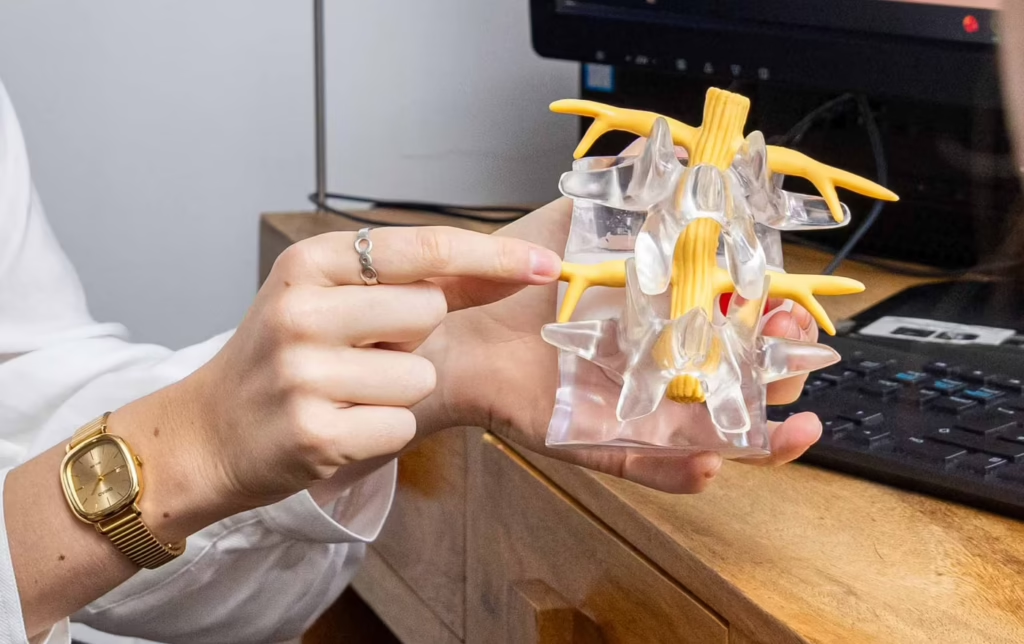
Many patients arrive at our clinic having been told they have a “slipped disc,” but the term itself is misleading. Discs do not literally slip. They may bulge, herniate, protrude, or extrude, each describing a different degree of disc disruption and potential nerve involvement. [2][52]
At The DISC Chiropractors, we spend a great deal of time helping patients understand that language matters. The phrase “slipped disc” can unintentionally make these injuries sound simple or easily reversed, when in reality disc injuries often require careful load management, staged rehabilitation, and thoughtful progression. Accurate diagnosis helps create realistic expectations and safer treatment planning. [2][88]
Clinic director Dr Brown also speaks from personal experience after suffering his own disc herniation following a hiking fall. Part of what shaped the clinic’s current approach was seeing how unpredictable disc injuries can be, particularly when aggressive treatment or poorly timed loading is introduced too early. Some patients improve dramatically with certain interventions, while others flare significantly. Timing, irritability, severity, and clinical judgement all matter enormously.
How Slipped Discs Affect Movement and Nerve Function
Disc injuries affect far more than the spine itself. They often alter posture, movement, balance, muscle activation, and confidence in predictable ways. One of the most common presentations is an antalgic posture, where the patient leans or shifts away from the painful side, struggles to stand upright, or moves cautiously to reduce nerve irritation. [59][95]
Other common features may include:
- A bent or guarded posture
- Difficulty bending forward
- Painful or restricted spinal extension
- Frequent repositioning while sitting
- Reduced walking tolerance
- Protective muscle guarding or asymmetrical loading
These adaptations are not the body “failing.” They are often protective responses designed to reduce mechanical stress and calm irritated tissues. Left unresolved, however, these compensations can reinforce dysfunctional movement patterns, deconditioning, and ongoing nerve sensitivity. [60][91]
At The DISC Chiropractors, we assess not only where symptoms are felt but also how the body compensates around the injury. This includes movement tolerance, loading strategies, posture, stability, and neurological function. Disc injuries often involve both mechanical irritation and inflammatory sensitivity around nearby nerve tissue, which is why successful rehabilitation usually requires more than just temporarily reducing pain. [95][97]
Active Disc Herniations vs Chronic Disc Injuries: Why The Strategy Changes Over Time
One of the biggest mistakes in disc rehabilitation is treating all disc injuries the same. An active, highly inflamed disc herniation behaves very differently from a chronic disc injury that has been present for six months or longer. Understanding that difference is critical because the body’s priorities, tolerances, and rehabilitation needs change dramatically over time. [88][89]
Active Disc Herniation
In the early stages of a disc herniation, the nervous system is often highly reactive. Patients may struggle to stand upright, tolerate sitting, bend forward, or even walk comfortably without protective guarding. At this stage, the body is prioritising protection over performance. The primary goal is not aggressive strengthening or postural perfection; it is to calm irritation, reduce mechanical sensitivity, and restore sufficient movement tolerance to begin rehabilitation safely. [42][45][95]
For active herniations, our approach at The DISC Chiropractors typically focuses on:
- Controlled spinal decompression to reduce loading sensitivity
- Class IV laser therapy to help calm inflammation and nerve irritation
- Gentle instrument-assisted mobilisation
- Strategic unloading and movement modification
- Early-stage positional and directional-preference rehabilitation where appropriate
In these highly reactive cases, timing matters enormously. Overloading a sensitive disc too early, particularly through poorly matched strengthening, aggressive manipulation, or excessive flexion and rotation, can significantly increase flare-ups and nervous-system sensitivity. [42][70]
Chronic Disc Injuries
Chronic disc injuries, however, often become a different problem entirely.
Once symptoms persist beyond six months, many patients are no longer dealing purely with an inflamed disc. Instead, they may also be dealing with longstanding compensation patterns, muscular inhibition, pelvic instability, movement asymmetry, deconditioning, soft-tissue restriction, and fear-driven movement behaviours layered on top of the original injury. Many of these were likely in play before the disc became irritable or directly caused the herniation. [59][89]
This is where rehabilitation becomes less about calming the disc itself and more about rebuilding the entire movement system around it.
In chronic cases, we often see recurring patterns involving pelvic instability, poor deep-core recruitment, altered gait mechanics, and asymmetrical loading strategies. Some patients demonstrate movement patterns consistent with asymmetry-based rehabilitation frameworks, such as the Postural Restoration Institute’s patterning, in which predictable shifts in pelvic orientation and muscular dominance may contribute to chronic overload and poor force distribution throughout the spine and hips.
While these models remain evolving clinical frameworks rather than universally accepted diagnoses, they can help explain why we, as clinicians, often see repeatable patterns of dysfunction across many patients and why some patients repeatedly overload the same tissues despite temporary symptom relief. [143]
At this stage, treatment may begin incorporating:
- Pelvic and core stability retraining
- Functional loading assessment
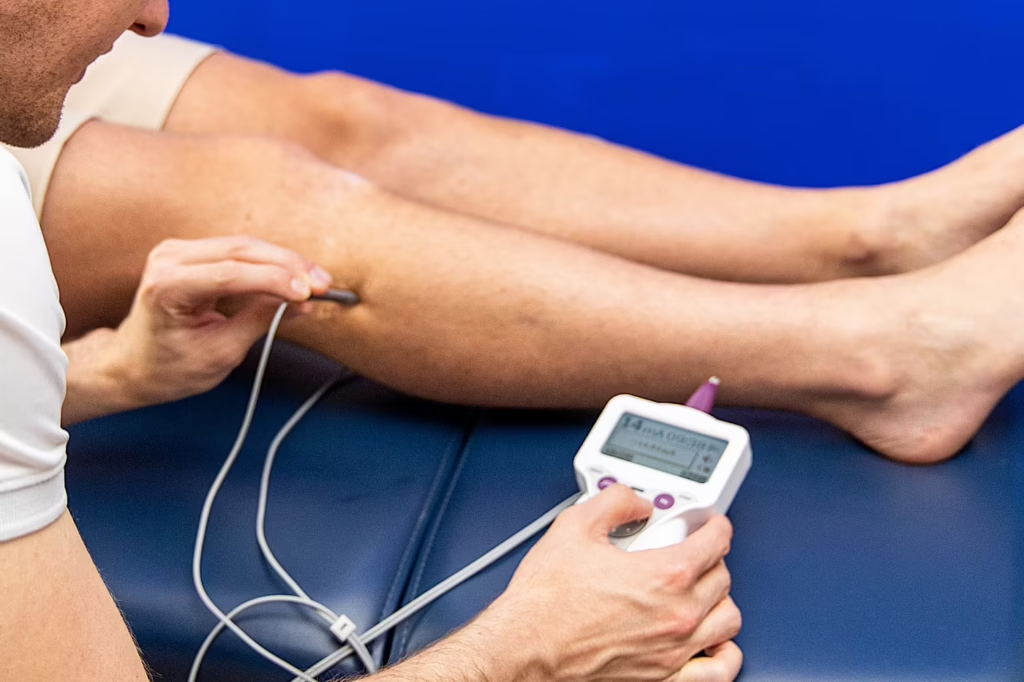
- Neuromuscular stimulation for inhibited muscle groups
- HIEMT to support deep-core activation and pelvic stability
- Manual adhesion-release methods where chronic soft-tissue restriction is limiting movement quality
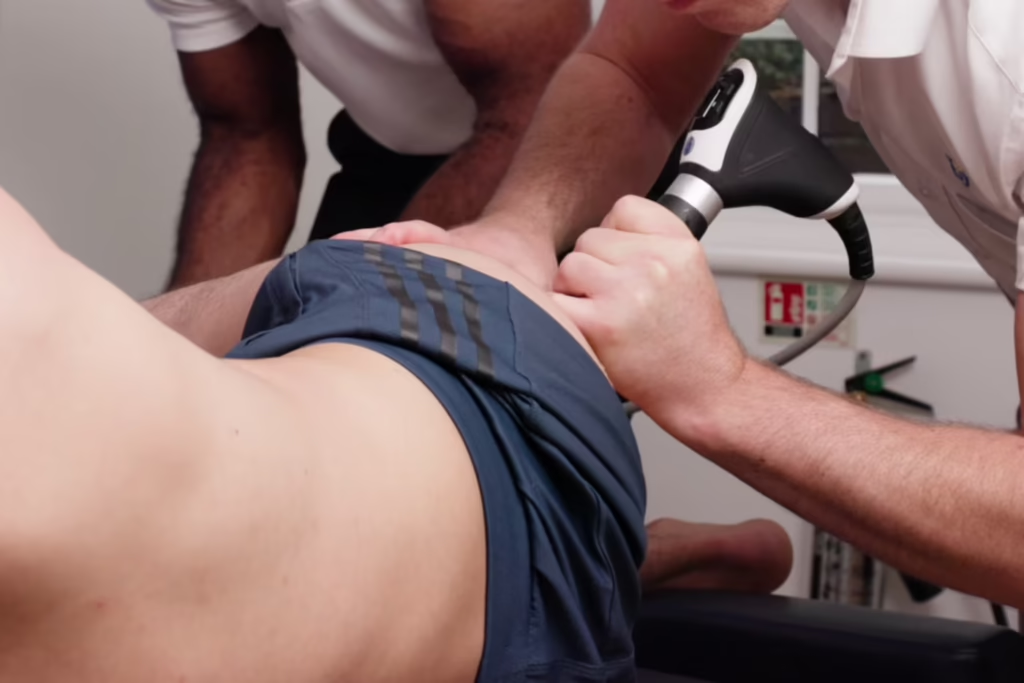
- Shockwave therapy to help improve tolerance and mobility in persistently restricted tissues
- Progressive strength and movement retraining under real-world load [44][49][50]
In chronic cases, rehabilitation is often less about “fixing the disc” directly and more about restoring the body’s ability to distribute force, stabilise movement, and tolerate daily physical stress without repeatedly aggravating sensitised tissues. This is one reason why some patients continue experiencing flare-ups long after scans show the original disc injury has stabilised. [59][91]
The principle remains the same throughout both stages: the right treatment at the right time. Active herniations usually require calming, unloading, and careful progression. Chronic disc injuries often require rebuilding, rebalancing, and restoring resilience throughout the wider movement system. Confusing those two stages is one of the main reasons many disc rehabilitation programs either stall, flare patients up, or stop at temporary symptom relief instead of delivering lasting functional recovery. [88][90]
Why Many Treatments Fail, And What We Do Differently
Many patients arrive after months or years of treatments that provided temporary symptom relief without lasting recovery. Common frustrations include generic exercise plans introduced too early, excessive rest and painkiller reliance, poorly timed rehabilitation, or overly aggressive treatment approaches that increase irritation rather than reduce it. Persistent back pain remains extremely common, particularly when movement quality, loading tolerance, and long-term rehabilitation are not adequately addressed. [88][89]
At The DISC Chiropractors, our DISC Injury Protocol is built around precision, timing, and staged progression rather than simply applying the same treatment repeatedly.
Instead of rushing into strengthening too early, we prioritise calming irritation, improving tolerance, and restoring safe movement first. Rather than relying solely on passive treatment, rehabilitation is layered in progressively as the disc and nervous system become more stable. [42][43]
Disc injuries don’t necessarily need more treatments; they need the right treatment at the right stage. That’s the core of our protocol: a clear, research-led roadmap designed to support actual disc regeneration, not just temporary pain relief. Every phase of our care plan is based on evidence-backed timing and technique, ensuring the right intervention at the right moment. This is the kind of structured approach people often expect from the DISC chiropractors in Surbiton, rather than an open-ended series of unconnected visits.
Our internal audited outcomes confirm that 80% of patients experience at least 80% improvement within the recommended protocol window, a result we attribute to the knowledge, experience, precision, structure, and adaptability of our approach.
The 3-Phase DISC Injury Protocol
Our 9-week program (comprising 18 sessions) is divided into three clearly defined phases: Move, Stabilise, and Fortify. This structured progression reflects the healing trajectory of disc injuries, particularly in cases presenting with altered movement, compensatory posture, or severe neural sensitivity.
The aim is not simply to reduce pain temporarily, but to restore confidence in movement, improve spinal stability, and gradually return patients to normal life with less fear of recurrence. [6][88]
Below is the outline for acute or active disc injuries. In chronic cases, the first phase is often well tolerated, allowing us to begin an extended phase 2 earlier. The number of treatments is often the same, but our care, which initially prioritises pain, can shift to focus on the deeper functional deficits earlier.
Phase 1: Calm Pain-free mobility and the Introduction of Stability (Treatments 1–6)
Goals
- Reduce irritation and inflammation
- Decrease mechanical sensitivity around the nerve (Decompress)
- Restore safe foundational movement with directional preference
- Improve tolerance to basic daily activity
- Introduction and framing of stability issues.
Tools
- Spinal decompression introduced progressively based on tolerance
- Class IV laser therapy
- Gentle instrument-assisted mobilisation
- Strategic unloading and movement modification
In highly reactive cases, treatment may initially begin with even more conservative interventions such as laser therapy, designed to calm irritation before decompression or more active rehabilitation is introduced. Some patients tolerate decompression immediately, while others require a slower progression because of heightened nerve sensitivity or inflammatory reactivity. [42][45]
Decompression is not delivered in isolation. Treatment may also include pelvic mobility work, soft-tissue release, and movement strategies to reduce unnecessary loading around the injured area. The goal is to create enough stability and safety for the nervous system to tolerate progression without triggering major flare-ups. [88][95]
For many patients arriving at a chiropractor in Surbiton unable to stand upright comfortably, this calmer stabilisation phase is often the turning point between repeated aggravation and meaningful progress.
Phase 2: Stabilise: Rebuild and Retrain (Treatments 7–12)
Once pain sensitivity settles and movement improves, rehabilitation shifts toward rebuilding stability, movement control, and loading capacity. This is often the stage when patients feel “better,” but hidden deficits in coordination, strength, and movement quality persist. [59][91]
We use functional assessment to identify asymmetries, instability patterns, altered loading strategies, and neuromuscular inhibition that may continue stressing the healing disc or surrounding joints. The goal is not simply pain-free movement, but more durable and adaptable movement under real-world demands. [60][102]
Goals
- Restore movement quality and joint mechanics
- Correct muscular imbalance and loading asymmetry
- Improve spinal and pelvic muscular stability
- Rebuild tolerance to movement and activity
Tools
- Functional rehabilitation and core retraining
- High-intensity electromagnetic therapy where appropriate
- Neuromuscular stimulation for inhibited muscle groups
- Shockwave therapy for persistent soft-tissue restriction
- Manual adhesion-release techniques where clinically appropriate
Importantly, the protocol remains adaptable. Some patients progress steadily, while others require slower loading, modified rehabilitation, or temporary regressions depending on symptom behaviour and tissue tolerance. Rehabilitation is rarely perfectly linear, especially in more complex disc cases. [79][89]
For patients who have already seen more than one chiropractor in Surbiton or South-West London without lasting improvement, this phase is often when they first begin to feel physically capable again, rather than simply “less painful.”
Phase 3: Future-Proof and Fortify (Treatments 13–18)
The final stage focuses on resilience, confidence, and independence. By this point, the emphasis has shifted away from calming symptoms; we continue to build functional strength and begin preparing the body for real-world physical demands. [6][7]
Goals
- Build long-term movement resilience
- Restore confidence with lifting, movement, and activity
- Improve tolerance to work, sport, and daily life
- Reduce reliance on ongoing treatment through self-management
Tools
- Progressive loading and strength work
- Dynamic balance and coordination training
- Functional movement retraining
- Lifestyle-specific mobility and stability strategies
- Gradual spacing of visits to test independence
Patients are gradually exposed to more demanding tasks such as lifting, prolonged sitting, twisting, carrying, and higher-level activity to ensure movement remains stable under real-life stress rather than only in controlled environments. [88][90]
Importantly, treatment frequency is also reduced progressively during this phase. The aim is not to create dependence on ongoing care, but to confirm that improvements can be maintained independently between visits. Patients are encouraged to monitor symptoms, movement confidence, and flare-up triggers while building greater trust in their body’s ability to self-regulate over time. [86][145]
This is often the stage where patients stop viewing themselves as “fragile” and begin returning to normal activity with far less fear of recurrence.
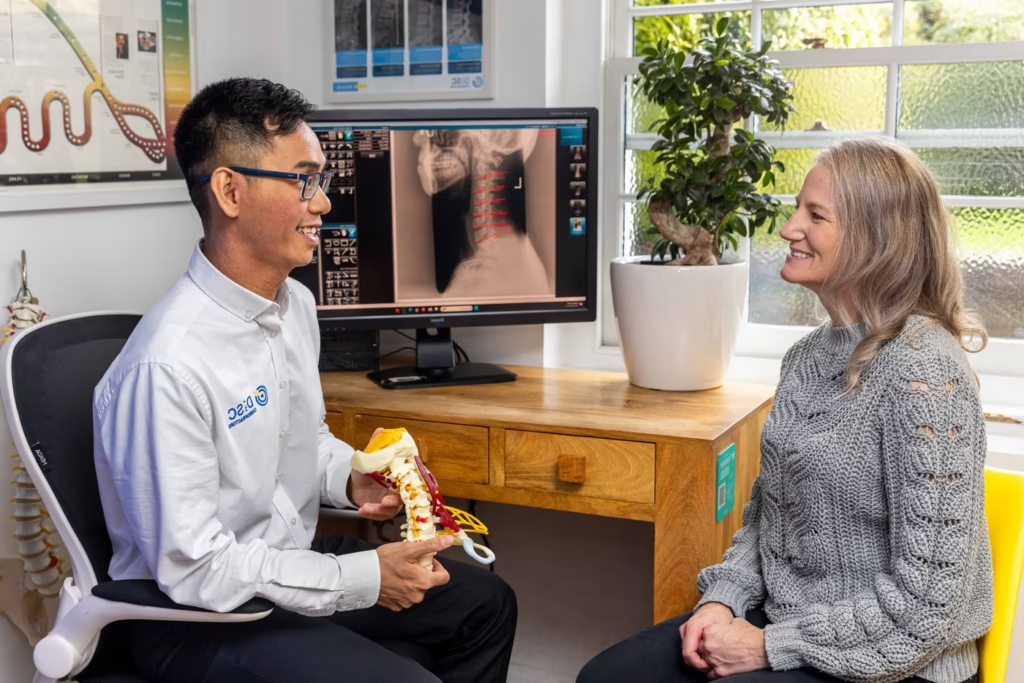
The Role of Imaging and Assessment in The DISC Protocol
We use imaging thoughtfully and only when it is likely to add meaningful clinical value.
X-rays
X-rays may help assess spinal alignment, degeneration, pathology, structural variation, or rule out certain contraindications to aspects of care where clinically indicated. In cases involving suspected radiculopathy or more significant neurological involvement, imaging may sometimes support safer clinical decision-making. [52][53]
As a clinic that specialises in Disc/nerve-based injuries, having our own in-house X-ray suite is key to our success. We also run a successful referral program in which other local chiropractors ask us to image their patients to aid their own understanding.
MRI
MRI is typically reserved for cases involving significant neurological symptoms, persistent nerve compression signs, surgical consideration, or poor response to conservative care. However, many disc injuries can initially be identified through detailed history-taking, neurological assessment, and functional movement examination without immediate MRI referral. [54][55]
We offer a free service for patients with a current (1-year-old) relevant spinal MRI, in which we will review the findings and provide a clinical assessment. Essentially, this is a second opinion on the findings and expectations, currently assumed to be true.
Importantly, imaging represents only one part of the clinical picture. Disc injuries are dynamic, and symptoms often fluctuate depending on movement tolerance, inflammation, loading, and nervous-system sensitivity. This is why functional assessment remains central to day-to-day rehabilitation decisions. [56][95]
Red Flags and When to Refer
We understand our scope and respect it. Chiropractic care is not suitable for every disc case. While non-specialist chiropractors may be able to offer temporary relief by reducing muscular spasm or offloading sensitive tissues, their treatment options are inherently limited. The most important factor is clinical awareness, which involves knowing when to proceed cautiously, when to modify techniques, and when to stop. Manipulating an inflamed or neurologically reactive disc inappropriately can worsen symptoms. Responsible care means recognising when adjustments are contraindicated and prioritising the patient’s long-term outcome over short-term intervention.
However, some cases are above and beyond even good specialist chiropractors like ours; we refer out immediately if there are signs of:
- Cauda equina syndrome (loss of bowel/bladder control)
- Rapid neurological decline
- Severe postural, alignment or congenital defects
- Fractures, infections, or tumours (require advanced imaging)
We collaborate with GPs, orthopaedic consultants, and surgeons when needed to ensure safety and clarity in complex presentations. For someone under the care of a good chiropractor in Surbiton, this joined-up communication is often what gives them confidence that nothing serious is being missed.
What Makes The DISC Protocol Different?
The DISC Injury Protocol is built around one core principle: bringing the latest and most effective treatments that target disc injuries directly and blending that with precise clinical timing and structured progression. Rehabilitation and movement retraining are supportive layers built around the central goal of creating a more favourable mechanical and neurological environment for disc recovery. [42][43]
Technology
Most traditional approaches rely heavily on either generic exercise programs or hands-on treatment alone. Our protocol instead integrates technologies such as spinal decompression, Class IV laser therapy, neuromuscular stimulation, HIEMT, and shockwave therapy into a staged system designed specifically for disc-related pain presentations. The aim is not simply to reduce symptoms temporarily, but to improve movement tolerance, calm nerve irritation, reduce mechanical stress, and support more stable long-term recovery. [45][49][50]
Clinical Systems
Patients progress through clearly defined rehabilitation phases with reassessment points focused on movement quality, function, loading tolerance, and symptom behaviour rather than symptom intensity alone. [20][97]
Personalisation
Although the framework remains structured, rehabilitation is adapted continuously based on symptom reactivity, progress, lifestyle demands, and physical tolerance. Some patients require longer stabilisation phases, while others progress more rapidly into higher-level rehabilitation. [79][88]
Recovery-Focused Rehabilitation
Modern disc rehabilitation increasingly focuses not only on reducing pain, but also on improving the mechanical and functional environment surrounding the injured disc. The aim is to improve movement quality, reduce excessive loading, restore tolerance to activity, and support longer-term spinal resilience through staged rehabilitation. [42][43]
People searching for the best chiropractor in Surbiton for a serious disc issue are rarely looking for just a quick adjustment. Most are looking for a clear plan that explains what recovery may realistically involve over weeks and months rather than minutes.
Final Thoughts
Disc injuries can feel frightening, frustrating, and unpredictable, particularly when pain affects movement, confidence, sleep, or normal daily life. But a disc injury does not automatically mean you are permanently damaged or destined for surgery. [88][89]
In many cases, meaningful improvement comes from the right combination of timing, rehabilitation, movement progression, load management, and patience rather than any single “magic” intervention.
At The DISC Chiropractors, our goal is not simply to reduce pain temporarily, but to help patients rebuild confidence, resilience, and long-term function through a structured rehabilitation process tailored to the complexity of disc-related pain.
If previous treatment approaches have left you feeling stuck, that doesn’t mean recovery is impossible. Sometimes it simply means the strategy was incomplete, poorly timed, or not specific enough to the problem itself.
We are here to help you move forward with greater clarity and confidence.