
Will I Get Homework From My Chiropractor
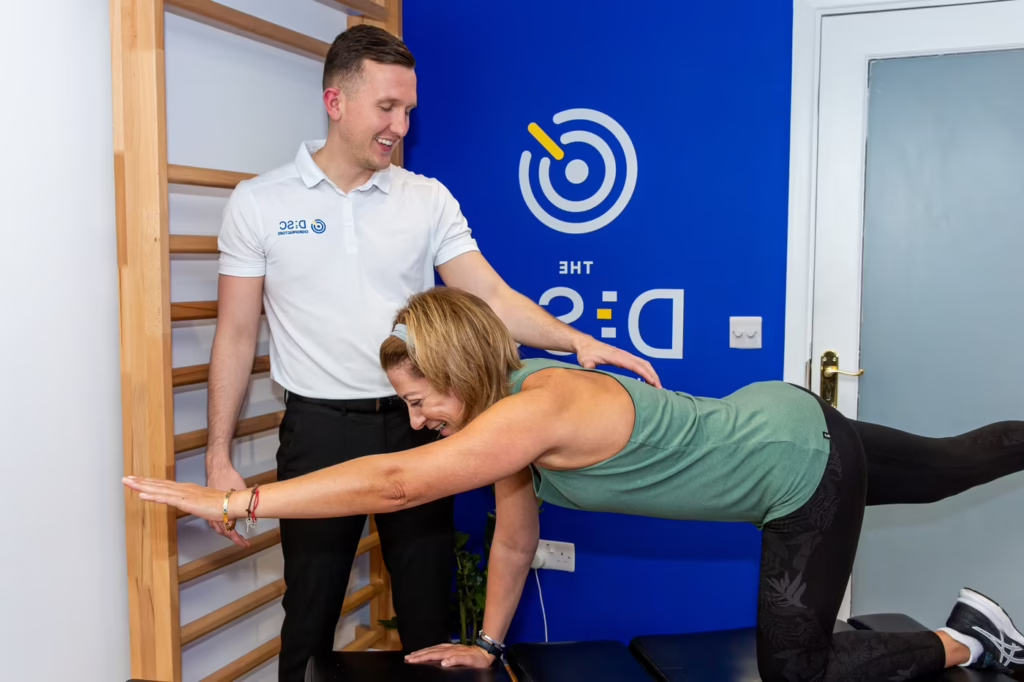
The Role of Rehabilitative Exercises in Modern Chiropractic
When Paul, a Surbiton resident, first visited his local chiropractor, he was sceptical. Years of recurring back pain had left him stuck in the familiar cycle of short-term relief followed by flare-ups. What finally changed things was not just the treatment itself, but the addition of a structured rehabilitation program between visits. Over time, he noticed less pain, better mobility, improved core strength, and greater confidence in movement. Stories like this reflect the wider shift in modern chiropractic toward more active, exercise-based rehabilitation. [6][88]
When many people picture visiting a chiropractor in Surbiton, they imagine spinal adjustments, joint “clicks,” or posture advice. Yet modern chiropractic increasingly overlaps with physiotherapy-style rehabilitation, combining hands-on care with mobility drills, motor control work, stability training, and progressive strengthening. The differences between professions are often more about perception than about the rehabilitation strategies themselves. [20][62]
So, will you receive “homework” exercises from your chiropractor? In many cases, yes. Modern back pain guidelines strongly emphasise active care, self-management, and progressive exercise rather than relying solely on passive treatment. These exercises are not about shifting responsibility onto the patient; they are designed to reinforce treatment effects, improve movement quality, and create longer-lasting results. [6][7][90]
What Do Rehabilitative Exercises from a Chiropractor Actually Involve?
Yes, many modern chiropractors prescribe rehabilitative exercises as part of treatment, particularly for persistent or recurring pain. These home-based programs are designed to reinforce the changes made during hands-on care and may include mobility drills, postural retraining, core stability work, movement re-education, and progressive strengthening depending on the patient’s needs and stage of recovery. [6][88]
Research consistently shows that exercise-based rehabilitation improves pain and function in chronic low back pain, especially when programs are individualised and combined with broader rehabilitation strategies. These exercises help:
- Retrain weak, inhibited, or poorly coordinated muscles [59][91]
- Improve joint stability and movement efficiency [60][102]
- Reduce the risk of recurring flare-ups [7][86]
- Improve confidence and tolerance to movement [89][94]
- Encourage patients to take an active role in recovery [6][88]
Much like wearing a retainer after orthodontic treatment, the body often needs time, repetition, and reinforcement before new movement patterns become more automatic and resilient. In that sense, rehabilitative exercises are not separate from treatment; they are the continuation of treatment between visits. [15][16]
Long-term recovery rarely comes from passive care alone. The combination of manual therapy and active rehabilitation consistently yields stronger, more durable outcomes than either approach in isolation. This is unfortunate news for anyone hoping recovery could be outsourced entirely while lying face down on a treatment table twice a month. [59][91]
How do exercises help prevent recurring issues?
When pain settles but the underlying movement dysfunction remains, symptoms often return. Poor hip control, weak stabilising muscles, reduced conditioning, movement avoidance, or inadequate load tolerance can all continue to place repeated stress on the same tissues. [59][91]
Rehabilitative exercise helps address these underlying contributors by improving strength, coordination, stability, and movement efficiency over time. This is one of the main reasons active rehabilitation is considered central to relapse prevention in modern musculoskeletal care. [7][86]
Are rehabilitative exercises essential?
Not always in a strict sense, air is essential, rehabilitative exercises are a bonus, but consistency makes a substantial difference to long-term outcomes. Research on home-based rehabilitation programs consistently shows that patients who adhere more closely to exercise plans generally achieve greater improvements in pain, movement tolerance, and function than those with poor adherence. [6][79]
In reality, not every patient fully engages with rehabilitation, and some prefer a more passive approach to care. Positive outcomes can still occur, but progress is often slower, less stable, or more prone to recurrence when movement capacity and strength are not addressed alongside symptom relief. [7][88]
Treatment itself can sometimes provide enough momentum for meaningful improvement, particularly in less complex cases or during flare-ups, where pain, stiffness, or movement restriction is the main barrier. For some patients, periodic treatment combined with sensible activity levels may be sufficient to maintain good function and control symptoms effectively. [15][16]
Long term recovery is usually built on two interconnected pillars: what happens during treatment sessions and what happens between them. Rehabilitative exercises help maintain momentum, reinforce movement adaptations, and gradually build the physical capacity needed for longer-term resilience. [90][145]
For this reason, many modern chiropractors increasingly blend hands-on care with structured rehabilitation strategies, creating an approach that often resembles a hybrid of traditional chiropractic and physiotherapy principles. For patients seeking lasting change rather than repeated short-term relief, that integrated model often produces the most meaningful outcomes.
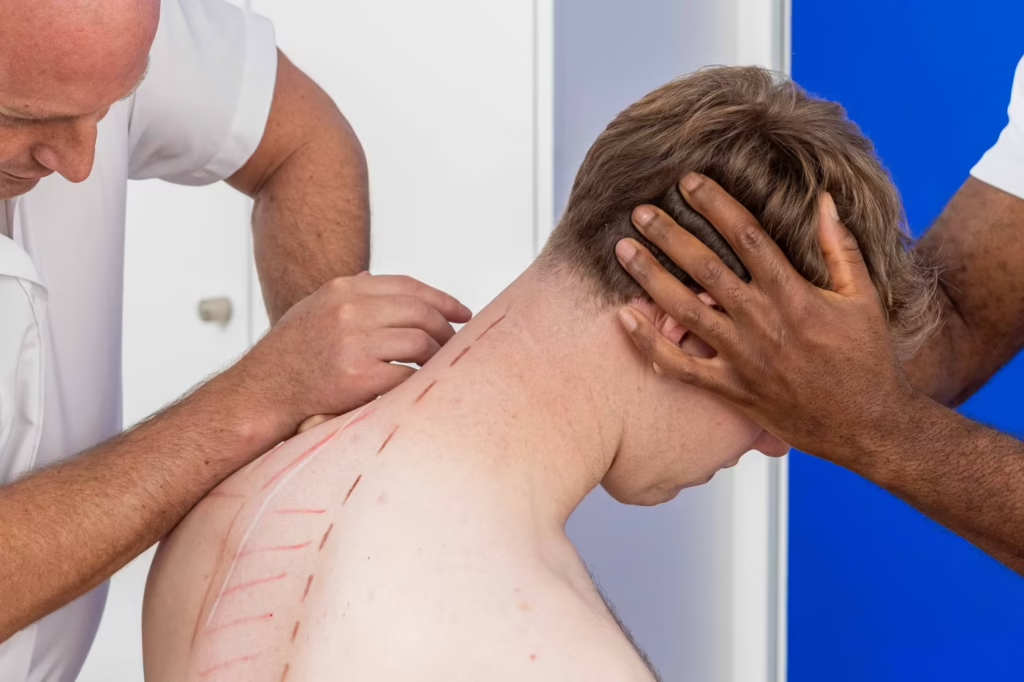
What does an average rehabilitation plan look like at The DISC Chiropractors?
At The DISC Chiropractors, rehabilitation programs are designed to be progressive, adaptable, and responsive to the patient’s presentation, goals, and tolerance levels. Each plan begins with a detailed assessment that looks not only at pain itself but also at movement quality, stability, loading tolerance, confidence, and behavioural patterns that may be contributing to the problem. [20][88]
Rather than rushing immediately into aggressive strengthening, early rehabilitation often prioritises movement quality, breathing control, joint stability, postural awareness, and low-load coordination. This helps establish a more stable foundation before progressing into heavier loading or more complex movement demands. [59][60]
Pushing too aggressively too early is one of the most common reasons patients lose confidence in rehabilitation or trigger flare-ups. For that reason, progression is guided by both clinical assessment and patient feedback, ensuring each stage is earned rather than assumed. Setbacks are treated as useful feedback rather than failure, allowing rehabilitation plans to adapt appropriately over time. [79][89]
This staged, flexible approach helps reduce overload, improve confidence, and support longer-term resilience rather than chasing rapid but unstable progress.
Phase 1: Mobility and Relief
- Pelvic tilts
- Hip hinges
- Gentle range-of-motion exercises
- McKenzie extensions where appropriate
These exercises aim to restore movement, reduce protective tension, and improve comfort during the more reactive phases of recovery. [75][90]
Phase 2: Stability and Control
- Deadbug variations
- Superman holds
- Side plank progressions
These exercises help rebuild spinal control, improve muscular coordination, and reactivate stabilising systems before heavier strengthening is introduced. [59][91]
Phase 3: Functional Strengthening
- Glute bridges and banded clams
- Sit-to-stand drills or chair squats
- Step-ups or resistance-based compound movements where appropriate
This phase focuses on rebuilding real-world strength, physical tolerance, and confidence in daily movement demands once foundational stability has improved. [6][88]
At The DISC Chiropractors, rehabilitation is designed to progress alongside the patient’s actual recovery rather than following a rigid checklist. The goal is not simply to exercise for the sake of exercise, but to build sustainable movement quality, resilience, and independence over time.
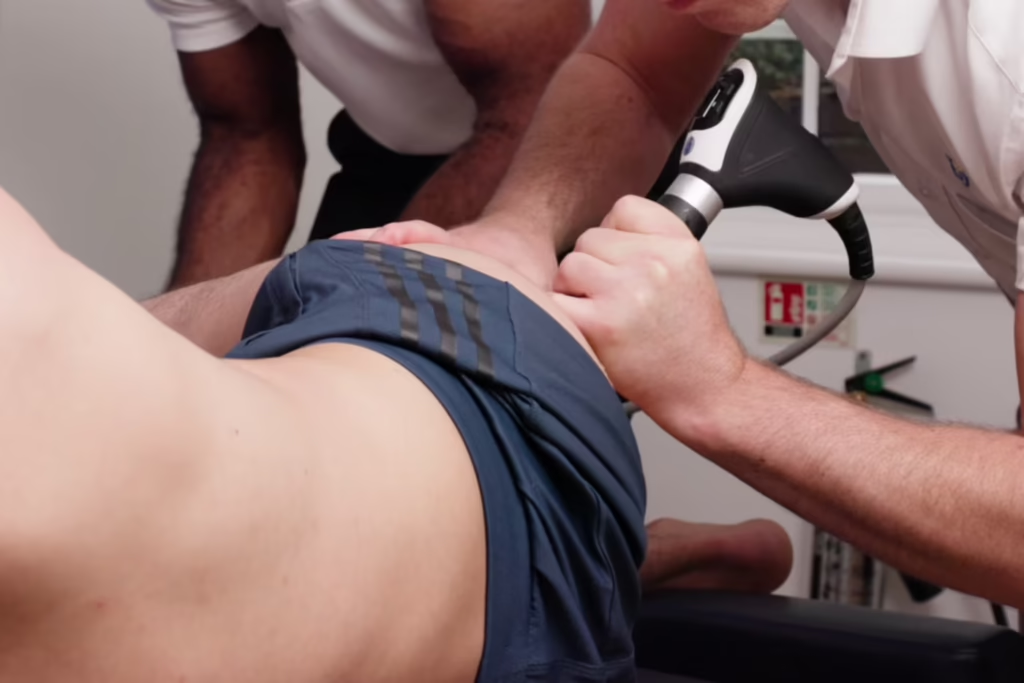
How do I know when pain during exercise is good or bad? Pain Feedback & The Traffic Light System
Understanding the difference between acceptable discomfort and problematic pain is one of the most important parts of rehabilitation. After treatment, the body may feel looser or more mobile, but that does not necessarily mean tissues are immediately ready for high-intensity loading. Rehabilitation works best when progression matches current tolerance rather than constantly exceeding it. [89][94]
To help patients understand this balance, we often use a simple “Traffic Light System” adapted from broader pain-monitoring approaches used throughout sports medicine and rehabilitation.
🟢 Green Light
Mild discomfort during or after activity that settles relatively quickly and does not significantly change movement quality or daily function.
Examples:
- Mild muscular fatigue after exercise
- Temporary stiffness after gardening
- Light postural tension after rehabilitation drills
What to do: Continue as planned. Mild, short-lived discomfort is often part of normal adaptation rather than tissue damage.
🟠 Amber Warning
Pain or fatigue that lingers for several hours, increases during activity, or noticeably changes movement behaviour.
Examples:
- Persistent hip ache after prolonged walking
- Increasing back tension during lifting
- Fatigue or soreness affecting evening activities
What to do: Reduce intensity, volume, or loading demands temporarily and focus on movement quality and recovery strategies.
🔴 Red Light
Sharp, escalating, radiating, or next-day pain that significantly limits movement or normal activity.
Examples:
- Electric-like pain down the leg
- Significant next-day flare-up after exercise
- Pain disrupting sleep or normal function
What to do: Stop the aggravating activity and seek clinical guidance before progressing further.
The Traffic Light System applies not only to exercise, but also to daily tasks such as lifting, prolonged sitting, gardening, travelling, or housework. Pain is not always a sign of damage, but it is useful feedback that can help guide safer progression when understood properly. [94][95]