
Is It Possible to Cure Back Pain?
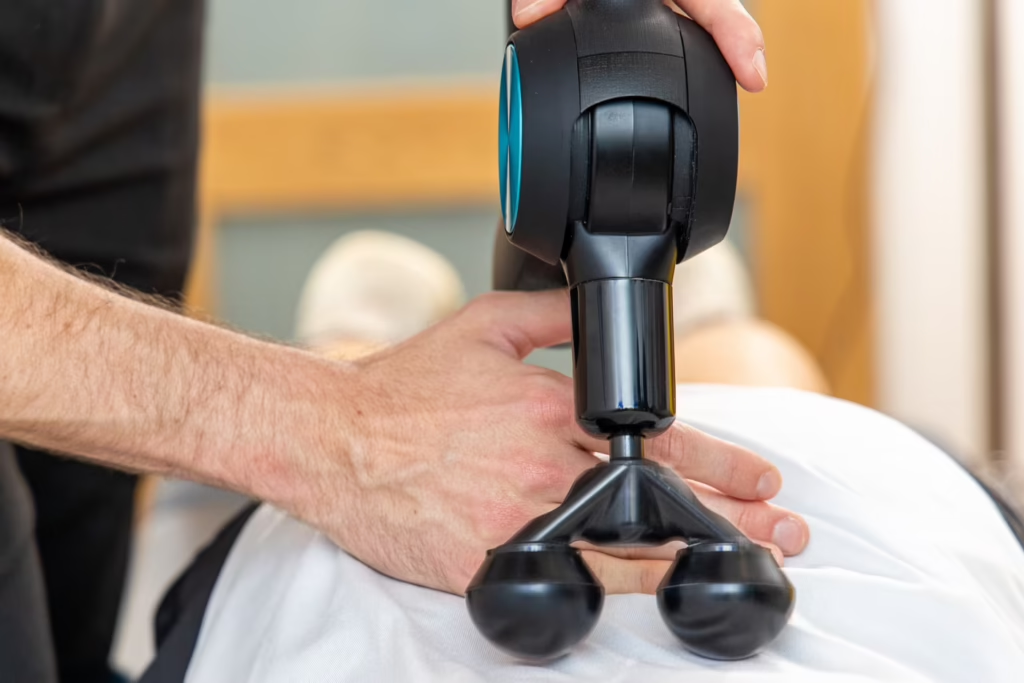

Surbiton Chiropractor Explains Relief Vs Recovery
At 8:00 a.m. sharp, Jane stepped onto the busy train at Surbiton Station, her briefcase in one hand and coffee in the other. Suddenly, a sharp spasm spread across her lower back, causing her to wince and falter. She paused mid-commute, grappling with the familiar, debilitating pain that had become an unwelcome part of her daily routine. Have you ever found yourself in similar moments, where pain disrupts your day and shifts your focus inward? If so, you are not alone. Millions of people experience these interruptions every day, trying to carry on with work, family, exercise, and normal life while pain quietly dictates their decisions. [16]
Back pain is one of the most common health complaints worldwide. For some, like Jane, it is an occasional flare-up during periods of stress or overload. For others, it becomes a recurring or chronic issue that interferes with work, movement, sleep, exercise, and quality of life. One of the most common questions patients ask when they first walk into our Surbiton chiropractic clinic is deceptively simple:
“Can it actually be cured?”
Back pain is not a disease with a quantifiable endpoint, and it is rarely a single-condition problem with a one-time fix. In most cases, it is influenced by movement habits, previous injuries, physical conditioning, work demands, stress, sleep, recovery capacity, and the nervous system’s response to load over time. While many acute episodes improve significantly, recurrence is extremely common, with some studies suggesting that lifetime recurrence rates may reach up to 85% in certain populations. [146]
That does not mean recovery is hopeless or that patients are destined to live in pain forever. Far from it. Most people can achieve substantial improvements in pain, function, movement confidence, and quality of life when treatment focuses not just on temporary symptom relief, but on improving how the body moves, adapts, stabilises, and tolerates stress over the long term.
This is why the goal of modern chiropractic and rehabilitation care is usually not to chase a mythical “magic bullet,” but to help patients better understand the factors driving their pain, improve movement quality and resilience, strengthen vulnerable areas, and manage flare-ups more intelligently when they occur. Lasting progress is often built through a combination of treatment, rehabilitation, movement, recovery, behavioural change, and smarter load management over time. [145]
By improving movement habits, staying physically active, building strength and stability, managing stress, and addressing factors that repeatedly overload the spine, many patients can dramatically reduce the frequency and severity of future flare-ups. That is what true long-term recovery usually looks like: not necessarily never feeling discomfort ever again, but regaining confidence, function, and control over your body, rather than constantly fearing the next setback. [5]

Why Pain Relief Is Only the First Step
Pain is often what brings people to a chiropractor in Surbiton. It is the body’s alarm system, signalling that something is under strain or not functioning properly. When that pain begins to ease, it can feel as though the problem has been fixed. But this can be deceptive. In many cases, pain is one of the first symptoms to improve once inflammation or nerve irritation settles, while the deeper mechanical, muscular, and neurological issues driving the problem may still be present beneath the surface. [145]
This is why high-level chiropractic and rehabilitation care does not simply stop when symptoms reduce. Good chiropractors in Surbiton plan beyond short-term pain relief and anticipate the next stages of recovery. Once pain begins to settle, the focus often shifts toward restoring movement quality, improving muscular support, rebuilding stability, correcting compensation patterns, and increasing the body’s tolerance to real-world stress and activity.
Pain relief should therefore be viewed as an important checkpoint, not the finish line. The real questions you need to ask are:
- Can the joint now move properly?
- Are the supporting muscles functioning correctly?
- Can the patient tolerate normal daily loads again?
- Can they return to the activities that matter most to them without fear or hesitation?”
Function becomes far more important in the long term than simply whether pain is temporarily absent.
Stopping treatment, the moment symptoms ease, often leads to the frustrating cycle many chronic back-pain sufferers know well: symptoms settle, activity resumes too quickly, underlying dysfunction remains, and the same area eventually becomes overloaded again. In many cases, each flare-up becomes progressively harder to calm because the body has adapted to previous injuries through compensation, guarding, reduced conditioning, and scar-tissue formation. [146]
Pain relief is a milestone, not the completed project. It may mean the fire has been extinguished, but rebuilding resilience, movement confidence, stability, and long-term function often takes longer.
What True Recovery Looks Like
True recovery is not simply about feeling comfortable while avoiding activity. It is about being able to return to the things that matter most to you without hesitation, fear, or repeated setbacks. This is often where the best chiropractors in Surbiton separate themselves from purely symptom-focused care.
For one patient, recovery may mean sitting through a work meeting without stiffness. For another, it may mean lifting their child confidently, returning to the gym, travelling comfortably, sleeping through the night, or getting back onto the golf course without constantly worrying about “setting their back off” again.
This is why good chiropractors measure more than pain scores alone. Movement quality, strength, endurance, coordination, positional tolerance, and confidence under load often tell us far more about recovery than whether someone simply reports feeling “better” that week. [26]
Proper recovery also means reducing the compensation patterns that often develop around pain and injury. Chronic muscular tension, protective guarding, altered movement strategies, and fear of movement can all persist long after the initial symptoms settle.
Then stress testing the function of your back through proper rehabilitation, which aims to restore trust in the body’s ability to move, adapt, and function normally again, rather than leaving patients stuck in a cycle of temporary relief followed by repeated relapse. [4]
Common Mistakes That Stall Recovery
Relying Only on Pain Relief
One of the biggest mistakes patients make is assuming that reduced pain automatically means the underlying problem has fully resolved. Medication and passive treatments may temporarily calm symptoms, but they do not necessarily restore movement quality, stability, conditioning, or resilience. Many chronic back-pain sufferers become trapped in a cycle of repeatedly suppressing symptoms without ever properly rebuilding the body’s tolerance to load and movement. [4]
Failing to Change the Habits That Caused the Problem
Recovery rarely happens in isolation from daily life. Prolonged sitting, poor lifting mechanics, repetitive overload, lack of movement, poor sleep, stress, and inadequate recovery habits can all continue sensitising the spine long after symptoms initially improve. Lasting recovery often requires changes in how the body is moved, loaded, and managed day-to-day, not simply in how pain is treated. [146]
Expecting Instant Results
Some patients hope a few good adjustments will permanently “reset” everything overnight. While symptoms can sometimes improve quickly, rebuilding strength, movement tolerance, coordination, and stability usually takes longer. Like returning to the gym after a long break, temporary soreness, fatigue, or stiffness during rehabilitation does not necessarily indicate damage. In many cases, it reflects the body adapting to new demands and gradually becoming more resilient. [2]
Not Communicating Changes Early
Recovery is rarely completely linear. Symptoms may shift as posture, movement, strength, and tissue tolerance begin changing. If new symptoms develop, pain patterns change significantly, or treatment reactions feel unexpectedly intense, communicating this early allows your chiropractor to adjust technique, pacing, rehabilitation, or treatment strategy before small flare-ups become larger setbacks. [82]
Overanalysing Every Temporary Sensation
As the body adapts to treatment and movement patterns begin changing, it is normal to experience temporary fluctuations in stiffness, tension, soreness, or loading patterns from day to day. Not every small ache or asymmetry represents damage or treatment failure. Good chiropractic care focuses on long-term trends in movement quality, stability, function, and resilience rather than reacting emotionally to every short-term fluctuation. [94]
Recovery Requires Participation
At The DISC Chiropractors in Surbiton, education forms a major part of care because long-term recovery depends on far more than what happens on the treatment table. Lasting success is usually built through better movement habits, improved body awareness, sensible pacing, rehabilitation, recovery strategies, and staying actively engaged in the process rather than passively waiting to be “fixed.” [145]
The 3 Phases of Chiropractic Recovery
Most effective chiropractic and rehabilitation programs follow a phased structure, with each stage designed to achieve a different objective: relief, restoration, and long-term resilience. Understanding these stages helps patients appreciate why recovery often continues long after the initial pain begins to settle.
Modern spine and rehabilitation guidelines increasingly support phased, multimodal approaches that combine symptom reduction, movement restoration, exercise, education, and long-term self-management rather than relying solely on passive treatment.
Research also suggests that structured long-term management may help reduce recurrence rates in persistent spinal conditions compared to symptom-only care, reinforcing why stopping treatment too early can sometimes increase the risk of relapse. [2][86][145]
1. Relief Phase
The immediate goal during this phase is to calm the system. This often means reducing pain and inflammation, decompressing irritated nerves, easing protective muscle guarding, and improving movement tolerance to the point that the body can begin functioning more normally again. Persistent pain conditions are now understood to involve both tissue irritation and nervous-system sensitisation, which helps explain why reducing sensitivity early can be so important. [85][95]
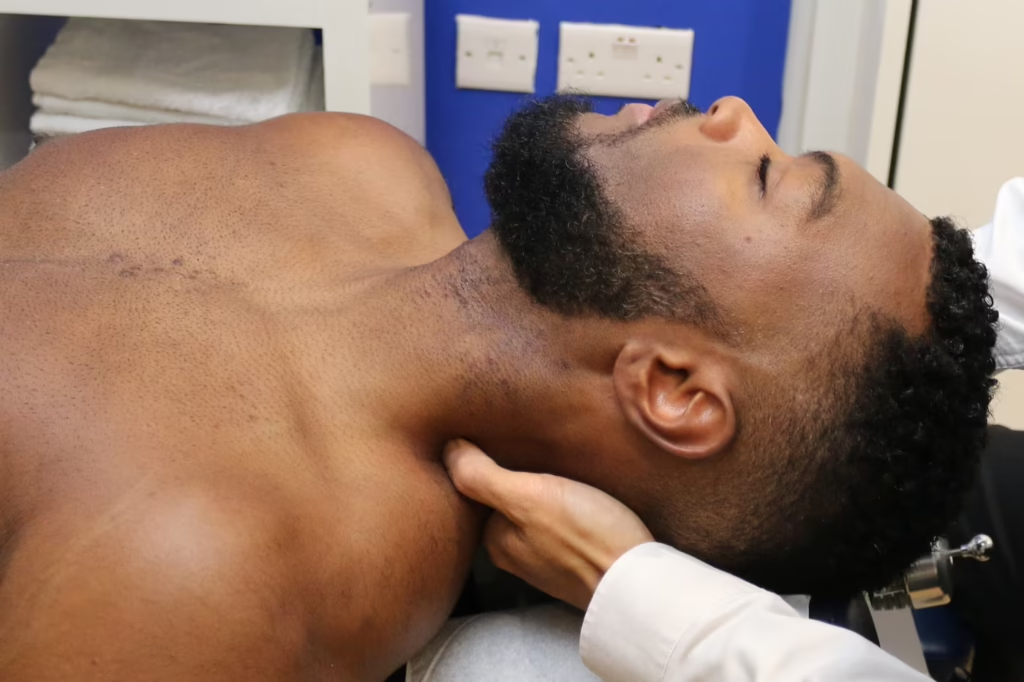
Treatment during this stage may include gentle spinal adjustments, soft-tissue therapy, spinal decompression, mobility work, low-force techniques, or laser therapy, depending on the patient’s presentation, irritability, and sensitivity levels. Evidence supports multimodal approaches that combine manual therapy with movement, exercise, and rehabilitation rather than relying solely on passive care. [16][18][88]
Where appropriate, additional supportive therapies may also be integrated. Research on non-surgical spinal decompression has demonstrated improvements in pain, disability, and functional outcomes in selected patients with lumbar radiculopathy and disc-related presentations, while low-level laser therapy may provide additional support in some musculoskeletal and discogenic pain conditions. [42][43][70]
This phase often produces the fastest symptom changes, with many patients noticing improvement within the first few weeks. However, symptom relief alone rarely creates lasting functional change. Pain settling simply creates the opportunity for deeper rehabilitation to begin more effectively. [6][89]
2. Functional Restoration Phase
Once symptoms become more manageable, the focus usually shifts toward addressing the movement dysfunctions, muscular imbalances, instability patterns, and compensation strategies that may have contributed to the problem in the first place.
This stage often involves restoring joint mobility, improving muscular coordination and stability, rebuilding confidence in movement, and gradually increasing the body’s tolerance to real-world physical stress. Rehabilitation becomes far more individualised during this phase because different patients break down in distinct ways depending on their posture, movement habits, injury history, strength, lifestyle, and nervous system sensitivity. [59][141]
At The DISC Chiropractors, we use objective assessments such as movement analysis, muscle stability testing, proprioceptive evaluation, and functional loading strategies to help guide this stage of recovery. These approaches aim to assess whether the body can stabilise and control movement effectively under load rather than simply whether symptoms are temporarily absent. Research into spinal manipulation and rehabilitation also suggests potential effects on sensorimotor integration, proprioception, and neuromuscular control. [91][102]
The goal is not simply to get patients out of pain, but to help them become strong, stable, and adaptable enough to stay out of pain in everyday life. We also recognise that some chronic or complex cases plateau with standard rehabilitation alone. In these situations, additional technologies and supportive therapies may sometimes help target specific limitations more effectively.
Neuromuscular Stimulation may help improve activation in muscles that have become inhibited following prolonged pain or nerve irritation, while high-intensity electromagnetic stimulation may assist deep core recruitment and pelvic stability in selected patients with poor muscular activation patterns. [44][49]
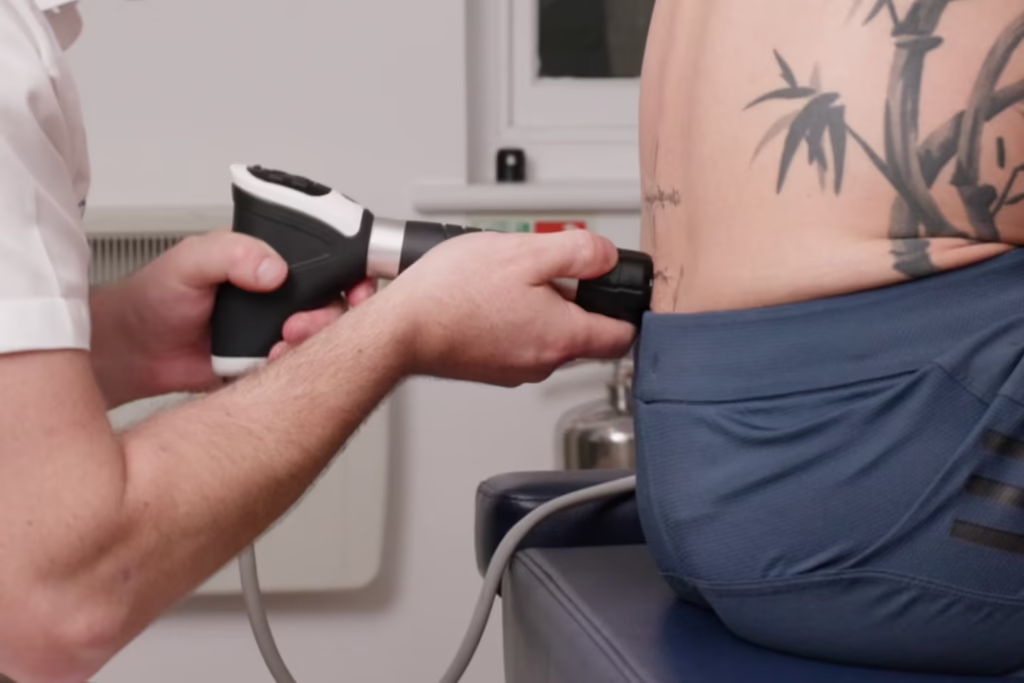
Acoustic Shockwave Therapy and Adhesion Release Methods may also help address chronic soft-tissue restriction patterns and treatment-resistant scar tissue that continue limiting movement and load tolerance in stubborn cases, particularly when traditional soft-tissue approaches alone have failed to restore normal tissue mobility. Emerging evidence supports its use in selected chronic musculoskeletal conditions. [47][50]
The key is not the technology itself but the knowledge and experience to select the right tool for the right patient at the right stage of recovery. Advanced rehabilitation should support the broader goal of restoring movement quality, confidence, stability, and long-term function rather than simply chasing temporary symptom relief. [90][145]
3. Maintenance or Independence Phase
Once functional goals are achieved, the final phase focuses on maintaining progress and reducing the risk of relapse. This does not always mean continued regular treatment. Ideally, it means you have reached a point where your body can maintain health more independently, with less reliance on passive care and greater confidence in self-management. Research into recurrent low back pain suggests that long-term outcomes often improve when patients continue appropriate movement, exercise, and preventative strategies even after symptoms have settled. [7][86][145]
This phase may include:
- Extending the time between visits
- Periodic re-evaluations
- Updated ergonomic and lifestyle strategies
- Targeted mobility or stability routines for ongoing support
- Maintenance visits spaced to suit your lifestyle, physical demands, and relapse risk profile
For physically demanding individuals, patients with a history of repeated flare-ups, or those managing persistent spinal conditions, this phase is often the difference between staying well and repeatedly falling back into the pain cycle. Preventative care in musculoskeletal health follows a similar principle to many areas of healthcare: small problems are often far easier to manage before they become major setbacks. [21][87][127]
In every phase, the key is clarity. You should understand your current stage of recovery, the goals you are working toward, and how progress is being measured. That level of transparency forms the foundation of effective, patient-centred chiropractic care. [4][20]

Common Mistakes That Stall Recovery
Relying Only on Pain Relief
One of the biggest mistakes patients make is assuming that reduced pain automatically means the underlying problem has fully resolved. Medication and passive treatments may temporarily calm symptoms, but they do not necessarily restore movement quality, stability, conditioning, or resilience. Many chronic back-pain sufferers become trapped in a cycle of repeatedly suppressing symptoms without ever properly rebuilding the body’s tolerance to load and movement. [4]
Failing to Change the Habits That Caused the Problem
Recovery rarely happens in isolation from daily life. Prolonged sitting, poor lifting mechanics, repetitive overload, lack of movement, poor sleep, stress, and inadequate recovery habits can all continue sensitising the spine long after symptoms initially improve. Lasting recovery often requires changes in how the body is moved, loaded, and managed day-to-day, not simply in how pain is treated. [146]
Expecting Instant Results
Some patients hope a few good adjustments will permanently “reset” everything overnight. While symptoms can sometimes improve quickly, rebuilding strength, movement tolerance, coordination, and stability usually takes longer. Like returning to the gym after a long break, temporary soreness, fatigue, or stiffness during rehabilitation does not necessarily indicate damage. In many cases, it reflects the body adapting to new demands and gradually becoming more resilient. [2]
Not Communicating Changes Early
Recovery is rarely completely linear. Symptoms may shift as posture, movement, strength, and tissue tolerance begin changing. If new symptoms develop, pain patterns change significantly, or treatment reactions feel unexpectedly intense, communicating this early allows your chiropractor to adjust technique, pacing, rehabilitation, or treatment strategy before small flare-ups become larger setbacks. [82]
Overanalysing Every Temporary Sensation
As the body adapts to treatment and movement patterns begin changing, it is normal to experience temporary fluctuations in stiffness, tension, soreness, or loading patterns from day to day. Not every small ache or asymmetry represents damage or treatment failure. Good chiropractic care focuses on long-term trends in movement quality, stability, function, and resilience rather than reacting emotionally to every short-term fluctuation. [94]
Recovery Requires Participation
At The DISC Chiropractors in Surbiton, education forms a major part of care because long-term recovery depends on far more than what happens on the treatment table. Lasting success is usually built through better movement habits, improved body awareness, sensible pacing, rehabilitation, recovery strategies, and staying actively engaged in the process rather than passively waiting to be “fixed.” [145]

How Chiropractors Measure Recovery, Beyond Pain Scores
The best chiropractors track progress using a combination of subjective insight and objective functional assessment, helping ensure that care remains both meaningful and measurable throughout the recovery process.
- Patient-Reported Outcome Measures (PROMs): These tools help track how symptoms affect your day-to-day life, including sleep, work, movement confidence, and overall function. They ensure that your lived experience remains central to the care process rather than relying purely on clinical findings. [97]
- Functional and Physical Markers: Recovery is about more than pain reduction alone. Chiropractors may assess spinal mobility, movement quality, muscular coordination, balance, loading tolerance, and neuromuscular control to determine whether the body is functioning more effectively, not simply feeling temporarily better. [60][91][102]
- Ongoing Reassessment and Adaptation: At The DISC Chiropractors, both subjective and objective findings are reviewed throughout care, with formal reassessments built into the rehabilitation process. These reviews allow treatment strategies to evolve based on real progress, helping avoid unnecessary treatment, delayed progression, or prolonged reliance on the wrong approach. Modern rehabilitation guidelines increasingly support adaptable, individualised care pathways rather than rigid one-size-fits-all treatment plans. [5][79][88]
Our aim is to reduce guesswork and improve clinical decision-making, so patients are not simply feeling better temporarily but functioning better long-term.
This structured, data-informed approach creates clarity and confidence for both the patient and practitioner. It helps establish what is improving, what still needs work, and what steps should come next. Frankly, this should be standard healthcare logic, yet humans still seem surprised when measuring outcomes produces better outcomes. Extraordinary species.
Final Thoughts: Do Not Settle for Temporary Relief
The ultimate goal of chiropractic care is not simply to feel better, but to function better. Relief alone is rarely the same as full recovery. Sustainable improvement depends on restoring the body’s ability to move, adapt, tolerate load, and cope with everyday physical stress without repeated setbacks. [6][88][89]
Before finishing care, ask yourself:
- Have I regained full movement and confidence?
- Can I do what I need to do without restriction or fear?
- Have the underlying drivers of the problem been properly addressed?
- Do I have a clear plan to maintain progress moving forward?
If the answers to those questions remain uncertain, recovery may not yet be complete.
At The DISC Chiropractors, our focus is not on chasing quick fixes or temporary symptom suppression. We aim to help patients build long-term resilience through structured, adaptable rehabilitation that supports stronger movement, greater confidence, and more sustainable results. [20][89][145]