
Chiropractic for Chronic Pain: Our Approach to Tough, Long-Lasting Cases in Surbiton

Understanding Chronic Pain: Why It’s Not Just About the Site of Pain
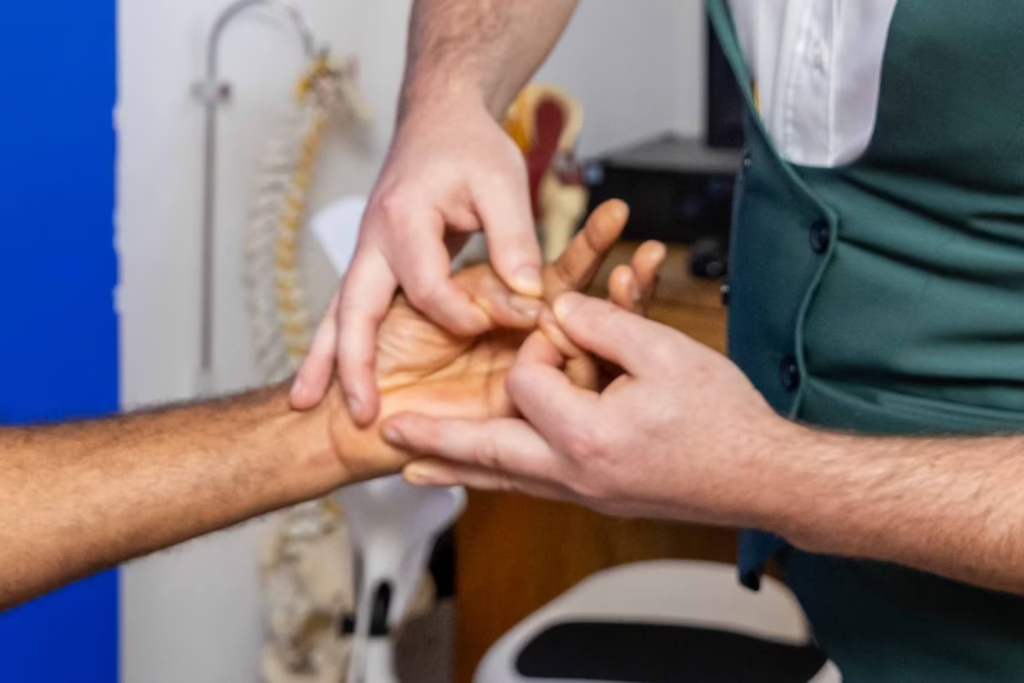
Chronic-complex pain is not simply a longer-lasting version of acute pain. It is a layered condition involving both nervous-system sensitisation and physical dysfunction. One useful way to picture this is like a car alarm that gradually becomes too sensitive, eventually reacting to the slightest touch or vibration. In chronic pain states, the nervous system can become increasingly protective and reactive, amplifying pain responses well beyond the original injury itself. Modern pain science refers to this process as central sensitisation. [94][95]
This process is often poorly explained, leaving many patients feeling dismissed or told the pain is “all in their head.” In reality, chronic pain usually involves a far broader interaction between the nervous system, movement patterns, tissue health, stress, behaviour, and physical load tolerance. At The DISC Chiropractors, we regularly see how this combination of heightened nervous-system sensitivity and ongoing mechanical overload can keep people trapped in persistent pain cycles. [89][96]
Equally important are the physical changes that can develop over time, including longstanding muscle imbalances, restricted mobility, altered movement strategies, and soft-tissue stiffness associated with repeated strain or incomplete recovery. Someone bending down to tie their shoes may not simply be experiencing a “bad back,” but rather the accumulated effects of years of compensation, guarding, reduced mobility, and reduced confidence in movement. These adaptations can reinforce dysfunctional patterns, alter normal movement feedback, and contribute to the persistence of pain. [59][60]
In many chronic cases, these layered physical dysfunctions become deeply intertwined with nervous-system sensitivity. This is why experienced chiropractors and rehabilitation professionals pay attention not just to where pain is felt, but also to how the body moves, stabilises, compensates, and tolerates load over time. Chronic pain is rarely explained by a single structure alone. [88][97]
Many persistent pain presentations are layered in their formation from a combination of long-standing movement dysfunctions, poor biomechanics, postural imbalances, physical deconditioning, and unresolved soft-tissue irritation. Over time, some tissues become overloaded while others become underused, creating compensatory movement patterns that can perpetuate stress and reduce movement efficiency. Emerging evidence also suggests that restricted fascial or soft-tissue mobility may contribute to altered mechanics and local irritation in some patients. [47][48]
With chronic pain affecting a substantial proportion of adults worldwide and contributing significantly to disability, healthcare burden, and reduced quality of life, these long-term mechanical and neurological patterns are far from uncommon. For many people searching for a chiropractor in Surbiton, it is not one single injury that finally pushes them to seek specialist help, but the slow accumulation of recurring problems that never seem to fully resolve. [37][130]
Complex pain patterns require more than symptom suppression alone. They often demand a broader understanding of pain science, movement quality, tissue loading, rehabilitation, and long-term behavioural change, which is why a structured, multi-faceted approach to care is often necessary. [88][90]
Why Chronic Cases Often Fail in Traditional Systems
Many traditional systems approach chronic pain through one of two routes: suppressing symptoms with medication or applying generic rehabilitation programs that fail to adapt to the complexity of the individual. While these approaches may help some people, persistent cases often involve overlapping mechanical, neurological, behavioural, and lifestyle factors that require more individualised management strategies. [79][89]
Common barriers include:
- Over-reliance on painkillers that may temporarily reduce symptoms without meaningfully improving movement quality, tissue capacity, or long-term function. Modern pain guidelines increasingly emphasise active rehabilitation, self-management, and cautious long-term reliance on medication-based strategies for persistent musculoskeletal pain. [114]
- Overly passive treatment approaches that provide temporary symptom relief without adequately rebuilding strength, movement confidence, coordination, or physical resilience. Research consistently supports combining manual therapy with active rehabilitation and exercise rather than relying on passive treatment alone. [6][88]
- Fragmented care, where different professionals focus only on isolated body parts or symptoms without recognising wider compensation patterns, lifestyle factors, or long-term functional changes. Persistent musculoskeletal pain is now widely recognised as requiring a more integrated biopsychosocial approach. [89]
- Generic exercise programs that fail to account for individual movement tolerance, structural limitations, deconditioning, fear avoidance, or neurological sensitivity. Poorly matched rehabilitation can sometimes reinforce compensatory patterns or increase flare-ups rather than improve function. [79][91]
- Lack of meaningful outcome tracking, leaving patients uncertain whether care is genuinely improving function, plateauing, or simply cycling through temporary relief. Effective rehabilitation relies on reassessment, adaptation, and measurable progress rather than assumptions alone. [20][97]
- Oversimplification of diagnosis, where treatment focuses only on the most painful area while overlooking upstream contributors such as hip dysfunction, spinal instability, deconditioning, movement asymmetry, or persistent loading intolerance. Chronic pain is often maintained by multiple overlapping drivers rather than a single isolated structure. [59][88]
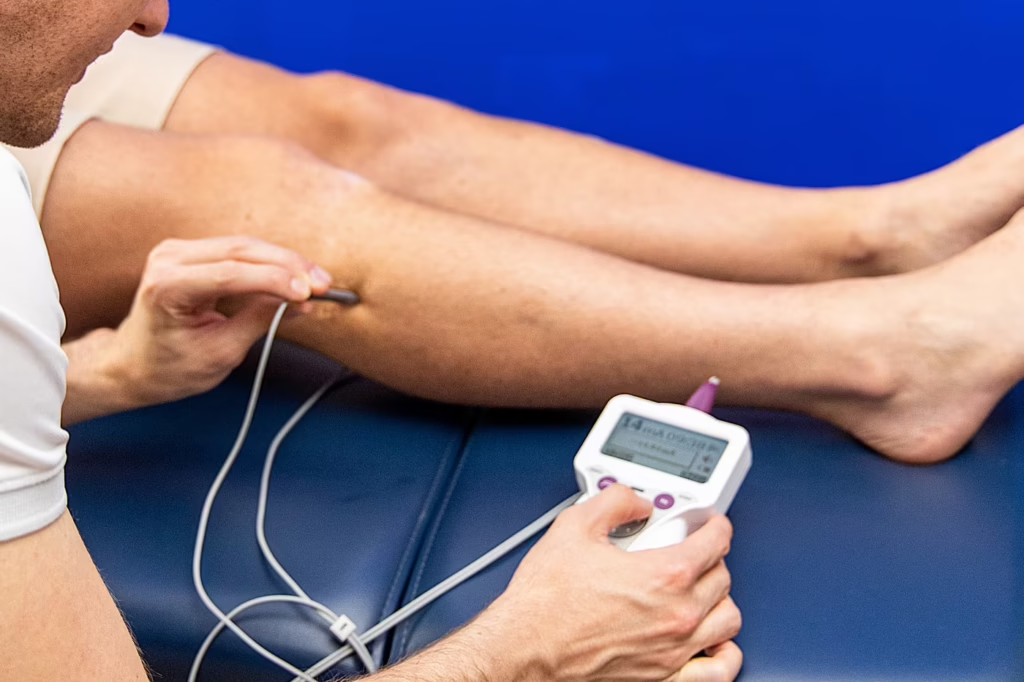
- Insufficient access to appropriate technology or treatment options. Modern musculoskeletal rehabilitation has evolved far beyond purely hands-on care alone. In more complex or persistent cases, these technologies may help improve tissue-loading tolerance, movement quality, muscle activation, and rehabilitation progression when appropriately integrated into a broader treatment plan rather than used in isolation. [42][49][50][88]
When people eventually seek help from a chiropractor in Surbiton after years of recurring pain, it is often because they feel no one has fully connected all of these factors into one coherent rehabilitation strategy.
Our Chronic Pain Protocol: How We Address the Whole System
Our approach treats chronic-complex pain as both a whole-body and whole-person issue. This means we look beyond the painful joint or muscle itself. We examine how the nervous system is functioning, the quality of movement patterns, structural stability, physical conditioning, and even the emotional context surrounding the pain experience. Modern rehabilitation models increasingly recognise that persistent pain rarely exists in isolation from the wider physical and behavioural systems around it. [88][89][95]
Even some conditions that initially appear straightforward can involve multiple overlapping layers of dysfunction. Often, each stage of recovery reveals another contributing factor, whether that is movement avoidance, instability, mobility restriction, deconditioning, or unresolved loading intolerance. Like identifying the hidden crack in the foundations of a damaged house, our goal is to understand the deeper drivers of dysfunction rather than repeatedly chasing symptoms alone. [59][79]
At The DISC Chiropractors, we are fortunate to have access to a broad range of rehabilitation tools and technologies that go beyond traditional hands-on treatment. In many chronic-complex cases, progress does not necessarily require a completely different diagnosis, but rather a more structured, multi-layered, and adaptable rehabilitation strategy. Sometimes improvement comes from applying the right inputs, in the right sequence, with enough consistency and progression across multiple systems of the body. [20][88]
This structured, multi-faceted approach is often what people are really searching for when they seek help for long-standing pain, not simply temporary symptom relief, but a clearer strategy for rebuilding function, confidence, and resilience over time.
Phase 1: Desensitise and Mobilise
We begin by calming the nervous system, improving soft-tissue mobility, and restoring foundational joint and movement capacity. Chronic-complex pain is rarely resolved while the body remains guarded, stiff, protective, and hypersensitive to movement. The early stages of rehabilitation are often focused on helping the body feel safer moving again while gradually reducing protective tension and sensitivity. [94][95]
Patients frequently describe this phase as the point where movement begins to feel less threatening and less exhausting. Rather than forcing aggressive strengthening too early, the aim is to build enough mobility, tolerance, and confidence to enable deeper rehabilitation. Although recovery timelines vary considerably, this stage often occupies the first few weeks of care in more persistent cases. [89][90]
Treatments in this phase may include:
- Manual or instrument-assisted mobilisation techniques and targeted mobility drills to improve segmental movement and tissue glide [15][16]
- Spinal decompression to provide a sustained form of axial distraction not typically achieved through manual adjustment alone [42][43]
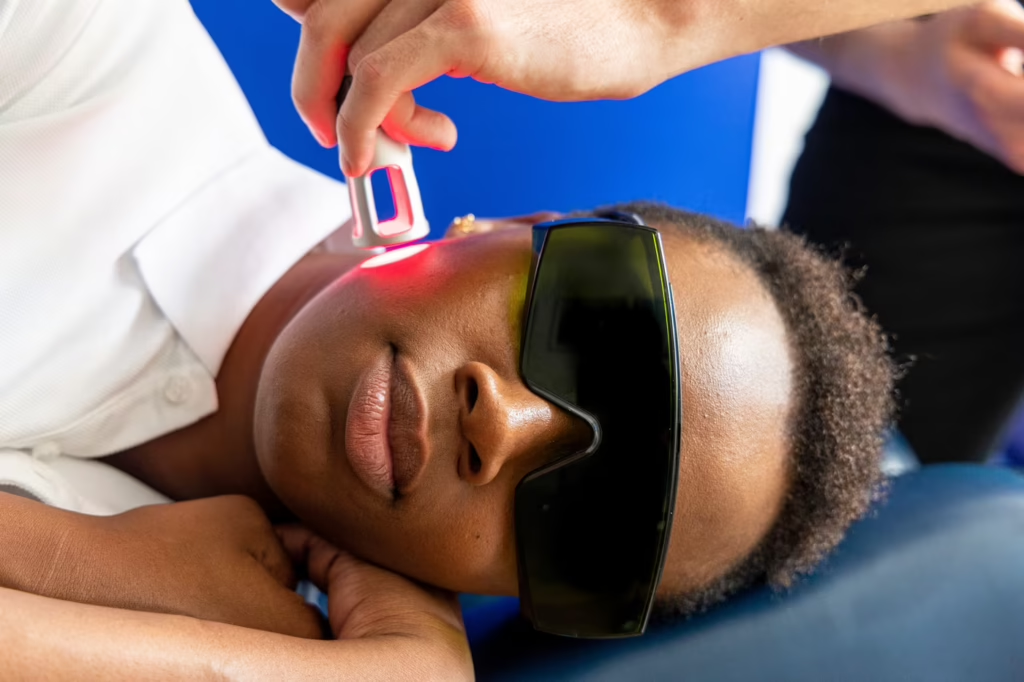
- Class IV laser therapy to support pain reduction and help calm local tissue irritation [45][70]
- Controlled rehabilitative exposure to movement patterns that gradually rebuild confidence and reduce protective guarding [89][94]
For many people working with a chiropractor in Surbiton for the first time, this phase feels less like being “fixed” and more like finally giving the body enough safety and breathing room to stop constantly fighting itself. Which, honestly, is often the first meaningful victory in chronic pain recovery.
Phase 2: Stabilise and Rebuild
This phase focuses on restoring postural control, movement coordination, and deep segmental stability before introducing higher levels of strength, load, or complexity. True stability is not simply about “holding posture” or bracing the core. It is about restoring balanced movement patterns and improving the body’s ability to distribute load efficiently during real-life activity. [59][60]
A simple way to picture this is through everyday movement. Bending to lift shopping bags, climbing stairs, carrying children, or sitting at work for extended periods all require coordinated muscular support and controlled movement. When these systems become poorly balanced or inhibited, the body often compensates by overusing certain muscles while underusing others, gradually reinforcing chronic overload patterns. [91][102]
Many patients with chronic complex pain also exhibit predictable movement asymmetries and compensatory patterns throughout the hips, pelvis, spine, and extremities. Some rehabilitation frameworks, including asymmetry-based models such as unilateral postural restoration concepts, attempt to explain how these imbalances may contribute to chronic overloading and movement inefficiency. While these models remain evolving clinical frameworks rather than universally accepted diagnoses, they can sometimes help guide rehabilitation strategies in selected patients. [143]
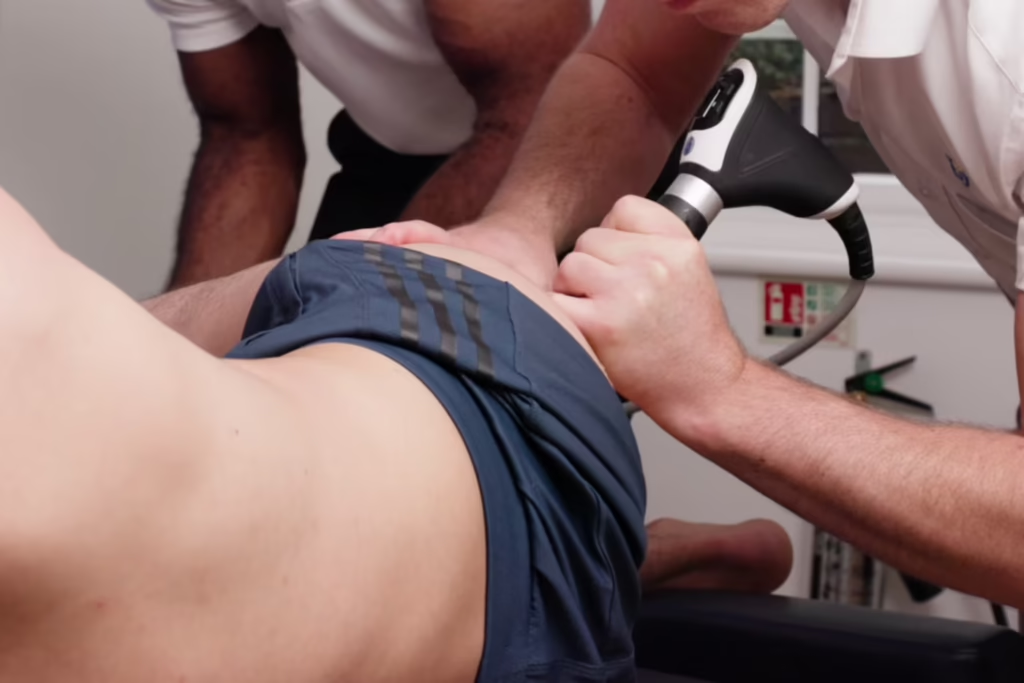
This phase is also where we begin systematically addressing soft-tissue restrictions, localised stiffness, and chronic movement limitations that may have developed through years of guarding, reduced movement variability, or incomplete recovery. Appropriately applied manual therapy, instrument-assisted techniques, mobility work, and shockwave therapy may help improve tissue mobility and reduce local mechanical irritation in some persistent cases. [47][50]
Treatments in this phase may include:
- Identifying and rebalancing dysfunctional movement and muscle activation patterns [60][102]
- Rebuilding foundational stability around the spine, pelvis, and hips through motor retraining [59][91]
- Reintegrating inhibited stabiliser muscles using neuromuscular stimulation or electromagnetic therapy where appropriate [44][49]
- Addressing soft-tissue restrictions and local mobility deficits [47][50]
- Correcting altered postural and movement strategies driven by guarding or disuse [88][95]
- Teaching patients to move with greater control, fluidity, and confidence [6][89]
- Introducing progressively more demanding loading strategies in controlled environments [7][90]
For patients who have already seen more than one chiropractor in Surbiton without lasting progress, this is often the phase when they begin to notice a shift from simply feeling “less painful” toward becoming more physically capable and resilient.
Phase 3: Load, Strengthen, and Reintegrate
Once pain sensitivity has reduced, movement has improved, and stability patterns are better established, the focus shifts toward rebuilding strength, adaptability, confidence, and long-term resilience. This is the phase where rehabilitation becomes less about protecting the body and more about preparing it for real life again. [6][90]
Long-term recovery depends on gradually exposing the body to meaningful physical demands in a way that improves tolerance without overwhelming the system. Research consistently supports progressive exercise, self-management, and long-term movement strategies as central components of persistent musculoskeletal pain rehabilitation and relapse prevention. [7][86]
This stage may include:
- Functional rehabilitation tailored to work, parenting, sport, travel, or lifestyle goals [6][56]
- Progressive strength development that respects previous compensations and fatigue patterns [59][91]
- Real-world movement simulations that prepare the body for daily physical demands [88][90]
- Education and habit retraining designed to reduce future flare-ups and improve long-term self-management [7][86]
Building sustainable home-based movement and recovery strategies [79][145]. This is often the stage where treatment becomes less centred around the table and more focused on restoring confidence in everyday life, helping patients return to lifting, walking, travelling, exercising, and living with far less fear of triggering another setback. Humans tend to forget this part. Recovery is not just the absence of pain. It is the return of capability.
When Chronic Pain Isn’t Just Physical
Chronic-complex pain is often influenced by factors that extend far beyond the site of pain itself. Modern pain science increasingly recognises that persistent pain can be shaped not only by tissue irritation and movement dysfunction, but also by stress, sleep quality, behaviour, emotional health, physical conditioning, and wider lifestyle factors. [89][95]
For many patients, recovery begins accelerating once these broader influences are acknowledged and addressed. One patient described it simply: “Once I slept better, the pain dialled down.” Experiences like this highlight how recovery is often affected by the wider environment surrounding the nervous system, not just the painful structure itself. Any chiropractor in Surbiton working with chronic pain while ignoring these broader contributors is likely to see only part of the picture. [94][96]
At The DISC Chiropractors, we embrace a biopsychosocial approach to rehabilitation, recognising that long-term pain is rarely explained by anatomy alone.
- Emotional stress, anxiety, depression, trauma, and prolonged psychological strain can all increase nervous-system sensitivity, reduce recovery tolerance, and interfere with rehabilitation behaviours. Persistent stress states may heighten protective responses within the nervous system, making pain feel more intense, unpredictable, or difficult to settle. [95][96]
- Fear-avoidant behaviours, such as excessive bracing, movement avoidance, or withdrawing from activity, can gradually reinforce the belief that the body is fragile or unsafe. Over time, these protective behaviours may contribute to deconditioning, reduced confidence, and worsening physical tolerance. [89][94]
- Poor sleep quality, chronic fatigue, physical inactivity, and inadequate recovery habits can negatively affect pain sensitivity, stress regulation, cognitive resilience, and tissue recovery. Sleep disruption alone has been strongly associated with heightened pain perception and reduced rehabilitation tolerance. [7][88]
- Wider health factors such as nutritional status, hormonal health, metabolic function, genetic sensitivity, and systemic inflammation may also influence pain sensitivity and overall recovery capacity in some patients. While these factors are rarely the sole cause of chronic pain, they can sometimes contribute to why recovery becomes prolonged or inconsistent. [37][127]
As part of a broader health-focused approach, The DISC Chiropractors may utilise selected screening tools, lifestyle assessments, and, where clinically appropriate, external laboratory testing to help identify factors that could be contributing to fatigue, inflammation, poor recovery, or reduced rehabilitation tolerance. These assessments are intended to support, not replace, evidence-based musculoskeletal rehabilitation and medical care.
In our experience, meaningful progress in chronic pain recovery often occurs when the physical, neurological, behavioural, and lifestyle aspects of health improve together rather than being treated as completely separate problems. This broader perspective is one reason many patients seek out chiropractors in Surbiton who take a more whole-system view of persistent pain. [88][89]
Final Thoughts: Hope for Complex Cases
If you have been living with long-term pain, you may already have reached the point where you feel exhausted, frustrated, or uncertain whether meaningful improvement is still possible. Persistent pain can gradually shrink confidence, reduce activity, and make the future feel smaller than it once did. But chronic pain does not automatically mean your body is permanently damaged or beyond recovery. [94][95]
In many cases, recovery is less about finding a single “magic fix” and more about building the right combination of structure, progression, education, rehabilitation, and support over time. With an appropriate strategy, the nervous system can often become less protective, movement can improve, physical tolerance can rebuild, and confidence can gradually return. [88][90]
At The DISC Chiropractors, our goal is not simply to chase short-term symptom relief, but to help patients regain control, capability, and resilience in everyday life. If previous treatments have failed, that does not necessarily mean improvement is impossible. Sometimes it simply means the approach was incomplete, poorly matched, or not designed for the complexity of persistent pain. [79][89]