
Chiropractor vs Osteopath Similar Goals Different Methods
Introduction
In Surbiton, chiropractors and osteopaths are frequently recommended for musculoskeletal pain, stiffness, and postural concerns. The area is recognised for its skilled practitioners, each well-regarded in their respective fields. While both professions use hands-on therapies to enhance physical function and well-being, their training, philosophies, and methods differ significantly. The diversity expertise gives residents tailored options that meet the needs of the Surbiton community. [12][119][123]
Before examining the distinctions between chiropractors and osteopaths, it is important to understand where their approaches overlap. This article outlines the key differences and similarities between the two professions and provides guidance on selecting the most appropriate option for conditions such as back pain or postural issues. Gaining insight into these fields can help you make informed decisions about your care.
Common Grounds of Chiropractic and Osteopathy
Despite their philosophical and methodological differences, the best chiropractors and osteopaths share several core principles and practices. Both professions rely heavily on manual therapy, using their hands as the primary tool for assessment, diagnosis, and treatment. [1][123] These hands-on techniques are non-invasive and drug-free, offering a conservative option for individuals seeking relief from pain or dysfunction without relying on medication or surgery. [88]
Both chiropractic and osteopathy aim to restore optimal bodily function. Through spinal adjustments or soft-tissue techniques, practitioners improve mobility, reduce tension, and enhance musculoskeletal balance. The overarching goal is to help patients move more comfortably and resume daily activities efficiently. [89][124]
Chiropractors and osteopaths also offer lifestyle guidance, addressing posture, ergonomics, stretching, exercise, and stress management. Their approach is comprehensive, taking into account individual habits, environmental factors, and physical demands.
Both professions are statutorily regulated in Surbiton and throughout the UK: chiropractors by the General Chiropractic Council (GCC) and osteopaths by the General Osteopathic Council (GOsC). [12][119] This regulatory framework ensures practitioners meet rigorous educational and professional standards. Both require a university-level qualification and ongoing professional development, offering patients assurance in the quality of care. Patients can verify a practitioner’s registration by visiting the GCC or GOsC website to confirm the practitioner’s credentials.
Exploring Chiropractic Care
Chiropractic care diagnoses and treats musculoskeletal disorders, especially of the spine, and their effects on the nervous system and health. A chiropractor believes proper spinal function and joint mobility are important for movement and musculoskeletal health, as dysfunction can hinder movement, healing, and function. [62][103]
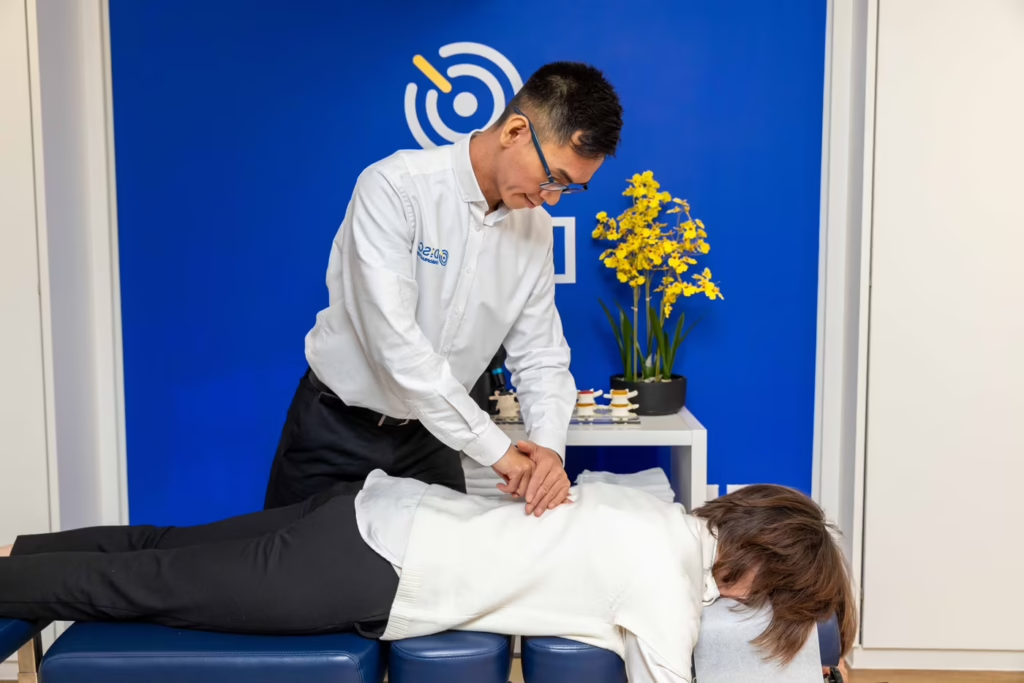
A typical chiropractic appointment assesses posture, spinal alignment, and joint mobility. Chiropractors use hands-on methods to improve function, most notably spinal adjustments and precise movements to restore joint motion. They may also use soft tissue therapy, postural retraining, exercise rehabilitation, ergonomic coaching, and individualised lifestyle advice. [20][88]
People commonly visit chiropractors in Surbiton for conditions such as acute or chronic back pain, neck stiffness, sciatica, joint dysfunctions in the shoulders, hips, or knees, tension headaches, migraines, and repetitive strain injuries. Chiropractic care is also frequently sought by athletes or active individuals aiming to optimise performance and prevent injury. [1][73]
Unlike medication-based approaches, chiropractic offers a conservative, drug-free alternative that often can provide significant relief and functional improvement with minimal side effects. Common side effects can include temporary soreness or mild discomfort at the site of the adjustment, but these are usually short-lived. [13][64]
Additionally, chiropractors maintain rigorous safety standards to minimise risks during treatment. Many patients report improvements in pain, mobility, and daily function during the early stages of care, although recovery timelines vary depending on the nature and severity of the condition. Research suggests that a substantial proportion of patients with neck or low back pain experience clinically meaningful improvement within the first six weeks of chiropractic care. [73].
Acute or chronic back pain:
- Neck pain and stiffness
- Sciatica and nerve impingement
- Headaches and migraines
- Postural syndromes (e.g., desk work strain)
- Joint and mobility issues (e.g., shoulder, hip, knee)
- Sports injuries and repetitive strain conditions
[1][65][77]
Chiropractic care is well-suited for individuals seeking rapid recovery through non-invasive, medication-free interventions. Chiropractors prioritise lasting relief by restoring function, rather than simply masking pain, and assess progress through improvements in mobility and quality of life. [88][89]

Distinguishing Chiropractors from Osteopaths
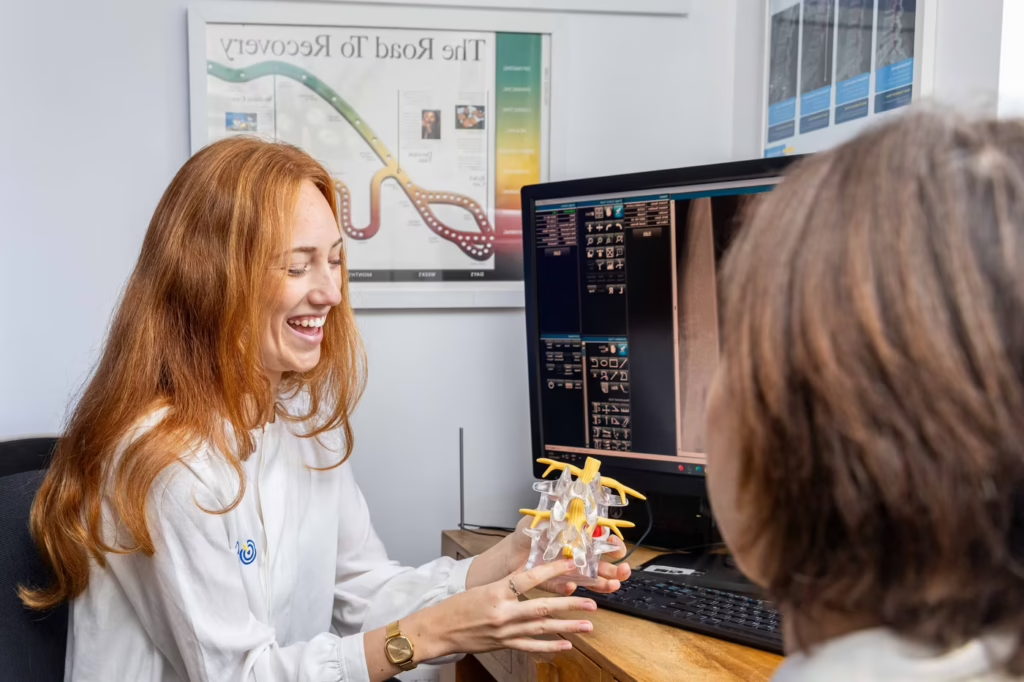
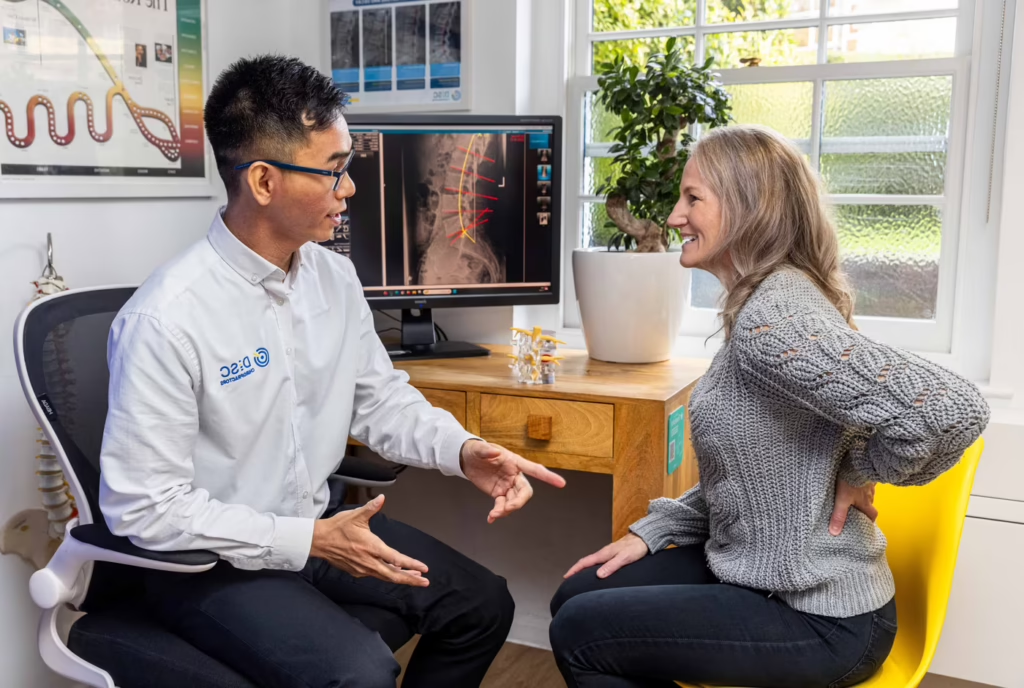
One key area where the distinction between chiropractors and osteopaths becomes especially clear is their approach to diagnostics, particularly in imaging. Chiropractors in many countries, including the UK, are trained and licensed to take and interpret X-rays as part of their diagnostic process. This capability aligns with chiropractic’s structural and biomechanical philosophy, allowing practitioners to assess spinal structure, joint degeneration, postural adaptations, or possible disc-related pathology more precisely. The ability to visualise the spine can help tailor treatment plans and reinforce the biomechanical focus that underpins much of modern chiropractic care. [20, 79]
Osteopaths, by contrast, typically do not use in-house imaging as part of routine practice. Their approach leans more heavily toward palpation, observation, movement assessment, and patient history as primary diagnostic tools. While osteopaths can refer for imaging when clinically necessary, it is generally less central to their treatment model. This diagnostic divergence also reflects how the two professions have historically evolved: chiropractic traditionally places greater emphasis on spinal biomechanics and segmental joint function, while osteopathy approaches the body more holistically, emphasising movement, balance, and whole-body function. [119, 123]
Both chiropractors and osteopaths use hands-on techniques to restore function and relieve discomfort, but their approaches differ in emphasis. Chiropractors focus strongly on the relationship between the spine, joint mechanics, and the nervous system, aiming to restore mobility, improve movement quality, and influence neuromuscular function through targeted manual techniques. Modern chiropractic care also increasingly incorporates rehabilitation, movement retraining, exercise therapy, and broader musculoskeletal management alongside spinal manipulation. [15, 102, 103]
Osteopaths, on the other hand, tend to take a broader whole-body view of physical function. Rather than focusing primarily on the spine, osteopathy traditionally emphasises the interaction between posture, movement, circulation, connective tissues, and the body’s self-regulatory mechanisms. The belief is that restrictions or imbalances in one area of the body may contribute to dysfunction elsewhere, thereby encouraging a more integrated approach to assessment and treatment. [119, 123]
When it comes to technique, chiropractors often employ high-velocity, low-amplitude spinal adjustments, those classic, precise movements often accompanied by an audible ‘pop’, as well as targeted joint manipulation, exercise-based rehabilitation, spinal decompression, and adjunctive therapies such as dry needling or soft-tissue therapy. These methods are typically structured, goal-oriented, and based around measurable improvements in mobility, pain, and physical function. [69, 88]
In contrast, osteopaths frequently use gentler, rhythmic techniques such as soft-tissue stretching, joint articulation, and cranial osteopathy. Their sessions may feel more fluid and exploratory, adapting continuously to tissue tension, movement quality, and whole-body presentation, rather than repeatedly focusing on a single restricted spinal segment. Treatment often involves slower or sustained techniques intended to improve comfort, reduce tension, and support overall physical function. [123][124]
The difference is also evident in how care is planned and delivered. Chiropractic care often follows a phased structure, beginning with symptom relief before progressing into rehabilitation, movement correction, and longer-term maintenance strategies based on objective findings such as mobility testing, neurological assessment, posture evaluation, or functional capacity. Osteopathic treatment, by contrast, is often paced more intuitively, with sessions spaced according to how the patient responds and integrates treatment over time. [87, 88, 89]
These distinctions do not suggest that one approach is inherently superior; rather, each is suited to different needs, preferences, and clinical presentations. Some patients benefit from integrating both disciplines at different stages of recovery. At DISC Surbiton, chiropractors and osteopaths have worked collaboratively under the same roof, often referring patients to one another when a specific condition, treatment preference, or clinical presentation would be better suited to the other discipline. This cross-referral approach reflects a patient-centred philosophy focused on achieving the best possible outcome for the individual. [88, 89]
Through its various evolutions over the past 20 years, The DISC Chiropractor in Surbiton has employed both osteopaths and chiropractors within its unique setup and has ultimately concluded that it is not the qualification alone that defines the clinician, but rather the personality, curiosity, communication, and drive to become exceptional at their craft; everything else can be learned.
Evaluating Osteopathy
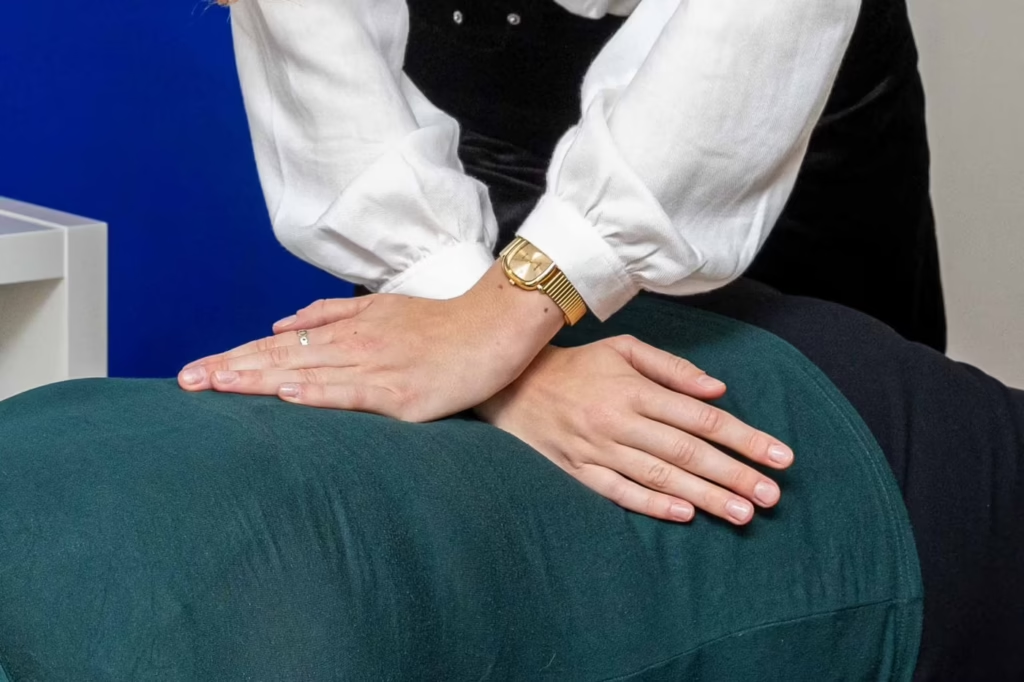
Osteopathy offers a distinctive whole-body approach to healthcare, emphasising the interconnectedness of the body’s systems and its natural capacity for adaptation and recovery. Rather than focusing solely on isolated symptoms, osteopathy traditionally considers how musculoskeletal function, posture, movement patterns, connective tissues, and broader physical balance may interact and influence one another. This holistic perspective often appeals to patients seeking gentler, more systemic forms of manual therapy or those experiencing complex, multifactorial symptoms. [119, 123]
One of the hallmark strengths of osteopathic care is its adaptability. Osteopaths tailor treatment to each individual’s needs, often utilising slower, rhythmic techniques intended to support relaxation, reduce tension, and improve movement quality throughout the body. The focus is not solely on pain relief, but also on improving comfort, mobility, physical function, and overall well-being. [123][124]
For many patients, this whole-body approach can feel particularly supportive during periods of stress, fatigue, postural strain, pregnancy-related discomfort, or chronic tension. Osteopathic treatment is often chosen by individuals who prefer gentler manual techniques or who feel their symptoms involve multiple interconnected areas rather than one clearly isolated mechanical issue. [57, 124]
Osteopathy may also be well suited to sensitive or more systemic presentations. For example, expectant mothers experiencing pelvic discomfort during pregnancy, individuals with chronic muscular tension, or patients who feel overwhelmed by more forceful manual approaches may prefer osteopathic treatment styles. The profession traditionally focuses on supporting healthy movement, balance, and overall physical function rather than concentrating solely on structural correction or isolated joint mechanics. [57, 119]
Ultimately, osteopathy tends to resonate most strongly with patients seeking a gentler, more holistic, and whole-person style of care. Its emphasis on adaptability, tissue balance, movement quality, and patient comfort can make it particularly appealing in chronic, complex, or more subtle presentations, where a slower, more integrated treatment style is preferred. [123][124]
Distinguishing Chiropractors from Osteopaths
One key area where the distinction between chiropractors and osteopaths becomes especially clear is their approach to diagnostics, particularly in imaging. Chiropractors in many countries, including the UK, are trained and licensed to take and interpret X-rays as part of their diagnostic process. This capability aligns with chiropractic’s structural and biomechanical philosophy, allowing practitioners to assess spinal structure, joint degeneration, postural adaptations, or possible disc-related pathology more precisely. The ability to visualise the spine can help tailor treatment plans and reinforce the biomechanical focus that underpins much of modern chiropractic care. [20, 79]
Osteopaths, by contrast, typically do not use in-house imaging as part of routine practice. Their approach leans more heavily toward palpation, observation, movement assessment, and patient history as primary diagnostic tools. While osteopaths can refer for imaging when clinically necessary, it is generally less central to their treatment model. This diagnostic divergence also reflects how the two professions have historically evolved: chiropractic traditionally places greater emphasis on spinal biomechanics and segmental joint function, while osteopathy approaches the body more holistically, emphasising movement, balance, and whole-body function. [119, 123]
Both chiropractors and osteopaths use hands-on techniques to restore function and relieve discomfort, but their approaches differ in emphasis. Chiropractors focus strongly on the relationship between the spine, joint mechanics, and the nervous system, aiming to restore mobility, improve movement quality, and influence neuromuscular function through targeted manual techniques. Modern chiropractic care also increasingly incorporates rehabilitation, movement retraining, exercise therapy, and broader musculoskeletal management alongside spinal manipulation. [15, 102, 103]
Osteopaths, on the other hand, tend to take a broader whole-body view of physical function. Rather than focusing primarily on the spine, osteopathy traditionally emphasises the interaction between posture, movement, circulation, connective tissues, and the body’s self-regulatory mechanisms. The belief is that restrictions or imbalances in one area of the body may contribute to dysfunction elsewhere, thereby encouraging a more integrated approach to assessment and treatment. [119, 123]
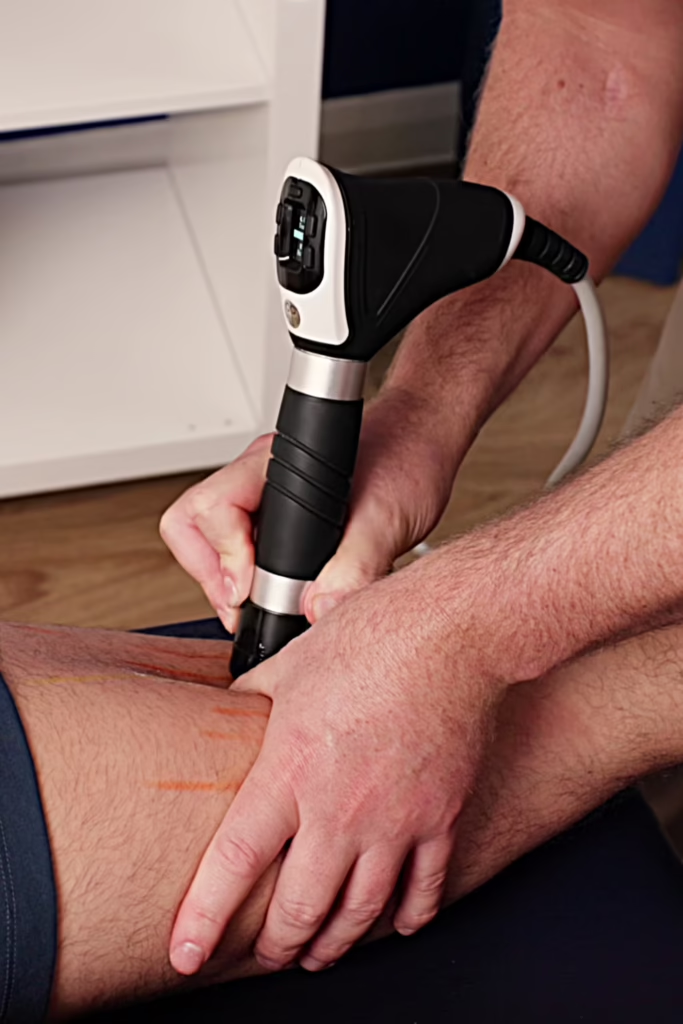
When it comes to technique, chiropractors often employ high-velocity, low-amplitude spinal adjustments, those classic, precise movements often accompanied by an audible ‘pop’, as well as targeted joint manipulation, exercise-based rehabilitation, spinal decompression, and adjunctive therapies such as dry needling or soft-tissue therapy. These methods are typically structured, goal-oriented, and based around measurable improvements in mobility, pain, and physical function. [69, 88]
In contrast, osteopaths frequently use gentler, rhythmic techniques such as soft-tissue stretching, joint articulation, and cranial osteopathy. Their sessions may feel more fluid and exploratory, adapting continuously to tissue tension, movement quality, and whole-body presentation, rather than repeatedly focusing on a single restricted spinal segment. Treatment often involves slower or sustained techniques intended to improve comfort, reduce tension, and support overall physical function. [123][124]
The difference is also evident in how care is planned and delivered. Chiropractic care often follows a phased structure, beginning with symptom relief before progressing into rehabilitation, movement correction, and longer-term maintenance strategies based on objective findings such as mobility testing, neurological assessment, posture evaluation, or functional capacity. Osteopathic treatment, by contrast, is often paced more intuitively, with sessions spaced according to how the patient responds and integrates treatment over time. [87, 88, 89]
These distinctions do not suggest that one approach is inherently superior; rather, each is suited to different needs, preferences, and clinical presentations. Some patients benefit from integrating both disciplines at different stages of recovery. At DISC Surbiton, chiropractors and osteopaths have worked collaboratively under the same roof, often referring patients to one another when a specific condition, treatment preference, or clinical presentation would be better suited to the other discipline. This cross-referral approach reflects a patient-centred philosophy focused on achieving the best possible outcome for the individual. [88, 89]
Through its various evolutions over the past 20 years, The DISC Chiropractor in Surbiton has employed both osteopaths and chiropractors within its unique setup and has ultimately concluded that it is not the qualification alone that defines the clinician, but rather the personality, curiosity, communication, and drive to become exceptional at their craft; everything else can be learned.
Making a Choice: Chiropractor or Osteopath
Deciding between a local Surbiton chiropractor and an osteopath depends on several factors, including the nature of your symptoms, your treatment goals, and your personal preferences regarding therapeutic style. If you’re dealing with back or neck pain, disc-related issues, sciatica, or more clearly mechanical musculoskeletal problems, chiropractic care may offer a more structured and targeted approach, particularly through spinal manipulation, rehabilitation, movement correction, and functional recovery strategies. Good chiropractors often follow measurable treatment plans that emphasise progression, posture, mobility, and long-term physical function. [1, 73, 88]
On the other hand, if your concerns involve more generalised body tension, broader movement discomfort, pregnancy-related strain, or simply a preference for gentler, full-body manual therapy, osteopathy may feel like a better fit. Osteopathy is traditionally known for its holistic treatment philosophy, with many patients valuing its slower, more integrated, and whole-body approach to physical function and recovery. Patients who prefer a more subtle and adaptive treatment style often resonate with osteopathy’s rhythm and philosophy. [57, 119, 124]
It’s important to research your options thoroughly before making a decision. Check that any practitioner you consider is fully qualified and registered; chiropractors with the General Chiropractic Council (GCC), and osteopaths with the General Osteopathic Council (GOsC). Reviewing the literature, asking about clinical experience, and discussing treatment approaches during an initial consultation can help you determine which style of care best suits your condition, goals, and comfort level. [12, 119]
Pricing can vary depending on the practitioner’s experience and clinic location, but sessions typically range from £50 to £120 privately. Some private insurance plans may contribute toward treatment costs, although NHS availability for both professions remains limited in most areas. Ultimately, what matters most is not the professional title itself, but the practitioner’s communication, clinical reasoning, skill set, and how well their approach aligns with your personal health goals and preferences.
Conclusion
Chiropractors and osteopaths in Surbiton both offer valuable, non-invasive approaches for managing a broad range of musculoskeletal conditions. While their philosophies, diagnostic styles, and treatment methods differ, both professions aim to improve mobility, reduce discomfort, and support better physical function through conservative, hands-on care. [88, 119]
Ultimately, the most appropriate choice depends not only on your symptoms but also on your preferences, goals, comfort level, and the quality of care provided. Some patients prefer the more structured, rehabilitation-focused approach commonly associated with chiropractic care, while others may feel more aligned with the gentler, whole-body philosophy often seen in osteopathy. In many cases, the most important factor is selecting a skilled practitioner who communicates clearly, performs thorough assessments, and tailors care appropriately to the individual. [89, 119]
At The DISC Chiropractor in Surbiton, we specialise in evidence-informed chiropractic care focused on restoring movement, improving function, and supporting long-term recovery through structured rehabilitation and personalised treatment strategies.
Need help deciding what’s right for you? Please feel free to book a consultation; we’ll help you navigate your options clearly and confidently. Our consultations are obligation-free and focused entirely on understanding your symptoms, goals, and the most appropriate pathway forward.