
Chiropractic Treatment for Sciatica: Finding What Is Actually Irritating the Nerve
Most people arrive here having been given the word rather than an explanation. Sciatica. But seemingly every pain in the back or buttock that runs down the leg gets labelled as sciatica, which sounds like a diagnosis but is not one.
That distinction is that sciatica describes a symptom pattern. It does not tell you what is producing it, and until you know that you cannot sensibly decide what to do about it.
A herniated disc, a narrowed nerve exit, an irritable joint referring pain into the leg, and a deep gluteal problem all commonly get labelled sciatica. They don’t respond to the same treatment, and some improve with certain exercises while others get worse.
For our purposes, true sciatica is genuine nerve root pain; what is irritating that nerve, and whether that changes what should happen next. What follows draws on twenty-two years of treating disc and nerve presentations, as well as published research. Where the two disagree, we say so.
Not sure what to do next?
It all starts with an assessment
Wanting more information?
Is the pain in your leg actually sciatica?
True sciatica is pain generated by irritation or compression of a lumbar nerve root, most often L5 or S1, felt along the territory that nerve supplies.
It has a recognisable behaviour. The leg pain is often worse than the back pain. The pain travels below the knee, often into the calf, ankle or foot, and follows a circumscribed band rather than spreading vaguely. It tends to be sharp, electric or burning rather than aching, often with pins and needles, numbness or a patch of skin that feels dulled. Coughing or sneezing can send a jolt down the leg, and early movement aggravates.
Not everything that hurts down a leg does this. Pain that stops at the buttock or back of the thigh, aches rather than shoots, and has no defined edge or pins-and-needles sensation is more likely referred pain from a joint or disc. It is extremely common; it is routinely called sciatica, and it is a different problem.
The word is used loosely, and the research shows how loosely. Prevalence estimates range from under 2 per cent to over 40 per cent, because studies define the term differently [1]. If the literature cannot agree on what counts, a five-minute Google of symptoms is unlikely to have settled it for you.
What is causing your sciatica?
Disc herniation is the most common cause by a wide margin, usually quoted at around 90 per cent of true radicular sciatica [2], though that comes from specialist populations using strict definitions. Disc material displaces backwards, contacts the root, and produces mechanical pressure alongside a chemical inflammatory response. The inflammation matters at least as much as the pressure, which is why a small herniation can hurt a great deal and a large one sometimes causes very little. Our slipped disc page covers the disc itself.
Narrowing of the nerve exit reaches the same place more slowly. Where the foramen has closed through disc height loss and joint enlargement, the root is crowded rather than pushed. It arrives gradually, is more common with age, and often behaves opposite to a disc: worse standing and walking, better sitting or leaning forward. Our spinal stenosis page explains that pattern.
Additionally, longstanding degenerative changes or a small forward slip of one vertebra on another can both reduce available space, though neither is automatically the cause just because it appears on a report. Our degenerative disc disease page explains why you should match degenerative findings to symptoms rather than treat them simply because they appear on a scan.
What could be mistaken for sciatica?
Separating these is where most of the value in an assessment sits.
Referred pain from the lumbar discs, sacroiliac joints, hips, or facet joints is the most common impostor. Deep structures in the low back have a poor sense of their own location, so pain from them is felt in the buttock and thigh with no clear boundary. It rarely passes cleanly past the knee and rarely produces true numbness. Our leg referred pain page explains that mechanism.
Deep gluteal and piriformis dysfunction presents as irritation of the sciatic nerve in the buttock rather than at the spinal root. The pain sits deep in the buttock, is provoked by sitting on it or by direct pressure and comes without the back signs a disc would produce. Piriformis is also overdiagnosed, which we cover on our piriformis syndrome page.
Of course, all of these could be in play alongside radicular nerve root irritation, which is one reason a presentation that has not responded should be reassessed rather than repeated. Finding a specialist clinic in chronic or complex pain might also be prudent.
Not sure what to do next?
It all starts with an assessment
Wanting more information?
When does sciatica need urgent assessment?
Most sciatica is painful rather than dangerous, and that is worth saying plainly. Severe pain on its own, even pain that stops you from sleeping, is not an emergency. What escalates that is progressive neurological change, not increased pain.
Go to A&E the same day if you develop difficulty passing urine or lose the normal sensation of needing to, lose bladder or bowel control, notice numbness around the back passage, genitals or inner thighs, or find symptoms have spread to affect both legs together. That combination can indicate cauda equina syndrome, which is uncommon but needs assessing immediately rather than treating. For a full list of symptoms that require urgent assessment, see the NHS guidance on sciatica and emergency warning signs
A leg that feels weak due to severe pain is common and usually settles. A leg that is measurably losing strength is different, and it is one of the few situations where the timing of assessment genuinely affects the outcome.
Will my sciatica ever settle on its own?
Sciatica has two quite different trajectories. Often, many episodes settle surprisingly quickly. The BMJ review of the diagnosis and treatment of sciatica reports that around half of acute cases improve within ten days and around three-quarters within four weeks. That early group is important: sciatica that resolves quickly behaves very differently from symptoms that have persisted long enough to become established.
Once sciatica persists, the prognosis looks rather different. In the UK ATLAS primary-care study of sciatica prognosis, only 55 per cent of patients clinically diagnosed with sciatica had achieved a meaningful improvement in disability at twelve months, leaving around 45 per cent who had not. Longer duration of leg pain was itself associated with a poorer prognosis.
This is why quoting an average recovery time for sciatica can be misleading. It combines a large group whose symptoms settle quickly with a substantial group whose symptoms become persistent or recurrent. The average falls somewhere between them, describing neither particularly well. Clinically, the more useful question is which trajectory yours is following.
When a disc herniation is the cause, the structural prognosis can be remarkably good. Across imaging studies, around two-thirds of herniations can reduce or disappear with the right environment, and larger fragments are more likely to regress. The material that alarms people most on a scan is often the material the body clears most reliably.
Should you stretch or exercise with sciatica?
This is the most-searched question about sciatica and the one most often answered poorly.
The right exercise depends on the diagnosis, and generic sciatica routines ignore that. Loading one diagnosis in the direction that suits another can readily make things worse, which is why so many people arrive having tried a programme from the internet and end up worse than when they started.
One specific point about stretching explains a great deal.
An irritated nerve root does not generally respond well to sustained tension. That is part of the principle behind the straight-leg raise used to examine lumbar radiculopathy. Raising the straight leg progressively loads the sciatic nerve and its roots, and reproduction of familiar leg symptoms contributes to the clinical picture. Many common hamstring stretches reproduce much of that same neural tension. A seated piriformis stretch can do something similar. Someone with genuine nerve root irritation who has been told repeatedly to stretch their hamstring may therefore be repeatedly tensioning the very structure that is already irritable.
This leads to an observation we use constantly, and we’d rather state it as an observation than dress it up as established evidence. If repeated hamstring or piriformis stretching consistently produces clear and lasting relief, we would question whether the symptoms are caused by an irritated nerve root. It proves nothing alone.
There is also an important distinction between holding a nerve under tension and moving it: research comparing neural sliding and tensioning techniques shows that sliders can produce substantially more nerve excursion with much less increase in strain. There are, therefore, presentations in which careful neural mobilisation is entirely appropriate. But sustained relief from stretching can point us towards muscular restriction or referred pain rather than true radicular pain, and that is a clue worth having.
None of which means do not move. Prolonged rest is generally unhelpful. A systematic review comparing structured exercise with advice to stay active in sciatica found a small short-term advantage for exercise in leg pain, but no meaningful difference between the approaches for disability in the short term or for pain and disability over the longer term. What matters is choosing movement after you understand what is producing the symptoms, not before.
Our Sciatica Guide explores these differences in more detail.
Can a chiropractor help with sciatica?
Yes. Chiropractic care is more than just a technique or a single adjustment, and traditional chiropractic manipulation can be very effective for appropriately selected cases of sciatica, especially when treatment targets the actual source of nerve irritation. The underlying diagnosis of the sciatica remains key, and the acute or severe nature of the injury also shapes decision-making.
Chiropractic care can influence the mechanical situation around that irritated nerve. Spinal segments may have stiffened, altering how load is distributed across the area. Hips can lose movement, leaving the lower back to do more with every step. Protective guarding that was useful during the acute stage can persist, while weeks or months of avoiding sitting, standing and walking can gradually reduce tolerance for all three.
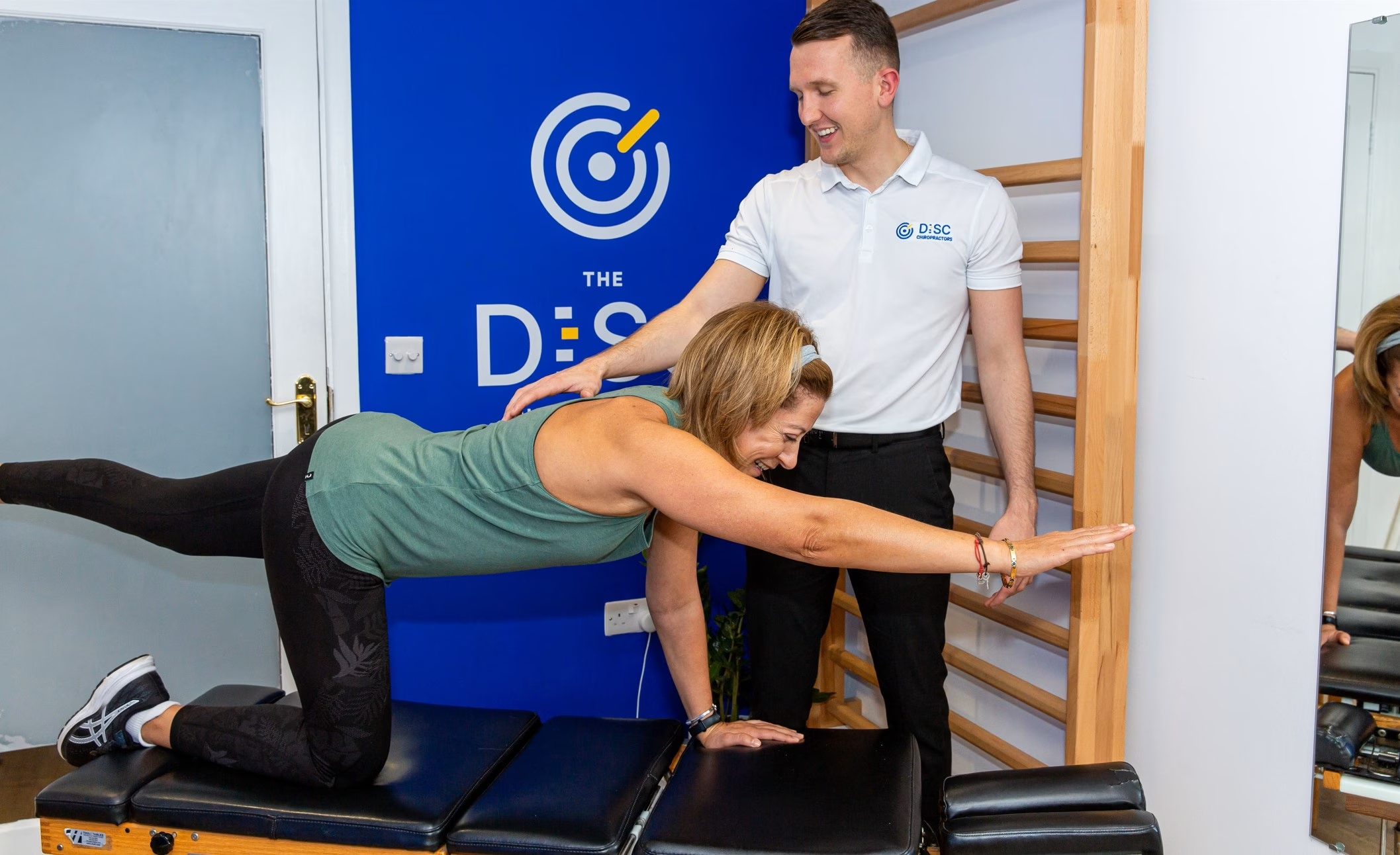
In a disc-driven presentation, treatment may initially focus on reducing mechanical irritation and unloading the affected segment while natural healing and resorption take place. With spinal stenosis or another cause of nerve irritation, the strategy can differ. As symptoms settle, the emphasis shifts towards restoring movement and progressively rebuilding the activities that have been lost.
Research supports manipulation in appropriately selected cases. A randomised double-blind trial of acute sciatica with disc protrusion found more pain-free days and lower pain scores with active spinal manipulation than simulated treatment [8]. In another randomised study comparing spinal manipulation with microdiscectomy, patients who had already failed medical management improved with both approaches [9]. NICE guidance for low back pain and sciatica also includes manual therapy as an option within a treatment package that includes exercise [10].
For us, chiropractic treatment for sciatica is not one technique. It is identifying the cause, choosing treatment appropriate to that presentation, restoring movement and rebuilding capacity.
Not sure what to do next?
It all starts with an assessment
Wanting more information?
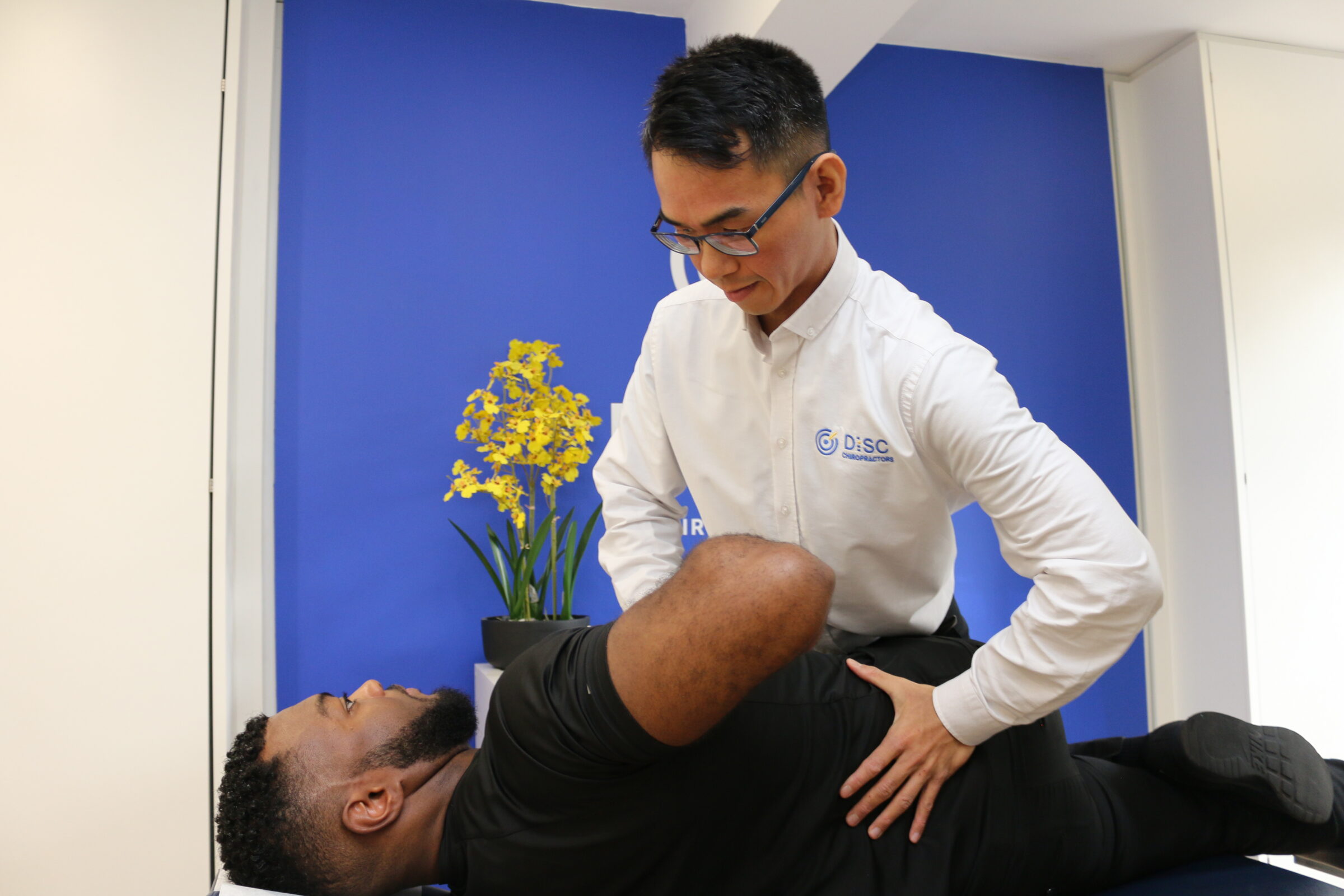
Can chiropractic make sciatica worse?
It can. That is why knowing when not to adjust is as important as knowing how to.
An acutely irritable disc-driven radiculopathy may respond badly to just about anything; sneezing or coughing are often reported hazardous enterprises with sciatica. But rotational treatment, like what chiropractors and osteopaths commonly use for generic back pain, is a particular risk factor, especially early in the presentation.
That is not a criticism of manipulation, which can be a very useful tool in the right case. It is a question of matching the treatment to what is in front of you. A stiff, robust lower back with referred thigh pain and a highly irritable L5 nerve root three weeks into a large disc extrusion are not the same clinical problem, however similar the leg pain might sound.
Four things largely determine our approach: the diagnosis, how irritable the presentation is, the neurological picture and whether any imaging actually matches what we find clinically.
Symptoms that flare with very small provocations and take hours to settle usually need a gentler approach, often beginning with unloading rather than immediately trying to restore movement. Symptoms that appear only towards end range and settle quickly may tolerate considerably more.
Stable altered sensation is also very different from progressing weakness. If neurological function is deteriorating, that changes the pathway, not just the technique.
MRI wording doesn’t make that decision for us either. A report describing a disc as “severe” does not automatically mean hands off, just as “mild” does not automatically make treatment safe. Imaging must be interpreted alongside the examination and how the symptoms are behaving; it would be remiss of a clinician not to at least factor this into their thinking.
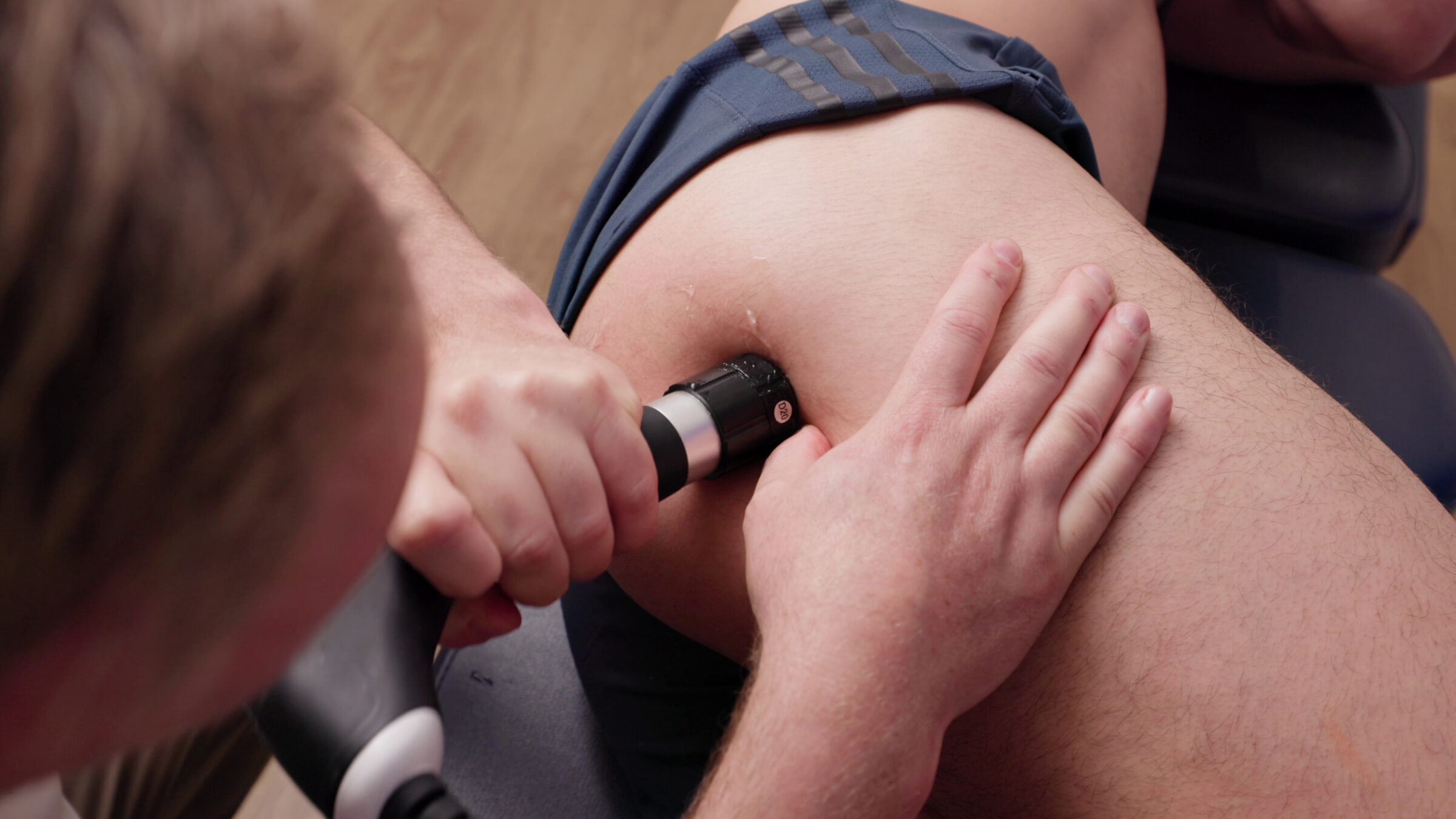
But chiropractic is not just a single adjustment technique; it’s a philosophy for recovery. When rotational manipulation is not appropriate, we can use gentler approaches, including instrument-assisted adjustment, mobilisation, drop table adjustment, and more advanced technologies such as spinal decompression therapy and class IV laser.
Most importantly, a presentation that is deteriorating under treatment needs reassessment, not the same treatment repeated. If the response is not what we expected, we have to reconsider the diagnosis, treatment choice, or need for further investigation.
Do you need an MRI for sciatica?
Not usually, at least not at first.
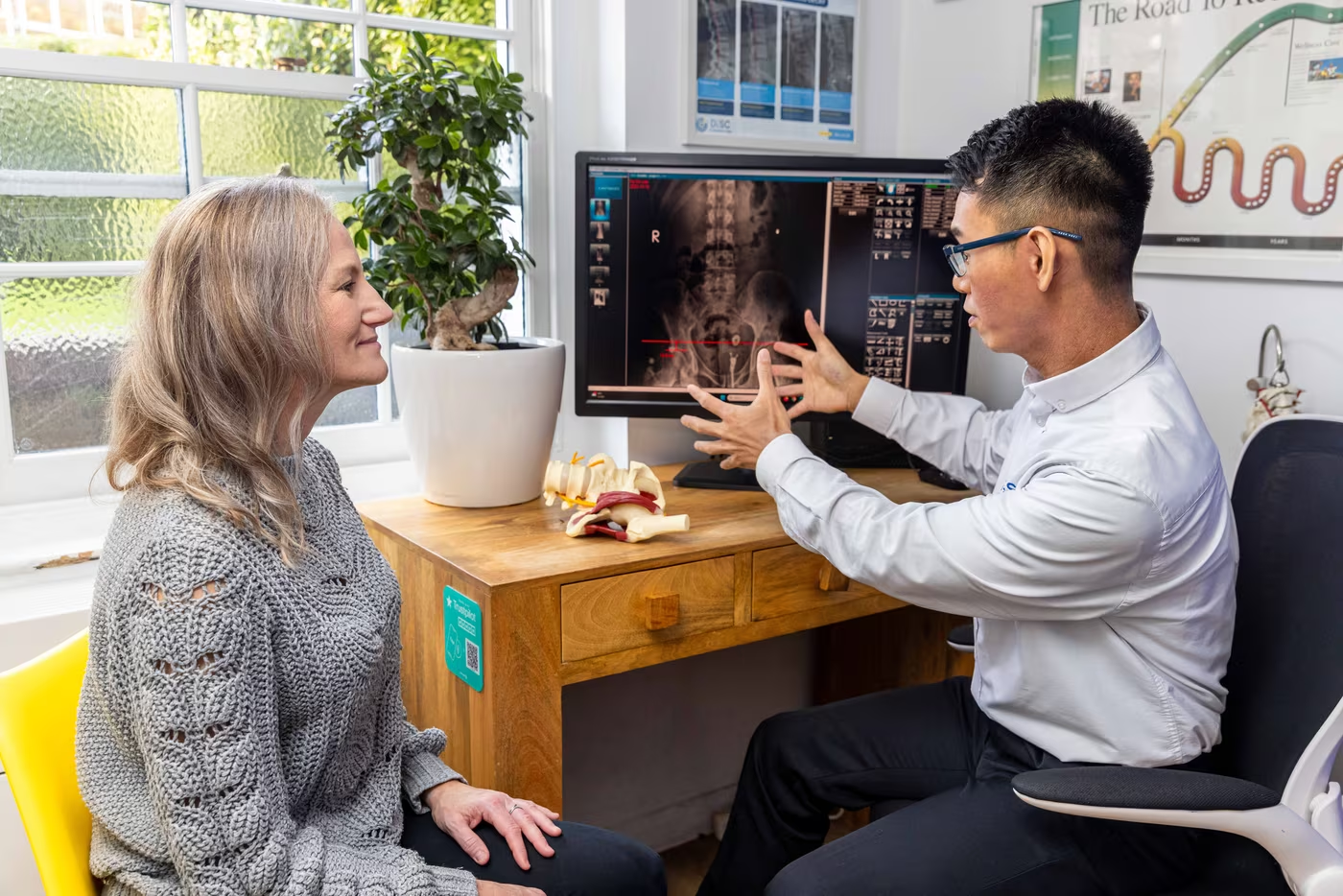
NICE guidance for low back pain and sciatica does not recommend routine imaging in a non-specialist setting. One reason is that MRI findings are extremely common in people without pain. In the Brinjikji review of asymptomatic spinal imaging, disc bulges were present in around 30 per cent of pain-free 20-year-olds and 84 per cent of pain-free 80-year-olds.
But that is only half the story. In a companion review comparing symptomatic and asymptomatic individuals, disc protrusions, extrusions, and other degenerative findings were significantly more common in symptomatic individuals. The point is not that MRI findings do not matter. The scan has to match the patient.
For sciatica, that means asking whether the abnormality is at the right level, on the right side and capable of explaining the neurological pattern we find on examination. A disc touching the left L5 nerve root is more significant when the patient has left-sided L5 pain, altered sensation, and weakness than when the symptoms are in the other leg.
MRI becomes particularly useful when the answer could change what happens next: significant or progressive neurological loss, symptoms that do not fit the expected pattern, failure to improve with appropriate care, or when an injection or surgical opinion is being considered.
We can arrange a private MRI when warranted, or request imaging back via your GP if it can wait. We typically suggest that this process be done after 2-3 weeks of care, by which time patients are expected to show significant signs of functional or symptomatic improvement.
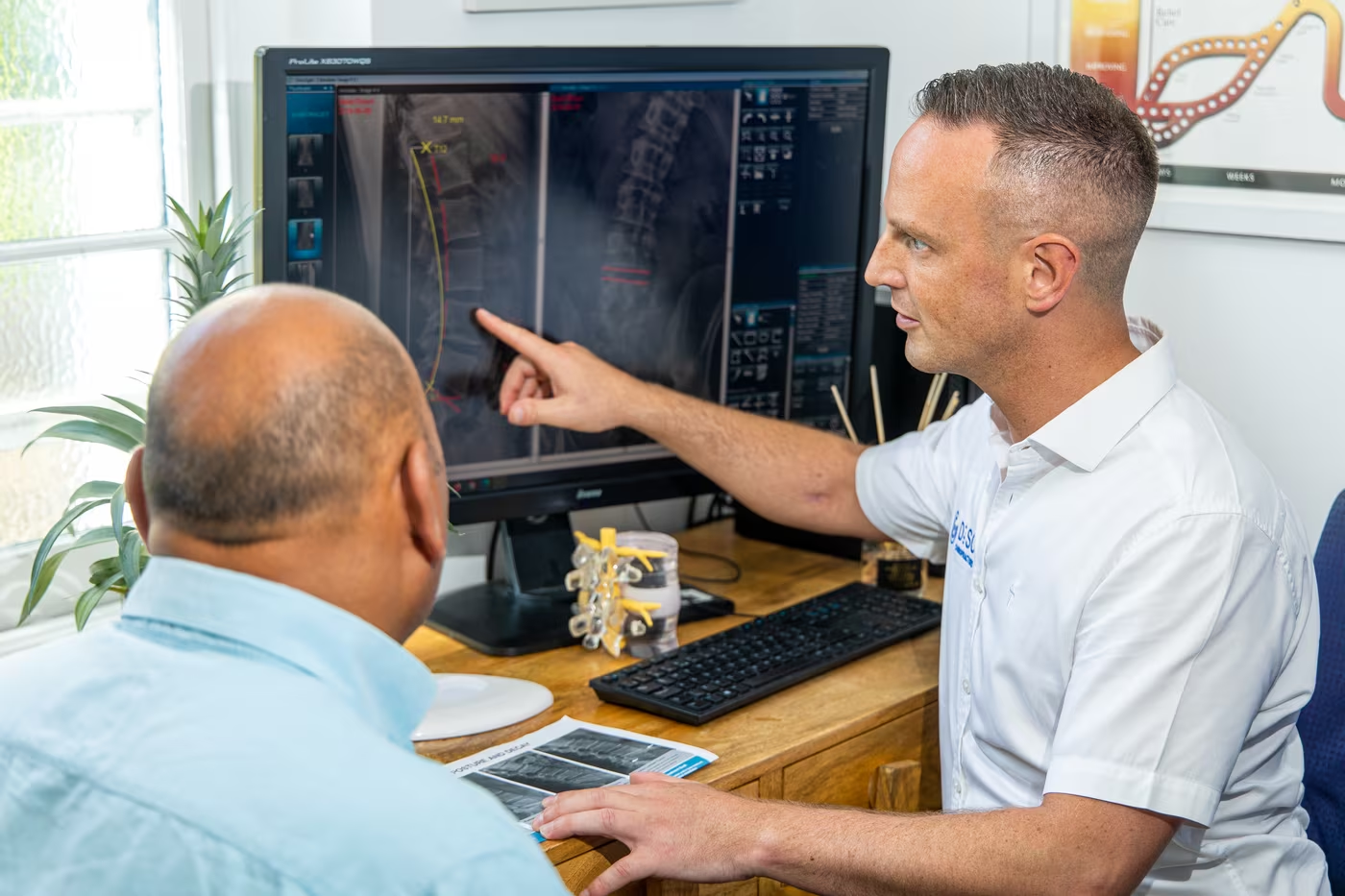
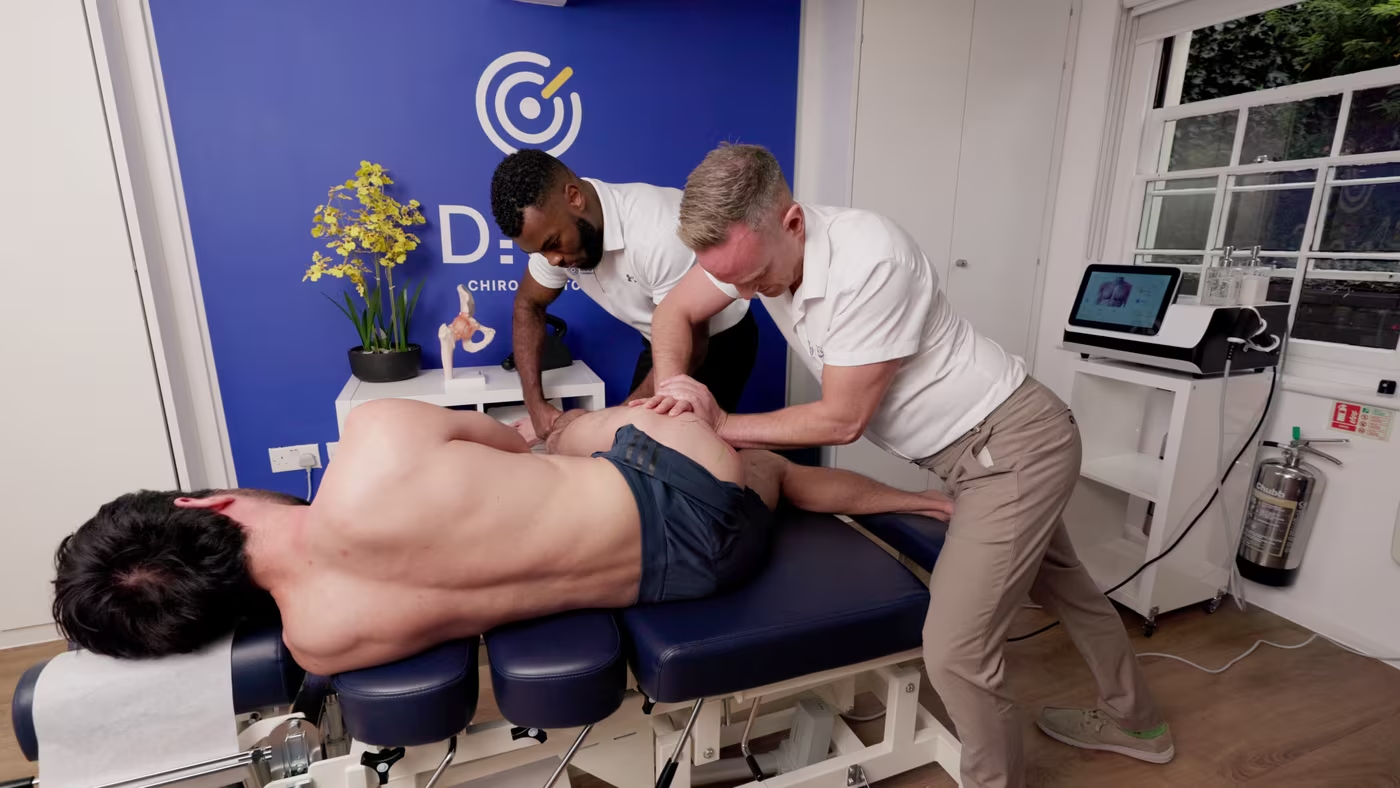
Can Treatment cure your sciatica?
With all musculoskeletal back or leg pain, there is no such thing as a cure, certainly not a permanent, guaranteed, never-to-return cure; it’s not a disease, so it’s wrong to view it through this lens.
The aim is to reduce symptoms by improving overall function, not to make the disc damage magically disappear. It is to reduce what is irritating the nerve, restore how the region moves and loads, and rebuild what you can tolerate, whilst giving the back time for the natural resorption described earlier to do its part.
That usually means a sequence or protocol rather than a technique: settle the irritable structures and reduce the load through them, restore movement where it has been lost, which is as often the hip or mid back as the involved segment, then rebuild sitting, standing and walking tolerance deliberately, because it does not return on its own once the pain has gone.
Where it fits, we often use spinal decompression therapy to unload the affected segment in a controlled and progressively measurable way that manual treatment cannot reproduce. In a disc-driven presentation, this can create a window in which the area tolerates movement and loading without immediately flaring.
Published evidence for stand-alone traction in sciatica remains mixed, so we use it as part of a protocol based on its biomechanical benefits, our clinical experience, and the patient’s response, rather than claiming it is a stand-alone treatment for every case.
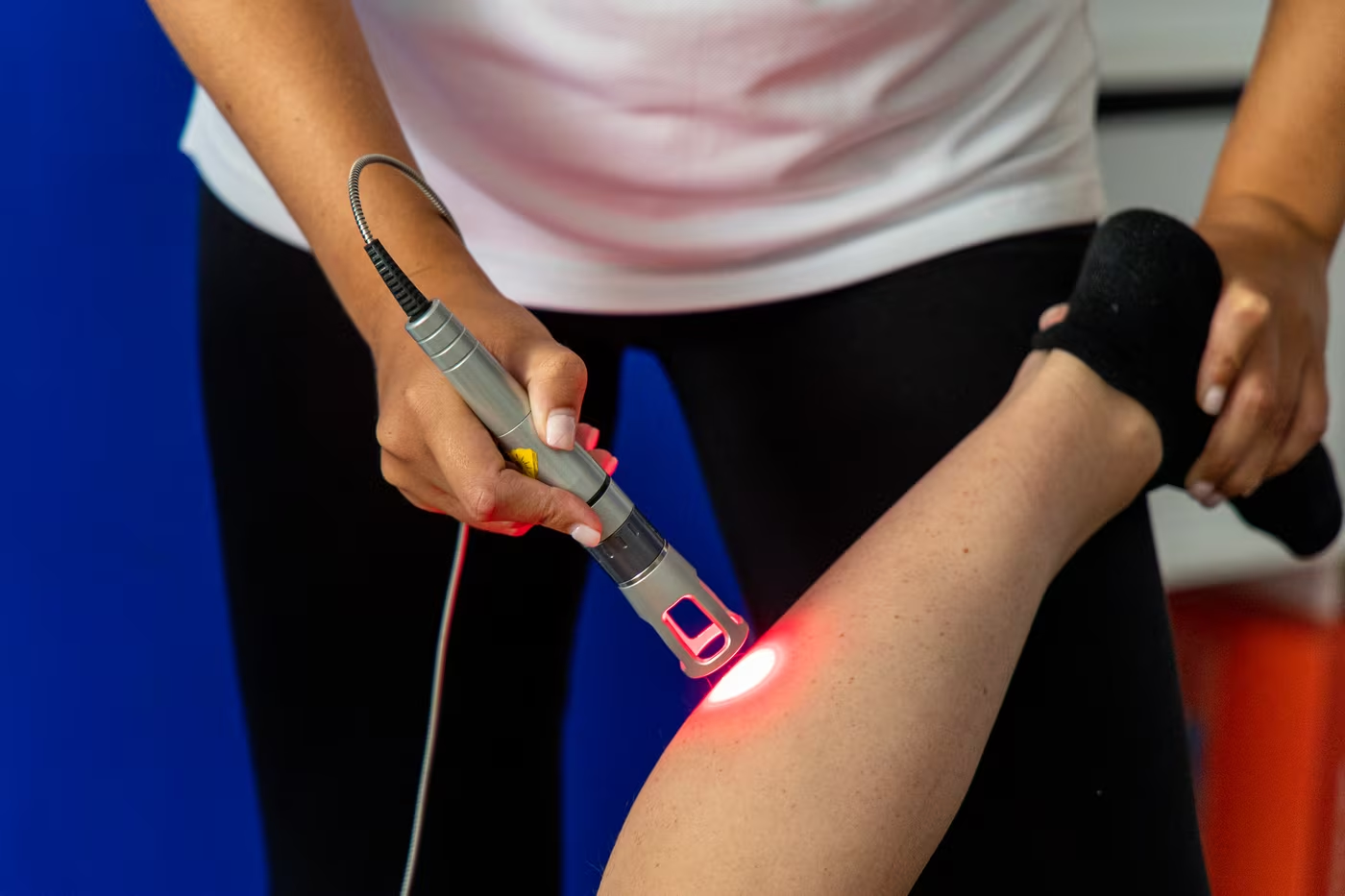
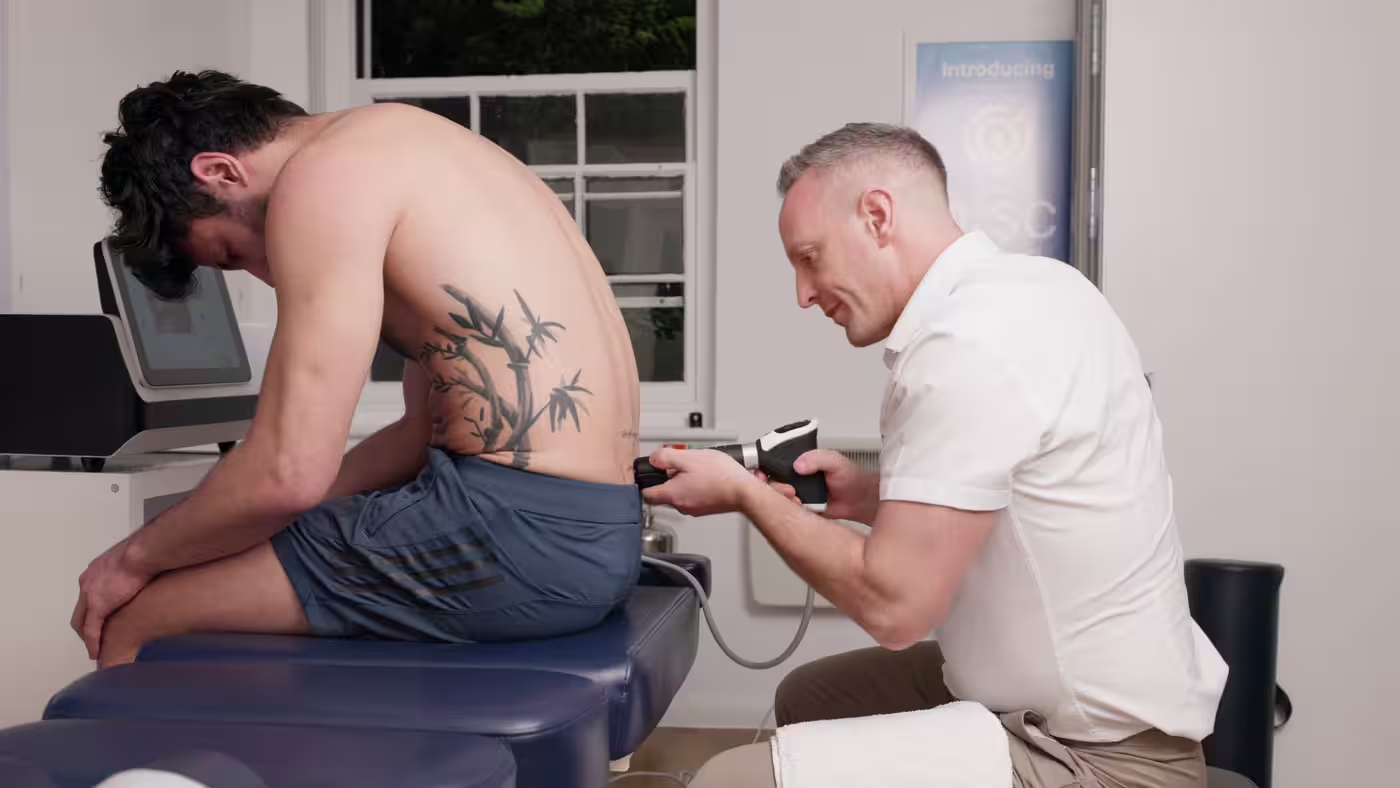
Class IV laser therapy can also be used as an adjunct where pain and tissue irritability are limiting progress, particularly during the earlier stages when getting the area moving and loading comfortably is the immediate objective.
Most people presenting with sciatica do not need the full DISC Protocol, and we will say so at the assessment. A recent, mechanically clear presentation usually needs an explanation it can trust, specific loading advice and a short course of care. If that is your situation and you are considering travelling a distance to us, a good local chiropractor should be able to help, and we would rather tell you.
What if sciatica treatment has already failed?
This is a large part of what we see, and there are five common explanations.
The diagnosis was incomplete or wrong. Referred pain treated as radicular pain, a deep gluteal presentation treated as a disc, or genuine nerve root pain where the level or structure responsible was not correctly identified.
Something else is contributing. A hip that has stopped moving properly, restricted movement elsewhere increasing demand on the lower back, or a loading pattern reproducing the irritation faster than it can settle.
The treatment was reasonable but wrong for the presentation. In our experience, a common example is repeated manual treatment to an irritable segment that first needed unloading and settling. Sometimes more advanced equipment is needed to deliver the therapeutic energy required for healing.
The treatment never progressed. Care may produce early relief but then remain essentially the same. Without progressing towards restoring movement, rebuilding capacity and returning to normal loading, improvement can plateau or symptoms can return.
The case now needs imaging or a specialist opinion. Conservative treatment can sometimes continue beyond the point at which the lack of progress itself becomes a reason to investigate further.
A reassessment is designed to distinguish among these, which is why treatment failure calls for a fresh assessment rather than a longer course of the same treatment.

When injections or surgery become appropriate
Surgery is relevant to only a minority of people with sciatica, because an operation must address something identifiable that it can change. In practice, that most often means disc-related sciatica where herniated material is compressing a nerve, although significant spinal or foraminal stenosis can also have surgical options.
Transient or relatively mild sciatica rarely reaches that threshold, and chronic sciatica does not qualify for surgery simply because it has lasted a long time. An operable structural cause, symptoms significant enough to justify intervention, and a convincing match between the examination and the imaging are needed.
When those conditions are met, surgery can remove the structure compressing the nerve. In the right patient, it can work very well. The comparison with conservative treatment is more nuanced. In the Dutch Sciatica Trial, which compared early surgery with prolonged conservative care, early surgery relieved leg pain faster, but outcomes were similar at one year [13].
Even where a disc herniation appears likely to be responsible, surgery is not normally the first step. In the absence of significant or progressive neurological loss, or another reason for urgent referral, the expected pathway is conservative management. Current NHS England criteria for lumbar discectomy require symptoms to have persisted despite non-operative treatment for at least three months, with MRI demonstrating a disc herniation at the level and side that correspond to the clinical findings.
That conservative period is not simply twelve weeks spent waiting to see what happens. NICE guidance for low back pain and sciatica includes manual therapy as an option within a treatment package alongside exercise, while routine early imaging is discouraged. Injections can be a useful part of this phase of care if conservative treatment is expected to be successful, but the patient is unable to fulfil treatment due to the levels of pain. They can therefore provide a useful bridge through a severe or difficult period, particularly when pain prevents normal activity or rehabilitation, but they are not necessarily a durable solution on their own.
A surgical opinion becomes more appropriate where there is progressive neurological loss, severe pain or functional limitation that is not improving, properly delivered conservative care has failed to produce enough change, and the imaging genuinely corresponds to the clinical picture. Only around 5–10 per cent of patients with a lumbar disc herniation ultimately require surgery, with most managed non-surgically [2].
What to do next
The useful next step is an assessment answering four things. Whether this is genuinely nerve root pain. What is irritating that nerve. What your neurological status is and whether it is stable. And how irritable the presentation currently is.
Those answers decide everything else, including whether you need much from us at all. Some people need an explanation and better loading advice for a few weeks, some a short course of care, some a staged programme aimed at settling an irritable root and rebuilding what they have lost. A few need an opinion sooner than they have been told. Knowing which you are is worth more than any individual treatment.

Written by
Dr David Brown, DC
Clinic Director | The DISC Chiropractors
David has been a practising chiropractor since 2004. He started at the clinic in 2010 as an associate and was promoted to Clinic Director at The DISC Chiropractors in 2015.
He led the drive to specialise in disc injuries after his own unfortunate injury in 2017, culminating in the clinic’s recent rebrand.
He now oversees a team of 7 clinicians, applying his knowledge and experience to treat some of the most challenging Chronic, Complex, and Severe cases.
His authorship of this website aims to combine the latest clinical evidence with the practical experience of being the first dedicated UK chiropractic clinic to specialise in Disc injuries and sciatica.