
10 Smart Questions Before Choosing a Chiropractor in Surbiton

Introduction: Why Ask Questions?
Choosing a Surbiton chiropractor is about more than convenience or location. By asking the right questions, you give yourself a much better chance of finding a chiropractor who genuinely understands your needs, communicates clearly, and builds a plan tailored to your specific situation. Instead of drifting into clinics that take a one-size-fits-all approach or recommend long-term care before fully understanding the problem, asking thoughtful questions helps you find care that aligns with your goals, expectations, and comfort level. Shared decision-making and patient involvement are increasingly recognised as important parts of good healthcare, particularly in long-term musculoskeletal conditions. [4][88]
Imagine Jane, a young professional working in Surbiton with a disc herniation, struggling with persistent pain that affects her work, sleep, and confidence in daily life. She’s wary of choosing the wrong chiropractor, fearing months of delayed recovery, unnecessary treatments, or being pushed into a plan that doesn’t feel right for her situation. This guide will help you ask the most important questions from the start, questions that reveal not just credentials, but also clarity, ethics, communication, and clinical reasoning. Whether you’re managing a complex disc issue, navigating persistent pain, or simply trying to make a more informed decision about your health, these 10 questions can help you look beyond marketing and identify a chiropractor who feels like the right fit for you.
Use this list as a starting point. The questions you ask today often shape the quality, clarity, and confidence of the care you receive tomorrow.
Question 1. Are You Registered with the General Chiropractic Council (GCC), and Where Did You Train?
In the UK, only practitioners registered with the General Chiropractic Council (GCC) can legally use the title “Chiropractor” or “Doctor of Chiropractic.” GCC registration confirms that the practitioner has completed recognised training, met regulatory standards, and remained accountable to professional and ethical requirements. If a provider is not listed on the GCC register, they are not legally permitted to practise as a chiropractor in the UK, which should immediately raise concerns. [12][14]
Asking about your local Surbiton chiropractor’s training also gives insight into the foundation of their clinical approach. Did they attend a GCC-accredited institution in the UK, or train abroad? Did their education include neurological assessment, rehabilitation principles, diagnostic reasoning, and evidence-informed care? While many chiropractors now rely more heavily on modern referral pathways and access to advanced imaging, some continue to develop strong radiographic analysis skills as part of managing more complex spinal conditions. Imaging should never be used unnecessarily, but in appropriate cases, it can meaningfully influence clinical decision-making and treatment planning. [5][83]
While all registered chiropractors meet a minimum professional standard, some pursue further postgraduate qualifications, CPD courses, or additional certifications in areas such as disc injury management, sports rehabilitation, paediatrics, or neurology. Their answer can help you understand whether they rely on a narrow treatment style or have developed a broader, more integrated approach to patient care.
The best chiropractors are usually transparent about their qualifications and comfortable explaining their background, reasoning, and clinical interests. If your local chiropractor hesitates to answer straightforward questions about their training or struggles to explain their approach to patient care, it may be worth exploring other options.

Question 2. What Conditions Do You See Most Often in Your Clinic?
Every chiropractic clinic develops its own clinical culture over time. Some clinics focus heavily on sports injuries; others work mainly with families or postural complaints; while some clinics specialise in more persistent or complex spinal conditions. Asking what conditions a chiropractor sees most often helps you understand whether their day-to-day experience genuinely aligns with your situation.
Disc-related problems may be more common than many people realise, particularly because some patients with mild, fluctuating, or referred symptoms are initially assumed to have simple muscular pain rather than an underlying disc issue. If you’re struggling with severe spasm, sciatica, nerve irritation, or a confirmed disc herniation, you’ll usually want someone who sees these cases regularly rather than occasionally. Treating more complex spinal problems is rarely about applying one generic technique. It often requires pattern recognition, careful assessment, ongoing reassessment, and an understanding of how symptoms evolve over time. MRI research also suggests that disc degeneration and structural changes are more prevalent in symptomatic populations than in asymptomatic controls, reinforcing the importance of clinical interpretation over assumptions alone. [121][134]
This question can also help you spot vague or evasive answers. If a chiropractor says they “treat everything” or relies heavily on broad phrases like “wellness” or “alignment” without explaining how they assess different conditions, ask for clarification. A more experienced clinician should usually be able to describe the common patterns they see, the types of patients they work with most often, and how their treatment approach changes depending on the presentation.
Ultimately, the goal is to find someone whose expertise is fluent in your problem, understands the condition, communicates clearly, and can explain not just what they do but why they do it. The right chiropractor won’t simply claim they can help; they’ll help you understand how they approach cases like yours and whether their clinic is genuinely equipped to support your recovery.
Question 3: Do You Have Experience with My Specific Condition or Symptoms?
Even if your local Surbiton chiropractor sees a wide range of patients, their hands-on experience with your specific type of problem still matters. A practitioner who regularly manages disc herniations, sciatica, nerve irritation, or persistent spinal pain is more likely to understand how symptoms behave, what aggravates them, and how treatment often needs to be progressed safely over time.
A chiropractor who regularly manages disc herniations, for example, should have a deeper understanding of nerve sensitivity, mechanical loading, symptom behaviour, and safe treatment progressions than someone whose main focus is sports performance, paediatrics, or general wellness. Research on disc-related low back pain shows why clinical interpretation matters: disc findings can be present without symptoms, but disc degeneration and related MRI findings are also more common in people with low back pain than in pain-free controls. That means the answer is not “ignore the scan” or “panic about the scan,” it is to interpret symptoms, examination findings, and imaging together like an adult, a concept the internet continues to treat as witchcraft. [133][134]
Don’t be afraid to describe your symptoms in detail and ask how they would typically approach such a presentation. Listen closely to their language. Are they giving thoughtful answers based on diagnostic patterns, symptom behaviour, and clinical reasoning? Or are they waving away the details with a smile and defaulting to broad promises like “we’ll realign your spine and the body will heal itself”?
This question also helps identify chiropractors who offer a genuinely personalised plan rather than a single protocol for every patient. Ask whether they’ve seen your condition before, what techniques or technologies may be suitable, how long recovery typically takes, and what challenges are common along the way. Their answers should show whether their approach is grounded in clinical logic, realistic expectations, and shared decision-making, rather than sales confidence dressed up as certainty. [4][88]
Ultimately, you’re not just buying time in a clinic; you’re partnering with a provider to improve your quality of life. That partnership works best when it is grounded in shared understanding, mutual respect, and real-world expertise. If your local Surbiton chiropractor can’t clearly explain how they handle your type of condition, they may not be the right fit.

Question 4: What Is Your Approach to Diagnosing New Patients?
Before your local chiropractor adjusts your spine, they should understand what they are treating. Most patients are understandably eager to “get on with it” and begin treatment, but good results often depend on a clear working diagnosis. That does not come from a quick visual scan, a vague comment about posture, or simply asking where it hurts. A responsible first appointment should include enough history-taking and examination to understand the likely source of the problem, identify any warning signs, and decide whether chiropractic care is appropriate. [5][12]
Imagine your first visit to the clinic. You are welcomed by the team and asked to complete a detailed intake form covering your health history, past injuries, current symptoms, medication, lifestyle factors, and anything else that may influence your care. A good chiropractor should then take you for a consultation, listen carefully, and perform a relevant physical examination. Depending on your case, this may include range-of-motion testing, orthopaedic tests, neurological screening, reflexes, muscle strength, sensation, and movements to help identify the pattern behind your discomfort.
If the initial findings suggest the need for further clarity, your local chiropractor may recommend diagnostic imaging, such as an MRI or X-rays, or refer you to the right provider for further investigation. Imaging should not be used just because it looks impressive on a website or makes the clinic feel more technical. It should be used when it can meaningfully clarify the diagnosis, influence treatment decisions, or help rule out more serious concerns. Structural findings also need to be interpreted in context, because many spinal changes can appear in people without pain, while some findings are more common in symptomatic patients. [83][133]
A good diagnostic process builds the foundation for targeted care. It means you are not just getting generic “back cracking,” but a plan that fits your presentation, goals, tolerance, and risk profile. Ask the question and expect a detailed, thoughtful answer. If the answer sounds rushed, vague, or overly certain before they have properly examined you, that is not clinical confidence. That is theatre with a treatment table.
Question 5: How Do Good Chiropractors Spot Medical Red Flags and Serious Health Conditions in Surbiton?
Your local Surbiton chiropractor is often the first point of contact for patients with spinal pain or nerve symptoms, but that doesn’t mean every case is appropriate for hands-on care. A responsible chiropractor must be trained not only in treatment but in triage. That means knowing when your condition falls outside their scope and having systems in place to flag serious medical issues early.
This is about more than just ticking boxes. Ask how they screen for red flags. Do they perform a thorough case history and neurological exam? Do they discuss or warn you of appropriate signs of spinal cord compression, systemic inflammatory disease, or underlying infection?
Some conditions, such as cauda equina syndrome, stroke, fracture, or tumour, require immediate medical attention. Others, like inflammatory arthritis or undiagnosed diabetes, may mimic musculoskeletal pain but require co-management. The best chiropractors will have clear criteria for when not to treat and will never hesitate to refer out or delay care until proper investigations are complete.
Patients often get frustrated at the length of a good chiropractor’s intake forms, but the best chiropractors don’t just ask where it hurts. They dig deeper. They ask about night pain, weight loss, trauma history, bladder or bowel changes, and systemic symptoms. If your Surbiton chiropractor doesn’t explore these areas, you’re not being appropriately screened, and that’s a clinical risk.
Ultimately, identifying red flags is not a technicality; it’s a duty of care. The best chiropractors are defined not only by what they treat, but by what they know not to touch. That discernment is what makes them safe, credible, and truly patient-centred

Question 6: How Do Good Chiropractors Choose the Best Treatment Techniques and Technologies, and How do They Know When Not to Adjust?
The best chiropractors rarely rely on a single method or technique. Instead, they develop a flexible, evidence-informed toolkit that can adapt to each patient’s condition, goals, sensitivity, and stage of recovery. From gentle mobilisation and movement retraining to spinal decompression, laser therapy, rehabilitation exercises, or instrument-assisted techniques, good chiropractors aim to choose the right tool for the right moment rather than forcing every patient into the same approach. [34][88]
Ask your local Surbiton chiropractor how they decide which treatment approach is most appropriate for your case. Do they adapt techniques based on the stage of healing, nerve sensitivity, mobility, pain tolerance, or overall irritability of the condition? Can they explain why they are recommending one approach over another, and how they expect it to influence your recovery over time? Good clinical reasoning should sound thoughtful and adaptable, not scripted.
Not every patient is suited to spinal manipulation immediately, particularly during the early stages of acute disc injury, severe inflammation, nerve compression, or extreme pain sensitivity. In these situations, alternative approaches such as decompression, mobilisation, rehabilitation, or instrument-assisted techniques may sometimes be more appropriate initially, whilst still helping the patient progress. The best chiropractors understand when to avoid higher-force techniques, when to modify treatment intensity, and when it may be appropriate to introduce certain approaches more gradually as symptoms settle. Treatment should evolve alongside the patient’s response, not remain fixed regardless of what the body is telling them. [79][88]
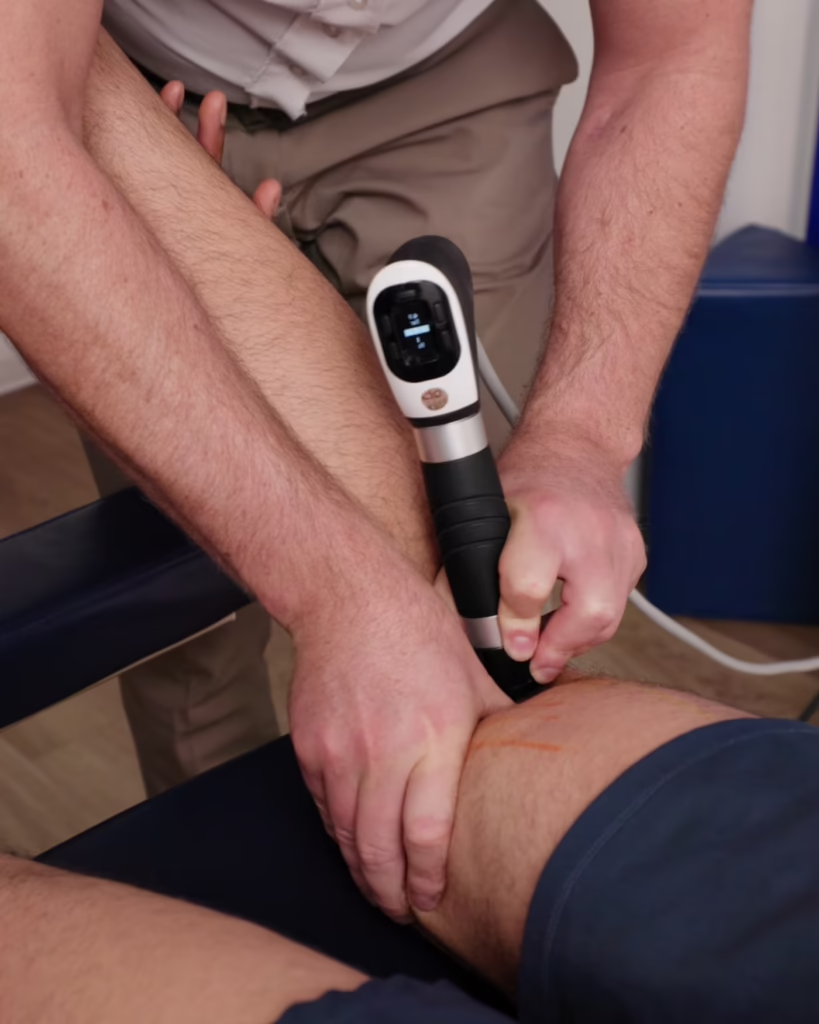
Technology is only useful when it is applied with purpose and clinical reasoning. If a chiropractor advertises tools such as spinal decompression, laser therapy, shockwave therapy, or neuromuscular devices, it is reasonable to ask about their experience with those technologies, what types of conditions they use them for, and how they measure progress over time. Equipment alone does not create good outcomes. Judgment, reassessment, and appropriate patient selection still matter far more than shiny machines. Humanity does love putting LEDs on things and declaring them revolutionary.
By asking this question, you are helping ensure your chiropractor has both range and reasoning: a broad clinical toolkit, alongside the judgment to use it carefully, progressively, and appropriately for your specific situation.

Question 7: What Kind of Results Can I Realistically Expect, and How Long Might It Take?
This question helps separate clinically grounded care from marketing fluff. Not even the best chiropractors can predict exactly how long recovery will take, particularly during the early stages before they have seen how your body responds to treatment. However, an experienced clinician should still be able to provide a reasonable estimate of likely timelines, expected progress, and the factors that may influence recovery based on your condition, age, activity level, general health, and symptom history.
Ask what improvement typically looks like for someone in your situation. Do they measure progress only through pain scores, or do they also assess movement quality, strength, mobility, activity tolerance, sleep, confidence, and overall function? Symptom relief matters, but it is only one part of recovery. Long-term improvement often involves rebuilding resilience, restoring movement, improving tolerance to load, and reducing the likelihood of repeated flare-ups. Best-practice musculoskeletal care increasingly emphasises functional outcomes and patient-specific goals rather than focusing purely on short-term pain reduction. [79][88]
One often overlooked aspect of care is that treatment plans and prognoses can evolve as patients respond. Recovery is rarely perfectly linear. Some people improve steadily, others progress in phases, and some experience temporary setbacks before moving forwards again. That does not automatically mean something has gone wrong. Human recovery is messy, adaptive, and occasionally dramatic for no obvious reason whatsoever. The important thing is whether the chiropractor recognises these patterns, reassesses appropriately, and adjusts the plan when needed rather than rigidly forcing the same approach regardless of response.
The best chiropractors recognise this variability early and discuss it openly from the beginning. At The DISC Chiropractors in Surbiton, for example, treatment plans are adapted based on how patients respond during the early stages of care. Frequency, technique selection, rehabilitation focus, and goals may all change over time depending on progress, setbacks, tolerance, and functional improvement. Flexibility is not a sign of uncertainty; it is usually a sign that the clinician is paying attention. Shared decision-making and ongoing reassessment are important parts of ethical patient-centred care. [4][82]
This question is also a useful way to identify overpromising. Be cautious if someone confidently tells you they will “fix” your problem in a set number of visits before properly understanding your history, examination findings, or response to care. Equally, be wary of clinics that recommend the same lengthy programme for every patient regardless of severity or complexity. Someone with a mild mechanical restriction should not necessarily be managed the same way as someone recovering from a significant disc injury or long-standing nerve irritation. Realistic expectations and appropriately scaled recommendations are signs of clinical honesty, not a lack of confidence.
Ultimately, this question is about trust. You want a chiropractor who is optimistic but realistic, clear without becoming alarmist, and willing to adapt the plan as new information emerges. Good outcomes are rarely built on rigid promises. They are usually built on communication, reassessment, realistic planning, and a shared understanding of the recovery process.
Question 8: How Do You Tailor Care Plans to Each Individual?
As mentioned, the best care plans are never truly one-size-fits-all. Every person has a different body, injury history, lifestyle, work demand, stress level, recovery capacity, and response to treatment. So, if your local Surbiton chiropractor offers the exact same visit structure, adjustment style, or treatment schedule to every patient regardless of condition, symptoms, or progress, that should raise concerns. In many cases, you can spot this rigidity in the paperwork long before treatment even begins. Good care plans should leave room for flexibility, discussion, and adaptation rather than feeling like a predetermined script. [4][79]
Ask how they personalise care. Do they group cases into broader clinical patterns, such as disc injuries, chronic pain conditions, or nerve irritation syndromes? Do they establish a baseline and then adjust recommendations based on how you respond week to week? Can they explain what success realistically looks like in your case and what signs would indicate the need to change direction? These conversations matter because recovery is rarely perfectly linear, especially in more persistent or complex conditions.
Look for answers that describe structured flexibility rather than rigid protocols. At The DISC Chiropractors in Surbiton, we begin with a broader framework, including phases focused on symptom reduction, stability, and long-term resilience, but we adapt within that structure as each patient progresses. Good chiropractors should use a mixture of subjective and objective markers to track progress, including movement quality, strength, function, tolerance for activity, and day-to-day capability, rather than simply whether pain happens to be slightly better on the day of the appointment. Best-practice musculoskeletal care increasingly emphasises individualisation, reassessment, and functional outcomes rather than symptom chasing alone. [79][88]
It is also worth asking what happens if progress stalls. Do they reassess the diagnosis? Refer for imaging or co-management? Introduce rehabilitation, modify techniques, reduce treatment intensity, or change the strategy entirely? The answer tells you a lot about whether the clinic is genuinely focused on outcomes or simply pushing every patient through the same process regardless of response.
Every patient should also have the opportunity to explain their goals, concerns, time limitations, and financial boundaries before recommendations are finalised. A good chiropractor should be honest about what is realistic, what may take longer, and whether the proposed plan actually fits the severity of the condition and the patient’s circumstances. In some cases, the best approach may even be to begin cautiously with a small amount of treatment, monitor the response carefully, or delay care altogether if expectations and clinical reality are too far apart. Shared decision-making and honest expectation-setting are central to ethical patient-centred care. [4][82]
Tailored care is about more than simply changing your appointment count. It is about thoughtful clinical reasoning, honest dialogue, reassessment, and shared goals. Your care plan should feel adapted to your needs and responses, not something copied and pasted from the last patient who walked through the door.

Question 9: What Are Your Chiropractic Payment Plans, Package Options, and Refund Policies?
Discussing fees can feel uncomfortable, but it is an important part of making an informed healthcare decision. Transparency around pricing shows respect for your time, budget, and autonomy. A clinic that is vague, evasive, or overly aggressive about costs may be prioritising transactions over trust. Good healthcare relationships work best when expectations, options, and financial commitments are explained clearly from the beginning. [4][12]
Start by asking about the clinic’s fee structure. Do they offer pay-as-you-go care, treatment packages, subscriptions, or phased programmes? Are any discounts for advance booking clearly explained, and do patients still retain flexibility if circumstances change? The goal is not necessarily to avoid packages altogether, but to understand exactly what is being offered and why.
It is perfectly reasonable for clinics to offer cost-saving bundles or structured programmes, particularly in cases involving longer-term rehabilitation or complex recovery plans. Some clinics may introduce programme pricing only after the first treatment or report of findings, allowing patients time to experience the clinic, understand the diagnosis, and reflect on their options before making a larger commitment. In some cases, clinics may even retrospectively apply discounted rates to earlier visits once a patient decides to continue care, helping avoid any financial disadvantage for taking time to think things through. Clear refund policies for unused care should also be explained up front, wherever applicable.
The key principle should always be consent without pressure. You should never feel rushed into committing to a care plan before properly understanding your condition, prognosis, or alternatives. Treatment plans should not feel like financial contracts designed to lock you in regardless of progress. If unused visits are non-refundable, pricing becomes deliberately confusing, or recommendations are tied to aggressive, time-limited sales tactics, it is worth proceeding carefully. Ethical healthcare should rely on clarity and trust, not urgency and pressure.
The best chiropractors focus on collaboration and transparency. Payment structures should support your care and fit realistically within your goals, circumstances, and preferences, not dictate them. Ask about options, cancellation policies, reassessments, and refund terms early. A clinic worth trusting should be comfortable having those conversations openly rather than treating them like awkward secrets hidden behind reception desks and laminated finance folders.
Question 10: Can I Have Time to Think Before Committing to a Care Plan?
Discussing fees can feel uncomfortable, but it is an important part of making an informed healthcare decision. Transparency around pricing shows respect for your time, budget, and autonomy. A clinic that is vague, evasive, or overly aggressive about costs may be prioritising transactions over trust. Good healthcare relationships work best when expectations, options, and financial commitments are explained clearly from the beginning. [4][12]
Start by asking about the clinic’s fee structure. Do they offer pay-as-you-go care, treatment packages, subscriptions, or phased programmes? Are any discounts for advance booking clearly explained, and do patients still retain flexibility if circumstances change? The goal is not necessarily to avoid packages altogether, but to understand exactly what is being offered and why.
It is perfectly reasonable for clinics to offer cost-saving bundles or structured programmes, particularly in cases involving longer-term rehabilitation or complex recovery plans. Some clinics may introduce programme pricing only after the first treatment or report of findings, allowing patients time to experience the clinic, understand the diagnosis, and reflect on their options before making a larger commitment. In some cases, clinics may even retrospectively apply discounted rates to earlier visits once a patient decides to continue care, helping avoid any financial disadvantage for taking time to think things through. Clear refund policies for unused care should also be explained upfront wherever applicable.
The key principle should always be consent without pressure. You should never feel rushed into committing to a care plan before properly understanding your condition, prognosis, or alternatives. Treatment plans should not feel like financial contracts designed to lock you in regardless of progress. If unused visits are non-refundable, if pricing becomes deliberately confusing, or if recommendations are tied to aggressive time-limited sales tactics, it is worth proceeding carefully. Ethical healthcare should rely on clarity and trust, not urgency and pressure.
The best chiropractors focus on collaboration and transparency. Payment structures should support your care and fit realistically within your goals, circumstances, and preferences, not dictate them. Ask about options, cancellation policies, reassessments, and refund terms early. A clinic worth trusting should be comfortable having those conversations openly rather than treating them like awkward secrets hidden behind reception desks and laminated finance folders.