
Understanding Chiropractic and Insurance in the UK

Understanding Chiropractic Insurance in the UK
Trying to understand what your health insurance does and does not cover can feel almost as confusing as the injury itself. Many patients seeking chiropractic care for back pain, sciatica, disc injuries, or nerve-related symptoms quickly discover that insurance policies, reimbursement rules, and referral requirements are rarely straightforward.
This guide has been designed to simplify that process.
Whether you are exploring private care for the first time, already have health insurance through work, or are trying to understand why certain treatments are covered while others are not, we’ll walk you through the key things you need to know before starting care.
We’ll explain:
- How chiropractic insurance works in the UK
- The difference between NHS and private rehabilitation pathways
- What insurers commonly approve or restrict
- How authorisation and claims processes work
- How to avoid unnecessary financial surprises during treatment
The goal is simple: to help you make informed decisions about both your rehabilitation and your finances, with clear expectations from the very beginning.
Before we even start, it’s important to point out the Golden rule: GET EVERYTHING IN WRITING!
Guide Outline
This guide is based on the same principles we use daily at The DISC Chiropractors in Surbiton: clarity, transparency, and helping patients understand both their rehabilitation options and the financial realities that can come with private care. This includes discussing:
- What your insurance policy may or may not cover
- Which parts of care may qualify for reimbursement
- How treatment plans are structured
- What financial responsibilities may remain if care extends beyond insurer limits
Our focus is not simply on helping patients claim treatment costs, but on helping them make informed decisions about the most appropriate rehabilitation pathway for their situation.
This guide will walk you through:
- How chiropractic insurance coverage typically works in the UK
- The differences between NHS and private MSK pathways
- What insurers commonly approve or restrict
- How to check your policy correctly
- How to avoid unexpected financial surprises when pursuing more complex rehabilitation care
Before diving into the details, it is worth starting with a few practical first steps:
- Review your insurance policy carefully, paying close attention to coverage for MSK, chiropractic, physiotherapy, and rehabilitation.
- Contact your insurer directly to clarify session limits, referral requirements, excess fees, and recognised providers.
- Confirm whether your chosen clinic is recognised by your insurer and whether all elements of treatment are eligible for reimbursement.
- Ask for written confirmation wherever possible to avoid misunderstandings later.
Understanding these differences can help you make more confident decisions about both your care and your financial planning before beginning treatment.

Why Insurance is a popular way to access MSK
Many patients dealing with persistent back pain, sciatica, disc injuries, or nerve-related symptoms eventually find themselves navigating not only healthcare decisions, but also confusing insurance policies and reimbursement rules. Understanding what support is available through both NHS and private healthcare systems can quickly become overwhelming, particularly when rehabilitation needs extend beyond simple short-term care. [1][18][88]
While musculoskeletal services are available through the NHS, access to chiropractic care specifically is often unavailable within standard NHS pathways. As a result, many patients seeking ongoing conservative rehabilitation, manual therapy, or more structured spinal care explore private healthcare options, either through self-funding or private medical insurance. [1][18]
That is where private health insurance may help. An estimated 14% of UK residents now have some form of private health insurance. [127] Many UK insurance policies, particularly employer-funded plans with musculoskeletal (MSK) coverage, cover chiropractic care, though reimbursement levels, session allowances, referral requirements, and accepted treatment categories can vary widely across providers and policies. Understanding these limitations early can help patients avoid unnecessary confusion or unexpected costs later in the process.
Clinics offering more structured rehabilitation programmes, advanced technologies, or longer-format multimodal care may sometimes fall outside standard insurer reimbursement models, particularly when treatment extends beyond conventional short-format chiropractic sessions. However, some patients still choose these approaches where they feel the rehabilitation structure, continuity of care, or clinical focus better matches the complexity of their condition. [79][88]
Economic Burden
Musculoskeletal (MSK) conditions place a major burden on both the NHS and the wider UK economy through healthcare costs, work absence, reduced productivity, and long-term disability. Low back pain alone remains one of the leading causes of disability worldwide and has historically been estimated to cost the UK healthcare system billions of pounds annually when direct and indirect economic impacts are combined. As a result, healthcare providers, employers, occupational health teams, and insurers are increasingly focused on conservative rehabilitation approaches aimed at reducing disability, improving function, and supporting an earlier return to normal activity before more invasive or costly interventions become necessary. [2][127][128][129][130]
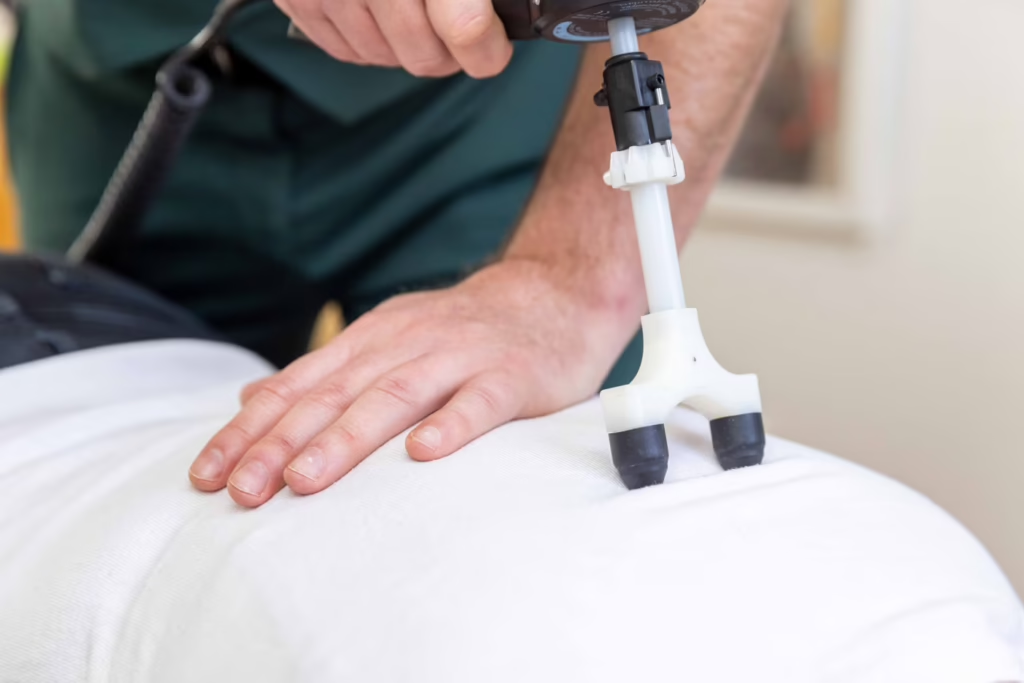
NHS vs Private Chiropractic: Which one to Prioritise
Many people are familiar with NHS musculoskeletal (MSK) services, particularly physiotherapy pathways designed to help manage common problems such as back strain, joint stiffness, neck pain, or mobility issues.
However, patients with more persistent or complex presentations, including disc herniations, recurrent sciatica, nerve irritation, or longstanding functional limitations, may sometimes feel that standard pathways do not provide the level of continuity, rehabilitation structure, or ongoing reassessment they are looking for. As a result, some patients eventually seek care at private chiropractic or rehabilitation clinics after progressing through the initial NHS or physiotherapy routes. [79][88]
One of the biggest differences between NHS and private care is often access and appointment structure. NHS MSK services remain under significant national pressure, and waiting times for non-emergency assessment or ongoing rehabilitation may sometimes extend for weeks or months, depending on region, demand, and clinical priority. [1]
Private chiropractic clinics may offer shorter waiting times, longer appointment durations, continuity of care with the same practitioner, more frequent reassessments, and broader rehabilitation options, depending on the clinic’s structure. For some patients, particularly those dealing with recurring or more complex spinal complaints, these differences may influence both their rehabilitation experience and their ability to progress consistently through care. [79][80]
Private clinics may also differ in the technologies and rehabilitation systems they incorporate, depending on the clinic’s focus and available facilities. Some clinics utilise:
- Spinal decompression therapy [16][42]
- Class IV laser therapy [71][88]
- Neuromuscular rehabilitation technologies [102][103]
- Advanced exercise rehabilitation systems [13][89]
- In-house imaging where clinically appropriate [83][79]
Many of these advanced services are not typically available within standard NHS MSK pathways and may also fall outside conventional insurance reimbursement structures, depending on the provider and policy involved. Some patients still choose these approaches because they feel the more comprehensive rehabilitation structure better suits the complexity of their condition or reflects what has been missing from previous treatment experiences. [42][79] Reimbursement structures can still vary substantially between insurers, particularly where rehabilitation programmes extend beyond standard short-format appointment models. [88][127]
One challenge in modern MSK care is that insurance policies are often structured around shorter, symptom-focused treatment models, whereas more complex spinal conditions may require longer-term rehabilitation, staged progression, and ongoing reassessment. Many insurers initially approve only a limited number of sessions before further review is required, which can leave patients trying to balance policy limits against what their recovery may realistically need.
This approach can work well for simpler musculoskeletal complaints, but more complex cases involving disc injuries, chronic pain, or nerve irritation may require a longer and more structured rehabilitation process. Understanding these limitations early and communicating clearly with both your clinic and insurer can help reduce confusion, avoid unexpected costs, and make the process easier to navigate.
As we continue through this guide, we’ll explore how chiropractic insurance coverage typically works in the UK, which treatments are commonly covered, where limitations may arise, and how patients can better prepare for the reimbursement process when pursuing more structured rehabilitation care.

Which UK Insurance Providers Cover Chiropractic?
Before navigating insurance claims, it’s important to understand which UK providers commonly offer chiropractic or musculoskeletal (MSK) coverage and how those policies are typically structured.
Insurance companies play a significant role within the wider healthcare ecosystem because they are incentivised to reduce long-term disability, prolonged work absence, and escalating healthcare costs wherever possible.
Chronic musculoskeletal conditions, particularly low back pain, place a major burden on both healthcare systems and workplace productivity across the UK. This growing economic pressure has increased interest in conservative rehabilitation pathways that aim to improve function, reduce recurrence, and support earlier return to normal activity. [2][127][128][129][130]
However, it is important to understand that insurance coverage for chiropractic care is rarely unlimited or fully open-ended. Most private healthcare policies were historically designed around shorter-format musculoskeletal care models, often involving relatively brief treatment blocks and reassessment checkpoints rather than long-term rehabilitation programmes. As a result, coverage structures do not always align neatly with more complex rehabilitation pathways involving chronic spinal pain, disc injuries, or staged neurological rehabilitation.
In practice, many insurers initially approve only a relatively small number of sessions before requiring reassessment or additional clinical justification. This approach may work well for simpler or short-term musculoskeletal complaints, but more complex cases can require longer rehabilitation timelines, ongoing reassessment, progression-based exercise programmes, and broader multidisciplinary management strategies.
Historically, this mismatch created tension between some insurers and clinic providers, particularly where clinics felt pressured to achieve recovery targets within relatively restricted treatment allowances. Over time, however, insurer systems and digital claims processes have become more flexible and streamlined, making collaboration between clinics, case managers, occupational health teams, and insurers more manageable than in previous years.
At The DISC Chiropractors in Surbiton, there have been periods where insurance administration and reimbursement restrictions became so complicated that we temporarily stepped away from insurance-based care altogether. Fortunately, systems have improved over time, and we now work with most major UK providers commonly offering chiropractic or outpatient MSK reimbursement, including:
- AXA PPP Healthcare
- Bupa
- Aviva
- Vitality
- WPA
Coverage structures vary substantially between providers and policy tiers. Some plans allow direct access to recognised practitioners, while others require GP referral, case-manager approval, or pre-authorisation before treatment begins. Corporate-funded policies may sometimes provide broader MSK coverage than individual entry-level plans, particularly where rehabilitation and occupational-health outcomes are prioritised.
Many insurers also operate within pre-negotiated fee structures and approved-provider frameworks. This means clinics submit claims through dedicated online portals, enabling the efficient processing of authorisations, invoices, and reimbursements for eligible treatment categories. At The DISC Chiropractors, we have dedicated administrative support to help patients navigate these processes and communicate with insurers where required.
One important point patients often overlook is that insurance terminology can significantly affect what is reimbursed. Policies may categorise chiropractic care under:
- Outpatient therapies
- Manual therapies
- Musculoskeletal rehabilitation
- Complementary therapies
- Specialist practitioner benefits
This distinction matters because some advanced rehabilitation components, such as spinal decompression therapy, laser therapy, or shockwave therapy, may require separate authorisation depending on their classification within the policy structure. Understanding these definitions before beginning treatment can help reduce confusion and avoid unexpected out-of-pocket costs later in the rehabilitation process.
At the same time, there is increasing recognition across healthcare, occupational health, and rehabilitation systems that some persistent or complex spinal presentations may require more structured, progression-based rehabilitation rather than purely symptom-focused short-term management. This has contributed to increased collaboration among rehabilitation providers, insurers, and case managers in more complex cases, particularly when patients have not fully responded to prior conservative treatment. [79][88][127]
Understanding your policy’s strengths, limitations, authorisation requirements, and reimbursement structure before starting care is one of the most important steps you can take. In the next section, we’ll walk through how to gain approval, what questions to ask your insurer, and how to improve the likelihood of receiving appropriate support for your rehabilitation needs.

Pre-Authorisation and Referrals: What to Know Before You Start
One of the most important steps before beginning treatment under an insurance policy is understanding whether pre-authorisation is required and, if so, how to obtain it. Insurers each operate differently. Some allow direct booking with recognised providers, while others require additional administrative steps before treatment is approved.
There are two key rules for obtaining authorisation:
- Contact your insurer before your first treatment, even if you are unsure whether you wish to proceed. This helps establish an initial claim pathway and gives you the option to use your cover later if needed.
- Get everything in writing, EVERYTHING!
This second point is extremely important. Patients sometimes misunderstand what has actually been authorised, particularly when discussions take place over the phone. Requesting written confirmation of:
- Authorised session numbers
- Treatment categories covered
- Reimbursement caps
- Excess obligations
- Referral requirements
- Provider recognition status
One helpful tip to avoid confusion later in the process. Since most insurer calls are recorded, patients can also reference call logs if disputes arise regarding what was discussed or agreed. But it is far easier to ask them, at the end of any call, to email you a copy of what has been agreed.
Many DISC patients arrive having already obtained a pre-authorisation code confirming that chiropractic care is covered and that the clinic falls within the insurer’s recognised provider network. In some cases, GP or consultant referral is still required, particularly where policies operate under stricter gatekeeping structures. While this can occasionally delay access to treatment, clear documentation and diagnosis often facilitate approval.
It is also worth noting that under UK patient-choice principles, a GP would not normally refuse a request for a private chiropractic referral unless there were genuine clinical or safety concerns regarding your case. Personal opinions about the profession itself should not determine whether a referral is provided.
Before attending your first appointment, it is often helpful to ask your insurer:
- Is chiropractic care covered under my current policy?
- Do I require a GP or consultant referral?
- Is my chosen chiropractor or clinic recognised?
- How many sessions are initially authorised?
- Is there a financial cap per session?
- Does my policy include an excess?
- Are advanced rehabilitation therapies classified separately?
Patients should also understand that many insurers initially approve only relatively small blocks of care before reassessment is required. Some policies automatically authorise a set number of sessions, while others require clinical review before further coverage is extended.
In more complex cases, particularly those involving longer-term rehabilitation or advanced treatment protocols such as decompression therapy, clinics may prepare detailed reports outlining:
- Diagnosis
- Functional limitations
- Objective findings
- Treatment rationale
- Measurable progress
- Proposed rehabilitation plans
This information can then be submitted to insurers as supporting documentation when requesting extended authorisation or access to additional treatment categories.
Since rebranding to highlight our specialist focus, we have seen an increase in referrals from insurers and in case-management pathways for patients requiring more structured non-invasive disc rehabilitation. In some cases, insurers now provide partial reimbursement for advanced rehabilitation components, helping patients access broader rehabilitation programmes while still contributing personally toward aspects of care not fully covered under their policy.
At the same time, many insurers still only reimburse one therapy type per session. This can create frustration for both patients and clinics because more integrated rehabilitation approaches, combining several therapies within a single longer appointment, are not always recognised within standard reimbursement models. Instead, patients may find themselves attending multiple shorter visits simply because insurers will not approve multimodal treatment within the same session.
In these situations, patients may choose to:
- Request additional authorisation
- Spread treatment over a longer timeframe
- Partially self-fund certain parts of care
- or combine insurance support with personal contribution, depending on their goals and policy structure
Being proactive during the authorisation stage can help make the rehabilitation process smoother and reduce the likelihood of unexpected financial issues during care. Without written confirmation that clearly outlines what is and is not covered, clinics may reasonably require payment up front while reimbursement is clarified directly between the patient and the insurer.
Likewise, where excess levels, reimbursement structures, or authorisation details remain unclear, clinics may request refundable deposits before commencing care in order to protect appointment time and minimise administrative disputes later in the process.
Some patients prefer to retain direct control over their claims process by paying for treatment themselves and then independently submitting invoices and supporting documentation to their insurer afterwards. Depending on the policy structure, this can provide greater flexibility and transparency throughout the reimbursement process.

Common Limitations and Policy Pitfalls
Even with the right policy in place, patients can still encounter limitations or administrative complications that affect how chiropractic care is reimbursed. These issues are not always clearly explained during policy sign-up and can sometimes create confusion or unexpected costs later in the rehabilitation process.
One of the most common limitations involves session caps. Many policies place annual limits on chiropractic or musculoskeletal treatment sessions, often authorising only relatively short blocks of care before reassessment is required. Some patients mistakenly assume that once treatment has been approved, ongoing care will continue automatically, only to later discover that session allowances have been exhausted partway through rehabilitation.
In more complex cases, these limits can sometimes be extended where clinics provide detailed supporting documentation outlining:
- Measurable progress
- Functional improvement
- Objective findings
- Ongoing clinical rationale for continued rehabilitation
At The DISC Chiropractors in Surbiton, internal clinic auditing has shown that requests for extended authorisation are often more successful when detailed progress reporting and clearly structured rehabilitation plans are provided to insurers. However, approval outcomes still vary substantially depending on the provider, policy tier, and whether annual limits are fixed or flexible.
Another hurdle patients often encounter is an impatient insurance company wanting them to switch providers mid-care. This is often borne out of a desire to reduce the number of sessions, and often without requesting an updated progress report from us.
Patients generally retain the right to choose their healthcare provider, even when using private medical insurance. However, insurers have favoured clinics (often where they have negotiated cheap rates) and may restrict reimbursement to their approved practitioners or treatment pathways under the policy terms.
If a patient is responding well to ongoing care, they may request a clinical review, ask the insurer to justify any proposed transfer in writing, and submit supporting evidence from their current clinician explaining why continuity of care remains appropriate.
Pre-existing or chronic conditions
Pre-existing or chronic conditions can also create complications. Some policies exclude musculoskeletal conditions that existed before the policy was taken out, while others provide only limited support where symptoms are classified as chronic or longstanding. Because definitions and exclusions vary significantly between insurers, it is often advisable for patients to fully understand:
- their diagnosis
- prognosis
- treatment recommendations
- and policy wording
before making assumptions about what will or will not be covered.
Another important distinction is between “active care” and “maintenance care.” Many insurers focus reimbursement around treatment aimed at improving symptoms and function, while longer-term maintenance or wellness-based follow-up care may fall outside standard policy structures. This can occasionally lead to situations where patients believe ongoing care remains authorised when their reimbursement eligibility has actually changed.
At The DISC Chiropractors in Surbiton, our administrative team regularly helps patients:
- Communicate with insurers (we can’t initiate contact for you)
- Clarify policy wording
- Track authorisation status (once details are provided)
- Organise supporting documentation
- Navigate reimbursement requirements throughout care
Understanding these limitations early can help reduce unexpected financial surprises and make longer-term rehabilitation planning significantly easier.

The Claim Process: Step-by-Step
Understanding the insurance process is only part of the equation. Successfully navigating the claims process itself is equally important for avoiding delays, reimbursement issues, or administrative confusion.
Most UK insurers generally operate using one of two reimbursement pathways:
- Patient-led reimbursement
Patients pay directly for treatment and later submit invoices and supporting documentation to the insurer for reimbursement. - Clinic-submitted claims
The clinic bills the insurer directly, usually where the provider is recognised and pre-authorisation has already been approved.
At The DISC Chiropractors, we support both approaches depending on the insurer structure and individual policy arrangements. Please note that our clinic policy requires full payment for all initial assessments. If your policy covers the assessment and an authorisation code is later accepted on the insurer system, eligible costs can then be reimbursed ack toThe you in line with your policy terms.
When preparing a claim, patients will commonly require:
- authorisation or pre-authorisation codes (written confirmation must be supplied)
- copies of invoices showing treatment dates and fees
- documentation outlining any reimbursement limitations
- details of any policy excess
- and occasionally supporting clinical reports for extended rehabilitation requests or advanced therapies
Patients managing claims independently are generally advised to:
- Keep digital copies of all documentation
- Monitor submission deadlines carefully
- Follow up if confirmation has not been received within a reasonable timeframe
Some insurers also apply claim-submission cut-off periods, meaning reimbursement requests must be submitted within a specific number of days of treatment. Missing these deadlines can occasionally result in otherwise valid claims being rejected.
For more advanced rehabilitation programmes involving therapies such as spinal decompression or laser therapy, insurers may occasionally request additional clinical justification before extending reimbursement beyond standard appointment models. In these situations, clinics may assist by preparing:
- outcome measures
- progress reports
- supporting documentation
- and clarification letters explaining the clinical rationale for care
Until written confirmation of reimbursement is received, clinics may still reasonably require payment at the time of treatment while claims are processed between the patient and insurer.
If a claim is partially rejected, patients are usually best served by requesting:
- the reason for rejection in writing
- clarification regarding appeal options
- and confirmation of whether additional evidence or reporting could alter the outcome
In many cases, relatively small administrative clarifications or updated clinical reports can help resolve reimbursement disputes more effectively than patients initially expect.
Final Thoughts: Navigating Chiropractic Insurance with Confidence
Securing insurance support for chiropractic rehabilitation, particularly for more complex spinal or neurological presentations, can initially feel complicated. However, with good preparation, clear communication, and a realistic understanding of policy structures, the process often becomes far more manageable than patients first expect.
The most important steps are usually:
- Understanding your policy clearly
- Obtaining written authorisation
- Choosing a clinic experienced in insurer communication
- Tracking sessions carefully
- Addressing reimbursement questions early rather than reactively
At The DISC Chiropractors in Surbiton, we aim to help patients bridge the gap between insurance structures and clinical rehabilitation needs by providing:
- Structured rehabilitation planning
- Clear communication
- Administrative support
- Detailed documentation where required
At the same time, patients should always remember that unless they have received explicit written confirmation outlining exactly what is authorised, they may remain personally responsible for any reimbursement shortfalls or excluded treatment categories. Understanding this early helps avoid unnecessary confusion later in the rehabilitation process.
If you are unsure whether your policy covers chiropractic care, advanced rehabilitation approaches, or more complex spinal rehabilitation pathways, contacting both your insurer and clinic before beginning treatment is often the simplest way to avoid unnecessary surprises and make more informed decisions about your care.