
Is It Normal to Feel Sore After a Chiropractic Adjustment
Is It Normal to Feel Sore After a Chiropractic Adjustment? What You Should Know
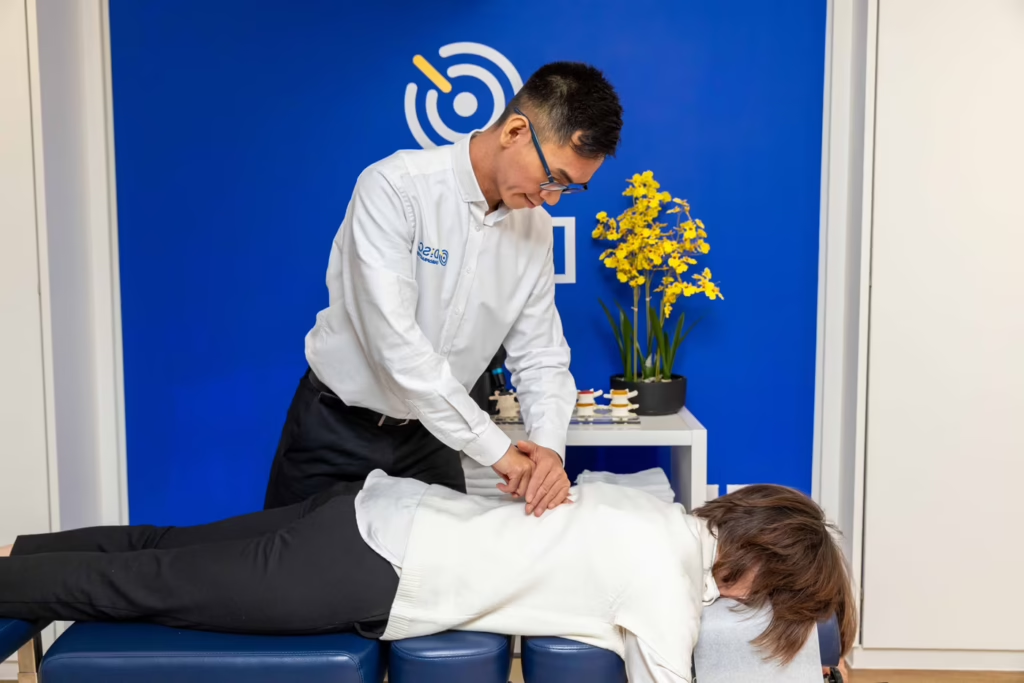
Think back to your last chiropractic adjustment. Did you leave the clinic feeling slightly sore, stiff, achy, or unusually aware of muscles and joints that had not bothered you before? It’s an extremely common question. Many patients seek chiropractic care expecting immediate relief, so temporary discomfort afterwards can sometimes feel surprising.
While chiropractic care is often associated with rapid improvements in pain and movement, mild soreness after treatment is not uncommon, particularly in more complex or long-standing cases involving chronic tension, altered movement patterns, disc irritation, or protective muscular guarding [13][100].
It’s also important to remember that every patient responds differently to physical treatment and recovery. Even at a genetic level, people vary in how sensitively they perceive pain, how strongly their nervous system reacts to stimulation, and how quickly inflammatory or healing responses occur. Genetics can magnify a response, which is one reason why two people with seemingly similar injuries can respond very differently to the same chiropractic adjustment or rehabilitation program [94][95].
Post-adjustment soreness does not automatically mean something has gone wrong. In many cases, it simply reflects the body adapting to changes in movement, loading, muscle activation, and nervous system input. Much like starting a new exercise program, tissues that have been underused, overloaded, or moving inefficiently may temporarily become more sensitive as the body recalibrates [88][102].
That said, understanding what causes soreness, when it is considered normal, and how to respond appropriately can make the experience far less worrying. Simple strategies such as gentle movement, hydration, sensible pacing of activity, and the use of ice or heat where appropriate can often help settle mild post-treatment reactions more comfortably.
It is also important to keep these reactions in perspective. While this article focuses on situations where soreness or flare-ups may occur, the overwhelming majority of chiropractic patients experience either no adverse response or only mild, short-lived reactions following care. Research into manual therapy and spinal manipulation consistently reports that, when side effects do occur, they are most commonly temporary increases in soreness, stiffness, fatigue, or muscular aching that resolve naturally within a short period [13][100].
A smaller percentage of patients may experience more noticeable short-term reactions such as increased muscular spasm, heightened stiffness, or temporary aggravation of sensitive symptoms. Even in these situations, symptoms can often be managed effectively by modifying treatment intensity, changing technique selection, pacing rehabilitation more carefully, or using supportive therapies where clinically appropriate.
The best chiropractors in Surbiton should openly discuss expected responses, clearly explain your individual risk profile, and adapt treatment based on how your body responds over time. High-quality chiropractic care should feel monitored, collaborative, and responsive rather than rigid or formulaic.
In short, mild post-treatment soreness is usually temporary, manageable, and far outweighed by the potential long-term benefits of restoring healthier movement and reducing ongoing mechanical stress. However, severe, unusual, or progressively worsening symptoms should always be discussed with your clinic promptly so they can be assessed appropriately [100][117].
What Causes Post-Adjustment Soreness or Discomfort?
Soreness after chiropractic care does not happen randomly. In most cases, there are understandable physiological reasons why the body may feel temporarily stiff, achy, or more sensitive after treatment. Often, this reflects the body adapting to changes in movement, loading, muscular activity, and joint mechanics rather than indicating harm [13][100].
One of the most important concepts to understand is that mild, short-term inflammation is not automatically a negative. In acute and controlled situations, inflammation is part of the body’s normal repair and adaptation process. When long-restricted joints resume movement, surrounding tissues may briefly become more sensitive as blood flow, muscular activity, and tissue loading patterns change [85][102].
A useful comparison is the soreness many people feel after returning to exercise following a long period of inactivity. The discomfort does not necessarily mean damage has occurred; often it reflects tissues adapting to a demand they have not experienced for some time.
Local Joint and Tissue Response
A common cause of post-adjustment soreness is simply that a stiff or chronically restricted joint has begun moving again. In areas such as the facet joints of the spine, prolonged restriction may lead to surrounding muscles and soft tissues becoming guarded, shortened, or less tolerant to movement over time.
When motion is restored, the tissues in that area suddenly begin to load and move differently. This can temporarily create local soreness, tenderness, or aching around the treatment site as the body adapts to the change [13][100]. In some cases, it may also reflect an increased awareness or “awakening” of local nerve sensors and proprioceptors that had been functioning in a state of stiffness, restriction, or protective guarding for a prolonged period [13][100][103].
In many cases, this response is mild and short-lived, particularly when treatment intensity is appropriately matched to the patient’s tolerance.
Muscular Recalibration and Compensation Patterns
In more chronic cases, the issue often involves multiple joints. Long-standing pain, postural asymmetry, disc irritation, or movement avoidance can gradually alter how the body distributes load and recruits muscle during movement. Some muscles become overworked and tense, while others become inhibited or underused [88][102].
Over time, these compensatory patterns may contribute to soft-tissue restriction, reduced movement variability, and increased tension through fascia and surrounding connective tissues [47][48].
When chiropractic treatment begins to change movement patterns and restore mobility, the body sometimes has to redistribute load across areas that have not been functioning normally for months or even years. Previously underused muscles may begin to activate again, while chronically overloaded tissues finally begin to relax. This adaptation process can temporarily feel similar to post-exercise soreness or muscular fatigue.
Patients with long-standing asymmetry or chronic guarding often notice these reactions more strongly because their nervous system and movement patterns have adapted to the original dysfunction over a prolonged period [94][102].
Inflammatory Response to Change
Inflammation often gets portrayed negatively, but acute, localised inflammation is also part of how the body repairs and adapts. When a previously restricted area begins moving again, surrounding tissues may briefly respond with increased blood flow, immune activity, and heightened sensitivity as the body adjusts to new loading demands [85].
That does not mean aggressive flare-ups are desirable. Good chiropractic care aims to provide sufficient movement and stimulation to encourage adaptation without overwhelming the system or provoking unnecessary irritation.
Joint Overload and Underload Responses
Not all joints respond to treatment in the same way. Some joints are excessively stiff and restricted, while others may already be relatively hypermobile or unstable.
In very stiff joints, restoring movement can temporarily expose underlying weakness, tension, or reduced tissue tolerance. Conversely, in more unstable regions, the nervous system may respond protectively by increasing muscle tone or causing spasms, while the body attempts to regain stability [94][102].
In both situations, the discomfort usually reflects the body attempting to adapt and stabilise rather than indicating structural harm from the adjustment itself.

The Nervous System’s Role in Pain Perception
Pain is not purely a tissue problem. It is also a neurological experience shaped by the brain, spinal cord, stress levels, movement patterns, and the body’s interpretation of threat and safety. Most people have experienced this without realising it. Stress alone can tighten the shoulders, increase jaw tension, amplify headaches, or make old injuries ache more intensely. The nervous system constantly influences the intensity of pain, even when the tissues themselves have not significantly changed [94][95].
Chiropractic adjustments appear to influence both the central and peripheral nervous system through changes in movement, proprioceptive input, and sensory signalling from joints and surrounding tissues [101][102]. Research has demonstrated measurable effects on pain-processing pathways, sensorimotor integration, muscular activation, and somatosensory processing following spinal manipulation in some patient groups [101][102][103].
Autonomic Nervous System Shifts
Some patients report feeling unusually relaxed, emotionally lighter, sleepy, or temporarily “foggy” after treatment. One proposed explanation is that changes in muscle tension, joint motion, and sensory input may influence autonomic nervous system activity, particularly in individuals who have been operating under prolonged stress, tension, or protective guarding [95][101].
For certain patients, this may feel like:
- A sudden sense of relaxation or release
- General fatigue after prolonged tension
- Feeling emotionally lighter or calmer
- Temporary light-headedness or reduced mental “noise”
These sensations are usually short-lived and may simply reflect the nervous system adapting to altered sensory input and reduced muscular guarding after treatment rather than anything harmful occurring.
Central Sensitisation and Irritable Nervous Systems
Some people, particularly those with chronic pain, prolonged stress, disc-related irritation, or long-standing movement dysfunction, develop more sensitive nervous systems over time. This process, often referred to as central sensitisation, means the nervous system becomes more reactive and protective, sometimes amplifying pain responses even to relatively mild stimuli [94][95][96].
In these patients:
- Mild movement or pressure may feel disproportionately intense
- Post-treatment soreness may be more noticeable
- Flare-ups may occur more easily
- Recovery may require slower pacing and gentler progression
This does not mean improvement is impossible. In fact, many chronic pain patients improve significantly with carefully paced rehabilitation, graded movement exposure, education, and appropriately modified treatment strategies. However, highly sensitised nervous systems often require a more measured approach that prioritises stability, trust, movement confidence, and gradual adaptation rather than aggressive treatment intensity [95][97].
Specific Causes of Post-Adjustment Pain Flares
In some situations, post-adjustment discomfort is more than simple muscular soreness or short-term adaptation. Occasionally, treatment may coincide with the aggravation or unveiling of an underlying issue that was already developing beneath the surface.
Triggering an Underlying or Latent Disc Issue
Sometimes, a previously silent or under-recognised disc problem may become more noticeable following changes in movement, posture, or load distribution after treatment. Disc injuries, particularly low-grade annular tears or early internal disc disruption, are frequently underdiagnosed because symptoms often develop gradually over time rather than appearing all at once [76][77].
In many patients, the disc has already been subjected to months or years of cumulative mechanical stress before symptoms become apparent. By the time pain starts radiating, stiffness becomes persistent, or movement tolerance drops significantly, the disc may already be sensitised or structurally vulnerable.
This is why some people appear to “suddenly” develop a disc problem after something seemingly minor such as:
- Sneezing
- Twisting awkwardly
- Lifting something light
- Getting out of a car
- Or even changing movement patterns after treatment
In reality, each of these events isn’t strong enough to create a herniation in a healthy disc. The underlying process must have been developing quietly long beforehand [76][78].
Likewise, the same logic applies to a chiropractic adjustment. A single thrust isn’t mechanically capable of damaging a healthy disc. Rather, if a disc is already close to its tolerance threshold because of prolonged stress, degeneration, or instability, even relatively minor changes in movement or loading may temporarily aggravate symptoms.
In these situations, the adjustment may coincide with the flare-up without necessarily being the root cause. It is often the final visible stressor placed on an already sensitised system; the adjustment was the match that lit up the bonfire, but not the reason the bonfire exists.
This is one reason why experience matters when dealing with suspected disc-related presentations. Early disc irritation does not always present with classic sciatica or obvious nerve pain. In some patients, the earliest signs may simply be:
- Deep lower back stiffness
- Protective muscle guarding
- Directional movement restriction
- Hip tightness
- Fatigue during standing or sitting
- Increased sensitivity to spinal loading [77][78]
Experienced chiropractors trained in disc-focused rehabilitation will usually modify treatment intensity, reduce unnecessary loading, monitor neurological symptoms carefully, and adapt techniques appropriately when these patterns are suspected.
Muscle Spasms
Muscle guarding is often the body’s most immediate form of protection. In disc injuries or unstable spinal conditions, muscles around the area may tighten deliberately to limit movement and reduce mechanical stress on vulnerable tissues. In many cases, this guarding is not simply the problem itself, but part of the body’s attempt to create stability and prevent further aggravation [77][94].
If that protective tension is reduced too aggressively, particularly before the underlying mechanical irritation or instability has settled, the body may respond by tightening again or triggering further spasm as a defensive reaction. This is why experienced chiropractors often modify treatment intensity in acute or highly irritable cases, focusing first on reducing irritation, improving control, and gradually restoring movement tolerance rather than forcing tissues to relax too quickly [77][94].
Simply relaxing those muscles, without addressing the underlying mechanical problem driving the spasm, can sometimes worsen symptoms or temporarily reduce stability. This is why experienced chiropractors often adjust treatment intensity in acute or highly irritable cases, focusing first on reducing irritation, improving control, and gradually restoring tolerance to movement, rather than forcing tissues to relax too quickly [77][94].
This is why therapies like acupuncture or deep massage, while helpful in many musculoskeletal conditions, are not recommended for disc complaints as they can sometimes backfire when applied too early or too aggressively over the site of an active disc injury.
Without corrective care or immediate follow-up rehab, load management, or muscle co-activation strategies:
- Surrounding muscles may double down on their spasm to regain control.
- The area may feel more tense or sore than before.
Rather than a sign of treatment failure, this response often indicates that the nervous system is doing its job, protecting the body while it recalibrates. Skilled clinicians will identify when guarding is functional and will pace treatment to support, not override, this process.
Relative Instability
Complex pelvic dysfunction can create a similar sense of relative instability, even when there is no major structural damage present. In these cases, the issue is often less about a single joint being “out of place” and more about poor coordination and load transfer across the pelvis, sacroiliac joints, and surrounding muscular system. Clinically, it is common to see reduced activation or delayed timing in key stabilising muscles, particularly the gluteal muscles, alongside excessive tension or overactivity in muscles such as the piriformis, hip flexors, or lower back musculature [88][102].
When one side of the pelvis loses stability or control, the body often compensates by increasing muscular tension elsewhere to create artificial support. The piriformis, for example, may become chronically overactive as it attempts to stabilise an unstable or poorly controlled hip and sacroiliac region. Over time, these compensations can contribute to altered movement patterns, asymmetrical loading, fascial tension, and irritation through the kinetic chain, sometimes extending into the lower back, hip, hamstring, or even the opposite shoulder [47][48].
These patterns are also closely linked to postural asymmetries and breathing mechanics. Subtle shifts in pelvic orientation, ribcage position, weight distribution, and gait can gradually reinforce protective muscle guarding and uneven loading across fascial planes and stabilising systems. In these situations, simply “loosening” tight muscles without restoring stability and control often provides only temporary relief. The deeper issue is not just tension, but the body’s ongoing attempt to create support around a poorly coordinated system [88][102][143].
Identifying these failures is often difficult, as many of these symptoms are mirrored in disc and sciatica cases and are layered on top of one another. Experienced chiropractors often combine adjustments with stability retraining, support belts, glute activation work, breathing mechanics, movement correction, and progressive rehabilitation rather than relying on passive treatment alone for these cases. The goal is not simply to reduce tension but to help the body regain efficient control, balanced load sharing, and confidence in movement.
Inappropriate Force, Thoracic Adjusting
Not every patient tolerates the same type or intensity of adjustment. A forceful technique that works well for one person may feel excessive or overly provocative for another, particularly in patients with heightened nervous system sensitivity, disc irritation, osteoporosis, hypermobility, previous rib injury, or long-standing protective guarding [77][100].
One area that deserves caution is the rib cage and thoracic spine. Patients with reduced bone density, previous rib trauma, calcified costal cartilage, chronic coughing history, menopause-related bone loss, or highly rigid thoracic mechanics may occasionally be more vulnerable to rib irritation or even minor rib injury during forceful rotational or compressive techniques.
What patients often describe as a “popped rib” is usually irritation of the costovertebral or costotransverse cartilage joints, surrounding intercostal tissues, a minor rib strain or, in the worst cases, a fracture to the rib bone itself. Whilst this constitutes a significant pain cycle ahead, it is a self-limiting injury that will heal.
Clinically, these patients are often identifiable before treatment. The thoracic spine may feel extremely rigid, breathing mechanics may be restricted, and the surrounding musculature may be highly guarded. In these situations, experienced chiropractors will usually modify positioning, reduce leverage and angle of adjustment, or avoid manual adjustments altogether in favour of gentler approaches such as drop-piece methods, instrument-assisted techniques, or mobilisation. Patients whose history indicates a weakness of the ribcage should understand the risk:reward ratio of having adjustments before consenting to care.
This is why proper assessment matters. Chiropractic adjustments should never be delivered in a one-size-fits-all fashion. Treatment should always be adapted to the patient’s condition, tissue tolerance, stage of healing, and overall stability rather than applying the same technique to every spine that walks through the door.
How Long Should Soreness Last — And When Is It a Concern?
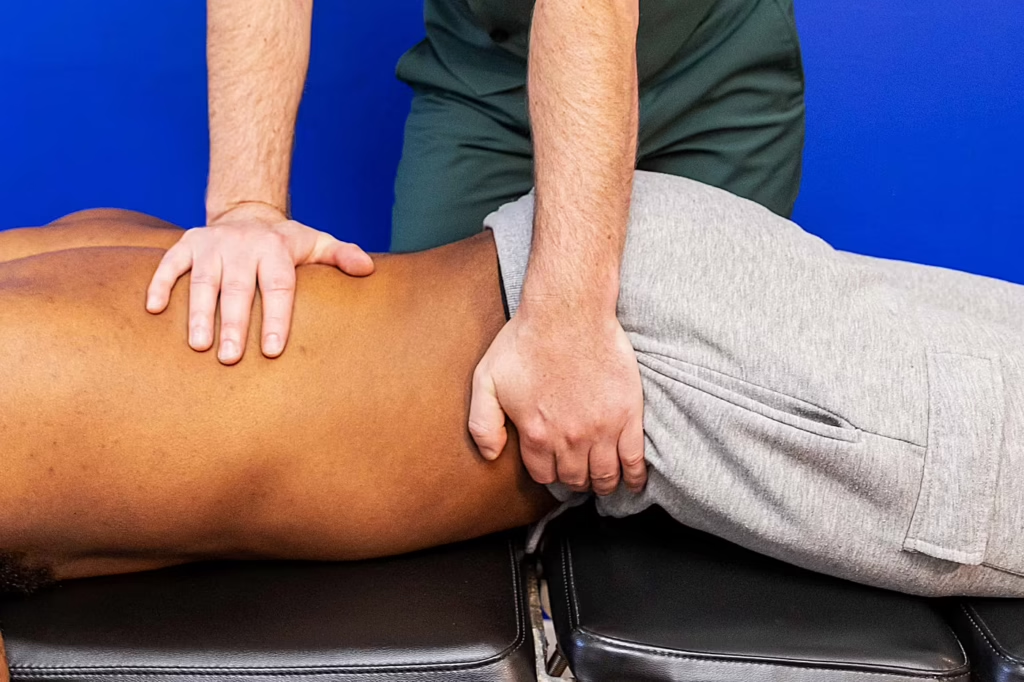
Most post-adjustment soreness follows a fairly predictable pattern. Mild stiffness, aching, or sensitivity during the first 6 to 24 hours is relatively common and usually part of the body’s adaptation to changes in movement, muscle activation, and tissue loading [13][100].
For some patients, particularly those with chronic tension, long-standing movement restriction, or more complex disc-related presentations, soreness may last slightly longer. A moderate ache or stiffness lasting up to 48 to 72 hours can sometimes reflect ongoing soft-tissue adaptation, muscular guarding, or an already sensitised nervous system rather than tissue damage.
In some cases, it may even represent a necessary period of tissue change as the body remodels old movement patterns and begins restoring healthier load distribution, much like the temporary tenderness, yet satisfaction, that can occur when the protective scab on a wound is finally dislodged to allow for the next stage of healing [94][102][47].
What matters most is the overall pattern. In most healthy treatment responses:
- Symptoms gradually settle rather than intensify
- Movement tolerance slowly improves
- Post-treatment soreness becomes less pronounced over successive visits
- Recovery between sessions becomes easier
By contrast, symptoms deserve earlier review if they become:
- Increasingly sharp or radiating
- Progressively worse rather than gradually settling
- Associated with numbness, weakness, or significant neurological symptoms
- Severe enough to substantially limit normal function or sleep [77][100]
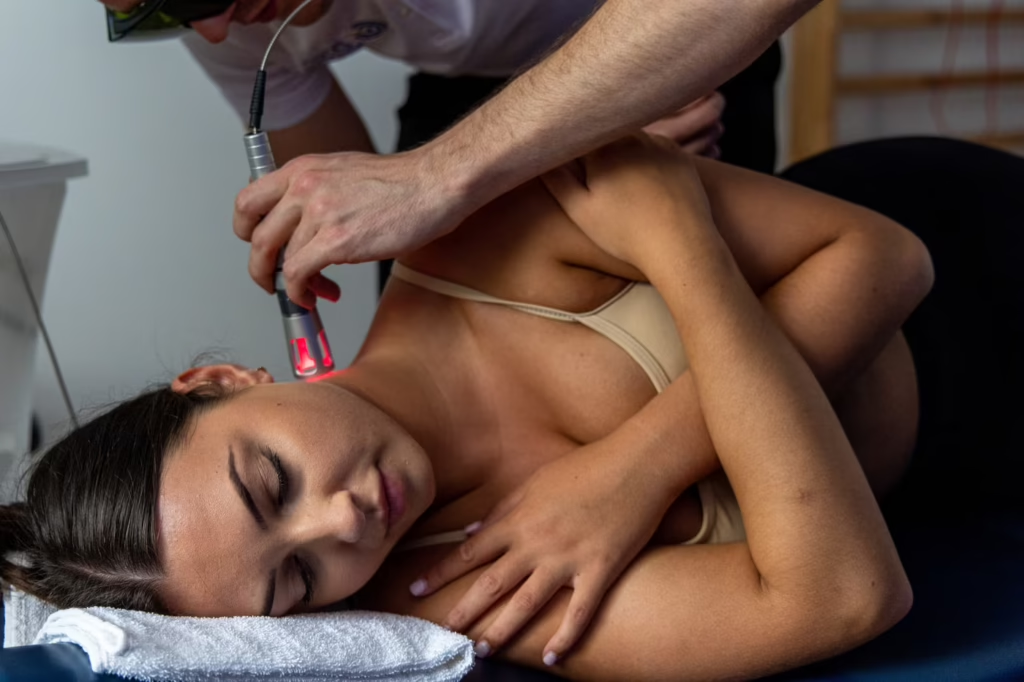
In more irritable disc or nerve-related cases, temporary inflammatory flare-ups can occasionally occur. The best chiropractors should have strategies in place to appropriately manage these reactions, which may include reducing treatment intensity, modifying technique selection, pacing rehabilitation differently, or using supportive modalities such as decompression or laser therapy where clinically appropriate [42][70].
Ultimately, if you are unsure whether your response feels normal, contact your clinic and discuss it with your chiropractor rather than simply waiting and worrying.
What to Do If You Feel Worse After a Chiropractic Visit
Good chiropractic care should be collaborative, and your feedback plays an important role in helping clinicians understand how your body is responding to treatment. If symptoms feel unexpectedly intense, prolonged, or different from what was discussed, it is important to communicate this early rather than waiting silently for the next appointment [82][98].
Tracking symptoms can also be helpful. Noting when discomfort began, what movements aggravate it, how long it lasts, and whether symptoms feel achy, sharp, spasmic, or radiating can help your chiropractor modify care more accurately. In many cases, small adjustments to treatment intensity, technique selection, pacing, or rehabilitation strategy are sufficient to significantly improve tolerance.
Importantly, discomfort after one type of treatment does not mean all chiropractic care will produce the same response. Experienced chiropractors can often modify their approach using lower-force or instrument-assisted methods, decompression or supportive rehabilitation, movement retraining and stabilisation work, reduced force or treatment frequency, or simply a slower progression in highly sensitised patients [42][72].
This kind of flexibility is often a sign of good clinical judgement rather than treatment failure. The goal is not to force patients through unnecessary discomfort, but to find the level of input the body can adapt to productively and safely over time.
Understand That Healing Isn’t Always Linear
Sometimes, a flare-up may simply reflect the body adapting to meaningful change rather than a sign that recovery is failing. Much like returning to exercise after a long period of inactivity, introducing movement into stiff, guarded, or poorly functioning tissues can temporarily create soreness, fatigue, or heightened awareness as the body relearns how to tolerate movement and load more efficiently [88][102].
As the nervous system and surrounding tissues gradually adapt, flare-ups usually become less frequent and less intense over time. Movements that initially felt threatening or exhausting often begin to feel more natural as strength, coordination, and confidence improve. In some cases, a temporary increase in sensitivity may even represent a necessary phase of tissue remodelling and movement change, much like the tenderness that can occur when a long-protected scab is finally removed to allow healthier healing underneath [47][94].
Healing is rarely a perfectly straight line. Some sessions will feel better than others, and temporary setbacks do not necessarily indicate damage. With appropriate pacing, communication, recovery strategies, and an adaptable care plan, even short-term discomfort can sometimes form part of the broader process of restoring healthier movement and long-term resilience.

Decompression Therapy: An Added Complexity to the Healing Response
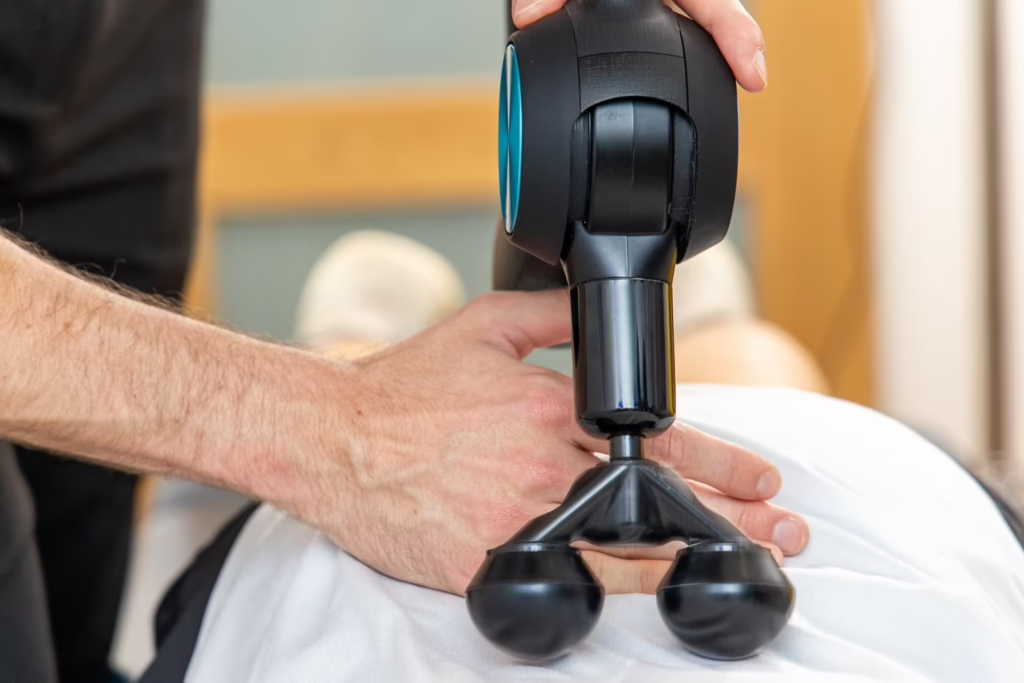
In disc-related cases, spinal decompression therapy is often used alongside chiropractic care to help reduce mechanical pressure on sensitised discs and nerves while encouraging healthier movement and loading patterns through the spine [42][43]. Most patients tolerate decompression well and often experience significant relief during treatment. However, in more acute or highly sensitised cases, some people may temporarily experience soreness, fatigue, muscular guarding, or heightened symptoms afterwards, particularly if the nervous system is already irritable or the surrounding tissues are inflamed.
Rather than representing a completely separate issue, decompression-related soreness is often best understood as part of the same broader adaptation response discussed throughout this article: changes in movement, tissue loading, nervous system sensitivity, and muscular guarding. What makes decompression unique is that it mobilises the spine in a direction and plane of movement that many people rarely experience in everyday life. This can be extremely valuable in chronically compressed or overloaded spines, but it also means the body sometimes needs time to adapt to these unfamiliar mechanical changes [42][144].
During decompression, gentle traction forces may temporarily reduce pressure through irritated discs and joints while encouraging movement and fluid exchange through tissues that may have become stiff, guarded, or poorly mobile over time [42][43]. As mobility improves, previously restricted tissues and surrounding connective structures may also begin adapting to different loading patterns again, which can occasionally create short-term soreness or protective tension, particularly in chronic cases [47][48].
Patients with fresh disc injuries or active nerve irritation are sometimes more prone to experiencing a “rebound” response as decompression tension reduces, the table returns to starting positions and normal spinal loading returns. During treatment, many patients feel relief while traction is active, followed by a temporary return of pressure, tightness, or sensitivity as the nervous system re-evaluates the area under load. In highly sensitised patients, this may briefly trigger protective muscular guarding or temporary flare-ups of familiar symptoms [77][94].
Importantly, this does not automatically mean harm has occurred. In many cases, it simply indicates that the body may require slower progression, gentler settings, additional stability work, or more gradual adaptation. Effectively, your discs are likely not ready to begin their healing cycle, and support work may be needed before recommencing. Experienced chiropractors will modify decompression settings, pacing, rehabilitation strategies, and supportive therapies based on the patient’s response rather than rigidly forcing progression [42][144].
Supportive approaches such as laser therapy, positional unloading, movement retraining and core stabilisation exercises or therapies, are often integrated alongside decompression to help calm sensitivity and improve tolerance to treatment over time [70][88]. As with every aspect of chiropractic care, the key is individualisation, progressing quickly enough to encourage adaptation and recovery, but not so aggressively that the nervous system becomes overwhelmed.
Final Thoughts: Soreness Isn’t Necessarily a Setback – It’s Feedback
While the majority of patients do feel better after a chiropractic adjustment, feeling sore afterwards doesn’t mean something went wrong. In most cases, it’s your body responding to change, activating muscles, shifting load, and recalibrating your nervous system. That said, it shouldn’t be dismissed or ignored.
A well-trained chiropractor will listen, adapt, and refine your plan to suit your needs. The goal is not to tough it out; it’s to work together, understand what your body is telling you, and maintain an effective, comfortable recovery. If you feel sore, speak up. Soreness can guide better care – and lead to better results.
As you prepare for your next visit, think about one question or concern you’d like to address. Bringing this to your appointment can empower you to make informed decisions about your health. Additionally, make sure to share any relevant medical history or current medications with your local Surbiton chiropractor. This information can significantly affect your response to care, helping tailor the treatment to your specific needs and building a foundation of trust with your healthcare provider.