
How DO Chiropractors know Where to Adjust

How Chiropractors Know Where to Adjust; And Do They Really Move Bones? The Science Behind Every Click
Introduction:
At The DISC Chiropractors in Surbiton, our approach is built around one simple idea: pain is rarely the problem itself. More often, it’s the warning signal, the visible tip of a much larger iceberg. That’s why the best chiropractors do not simply chase symptoms. They look deeper.
Knowing where to adjust is not guesswork or routine. It’s a structured clinical process combining observation, movement assessment, neurological testing, and pattern recognition to identify the most significant drivers of dysfunction.
In this guide, we’ll explain how a good chiropractor in Surbiton determines what needs adjusting, and what doesn’t, what actually happens during an adjustment, and why techniques such as muscle testing, stability mapping, and soft-tissue approaches like adhesion release can play an important role in long-term recovery.
What Are Chiropractors Actually Looking for During an Exam?
Many chiropractors understandably focus heavily on pain. In our experience, however, the best chiropractors focus on function first. During your assessment at The DISC Chiropractors in Surbiton, we are not only interested in where it hurts, but why the problem developed in the first place.
That means assessing:
- How your joints move [15].
- How your muscles stabilise the body during everyday tasks [102].
- How your posture adapts under stress or fatigue [89].
- How your breathing, balance, and movement patterns interact [88].
- Whether compensation patterns may be overloading other areas [88][102].
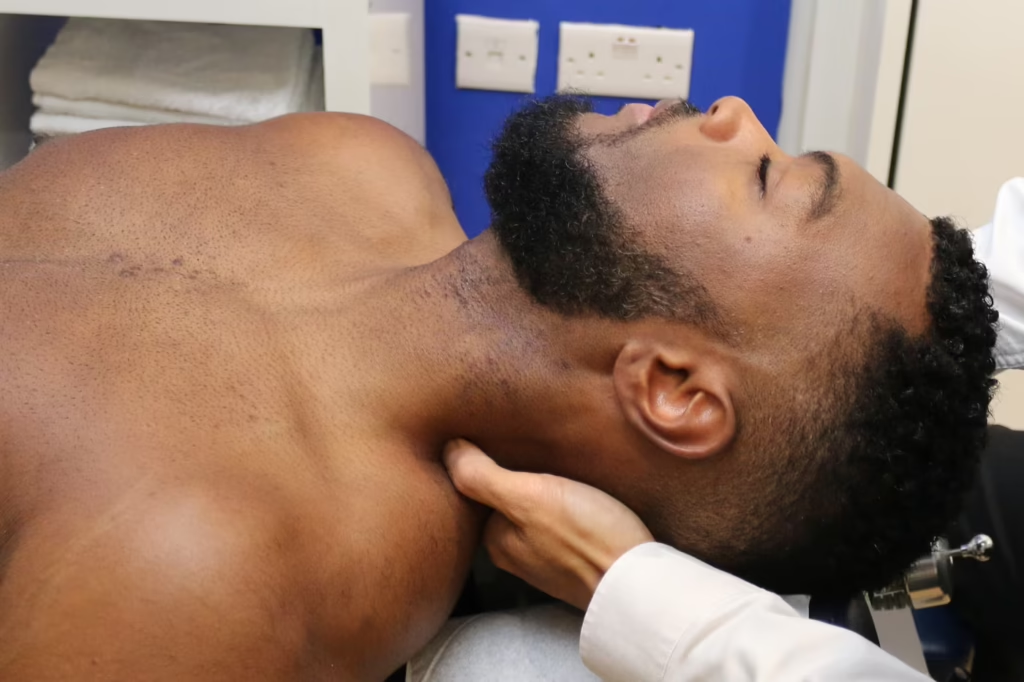
We use a layered approach to assessment, beginning with a detailed case history to understand how the issue developed over time. From there, we combine passive and active testing, including palpation, range-of-motion assessment, orthopaedic testing, movement screening, and postural analysis to identify restricted joints, overloaded tissues, asymmetrical loading patterns, or signs of altered motor control [89][102].
The best chiropractors also look beyond the obvious. Pain in the lower back does not automatically mean the lower back is the primary source of dysfunction. Sometimes the problem may relate to altered hip mechanics, foot stability, pelvic compensation, breathing restrictions, or long-standing protective movement strategies elsewhere in the body.
Research into movement adaptation and regional interdependence increasingly suggests that dysfunction in one area can influence loading and movement patterns throughout the wider kinetic chain [88][102]. That is why good chiropractors in Surbiton often assess the entire body rather than focusing narrowly on the exact location of pain.
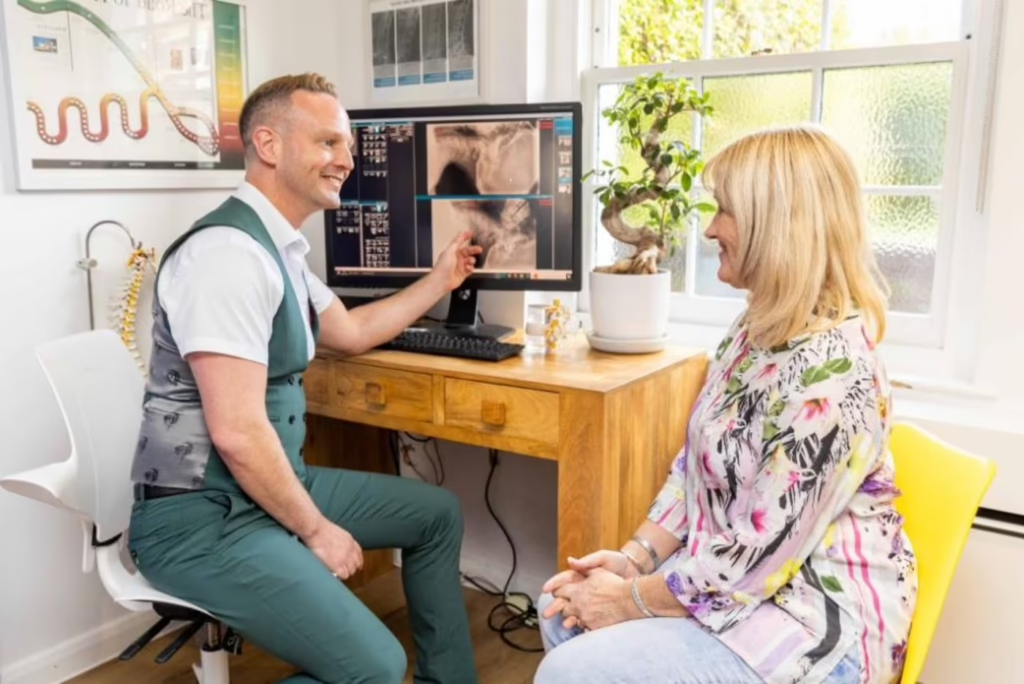
In more complex presentations, particularly cases involving disc injuries, persistent nerve irritation, long-standing pain, or significant trauma history, additional imaging may sometimes be appropriate. At The DISC Chiropractors in Surbiton, in-house digital X-rays can help assess structural changes, arthritic progression, spinal alignment, or potential red flags that may influence management decisions [77][83].
Importantly, imaging is not required for every patient. Current guidelines generally recommend imaging only when clinical findings suggest it is likely to meaningfully influence diagnosis, safety considerations, or treatment planning [1][77].
When imaging is clinically justified, modern digital X-rays typically expose patients to substantially lower radiation doses than older imaging systems [83][84]. Used appropriately, imaging can provide greater diagnostic clarity, help correlate structural findings with examination results, and support more personalised decision-making, particularly in complex or persistent spinal conditions.
X-Rays, Subluxations, and Philosophical Differences in Chiropractic
Within the chiropractic world, there is a wide spectrum of clinical philosophies, especially regarding the use of X-rays. Some chiropractors choose not to use imaging at all, relying instead on palpation, patient history, and functional testing to guide care. This approach can be reasonable for simpler, non-complicated cases involving general joint stiffness or muscular tension.
However, in cases involving suspected disc injury, nerve root compression, trauma, or more complex mechanical dysfunction, chiropractors have a professional responsibility to refer patients for imaging or specialist evaluation when clinically appropriate. Treating these cases without adequate diagnostic clarity may lead to the overlooking of important structural or neurological findings, particularly when symptoms are persistent, progressive, or accompanied by red flags [1][77].
Others use X-rays more routinely, not only for safety or diagnosis, but also to identify misalignments affecting the spine, historically referred to as “subluxation.”
Traditionally, the term subluxation referred to subtle spinal dysfunctions or misalignments believed to interfere with nervous system function. Some chiropractors still use imaging to visualise and measure these findings and may build longer-term treatment plans around their correction. However, modern evidence-based chiropractic care has increasingly shifted away from rigid structural-only models and toward broader functional, neurological, and movement-based approaches [11][99].
At The DISC Chiropractors in Surbiton, we view imaging as a valuable tool, but not one that is necessary for every patient, and certainly not something used to justify open-ended treatment plans. We use X-rays when there is a clear clinical reason, such as ruling out red flags, assessing structural involvement, or guiding management in more complex disc- or nerve-related cases. Our focus remains on function as much as structure. Just because something appears off on an X-ray does not automatically mean it is the source of pain or requires correction [77][83].
The best chiropractors in Surbiton use imaging to improve clarity, not create fear. Imaging should support better decision-making and informed consent, not pressure patients into unnecessary care. A useful question patients can ask is:
“How will these imaging findings actually change my treatment plan?”
A good chiropractor should be able to answer that clearly and confidently.
Are Surbiton Chiropractors Really Moving Bones Back Into Place?
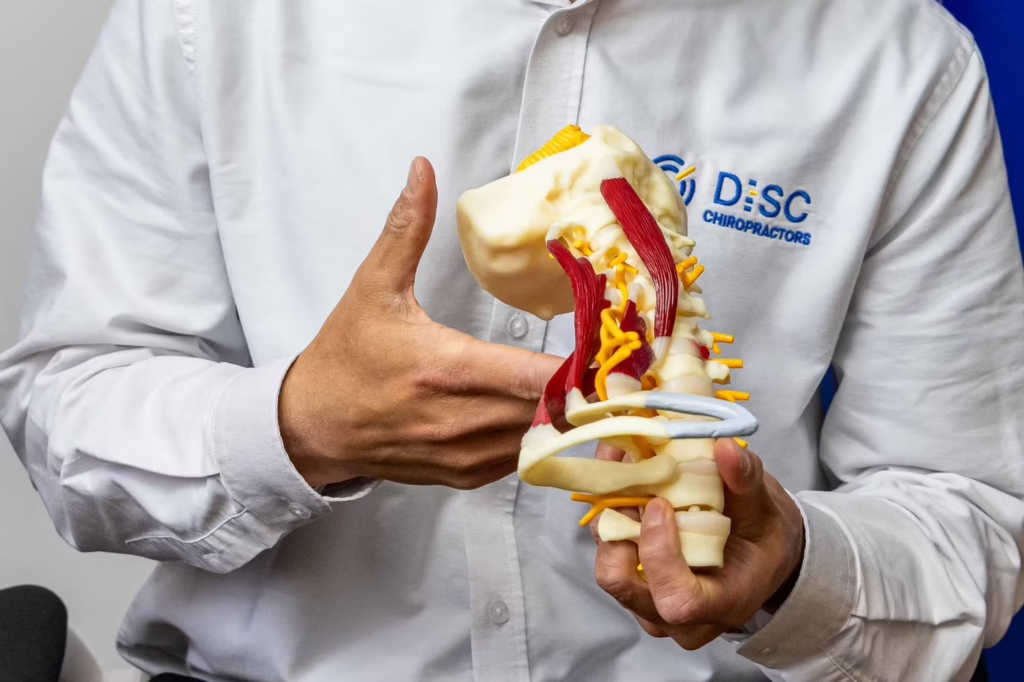
Let’s clear up one of the biggest myths surrounding chiropractic care: chiropractors are not “cracking bones back into place.” The click or pop sometimes heard during an adjustment is usually caused by gas releasing within the joint as pressure changes occur during movement, a normal process known as joint cavitation [142].
The joint is not dislocated beforehand, and the adjustment is not snapping the spine back into alignment like a Lego model being rebuilt. In most cases, what is occurring is a subtle improvement in joint movement and mechanics, which over time can lead to lasting changes.
When a restricted or poorly moving joint begins functioning more normally again, it may help reduce local mechanical stress, ease muscular guarding, and improve movement quality. These changes can contribute to reduced discomfort and improved mobility, which are often immediate treatment goals [15][40].
At The DISC Chiropractors in Surbiton, however, we do not view the adjustment itself as a standalone fix. Adjustments are integrated into a broader rehabilitation framework that includes movement retraining, neurological input, tissue preparation, stability work, and long-term structural support. The goal is not simply to create a click or temporary relief, but to help the body move, stabilise, and tolerate load more effectively over time [88][102].
What Else Science Says About Spinal Adjustments
Spinal adjustments can have effects that extend beyond the joint itself. When delivered appropriately, they may influence how the brain and nervous system process information coming from joints, muscles, and surrounding proprioceptive tissues involved in movement and body awareness [102][103].
Research suggests that spinal manipulation may influence sensorimotor integration, muscle activation, reflex responses, and aspects of motor control in certain patient groups [102][103]. Some studies have also observed changes in strength, movement coordination, and cortical processing following chiropractic adjustments, particularly in individuals with altered movement patterns or chronic dysfunction [108].
For example, research involving stroke patients found measurable improvements in aspects of strength and motor function following a short course of chiropractic care integrated into rehabilitation [143]. While these findings should not be interpreted as chiropractic “curing” neurological conditions, they do support the idea that spinal input may influence broader neuromuscular function in certain contexts.
Rather than focusing purely on “putting joints back into place,” modern chiropractic rehabilitation increasingly considers how movement, stability, coordination, muscular control, and nervous system adaptation interact [88][102].
At The DISC Chiropractors in Surbiton, we focus not only on structure, but also on function. That is why adjustments are integrated with movement assessment, muscle testing, rehabilitation drills, stability work, and progressive loading strategies rather than being used as isolated, standalone interventions.

Ways Surbiton Chiropractors Decide Where to Adjust
While the most thorough chiropractic assessments involve layered evaluation methods such as movement testing, neurological assessment, imaging when appropriate, and functional analysis, not all chiropractors approach care in the same way.
At the most basic level, some practitioners may focus primarily on the area where pain is felt, sometimes with minimal wider assessment. Although this can occasionally provide short-term symptom relief, it may overlook contributing factors elsewhere in the body or fail to address longer-term movement and compensation patterns [88][89].
Others may use approaches such as:
- Motion palpation.
- Postural assessment.
- Orthopaedic testing.
- Leg-length analysis.
- Functional movement screening.
- Soft-tissue assessment.
- Neurological or proprioceptive testing.
Different practitioners place different emphasis on these methods, and not all assessment tools carry the same level of scientific support when used in isolation.
The best chiropractors typically combine multiple sources of information rather than relying on a single test alone. Clinical reasoning often comes from combining:
- Patient history.
- Functional movement patterns.
- Tissue quality and muscular control.
- Neurological findings.
- Symptom behaviour over time.
- Patient feedback and response to care [88][102].
At The DISC Chiropractors in Surbiton, our assessment process is designed to understand how each joint, muscle group, and movement pattern fits into the wider mechanical and neurological picture. The goal is not simply to identify what feels restricted, but to understand why the body is compensating as it is and which areas are most important to address first.
Muscle Testing: How the Best Surbiton Chiropractors Uncover Hidden Dysfunction
Muscle testing is one of the tools we use to help identify where the body may be losing stability, coordination, or efficient neurological control. Importantly, it does not simply measure “strength” in the traditional gym-based sense. Instead, it helps assess how effectively the nervous system can recruit and coordinate a muscle under specific positions, loads, or movement demands [102][103].
If muscular recruitment is delayed, poorly coordinated, or inhibited, a muscle may appear to “switch off” or lose stability even in otherwise strong or athletic individuals. Research into sensorimotor integration and altered motor control suggests that changes in spinal input and joint function can influence how muscles activate and stabilise movement [102][103].
At The DISC Chiropractors in Surbiton, we use dynamic muscle testing alongside movement assessment, posture, joint mechanics, and soft-tissue evaluation to understand how the body responds under load. For example, difficulty stabilising during a single-leg stance may indicate altered pelvic control, compensatory movement strategies, or reduced joint stability elsewhere in the kinetic chain [88][102].
In more complex radiculopathy-based cases, it is also important to assess for signs of nerve root involvement before treatment begins. This may include testing reflexes, sensation, muscular strength, and myotomal patterns to identify potential neurological compromise or referral requirements [1][77].
Once more significant neurological compromise has been ruled out or appropriately managed, we then assess how specific joints and muscle groups stabilise dynamically under movement and positional stress. These types of functional loading assessments can sometimes reveal movement failures or compensation patterns that are less obvious during static examination alone [88][102].
As one of the few Certified Chiropractic Extremity Practitioners (C.C.E.P.) in the UK, our lead clinician is trained to assess how dysfunction in the shoulder, hip, ankle, jaw, or other extremities may influence loading patterns throughout the wider spine and kinetic chain.
Following treatment, whether through an adjustment, rehabilitation drill, decompression therapy, or soft-tissue intervention, we often reassess movement quality and muscular control immediately afterwards. Improvements in movement tolerance, stability, or recruitment patterns can help guide ongoing clinical decision-making and refine the rehabilitation process over time.
How We Decide Where to Adjust, and Where Not To
At The DISC Chiropractors in Surbiton, we prioritise functional relationships rather than simply chasing the area where pain is felt. This means assessing how different parts of the body load, compensate, stabilise, and adapt under stress. In many cases, the true driver of dysfunction may sit some distance away from the painful region itself [88][102].
Part of this process involves identifying whether a region is:
- Functionally restricted.
Overloaded or compensating. - Hypermobile or poorly stabilised.
- Inflamed or highly sensitised.
- Neurologically irritated or mechanically vulnerable.
This distinction matters because not every painful or restricted area should be adjusted automatically.
At The DISC Chiropractors in Surbiton, we are often cautious around regions that appear highly inflamed, structurally vulnerable, neurologically irritated, or excessively mobile. In more complex presentations, particularly disc injuries, radiculopathy, or acute nerve-root irritation, we may initially prioritise decompression therapy, laser therapy, rehabilitation, or movement-based strategies before considering more direct manual techniques [1][42].
Conversely, when a region appears functionally inhibited but structurally stable, a carefully selected adjustment may help improve movement quality, reduce protective muscular guarding, and support more efficient motor control [15][102].
The best chiropractors do not simply adjust everything that feels stiff. They assess, re-test, adapt, and respond to how the body behaves over time. Clinical decisions should not be driven purely by habit, routine, or attachment to a particular technique, but by ongoing functional assessment and patient response [88][89].
The goal of each intervention is not simply to create movement temporarily, but to help the body coordinate, stabilise, and tolerate load more efficiently over time.
What Techniques Do the Best Chiropractors in Surbiton Use?
There is no single “best” chiropractic technique. What matters most is clinical judgement, understanding which approach is most appropriate for the individual patient at a specific stage of recovery.
At The DISC Chiropractors in Surbiton, we use a broad range of methods depending on the presentation, including:
- Manual spinal adjustments [15][40].
- Instrument-assisted techniques [31][40].
- Drop-table methods [15].
- Spinal decompression therapy [42][43].
- Soft-tissue and adhesion-release approaches [47][48].
- Functional rehabilitation and movement retraining [88][102].
Each technique has its own strengths, limitations, and appropriate clinical applications.
Some patients may never receive a traditional manual adjustment, particularly during highly inflamed or acute phases involving disc injuries, nerve irritation, or significant sensitivity. Others may respond very well to carefully applied high-velocity spinal manipulation when it is clinically appropriate and well tolerated [15][40].
Good chiropractors do not simply apply the same favourite technique to every patient. They adapt their approach based on:
- Clinical findings.
- Movement behaviour.
- Neurological presentation.
- Tissue tolerance.
- Functional goals.
- Response to previous treatment [88][102].
Clinical flexibility often distinguishes higher-level rehabilitation-focused practitioners from more routine symptom-based care. Whether using decompression to reduce disc loading, laser therapy to calm irritated tissues, or extremity rehabilitation to improve kinetic-chain stability, the technique itself should always serve a broader functional goal rather than exist as an end in itself [42][50].
The best chiropractors are not loyal to a single method. They are loyal to helping patients move, function, and recover more effectively over time.
Conclusion
At The DISC Chiropractors in Surbiton, our approach combines clinical reasoning, hands-on care, movement assessment, neurological rehabilitation principles, and modern musculoskeletal science to help identify what is truly driving dysfunction rather than simply reacting to symptoms.
The goal is not to guess where to adjust, but to assess, test, monitor, and adapt treatment based on how the body responds over time. By combining adjustments with rehabilitation, movement retraining, tissue work, decompression, and, where appropriate, stability-based care, we aim to achieve more meaningful and lasting improvements in movement, resilience, and day-to-day function [88][102].
For patients who feel frustrated by short-term fixes or repetitive symptom-focused care, a more structured, function-driven approach may provide greater clarity, direction, and long-term progress.