
How Much Does it cost to see a Chiropractor in Surbiton, South-West London?
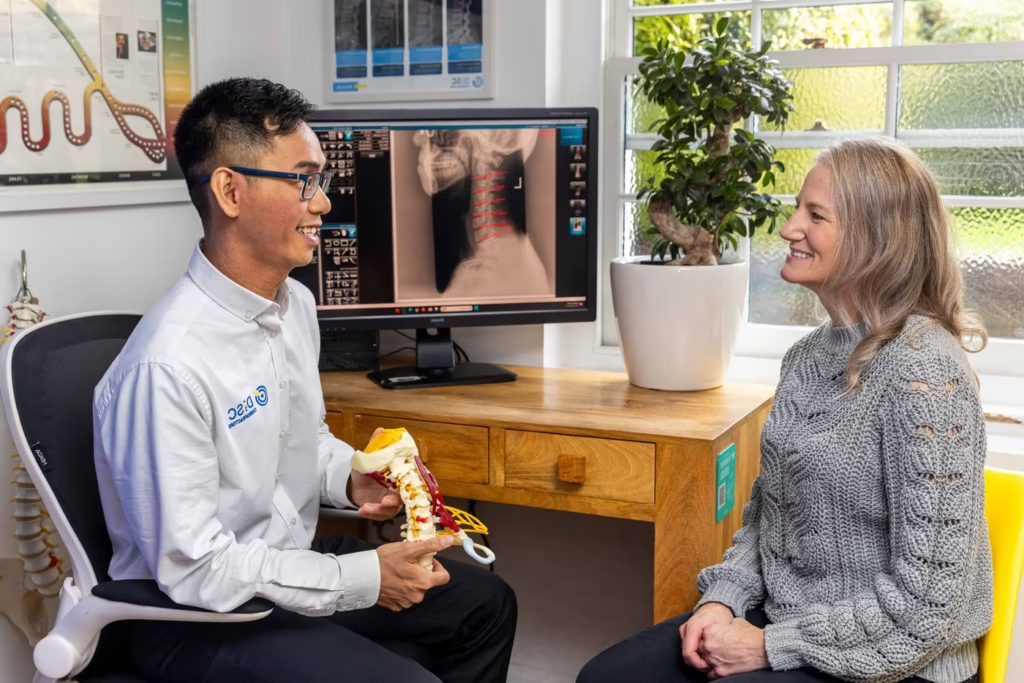

If you’re considering chiropractic care in Surbiton or the broader South-West London area, one of your first questions is likely to be: how much does it cost? And understandably so, healthcare fees can vary widely, and unlike NHS services, private care comes with a direct price tag. But while many people focus solely on the cost per session, the real value lies in understanding what that fee actually covers, how different clinics structure their pricing, and how your overall treatment journey may affect the total investment. [20]
Getting started is simple: you can book a consultation or a free discovery call with us to explore your options and find a plan that best fits your needs.
Chiropractic care in Surbiton or Greater London isn’t one-size-fits-all. Fees can vary significantly based on the type of clinic, the complexity of your condition, the level of technology available, and the practitioner’s expertise. Imagine this scenario: let’s say a patient, John, living in Surbiton, who recently suffered a severe disc injury, visits two different chiropractic clinics. At the first, he receives a simple manual adjustment for a modest fee, leaving with temporary relief but little change in his long-term condition.
At the second clinic, he is offered a comprehensive, staged recovery programme that includes detailed assessment, clinically justified imaging where appropriate, and advanced therapies tailored specifically to his condition. While the upfront cost is higher, this approach offers John a more structured path toward long-term recovery, emphasising overall value rather than simply the lowest session price. [79]
Before diving into the details, consider for a moment why you’re exploring chiropractic care. Are you looking for long-term relief, a quick fix, or a more advanced rehabilitation approach because other options have not worked for you? Reflecting on what you need from your care experience can make understanding the following breakdown much more personalised and relevant.
In this guide, we’ll break down what you can expect when it comes to chiropractic pricing in Surbiton and Greater London. We’ll also explore the factors that influence these costs, how chiropractic compares to other private healthcare options such as physiotherapy, osteopathy, or orthopaedic consultants, and how to determine whether you’re getting genuine value rather than simply choosing the cheapest option. [22]
To help you make a confident and informed decision, we’ll also walk you through what’s typically included in your fee, whether insurance may help, and what can make specialist care a worthwhile investment for long-term musculoskeletal health outcomes. [88]
Let’s begin with the basics: how much do most Surbiton chiropractors actually charge?

Typical Chiropractic Fees in Surbiton & Greater London
When people first consider chiropractic care, pricing can seem like a minefield. Rates vary dramatically across London, even between clinics that appear to offer similar services. In Surbiton and the surrounding areas of South-West London, patients can often find a balance between clinical quality and affordability, although the overall value of care still depends heavily on what is included within each appointment. [22]
A typical chiropractic session in Greater London will cost somewhere between £50 and £80 for a follow-up appointment. These sessions often involve manual adjustments and shorter consultation times. However, not all appointments are created equal. Some clinics allocate shorter appointment slots to keep fees lower, which may reduce the level of reassessment, treatment integration, or individualisation available during care.
Initial consultations typically range from £90 to £150. This appointment lays the foundation for your care and may include a spinal examination, a posture assessment, range-of-motion testing, and, occasionally, diagnostic imaging such as X-rays. Be aware that not all clinics include imaging in the initial fee; some may offer it as an optional add-on or require an external referral, which can introduce additional costs and delays.
A high-quality initial consultation should be comprehensive and transparent. It may include a spinal examination, posture assessment, range-of-motion testing, and clinically justified imaging where appropriate. In more complex presentations involving nerve pain, suspected disc injury, or persistent sciatica, additional diagnostics may play an important role in helping guide safe and appropriate management decisions. [83]
At The DISC Chiropractors in Surbiton, our approach is intentionally different. Imagine Aaron, a local Surbiton resident, who, upon his first visit, was relieved and surprised to receive same-day X-ray diagnostics. This immediate clarity about his condition provided him with peace of mind and enabled a collaborative discussion of his treatment plan from the start. We believe that everyone deserves a clear and accurate understanding of their condition before deciding on any course of care. (NB: all X-rays must be clinically justifiable; not every patient is guaranteed to qualify). [4]
This is why we’ve deliberately kept our initial consultation costs accessible, pricing new patient examinations between £49 and £69, depending on whether you choose to see one of our associates or the clinic director. Importantly, this fee includes any clinically necessary X-rays taken during the consultation, a cost we absorb because we believe access to accurate diagnostics should never become a barrier to appropriate care. For us, making that first step accessible reflects our commitment to transparency, patient education, and informed decision-making.
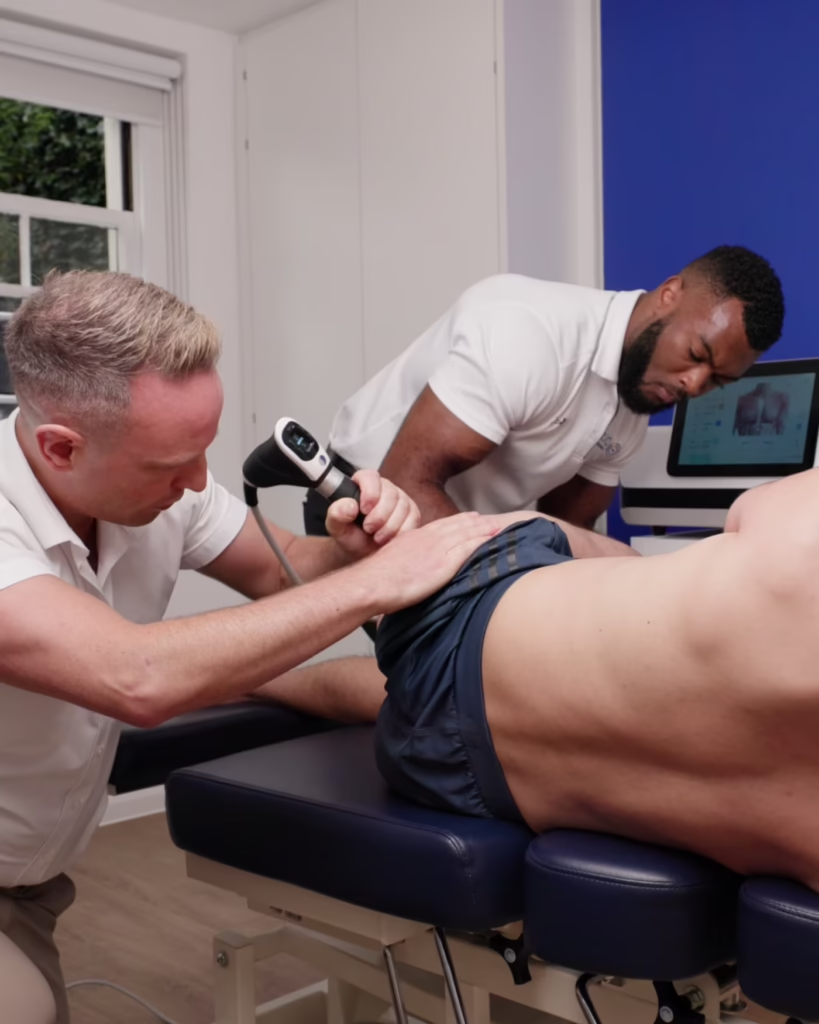
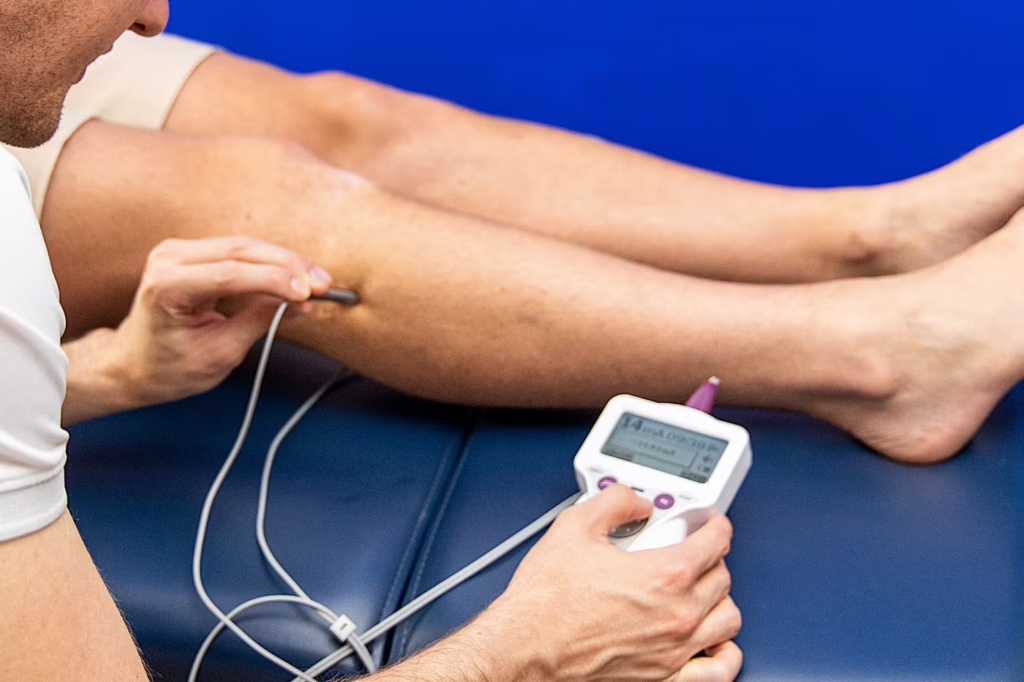
However, as a specialist clinic dealing with complex disc and nerve-related conditions, the overall cost of care is naturally often higher than at a generalist, adjustment-only clinic treating simpler presentations. That’s because our sessions may involve more than manual treatment alone, potentially incorporating spinal decompression therapy, Class IV laser therapy, shockwave therapy, guided rehabilitation, and structured progress evaluation depending on the patient’s diagnosis and stage of recovery. [42]
At The DISC Chiropractors in Surbiton, each plan is tailored to the individual diagnosis rather than following a one-size-fits-all template. We use structured treatment pathways based on the severity, irritability, and stage of the condition identified during assessment. Our aim is to help reduce unnecessary delays, repeated ineffective treatment cycles, and progression toward more invasive interventions where possible through targeted conservative care. [1]
Note that whilst we focus on complex cases, if it were determined that this level of care was unnecessary, a simpler mainstream treatment approach would always be discussed as an alternative.
To determine the suitability of our specialist care, each patient undergoes a comprehensive assessment that considers the complexity of their condition, symptom history, previous treatment response, and long-term goals. We look for indicators of more persistent or mechanically complex problems, such as recurring nerve pain, significant disc injuries, or repeated treatment failure elsewhere. [20]
If a patient’s condition is assessed as suitable for a more straightforward, generalist approach, we will recommend appropriate alternatives to ensure they receive the most efficient and appropriate care. This helps patients better understand whether specialist intervention is genuinely necessary, making their healthcare journey more informed, transparent, and personalised.
Here’s a quick overview of what to expect in terms of pricing:
Service | Typical Cost | What May Be Included |
Initial Consultation | £49–£150 | Case history, examination, posture assessment, and sometimes imaging |
Standard Follow-up Visit | £40–£80 | Shorter sessions, often adjustment or manual-therapy focused |
Specialist Session (DISC) | £48–£140 | May include decompression, laser, shockwave, rehabilitation, and integrated therapies |
What Factors Influence the Cost?
The price you pay for chiropractic care isn’t arbitrary; a combination of clinic-specific and treatment-specific variables shapes it. While many people compare fees per session as though they are directly interchangeable, it is often far more useful to look at what those fees represent in terms of clinical quality, available technology, appointment structure, and long-term patient outcomes. [20][22]
Location is a key factor. Central London clinics often charge the highest rates due to higher operating costs, demand, and the prestige associated with operating in the capital. Suburban areas such as Surbiton tend to sit in the mid-range, often offering access to high-quality care and modern technology without some of the price inflation commonly associated with city-centre healthcare settings. Rural clinics are often more affordable due to lower overheads, although the availability of specialist services and advanced rehabilitation technology can vary significantly.
Additionally, there is a broader north-south divide in UK private healthcare pricing, with clinics in the South of England often charging more than those in the North due to differences in living costs, property values, and local healthcare market expectations.
Practitioner expertise also plays a significant role. Chiropractors with additional training or specialist clinical focus, particularly in areas such as disc injuries, rehabilitation, or nerve-related conditions, may charge more than generalist clinics. However, more advanced assessment procedures, structured rehabilitation planning, and targeted conservative care approaches may help improve treatment precision, reduce repeated ineffective treatment cycles, and support better long-term management strategies in more complex cases. [1][79][88]
Technology and diagnostics can also influence pricing. Clinics that invest in tools such as digital X-rays, spinal decompression systems, Class IV laser therapy, shockwave therapy, or advanced rehabilitation equipment naturally carry higher operating costs. While this may increase the cost of care, these technologies can sometimes improve patient tolerance, treatment precision, rehabilitation efficiency, and non-invasive management options when integrated appropriately into a broader care plan. [42][43][45][46][50][51]
In short, understanding what drives costs helps patients focus less on headline pricing alone and more on the quality, structure, and long-term value of the care they receive. Conservative, structured approaches that combine education, rehabilitation, and appropriately selected manual therapies are increasingly recognised within modern musculoskeletal care pathways. [18][88]
The way care is structured matters too. Some clinics operate shorter appointment models designed around high patient volume and basic manual treatment. Others, like DISC, utilise longer appointments that may include diagnostics, structured reassessment, rehabilitation planning, and multiple integrated therapies within a single visit. Best-practice musculoskeletal care increasingly emphasises individualised treatment, regular reassessment, and multimodal rehabilitation rather than relying on a single technique. [20][79]
To add context, here’s how these variables can influence pricing:
Factor | Typical Effect on Cost | Why It Matters |
Clinic Location | Higher in Central London | Surbiton often offers strong value relative to central locations |
Chiropractor’s Experience | Specialist-focused clinics may charge more | Greater clinical depth and rehabilitation focus |
Diagnostic Tools | Adds cost but may improve assessment precision | Imaging and movement analysis were clinically appropriate |
Treatment Technology | Raises operational and session costs | Decompression, laser therapy, shockwave, and integrated rehabilitation |
Session Format | Longer appointments usually cost more | Allows for more detailed reassessment and multimodal care |
Understanding these factors allows patients to move beyond sticker shock and focus on what really matters: safety, structure, value, and the quality of the overall recovery journey. [23][24]

What’s Included in the Price (and What’s Not)?
When comparing clinics, one of the most important things to evaluate isn’t just the headline fee but what it actually includes. This is where the true value of chiropractic care often becomes clearer. Two clinics might charge the same £60 for a session, yet the time, clinical depth, rehabilitation support, and level of individualisation provided can differ dramatically. [20][22]
Some clinics advertise attractively low rates or introductory voucher offers, but then apply additional charges for diagnostics, progress reviews, rehabilitation support, or imaging referrals. In some cases, the initial fee may cover only a brief consultation, with further assessment or rehabilitation recommendations requiring separate appointments. Other clinics operate in open-plan or shared treatment environments where multiple patients are seen simultaneously with limited one-to-one interaction. While this model may suit some patients, it can reduce opportunities for detailed reassessment, personalised progression, or real-time adaptation of treatment strategies. [79]
At The DISC Chiropractors in Surbiton, we take a different approach. Our pricing reflects the broader scope of care provided at each stage of recovery. Every patient receives a detailed initial assessment, including any clinically justified X-rays where appropriate, alongside a clear diagnostic explanation and a personalised care plan outlining expected progression, treatment structure, and projected costs from the outset. [4][83]
Our ongoing sessions are designed to provide more than treatment alone. Depending on the diagnosis and stage of recovery, appointments may include spinal decompression therapy, Class IV laser therapy, neuromuscular re-education, shockwave therapy, rehabilitation exercises, and structured reassessment to monitor progress and adapt the care plan where necessary. [42][45][49][50]
We also ensure that each session includes sufficient time to reassess your body’s response, adjust treatment intensity where appropriate, and adapt the rehabilitation strategy accordingly. Patients are not rushed through care pathways, and we place strong emphasis on transparency, continuity, and informed decision-making throughout treatment. This can be particularly important in more complex presentations involving disc herniations, nerve irritation, or recurring sciatica. [1][20]
Here’s a summary to help distinguish typical offerings:
Feature | Some Clinics | DISC Approach |
Initial Consultation | Basic exam; imaging often extra | Full history, examination, and X-rays if clinically indicated |
Imaging (e.g. X-ray) | Frequently charged separately | Included within the initial assessment, where appropriate |
Progress Reviews | Extra charge or infrequent | Structured reassessment built into care planning |
One-to-One Time | May involve shared/open-plan settings | Private, structured, one-to-one care every visit |
This difference in what’s included helps explain why some clinics may appear cheaper upfront yet provide a less comprehensive or less structured rehabilitation experience over time. [23][24]
Comparing the Alternatives: Private Physio, Osteo & Consultants
While some musculoskeletal conditions can be addressed through NHS services, access to timely care is often limited. Long waiting lists, restricted appointment availability, and limited hands-on treatment mean many patients feel stuck or underserved, especially when symptoms are persistent, disruptive, or worsening. Consider this: how long have you already waited for relief? This question not only highlights the urgency but also frames why many patients explore private care pathways to access quicker diagnosis, more consistent follow-up, and broader treatment options. [104][110]
When evaluating the cost of chiropractic care, it’s important to compare it alongside other forms of private musculoskeletal healthcare. Many patients explore physiotherapy or osteopathy while considering chiropractic, while others pursue private consultations with orthopaedic surgeons, spinal consultants, or pain specialists when symptoms persist or become more severe.
Physiotherapy, both NHS-led and private, is often the first point of contact for musculoskeletal conditions. It commonly focuses on exercise-based rehabilitation, mobility work, and functional recovery. While highly valuable, the structure and content of physiotherapy sessions can vary significantly depending on the clinic, practitioner, and appointment duration. Some providers incorporate extensive manual therapy, while others focus primarily on exercise prescription and self-management strategies. [88]
Osteopathy, like chiropractic, incorporates hands-on manual therapy and often takes a broader whole-body approach to movement and musculoskeletal function. Training backgrounds, treatment styles, and clinical focuses vary considerably among practitioners, particularly in areas such as rehabilitation, sports injuries, disc conditions, and chronic pain management. Osteopathic sessions are often slightly longer, which some patients prefer when seeking a more time-intensive treatment experience. [39][123]
If conservative care proves ineffective, some patients progress toward private consultant-led pathways. This may involve spinal MRI, specialist consultation, injections, or surgery, depending on the severity of the condition and the patient’s response to prior care. These interventions can be valuable and clinically appropriate in certain cases, but they are also more invasive, carry more risks, are generally more expensive (when paid privately) and are intended to be reserved for patients who fail to improve with structured conservative management. [1][18]
To summarise:
Private Physiotherapy | £60–£90 per session | Rehabilitation-focused, exercise-led care [80][88] |
Private Osteopath | £55–£100 per session | Manual therapy with a broader holistic focus [124] |
Private Chiropractic (General) | £40–£70 follow-up | Manual-only sessions; variable clinical depth [20][79] |
Specialist Chiropractic (DISC) | £48–£140/session | Includes imaging, decompression, laser, rehab, and 1-to-1 care [78][79] |
Flagship Disc Regeneration Programme | £2256 | Most advanced non-invasive program currently available (Success rate: 80% of patients achieve 80% improvement in just 9weeks) |
Private Orthopaedic Consultant | £200–£350 + MRI | Typically recommends imaging; reviews for surgical options |
Spinal MRI Scan (private) | £300–£700 | Diagnostic; often the first step in a consultant-led path |
Spinal Injections (private) | £1,000–£2,500 | Temporary relief; not curative |
Spinal Surgery (Discectomy) | £8,000–£12,000+ | Invasive; appropriate only for select cases |
*Prices are from internal clinic research and have not been independently verified.
Understanding how chiropractic compares to these different care pathways, both financially and clinically, can help patients make more informed healthcare decisions. While injections or surgery may sometimes appear to offer a quicker solution, most modern musculoskeletal guidelines recommend beginning with appropriately structured conservative care before progressing toward more invasive interventions where clinically appropriate. [1][18][88]

Payment Options & Insurance Support
Navigating the financial side of private healthcare can feel just as overwhelming as understanding the clinical options themselves. That’s why at The DISC Chiropractors in Surbiton, we aim to make the process as transparent, straightforward, and flexible as possible, whether you’re fully insured, self-paying, or somewhere in between.
For those with private health insurance, we accept most major UK providers, including AXA, Bupa, Vitality, Aviva, and WPA. Many patients are eligible to claim part or all of their treatment costs, although coverage varies significantly depending on the insurer, referral requirements, excesses, treatment type, and annual limits within each policy. We’re happy to assist with pre-authorisation, provide supporting documentation where required, and help patients better understand how their cover may apply.
(See our step-by-step guide on insurance.)
If you’re self-paying, we’ve designed our fee structure to be flexible and to support informed choice. We offer both pay-as-you-go sessions and discounted prepaid care plans for patients pursuing longer-term rehabilitation programmes. Each pathway is supported by clearly defined clinical goals, structured reassessment procedures, and ongoing progress monitoring designed to help patients understand how care is progressing over time. [20][98]
Our longer-term rehabilitation pathways have been developed through a combination of clinical experience, evidence-informed practice, and ongoing refinement of treatment processes. This helps patients gain a clearer understanding of expected progression timelines, rehabilitation structures, and the level of commitment often required when managing more persistent disc, nerve, or musculoskeletal conditions. [79][88]
This transparency enables patients to make informed decisions with confidence, particularly when managing complex disc and nerve conditions, where structure, clarity, and consistency are essential for achieving lasting results. For common conditions such as mild disc injuries or tension-related nerve pain, patients can typically expect 9-12 sessions over 6-8 weeks. This generalised bandwidth” level of knowledge and understanding on how disc injuries progress, helps set realistic expectations and aids in planning both time and financial commitment.
To help ensure patients never feel pressured into committing prematurely, many providers begin with individual sessions before discussing whether a structured care plan may be appropriate. At DISC, if a patient chooses to transition into a prepaid programme after their initial visits, the cost of those early sessions can be deducted from the overall plan cost. This allows patients to experience the clinic environment, treatment approach, and rehabilitation structure before deciding whether longer-term care feels appropriate for them.
Importantly, none of our care plans are financial contracts. If a patient decides to discontinue care early for any reason, any unused sessions remain fully refundable. Our priority is always to support informed decision-making, patient autonomy, and appropriate clinical care rather than creating pressure around long-term financial commitment. Structured care plans also help improve scheduling consistency, rehabilitation continuity, and adherence to agreed treatment goals over time. [80]
We also offer PayPal FlexiPay and Shopify-integrated instalment options for patients who prefer to spread the cost of care in a more manageable and flexible way.
Private Insurance | ✅ | Assistance with pre-authorisation and supporting documentation |
Pay-as-you-go | ✅ | Flexible session-by-session care |
Prepaid Care Blocks | ✅ | Up to 20% off; initial sessions are deducted if a plan is chosen later within the first 2 weeks of care |
Instalment Plans | ✅ | Available through PayPal FlexiPay and Shopify |
Refund Policy | ✅ | Patients can exit care at any time; unused sessions are fully refundable. |
Whether you’re insured or self-funding, our goal is to ensure that finances never become an unnecessary barrier to receiving appropriate assessment, rehabilitation guidance, and high-quality conservative care. If you have questions about how to make treatment more accessible for your situation, ask. We’re here to help.

Final Thoughts: It’s Not Just What You Pay – It’s What You Get
Cost is an important consideration, but it should never be the only one. When it comes to your spinal health, nervous system, mobility, and overall quality of life, the more important question is often not simply, “What’s the cheapest clinic available?” but rather, “Which approach offers the clearest diagnosis, safest rehabilitation pathway, and best opportunity for meaningful long-term improvement? [1][20]
Imagine the relief of tying your shoes without that familiar twinge, lifting your child without hesitation, or walking through a park without constantly thinking about pain. For many patients, these everyday milestones represent the true value of effective musculoskeletal care, not simply symptom reduction, but greater confidence, function, movement freedom, and independence over time. [88][98]
At The DISC Chiropractors in Surbiton, we believe that transparency, structure, clinical depth, and integrated rehabilitation strategies help create a more supportive and personalised patient experience. While our pricing reflects the specialist nature of the services we provide, we also work hard to maintain accessibility through inclusive assessments, flexible payment structures, and patient-centred care planning. [79][80]
For patients facing complex disc injuries, nerve pain, or recurring spinal problems, specialist rehabilitation is not simply about receiving treatment. It is about understanding the condition clearly, having a structured plan, and feeling supported throughout the recovery process. Our aim is always to help patients move toward greater long-term confidence, resilience, and self-management wherever possible. [18][88]
If you’re weighing your options or unsure where to begin, we invite you to book a free discovery call. We’ll discuss your goals, review your situation, and help you understand whether our approach may be appropriate for your needs. Booking is simple via phone, email, or our online booking system, and we’ll guide you through the next steps as clearly as possible.
Because when it comes to your health, value is rarely found in the lowest price alone. More often, it comes from receiving the right care, at the right time, with the right level of support and clinical guidance.
Special References
(2024). Private surgery: what you need to know. which.co.uk/reviews/private-healthcare/article/private-surgery-what-you-need-to-know-aEBlD9W36qFr. https://www.which.co.uk/reviews/private-healthcare/article/private-surgery-what-you-need-to-know-aEBlD9W36qFr
(n.d.). The Cost of Chiropractic Care in London: What You Need to Know. harveyyoungaht.com. https://www.harveyyoungaht.com/the-cost-of-chiropractic-care-in-london-what-you-need-to-know/
(2024). What is the private healthcare cost in the UK?. Yawise.com. https://yawise.com/cost-guides/what-is-the-private-healthcare-cost-in-the-uk/
(n.d.). Spine Care as a Framework for Chiropractic Specialization. chiro.org. https://chiro.org/research/ABSTRACTS/Spine_Care_as_a_Framework.shtml
(2025). Private MRI Scan Costs in the UK 2025 Guide. wecovr.com/guides/private-mri-scan-costs-in-the-uk-2025-guide/. https://wecovr.com/guides/private-mri-scan-costs-in-the-uk-2025-guide/