
What Not To Do After a Chiropractic Adjustment
What Not to Do After a Chiropractic Adjustment: The 7 Common Mistakes That Delay Recovery
This guide is written for the go-getters, the patients who leave their adjustment feeling fantastic and immediately start planning their return to lifting, running, cleaning the house, reorganising the garage, or finally fixing the shed roof they have been ignoring for six months. The motivation is admirable. The problem is that healing is not just about feeling better; it is about giving your body enough time, movement, recovery, and strategy to stabilise and adapt properly.
It is also important to understand that recovery is rarely perfectly linear. Small setbacks, flare-ups, or periods of frustration can occur even when overall progress is moving in the right direction. Recognising this early helps patients stay reassured, consistent, and focused, rather than abandoning progress when symptoms fluctuate.
Low back pain and spinal issues are well known for their recurrence rates, particularly when patients return too quickly to old movement habits without improving long-term strength, stability, and load tolerance [11]. This guide walks through the most common mistakes people make after treatment with a good chiropractor in Surbiton and how to avoid sabotaging the progress you have already worked hard to achieve.
1. Do Not Go Straight Back to Your Old Routine
Even if you feel noticeably better after your adjustment, your body is still adapting internally. Pain relief is often the first to improve, but deeper structural, muscular, and neurological adaptations usually take longer [2][88]. This is especially true in more complex cases involving disc irritation, chronic guarding, instability, or long-standing compensation patterns.
It’s human nature to test one’s limits, but one of the biggest mistakes patients make is assuming that reduced pain automatically means tissues are fully ready for unrestricted loading again. Jumping straight back into heavy lifting, intense workouts, repetitive bending, or physically demanding chores too early can easily provoke irritation and undo early progress [2][4].
That does not mean you should become inactive. In fact, the opposite is usually true. Gentle movement, walking, hydration, light mobility work, and sensible activity often help the body consolidate and integrate the changes created during treatment far more effectively than complete rest.
The key is controlled progression. Think of the first 24 to 48 hours after treatment less as “doing nothing” and more as avoiding the temptation to stress-test your recovery before the body has properly adapted.
This is also an opportunity to interrupt the same loading patterns, postures, and movement habits that may have originally contributed to the problem. Many patients improve temporarily, only to revert to identical physical behaviours the moment their symptoms subside. Long-term recovery usually requires more than symptom relief alone. It requires building new habits, better movement tolerance, and more resilient loading strategies over time [2][3][4].
If you are unsure how quickly to return to training, running, yoga, gym work, or physical labour, ask your chiropractor directly. Good chiropractors in Surbiton should adapt recommendations to your condition, nervous system sensitivity, movement tolerance, and stage of recovery rather than giving every patient the same generic advice.
2. Do Not Ignore Your Fitness Baseline
If you have been away from training for weeks, months, or years, the sudden improvement in movement or reduction in pain after treatment can sometimes create a false sense of readiness. Many patients feel so much better that they immediately try to return to their previous workout intensity, only to overload tissues that are still adapting underneath the surface [3][4].
Even in patients who already train regularly, temporary reductions in pain do not automatically mean the body has fully rebuilt stability, movement tolerance, or resilience. The nervous system, supporting muscles, and connective tissues still need time to adapt to new loading patterns and biomechanical changes created through treatment and rehabilitation [3][4][88].
This is why good chiropractors in Surbiton often recommend a gradual return to loading rather than an immediate return to maximal effort. In practical terms, that may mean temporarily reducing weight, intensity, training volume, running mileage, or recovery demands while your body consolidates the changes.
Importantly, fitness and resilience are not always the same thing. Someone may have good cardiovascular fitness or be physically strong yet still move poorly, compensate heavily, or lack efficient spinal stability under fatigue. The goal is not simply to return to activity quickly, but to return with better control, tolerance, and movement quality than before the injury occurred.
A good chiropractor should be able to help guide this transition. At The DISC Chiropractors in Surbiton, we regularly help patients modify gym programmes, training schedules, and loading strategies so they can continue progressing without repeatedly aggravating the same tissues or movement patterns.
3. Do Not Skip the Core Engagement
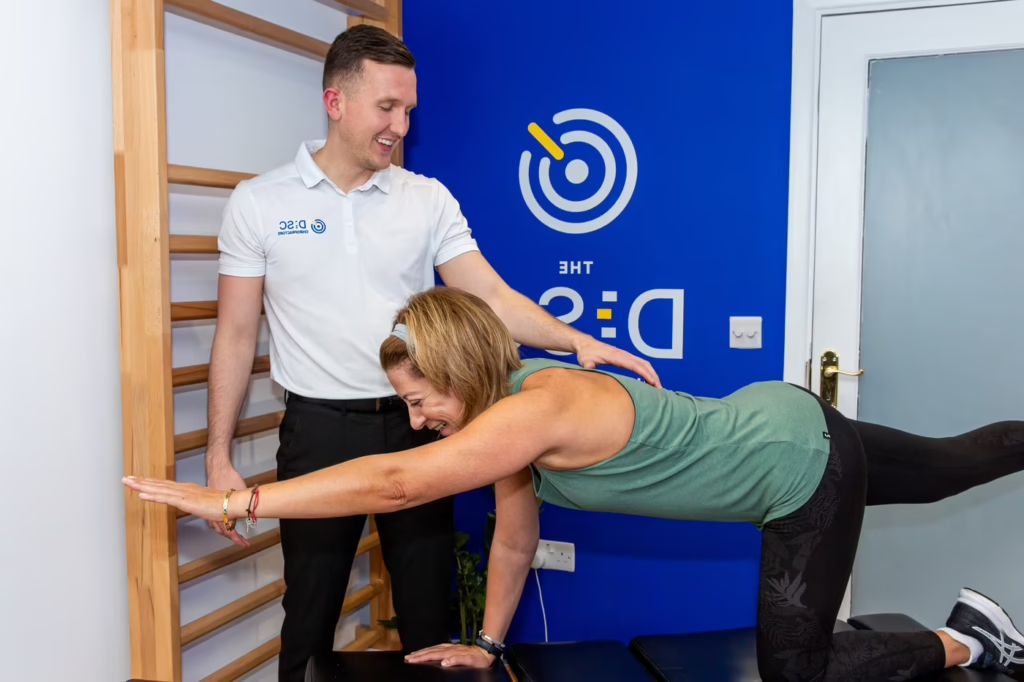
Whether you are lifting weights, unloading the dishwasher, carrying shopping bags, or picking up your child, poor spinal stability and core coordination are among the most common reasons symptoms flare up again after treatment. Rehabilitation does not happen only during exercises in the clinic; it happens in the thousands of small movements you perform throughout the day.
“If you cannot brace it, you probably should not lift it.”
Core engagement is not about aggressively tensing your stomach or “sucking in” your abs. Effective core control relies on the coordinated activation of the deeper stabilising system, including the transversus abdominis, internal obliques, diaphragm, pelvic floor, and deep spinal stabilisers, working together to regulate pressure and dynamically support the spine during movement [5][6][13].
This becomes particularly important in patients with disc injuries, pelvic instability, chronic low back pain, or long-standing compensation patterns. Many of these patients overuse superficial muscles while underutilising the deeper stabilising system, creating excessive compression, poor load transfer, and inefficient movement strategies over time [5][6][14].
Good rehabilitation, therefore, focuses not only on strength but also on breathing mechanics, pelvic control, spinal positioning, and movement coordination. Learning to brace properly during everyday activities, such as standing from a chair, carrying shopping, reaching, bending, or getting in and out of the car, often matters just as much as formal rehab exercises themselves.
Over time, these repeated “micro-moments” of better movement and improved stabilisation help retrain the body’s default patterns, so spinal support becomes more automatic rather than something patients only think about during exercises. Consistent core awareness outside the gym is one of the most overlooked ways to reduce reinjury risk and improve long-term resilience after chiropractic care [14][19].
4. Do Not Disregard Pain Signals
Your body has a highly intelligent signalling system, and pain is often its first warning sign. This becomes especially important after treatment, when you may feel looser, more mobile, or energised long before your tissues and nervous system have fully adapted to new movement patterns [2][3][15].
A good rule to remember is:
“Better form before heavier load.”
At The DISC Chiropractors in Surbiton, we often use a simple “Traffic Light” system to help patients judge what level of discomfort is acceptable during recovery [9][10].
🟢 Green Light: Mild discomfort, muscular fatigue, or stiffness during activity that settles within roughly 20 to 30 minutes afterwards is generally considered acceptable, particularly early in rehabilitation. These sensations are usually part of normal movement adaptation and rebuilding tolerance after injury or inactivity [3][10].
→ This zone is generally considered productive and safe.
🟠 Amber Warning: Pain that builds progressively during activity or lingers for several hours afterwards usually means you have exceeded your current tolerance level. This often indicates that load, technique, volume, posture, or recovery needs adjusting rather than stopping activity entirely [3][4][9][16].
→ Reduce intensity, modify technique, or improve recovery until symptoms return to the green zone.
🔴 Red Light: Sharp, shooting, electric, spreading, or significantly worsening next-day pain is a sign the system has likely become overloaded. This is especially important if symptoms begin radiating into the arm, leg, or rib region, or are accompanied by neurological symptoms such as numbness, weakness, or severe spasm.
That said, not every sudden twinge means damage. Particularly after injury, the nervous system may briefly trigger protective tension when reintroducing movements it no longer fully trusts. If slowing down, improving posture, resetting your brace, or repeating the movement more carefully removes the discomfort entirely, it was likely a temporary protective response rather than true aggravation.
However, if symptoms continue to build, spread, or leave you significantly worse afterwards or the next day, your body is signalling that the current load has exceeded its capacity.
→ Stop the activity and discuss the response with your clinician or local Surbiton chiropractor.
These same principles apply outside the gym too, whether lifting, shopping, gardening, sitting for long periods, carrying children, or performing repetitive daily tasks. Learning to interpret discomfort intelligently, rather than simply ignoring it or fearing it, is one of the most important parts of long-term recovery and self-management [9][10].
It is also important to distinguish between normal post-exercise soreness and warning signs of irritation. DOMS (Delayed Onset Muscle Soreness) usually appears 24 to 48 hours after unfamiliar or intense exercise, feels dull and diffuse, and often improves with movement. By contrast, joint irritation or nerve-related symptoms tend to feel sharper, more localised, or radiating, and may worsen during or after activity [3][10].
5. Do Not Confuse Rest With Inactivity
If you are someone who likes to stay busy, train hard, or constantly stay productive, rest can feel uncomfortable. Equally, some patients go home after an adjustment and spend the rest of the day collapsed on the sofa, barely moving. Both extremes can work against recovery.
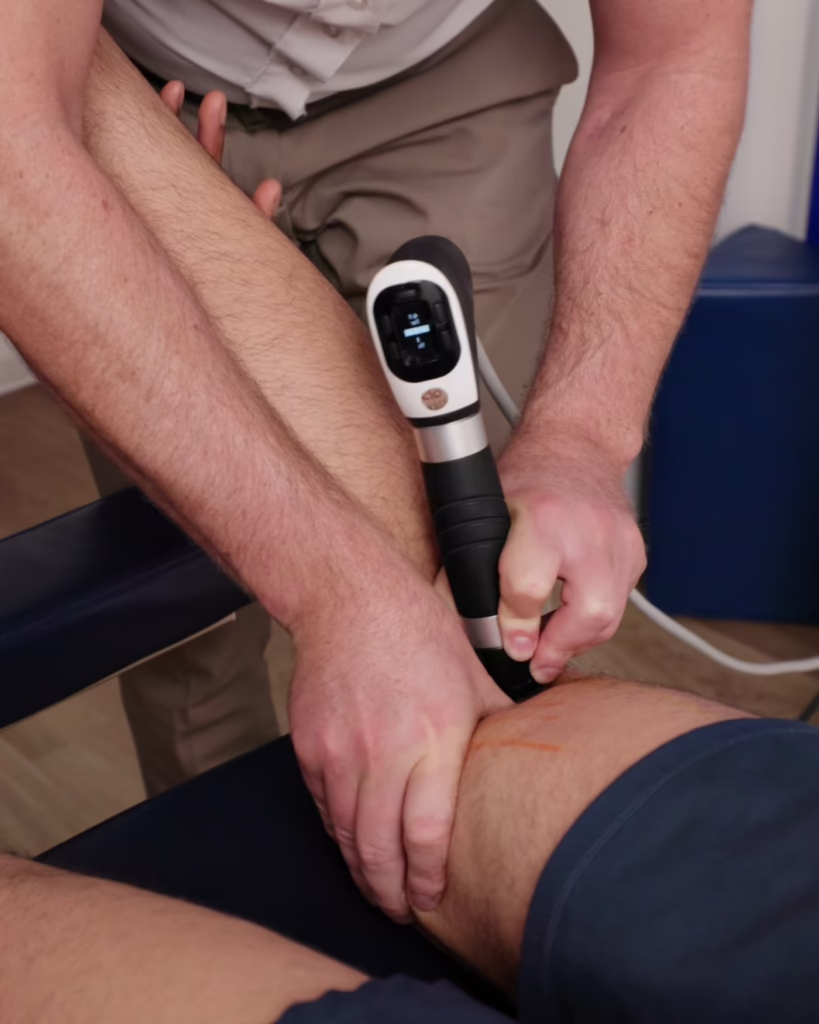
There is a difference between rest and bed rest. Rest does not mean complete inactivity. It means avoiding activities that make the pain worse and creating the right conditions for your body to adapt to the changes brought about by treatment and rehabilitation. Current low back pain guidelines consistently encourage graded movement and activity rather than prolonged bed rest or fear-based avoidance of movement [2][3][4][17].
Chiropractic care is designed to restore movement and improve tolerance to activity, not create dependency or fear around movement. At the same time, tissues and the nervous system still need space to adapt. Going straight back into high-intensity activity too quickly can overload the system, while prolonged inactivity often increases stiffness, guarding, and deconditioning.
Instead, think in terms of active recovery. Gentle walking, mobility work, positional exercises, light gym activity, and controlled movement often help reinforce the work done during treatment without overwhelming sensitive tissues [3][4]. For disc-related cases at The DISC Chiropractors in Surbiton, this may also include directional preference or positional exercises designed to reduce mechanical irritation and calm the nervous system.
The goal is to stay within your body’s adaptive range. Movement should generally leave you feeling looser, calmer, or more capable afterwards rather than progressively aggravated. Use the traffic light system; motion is medicine, but only when applied intentionally.
6. Do Not Neglect Recovery Inputs
A chiropractic adjustment may help create the conditions for change, but recovery still depends heavily on what happens between visits. Your body requires adequate sleep, hydration, movement, nutrition, stress regulation, and the capacity to recover to repair tissue, regulate inflammation, and adapt to new movement patterns effectively [2][3][18].
Key recovery inputs include:
- Hydration: your discs and joints rely on water to stay supple and function well. Aim for roughly 1.5 to 2 litres per day, adjusted for your size and activity.
- Sleep: most healing occurs during deep sleep. Target 7 to 9 hours with decent sleep hygiene.
- Nutrition: emphasise anti-inflammatory whole foods. Reduce refined sugar, seed oils, and ultra-processed snacks.
- Supplements: It is crucial to ask your chiropractor whether you are a candidate for support, such as:
- Magnesium for muscle relaxation
- Vitamin D for bone and immune health
- B12 for nerve support
- Omega-3s for inflammation control
Not all supplements are appropriate for everyone. Some supplements can interact with medications or have side effects, so proper guidance ensures safe and effective use.
- Stress: your nervous system must feel safe to heal. Incorporate breathing drills, mindfulness, or gentle walks.
- Posture: A more efficient posture reduces the energy required to hold you upright, which takes pressure off irritated joints and tissues.
- Core control: core stability in everyday life and in sport is vital for maintaining structure and function and, therefore, for reducing pain.
Ignoring these factors is like planting seeds and never watering them. Your nervous system needs more than good technique on the bench; it needs a supportive environment in daily life.
7. Final thought: Do Not Dismiss the Care Plan Just Because You Feel a Bit Better
Feeling better is an important milestone, but it is rarely the finish line. Pain is often the first thing to improve, while the deeper issues involving stability, movement control, tissue tolerance, and functional capacity may still require ongoing work [2][3][20].
One of the biggest mistakes patients make is forgetting the original reason they sought care. Most people did not come to a chiropractor solely to lower their pain scores. They came because they wanted to:
- Sit comfortably again
- Lift weights without flare-ups
- Play with their children
- Return to sport
- Walk further
- Sleep properly
- Drive without stiffness
- Stop feeling fragile during everyday life
Pain relief is only one part of recovery. True progress means rebuilding enough strength, movement confidence, and resilience that normal activities no longer feel threatening or unpredictable [2][3][4][10].
Many patients reach a stage where they say:
“I feel okay, as long as I do not overdo it.”
That often means the body is calmer under controlled conditions but still lacks the capacity to consistently tolerate heavier lifting, prolonged sitting, awkward movement, repetitive stress, or fatigue. This is why good chiropractors in Surbiton structure care plans around progression, reassessment, and the gradual restoration of real-world function rather than simply chasing temporary symptom relief [1][2][3][21].