
What To Expect On Your First Visit To A Chiropractor

Introduction:
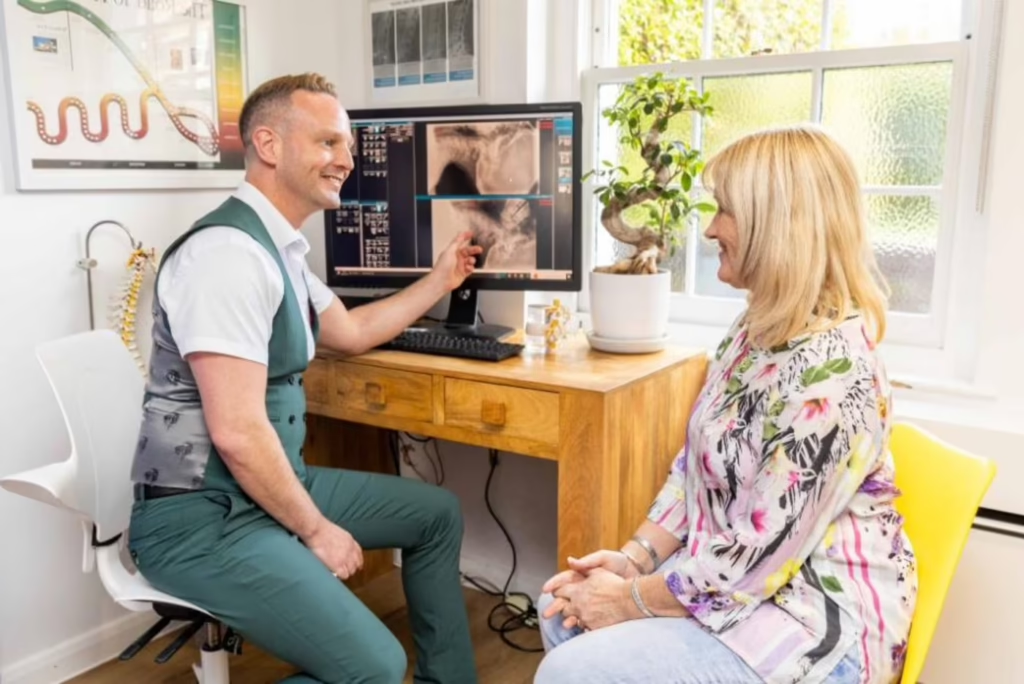
Many people arrive at their first chiropractic appointment after weeks, months, or even years of trying to manage their pain. Simple things, such as tying shoes, reversing the car, sitting through meetings, or sleeping comfortably, gradually become harder than they should be. By the time patients walk into a chiropractic clinic in Surbiton, most are carrying a mixture of frustration, caution, and hope.
To make the process feel less intimidating, it helps to break the first visit down into three stages:
To make the process feel less intimidating, it helps to break the first visit down into three stages:
- Understanding your history and symptoms.
- Carrying out a detailed examination.
- Explaining what appears to be happening and what your options are moving forward.
A good chiropractor should guide you through each stage clearly, explain why certain tests are being performed, and make sure you feel informed rather than rushed.
Evidence suggests that manual therapies, such as spinal manipulation and mobilisation, can help with some forms of back and neck pain, particularly when combined with exercise, movement advice, and self-management strategies [1][2]. Large reviews have also found that serious complications associated with chiropractic care are very rare when treatment is delivered appropriately by a properly trained and registered practitioner [3][4][100].
As with most physical treatments, mild, short-term reactions can occur. Some patients experience temporary soreness, stiffness, or fatigue after treatment, particularly in the early stages, but these effects are usually mild and short-lived.
If you are nervous about your first chiropractic appointment, that is entirely normal. Most patients simply want clear answers, a sensible plan, and reassurance that they are in safe hands.
Some patients notice meaningful changes within the first few visits, particularly when pain is more mechanical or irritation levels are lower. More complex problems, especially long-standing disc, nerve, or chronic pain conditions, often take longer and tend to improve in phases rather than in a perfectly straight line.
A good chiropractor should give you realistic expectations based on your condition, rather than promising instant results. The goal is not simply short-term pain relief, but steady progress towards better movement, stability, and long-term function.
Choosing a Chiropractor
Building the right chiropractic care team matters because your comfort, confidence, and recovery depend on it. You are not simply paying for a quick “back crack”. You are choosing someone to properly assess your condition, guide your recovery, and help you make informed decisions about your health.
Checking credentials and registration
The most important first step is to confirm that your chiropractor is registered with the General Chiropractic Council (GCC), the UK regulator for the profession. Only GCC-registered practitioners can legally use the title “chiropractor” in the UK and must meet recognised educational, ethical, and professional standards [5].
It takes less than a minute to check. Visit the GCC online register, search the chiropractor’s name, and confirm their registration is active.
If you are choosing a chiropractor in Surbiton, this should be viewed as an absolute minimum standard, not an optional extra.
What to look for in a Surbiton chiropractor
Once registration is confirmed, you can refine your search for the best chiropractor in Surbiton for your situation:
- Experience with your type of problem
Check their website or ask directly whether they regularly manage cases similar to yours, such as disc injuries, sciatica, chronic neck pain, recurrent headaches, or persistent nerve irritation. Clinics like The DISC Chiropractors in Surbiton focus heavily on complex disc and nerve-related cases, which is why some patients travel specifically for that expertise. - Evidence-based and conservative approach
Ask how treatment decisions are made, when imaging is considered appropriate, and under what circumstances referral may be necessary. A good chiropractor should be able to explain how their recommendations align with current musculoskeletal guidance, rather than relying solely on ideology or a single fixed technique [1][2]. - Communication style and rapport
You should feel listened to, not rushed. A good chiropractor takes time to understand your story, ask detailed questions, explain findings clearly, and answer concerns in plain English. - Practical details
Consider location, clinic hours, fees, and whether they are familiar with your insurance provider. The cheapest option is not always the best value, but you should always have clarity on costs and expectations from the beginning.
Once you are confident that your chosen chiropractor is a good fit, the next step is to understand what actually happens during that first visit.
Before You Arrive: Preparing For Your First Appointment
Taking ten minutes to prepare before your appointment can make the entire process smoother, more focused, and far more productive.
What to bring
- Any recent X-rays, MRI, or CT reports.
- A list of current medications and supplements.
- Details of previous injuries, treatments, or surgeries that may be relevant.
- Your insurance information, if you plan to claim.
- A written list of your top concerns, symptoms, or questions.
At The DISC Chiropractors in Surbiton, we actively encourage new patients to write down their main goals before arriving. Once you are in the room, it is surprisingly easy to forget important details or questions, particularly if you have been dealing with pain for a long time. A short list helps keep the consultation focused on what matters most to you.
What to wear
Choose comfortable clothing that allows you to move easily. Think practical and flexible rather than formal or restrictive. During the examination, you may be asked to:
- Bend, twist, or reach.
- Lie on your back, front, or side.
- Perform simple balance, strength, or movement tests.
Very tight, restrictive, or awkward clothing can make the examination more difficult than it needs to be for both you and the chiropractor.

The DISC New Patient Process In Surbiton: Two Key Visits
Some chiropractic clinics try to fit everything, consultation, examination, diagnosis, treatment planning, and treatment itself, into a single appointment. For straightforward cases, that can sometimes work reasonably well. For more complex disc, nerve, or persistent pain conditions, however, a rushed approach can increase the risk of oversimplifying the problem, potentially leading to negative outcomes.
At The DISC Chiropractors in Surbiton, new patients usually move through a structured two-stage process:
- Visit 1: Consultation, examination, and any clinically appropriate imaging.
- Visit 2: Report of Findings, treatment planning, and discussion of the next steps, often within 24 hours.
Separating the process into two visits gives the chiropractor time to properly review your history, examination findings, and any imaging before making recommendations. It also gives you time to process the information, think clearly about your options, and return with better questions during the Report of Findings appointment.
For patients dealing with complex or long-standing problems, that extra level of analysis and communication can make the entire process feel far more reassuring and structured from the beginning.
Visit 1, Step 1: Welcome, Paperwork, And Onboarding
When you arrive for your first appointment, the front-of-house team will greet you, confirm your details, and guide you through any remaining paperwork. Much of this is often completed online beforehand, although you may still be asked to sign consent or privacy forms in person.
Typical onboarding information includes:
- Your current symptoms and how they began.
- Previous episodes of similar pain or injury.
- Medical history, including operations, illnesses, or significant accidents.
- Lifestyle factors such as work posture, stress levels, exercise habits, activity levels, and sleep.
Although paperwork can feel repetitive when you are already uncomfortable, it serves an important purpose. A detailed history helps the chiropractor identify patterns, spot potential warning signs, and decide which examinations or treatments are appropriate or inappropriate for your situation.
Visit 1, Step 2: Gathering Your Medical History and Top Concerns
Once in the consultation room, the chiropractor will review your history in more detail and begin to build a clearer picture of what may be contributing to your symptoms.
You can expect questions such as:
- Where exactly is the pain, and does it travel anywhere?
- What makes it better or worse, for example, sitting, walking, bending, coughing, or lying down?
- Have you noticed numbness, tingling, weakness, or changes in coordination?
- How is the problem affecting work, sleep, exercise, family life, or hobbies?
- What concerns you most about the problem?
- What would a successful outcome realistically look like for you over the next few months?
At The DISC Chiropractors, patients are encouraged to clearly explain their main goals, whether that is sleeping through the night, walking comfortably again, returning to the gym, or avoiding more invasive treatment where possible.
These priorities matter because good rehabilitation is not simply about chasing temporary symptom changes. It is about helping you return to meaningful daily activities with greater confidence, stability, and control.
Visit 1, Step 3: Physical Examination
After discussing your history, the chiropractor will carry out a detailed physical examination. The aim is not simply to identify where pain is felt, but to understand which structures may be involved and how your body is responding overall.
This examination will usually include:
- Posture and movement assessment
How you stand, walk, sit, and move can provide useful clues about compensation patterns, protective tension, and areas of overload. - Range of motion testing
You may be asked to bend forward, backwards, sideways, or rotate your neck and spine. Pain or restriction in certain directions can help narrow down likely causes. - Orthopaedic testing
These are specific tests designed to stress particular joints, discs, ligaments, or nerve structures to see whether they reproduce familiar symptoms. - Neurological testing
Reflexes, muscle strength, coordination, and sensation may be assessed to evaluate how well the nervous system is functioning. This becomes particularly important when symptoms include pins and needles, weakness, leg pain, or arm pain. - Palpation
The chiropractor uses their hands to assess muscle tension, tenderness, joint movement, swelling, or areas of irritation.
At a specialist clinic such as The DISC Chiropractors, these findings are interpreted with particular attention paid to possible disc, nerve root, or stenotic involvement. The goal is not simply to identify what hurts, but to understand why symptoms behave as they do and whether a more cautious or modified treatment approach may be necessary.
Visit 1, Step 4: Diagnostic Studies, Including X-rays
Based on your history and examination findings, your chiropractor may occasionally recommend additional imaging or diagnostic studies. In many straightforward cases, this is unnecessary. In more complex, persistent, or unclear presentations, however, imaging can sometimes provide clinically useful information.
At The DISC Chiropractors in Surbiton:
In-house digital X-rays are available when clinically appropriate.
- Imaging may be used to help assess structural changes such as advanced degeneration, arthritis, stenosis, spinal alignment changes, or previous injuries.
- Any imaging request should be based on clinical reasoning, where the likely value of the information outweighs the small radiation exposure involved, in line with current safety guidance [3][4].
- Research has also shown that, in selected cases, imaging findings can meaningfully influence clinical decision-making and treatment planning, particularly in more complex spinal presentations. [83]
If you already have recent MRI or X-ray reports, these will usually be reviewed and incorporated into your assessment rather than unnecessarily repeated.
Between Visits: Analysing Your Results
Once the first appointment is complete, the chiropractor takes time to review and analyse all the information gathered during the consultation and examination process:
- Your symptom history and behaviour patterns.
- Findings from movement, orthopaedic, and neurological testing.
- Any imaging findings or previous reports.
At The DISC Chiropractors, this analysis period is intentionally built into the process. Rather than rushing straight into conclusions, the aim is to compare your history, examination findings, symptom behaviour, and any relevant imaging before making recommendations.
This matters because scans and X-rays are most useful when interpreted alongside the individual patient, and their examination findings, rather than treated as a diagnosis on their own [77][79]. In more complex disc, nerve, or long-standing pain cases, careful clinical correlation can help reduce unnecessary guesswork and support safer, more tailored decision-making.
You will then return for a dedicated Report of Findings appointment, usually within the next day or two, where everything is explained clearly, and your treatment options are discussed in more detail.
The DISC New Patient Process In Surbiton: Two Key Visits
Some chiropractic clinics try to fit everything, consultation, examination, diagnosis, treatment planning, and treatment itself, into a single appointment. For straightforward cases, that can sometimes work reasonably well. For more complex disc, nerve, or persistent pain conditions, however, a rushed approach can increase the risk of oversimplifying the problem, potentially leading to negative outcomes.
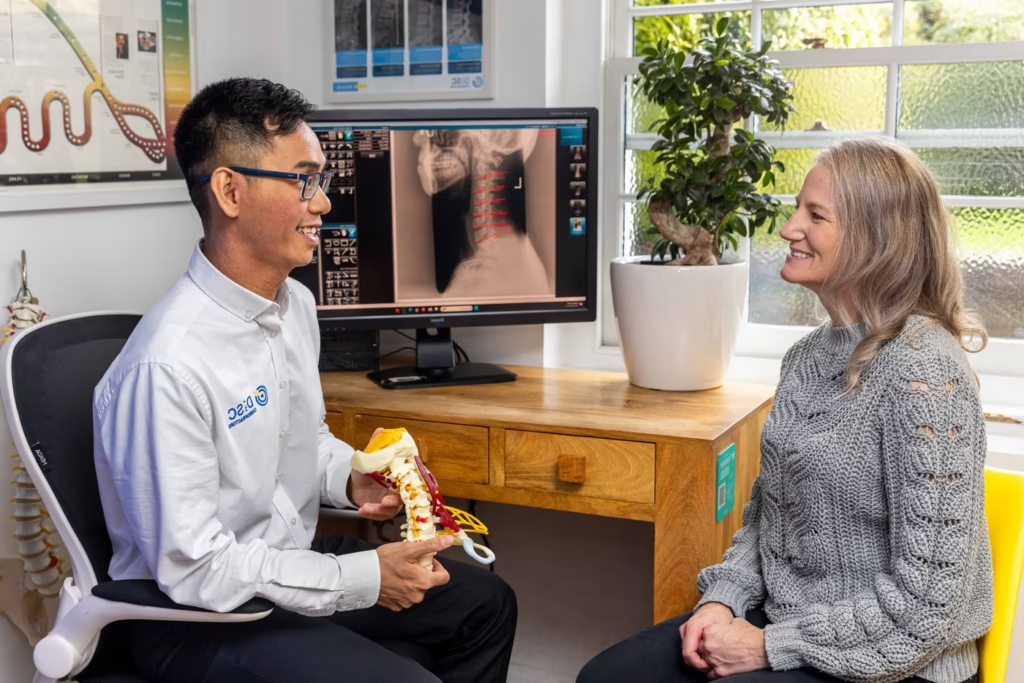
At The DISC Chiropractors in Surbiton, new patients usually move through a structured two-stage process:
- Visit 1: Consultation, examination, and any clinically appropriate imaging.
- Visit 2: Report of Findings, treatment planning, and discussion of the next steps, often within 24 hours.
Separating the process into two visits gives the chiropractor time to properly review your history, examination findings, and any imaging before making recommendations. It also gives you time to process the information, think clearly about your options, and return with better questions during the Report of Findings appointment.
For patients dealing with complex or long-standing problems, that extra level of analysis and communication can make the entire process feel far more reassuring and structured from the beginning.
Visit 1, Step 1: Welcome, Paperwork, And Onboarding
When you arrive for your first appointment, the front-of-house team will greet you, confirm your details, and guide you through any remaining paperwork. Much of this is often completed online beforehand, although you may still be asked to sign consent or privacy forms in person.
Typical onboarding information includes:
- Your current symptoms and how they began.
- Previous episodes of similar pain or injury.
- Medical history, including operations, illnesses, or significant accidents.
- Lifestyle factors such as work posture, stress levels, exercise habits, activity levels, and sleep.
Although paperwork can feel repetitive when you are already uncomfortable, it serves an important purpose. A detailed history helps the chiropractor identify patterns, spot potential warning signs, and decide which examinations or treatments are appropriate or inappropriate for your situation.
Visit 1, Step 2: Gathering Your Medical History and Top Concerns
Once in the consultation room, the chiropractor will review your history in more detail and begin to build a clearer picture of what may be contributing to your symptoms.
You can expect questions such as:
- Where exactly is the pain, and does it travel anywhere?
- What makes it better or worse, for example, sitting, walking, bending, coughing, or lying down?
- Have you noticed numbness, tingling, weakness, or changes in coordination?
- How is the problem affecting work, sleep, exercise, family life, or hobbies?
- What concerns you most about the problem?
- What would a successful outcome realistically look like for you over the next few months?
At The DISC Chiropractors, patients are encouraged to clearly explain their main goals, whether that is sleeping through the night, walking comfortably again, returning to the gym, or avoiding more invasive treatment where possible.
These priorities matter because good rehabilitation is not simply about chasing temporary symptom changes. It is about helping you return to meaningful daily activities with greater confidence, stability, and control.
Visit 1, Step 3: Physical Examination
After discussing your history, the chiropractor will carry out a detailed physical examination. The aim is not simply to identify where pain is felt, but to understand which structures may be involved and how your body is responding overall.
This examination will usually include:
- Posture and movement assessment
How you stand, walk, sit, and move can provide useful clues about compensation patterns, protective tension, and areas of overload. - Range of motion testing
You may be asked to bend forward, backwards, sideways, or rotate your neck and spine. Pain or restriction in certain directions can help narrow down likely causes. - Orthopaedic testing
These are specific tests designed to stress particular joints, discs, ligaments, or nerve structures to see whether they reproduce familiar symptoms. - Neurological testing
Reflexes, muscle strength, coordination, and sensation may be assessed to evaluate how well the nervous system is functioning. This becomes particularly important when symptoms include pins and needles, weakness, leg pain, or arm pain. - Palpation
The chiropractor uses their hands to assess muscle tension, tenderness, joint movement, swelling, or areas of irritation.
At a specialist clinic such as The DISC Chiropractors, these findings are interpreted with particular attention paid to possible disc, nerve root, or stenotic involvement. The goal is not simply to identify what hurts, but to understand why symptoms behave as they do and whether a more cautious or modified treatment approach may be necessary.
Visit 1, Step 4: Diagnostic Studies, Including X-rays
Based on your history and examination findings, your chiropractor may occasionally recommend additional imaging or diagnostic studies. In many straightforward cases, this is unnecessary. In more complex, persistent, or unclear presentations, however, imaging can sometimes provide clinically useful information.
At The DISC Chiropractors in Surbiton:
- In-house digital X-rays are available when clinically appropriate.
- Imaging may be used to help assess structural changes such as advanced degeneration, arthritis, stenosis, spinal alignment changes, or previous injuries. [84]
- Any imaging request should be based on clinical reasoning, where the likely value of the information outweighs the small radiation exposure involved, in line with current safety guidance [3][4].
- Research has also shown that, in selected cases, imaging findings can meaningfully influence clinical decision-making and treatment planning, particularly in more complex spinal presentations. [83]
If you already have recent MRI or X-ray reports, these will usually be reviewed and incorporated into your assessment rather than unnecessarily repeated.
Between Visits: Analysing Your Results
Once the first appointment is complete, the chiropractor takes time to review and analyse all the information gathered during the consultation and examination process:
- Your symptom history and behaviour patterns.
- Findings from movement, orthopaedic, and neurological testing.
- Any imaging findings or previous reports.
The DISC Chiropractors, this analysis period is built into the process intentionally. Rather than rushing straight into conclusions, the aim is to compare your history, examination findings, symptom behaviour, and any relevant imaging before making recommendations.
This matters because scans and X-rays are most useful when interpreted alongside the individual patient, and their examination findings, rather than treated as a diagnosis on their own [77][79]. In more complex disc, nerve, or long-standing pain cases, careful clinical correlation can help reduce unnecessary guesswork and support safer, more tailored decision-making.
You will then return for a dedicated Report of Findings appointment, usually within the next day or two, where everything is explained clearly, and your treatment options are discussed in more detail.
Informed Consent: Your Right To Understand And Choose
Before any treatment begins, your chiropractor should go through a clear informed consent process. The aim is not simply to obtain a signature, but to ensure you understand what is being recommended, why it is being recommended, and what reasonable alternatives may exist.

This discussion will usually include:
- Your working diagnosis and the reasoning behind it.
- The proposed treatment or rehabilitation plan.
- The possible benefits and expected goals of care.
- Common short-term reactions, such as temporary soreness, stiffness, or fatigue [100].
- Rare but more serious risks, and the steps taken to minimise them [3][4][100].
- Alternative approaches, including self-management, medical care, referral, imaging, or choosing not to proceed with treatment at all.
You should feel comfortable asking questions, requesting clarification, declining certain techniques, or asking for gentler alternatives where appropriate.
Well-informed consent is an ongoing conversation rather than a one-time form. If your condition changes, or different techniques or technologies are introduced later in your care plan, those decisions should also be discussed clearly and revisited with you.
Your First Treatment: What It May Look Like
Whether treatment begins on the same day as your Report of Findings depends on several factors, including:
- The nature and severity of your condition.
- Whether further imaging or testing is still required.
- How irritated or sensitive the area appears clinically.
- Your own comfort level and preferences.
In many straightforward cases, a gentle first treatment may begin during that second appointment. In more acute or complex disc and nerve-related presentations, however, The DISC Chiropractors may initially use lower-force or more gradual approaches before introducing more direct manual techniques.
The aim is not to force movement aggressively into painful tissues, but to begin reducing irritation, improving movement tolerance, and gradually restoring confidence in movement and physical activity [102][103].
After treatment, some people notice:
- A temporary sense of improved movement, reduced tension, or short-term pain relief [101].
- Mild soreness or stiffness later that day, similar to starting a new exercise routine [100].
- Temporary fluctuations in symptoms as the body adapts to changes in movement, loading, and muscular activity.
These reactions are usually mild and short-lived when treatment is appropriately matched to the patient and condition [100]. If symptoms feel unusually intense, concerning, or significantly worse, you should contact the clinic for advice and reassessment.
After Your First Visits: Next Steps and Self-Care
The early stages of care often focus on reducing irritation, improving movement confidence, and building a more stable foundation for recovery.
Depending on your condition, you may be given:
- Simple exercises or mobility drills.
- Advice on sitting, sleeping, lifting, or workstation setup.
Pacing strategies to help avoid repeated flare-ups. - Guidance on when heat, cold, rest, or movement may be more appropriate.
As symptoms become more manageable, the focus of care often shifts gradually towards rehabilitation, strength, resilience, and reducing the likelihood of future setbacks.
Research increasingly suggests that persistent spinal pain is influenced not only by local tissue irritation, but also by changes in movement patterns, muscular coordination, and nervous system sensitivity [102][103]. Because of this, long-term improvement often depends on more than simply reducing short-term pain. The broader aim is to help the body move better, tolerate load more confidently, and recover more effectively from everyday physical stress over time [1][2].
Summary: What To Expect From A First Chiropractic Visit In Surbiton
Putting it all together, your first experience with a chiropractor in Surbiton should feel structured, thorough, and collaborative:
- Confirm GCC registration and clinic suitability.
- Prepare key information, goals, and relevant imaging.
- Attend Visit 1, consultation, examination, and imaging where clinically appropriate.
- Allow time for your chiropractor to analyse the findings carefully rather than rushing into assumptions.
- Attend Visit 2, where the findings, recommendations, and options are explained clearly.
- Give informed consent once you fully understand the proposed approach.
- Begin treatment that matches your diagnosis, goals, comfort level, and stage of recovery.
- Continue with structured reviews to monitor progress and adjust rehabilitation where necessary.
Recovery is rarely instant or perfectly linear, particularly in more persistent disc, nerve, or chronic pain presentations. However, a well-structured assessment process should leave you with a clearer understanding of what may be happening, what your options are, and what realistic improvement could look like over time.
At The DISC Chiropractors in Surbiton, the goal is not simply to provide short-term symptom relief but to guide patients through a more structured process focused on movement quality, confidence, resilience, and, where possible, long-term recovery [1][2][102][103].