
How to Check a Chiropractor’s UK Credentials
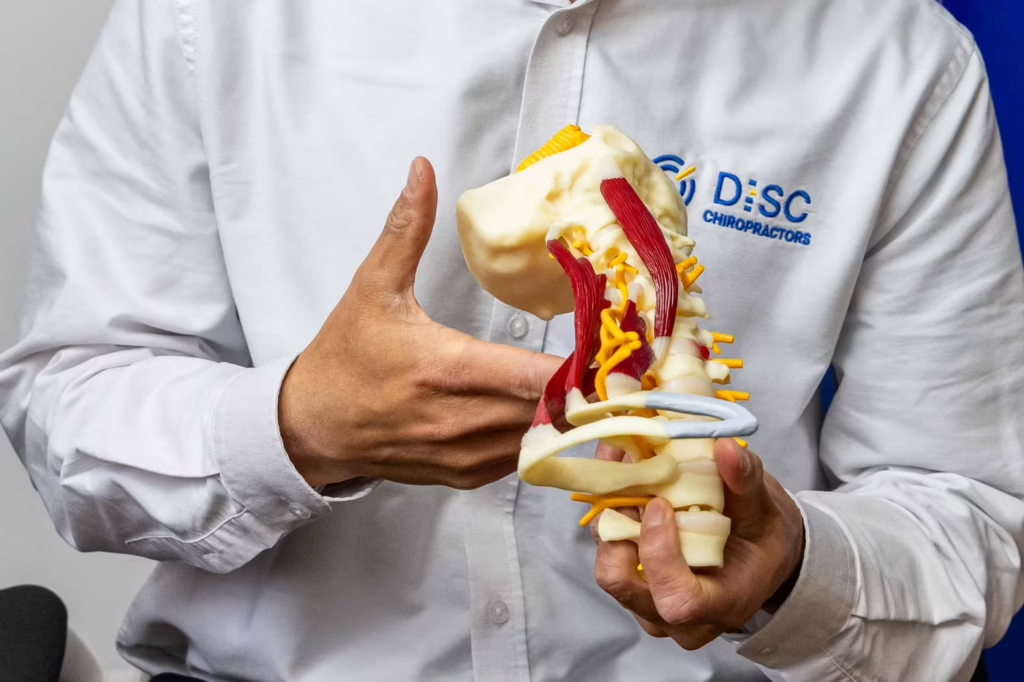
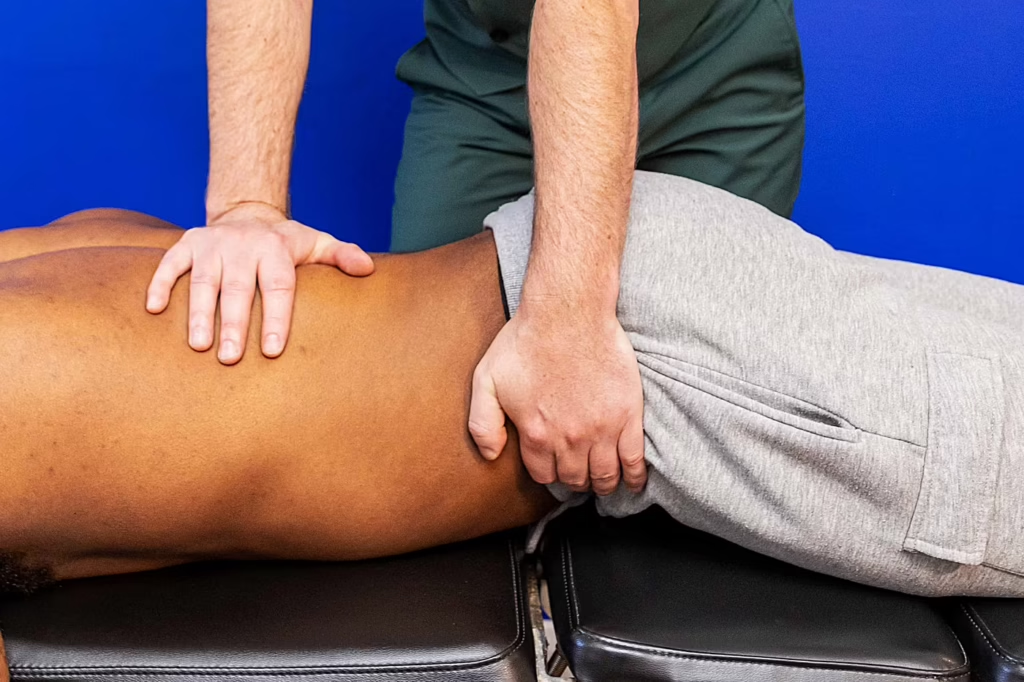
Introduction: Why Checking Credentials Matters
Imagine seeking relief for chronic back pain, only to worsen after treatment from an unqualified practitioner. While dramatic, many headlines involving spinal manipulation relate to individuals practising without recognised qualifications or proper regulatory oversight. Some people even use the term “chiropractor” despite lacking the training legally required to do so. I once even had a barber offer to adjust my neck during a haircut. Humanity remains committed to improvisation in areas where improvisation should never exist.
That said, most registered chiropractors in the UK provide safe, regulated, and professional care designed to reduce pain and improve function. Choosing a local Surbiton chiropractor should not come down to branding, clinic décor, or social media marketing alone. It should be based on trust, clinical standards, and verified qualifications.
Chiropractic is a legally regulated healthcare profession in the UK, but not every clinic is equally transparent about practitioner credentials. Verifying registration, insurance, and ongoing professional development helps ensure you are choosing a practitioner who meets recognised clinical and ethical standards.[135][136]
This guide explains how to confirm that your chiropractor is properly qualified, insured, and committed to ongoing education, allowing you to make a more informed and confident healthcare decision.
GCC Registration: The Legal Requirement in the UK
In the UK, chiropractic is a protected professional title. Only practitioners registered with the General Chiropractic Council (GCC) may legally use the title “chiropractor” or provide chiropractic treatment.[135][136]
The GCC exists to protect the public by ensuring chiropractors:
- complete an accredited university-level chiropractic degree
- practise within a regulated code of conduct
- maintain continuing professional development requirements
- remain fit to practise throughout their career
There are approximately 3,400 chiropractors currently registered in the UK.[140] Compared to many other healthcare professions, chiropractic remains relatively small, making transparency and regulation especially important.
To verify your local Surbiton chiropractor, visit the GCC register via the official website and search using the practitioner’s name or clinic details. The register shows whether they are currently registered, alongside any conditions or disciplinary findings.
If a clinic refuses to provide registration details or discourages you from checking, treat it as a concern rather than an inconvenience.
Checking the GCC register takes less than a minute and provides immediate reassurance that the person treating you has completed recognised training and remains under professional regulatory oversight.
Be cautious of vague phrases such as “chiropractic-style adjustments” or “osteopathic-style manipulation.” These terms may sometimes be used by individuals without recognised chiropractic qualifications or GCC registration. Completing a short manual therapy course is not equivalent to undertaking a regulated chiropractic degree and supervised clinical training program.
Be particularly vigilant and always check the practitioner’s registered status to avoid this. Patients might search for terms like “chiropractic-style adjustments course” when trying to educate themselves or verify expertise, but remember, this is not equivalent to the comprehensive five-year chiropractic training that authentic professionals undergo.)
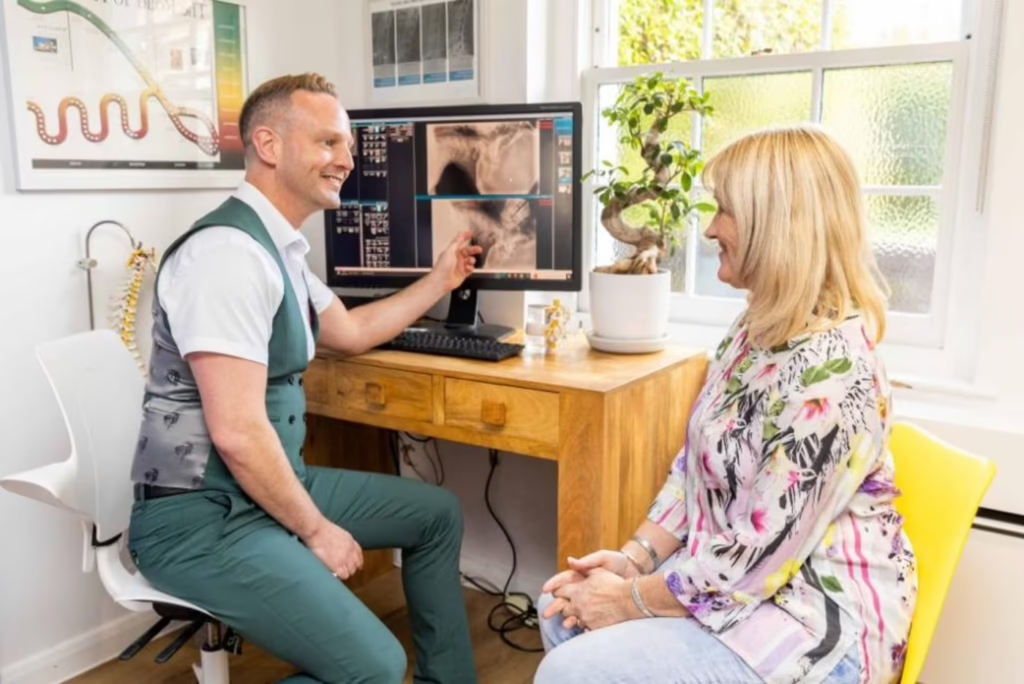
Educational Background: What Qualifications to Expect
All GCC-registered chiropractors must complete a university-level chiropractic degree from an accredited institution, typically a Master’s of Chiropractic, which involves four to five years of education and clinical training. [135]
Training commonly includes:
- anatomy and biomechanics
- neurology and orthopaedics
- diagnostic imaging
- rehabilitation and exercise therapy
- clinical assessment and patient management
You do not need to memorise every qualification, but a reputable clinic should clearly explain where its chiropractors were trained, when they qualified, and whether they have completed additional postgraduate education.
If a clinic claims specialist expertise in areas such as disc injuries, sports rehabilitation, or nerve-related conditions, look for evidence of further study, certification, or focused clinical experience supporting those claims.
The strongest clinics usually demonstrate expertise through the quality of their explanations, clinical reasoning, and patient education, not simply through expensive equipment or marketing language.
Insurance: Why It’s a Safety Essential
Every practising chiropractor in the UK must hold professional indemnity insurance as part of maintaining GCC registration.[138] This protects both the patient and practitioner in the unlikely event that something goes wrong during care.
Most patients will never need to think about insurance, but a reputable clinic should have no issue confirming that appropriate cover is in place if asked. You are unlikely to need to see documentation directly, but hesitation or avoidance around the topic should raise concern.
Professional insurance is one of the safeguards that separates regulated healthcare from informal or poorly governed practice. You should expect the same level of professionalism and accountability from your local Surbiton chiropractor as you would from any regulated healthcare provider.
In addition to professional indemnity insurance, most reputable clinics also maintain public liability insurance. This covers general incidents unrelated to treatment, such as slips, falls, or accidents occurring on the clinic premises. While patients rarely think about these safeguards, they form part of the broader professional responsibilities expected of a properly run healthcare clinic.
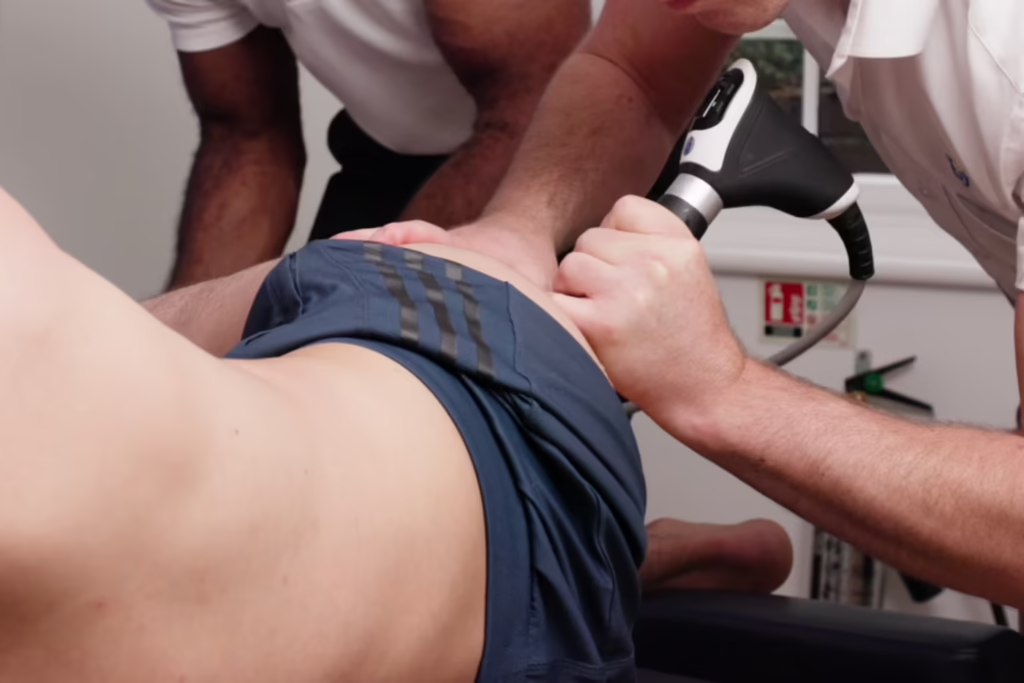
Continuing Professional Development (CPD): Staying Up to Date
Continuing Professional Development (CPD) is not optional, it is a formal requirement for maintaining GCC registration.[137] Chiropractors must complete ongoing education designed to maintain clinical standards, improve patient care, and stay current with developments in healthcare.
For clinics focused on more complex conditions, such as disc injuries, rehabilitation, or chronic spinal pain, meaningful CPD often extends well beyond the minimum requirements.
Experienced chiropractors frequently invest in:
- postgraduate education in biomechanics, rehabilitation, neurology, or imaging
- technology-specific training and certification
- conferences, seminars, and multidisciplinary workshops
- peer review, case discussions, and outcomes auditing
The best clinics usually demonstrate this through the quality of their assessment process, diagnostic reasoning, rehabilitation planning, and ability to explain why specific treatments are being recommended.
Owning advanced technology is not the same as knowing how to use it effectively. Tools such as decompression therapy, laser therapy, or advanced rehabilitation systems are only as valuable as the clinical reasoning guiding them. In some clinics, marketing can outpace expertise, leaving patients with generic care presented as specialist treatment.
So, how can you identify genuine commitment to professional development and clinical quality?
- recent training or postgraduate qualifications clearly mentioned
- recognised certifications relevant to the clinic’s focus
- clear explanations of how treatments apply to your condition
- educational content demonstrating clinical understanding
- transparency around referrals, co-management, or second opinions when appropriate
Continuous learning is not simply about remaining registered. It reflects whether a chiropractor is actively investing in delivering safer, more accurate, and more effective patient care.
Where to Find and Verify This Information
Most of the information you need can be found through a combination of the GCC register and the clinic’s website. Clinics that value transparency will usually display qualifications, registration details, and professional information clearly.
A quick “60-Second Credibility Scan” should include:
- a visible GCC registration number
- practitioner biographies with training background and graduation details
- mention of postgraduate education or specialist training
- evidence of continuing professional development
- educational content demonstrating understanding of the conditions treated
Do not stop at the homepage alone.
Look for:
- detailed “About” or “Meet the Team” pages
- technology or certification explanations
- information that feels specific, current, and clinically grounded rather than vague marketing language
If important details are unclear, ask directly. A good chiropractor should be comfortable discussing qualifications, training, and treatment reasoning openly.
Red Flags: Warning Signs to Watch For
When researching a chiropractor, pay attention to the following warning signs:
- no GCC registration listed or verifiable
- unclear or unverifiable qualifications
- reluctance to answer credential-related questions
- little mention of CPD, insurance, or regulation
- exaggerated treatment claims without supporting explanation
- specialist positioning unsupported by training or clinical focus
- vague, generic, or overly sales-driven clinical information
These do not automatically mean a clinic is unsafe, but they should encourage closer scrutiny.
It is also important not to confuse expensive equipment with genuine expertise. Advanced tools can be valuable when used appropriately, but outcomes still depend on clinical judgement, diagnostic skill, rehabilitation planning, and experience managing complex cases.
The strongest clinics tend to be transparent, evidence-informed, and realistic about both the possibilities and limitations of care.
As a specialist clinic, we see that some local clinics near The DISC Chiropractors in Surbiton have invested in similar high-tech equipment and positioned themselves as leaders in spinal care, yet, at present, lack the clinical experience to utilise these tools as effectively as a clinic that has had them for 10 years; outcomes still depend on clinical judgement, diagnostic skill, rehabilitation planning, and experience managing complex cases.
When evaluating potential chiropractic care providers, it’s crucial to focus on the actual measures of their clinical expertise and patient-centred outcomes rather than external appearances or expensive equipment. Tools like decompression therapy or Class IV laser, which can be instrumental in treatment, are only as effective as the protocols and expertise used with them.
A clinic’s ability to properly apply advanced technology should be measured by its comprehensive understanding of conditions, ongoing professional development, and transparent communication with patients, rather than solely by promotional claims. The strongest clinics tend to be transparent, evidence-informed, and realistic about both the possibilities and limitations of care.
Trust your instincts. When in doubt, choose the one who is willing to earn your trust, rather than assuming it.
Final Thoughts: Choose Confidence, Not Confusion
Verifying your local Surbiton chiropractor’s credentials is a quick but valuable step. In just a few minutes, you can confirm that your practitioner is legally registered, properly insured, appropriately qualified, and committed to ongoing professional development.[135][137][138]
These are not minor details. They form the foundation of safe, accountable, and trustworthy healthcare.
If concerns arise during treatment, start by discussing them directly with the practitioner. Most issues can be clarified through open communication. If serious concerns remain unresolved, patients can raise complaints through the General Chiropractic Council, which oversees professional standards and patient protection within the profession.[135]