
Lower Back Pain: What Your Back’s Behaviour Tells You.
Lower back pain is the most common musculoskeletal complaint, and one of the hardest to get a straight answer about. Most people are told either that it is “just muscular” or that a scan shows some wear and tear, neither of which explains why it hurts to sit but not to walk, or why it was fine last month, but keeps coming back.
The most useful information is not where it hurts. It is how your back behaves: what provokes it, how much it tolerates, whether pain travels, and how it has changed across episodes.
Rather than repeating the same anatomy lesson found on endless lower back pain pages, we are going to concentrate on the questions that actually help distinguish one type of lower back pain from another.
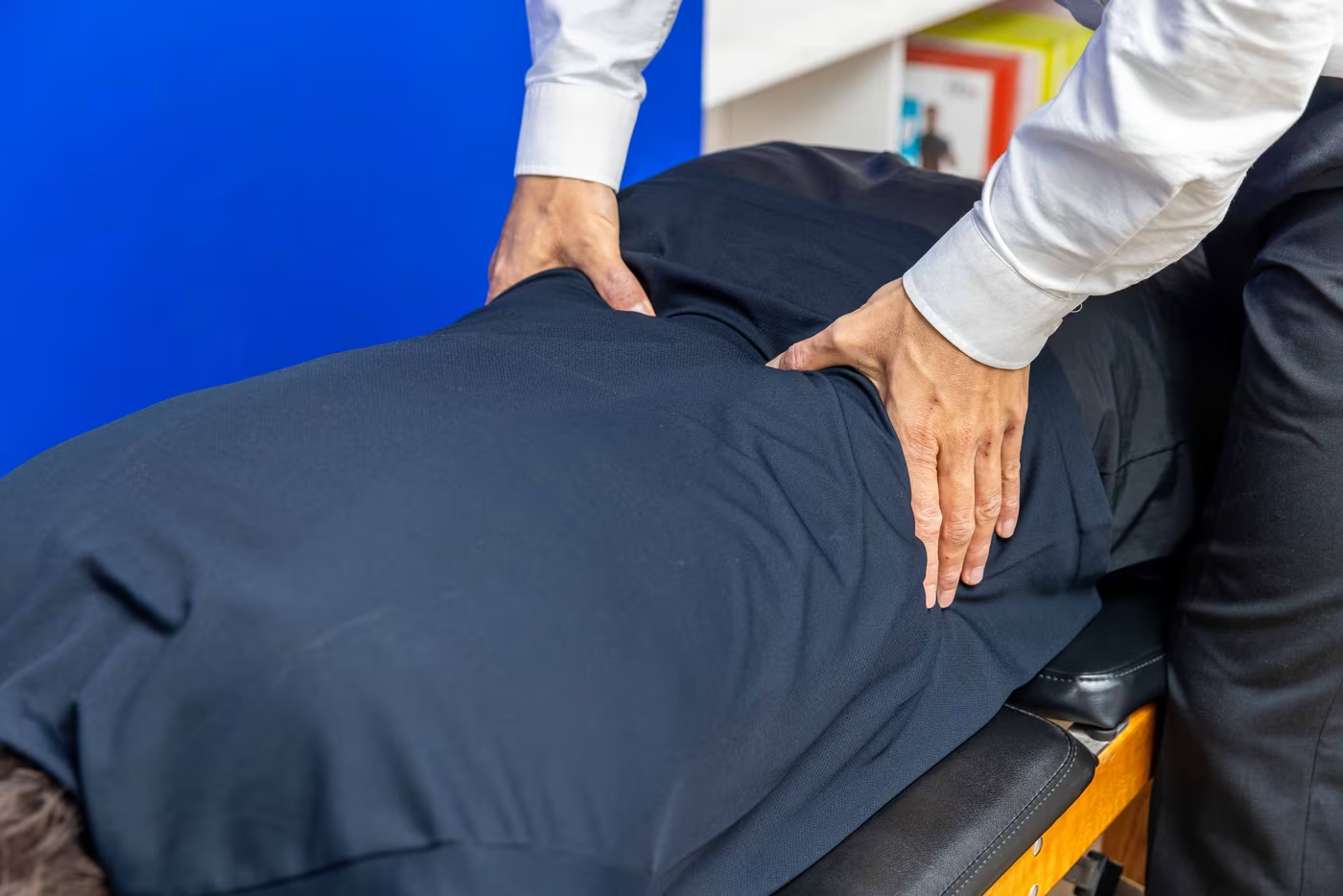
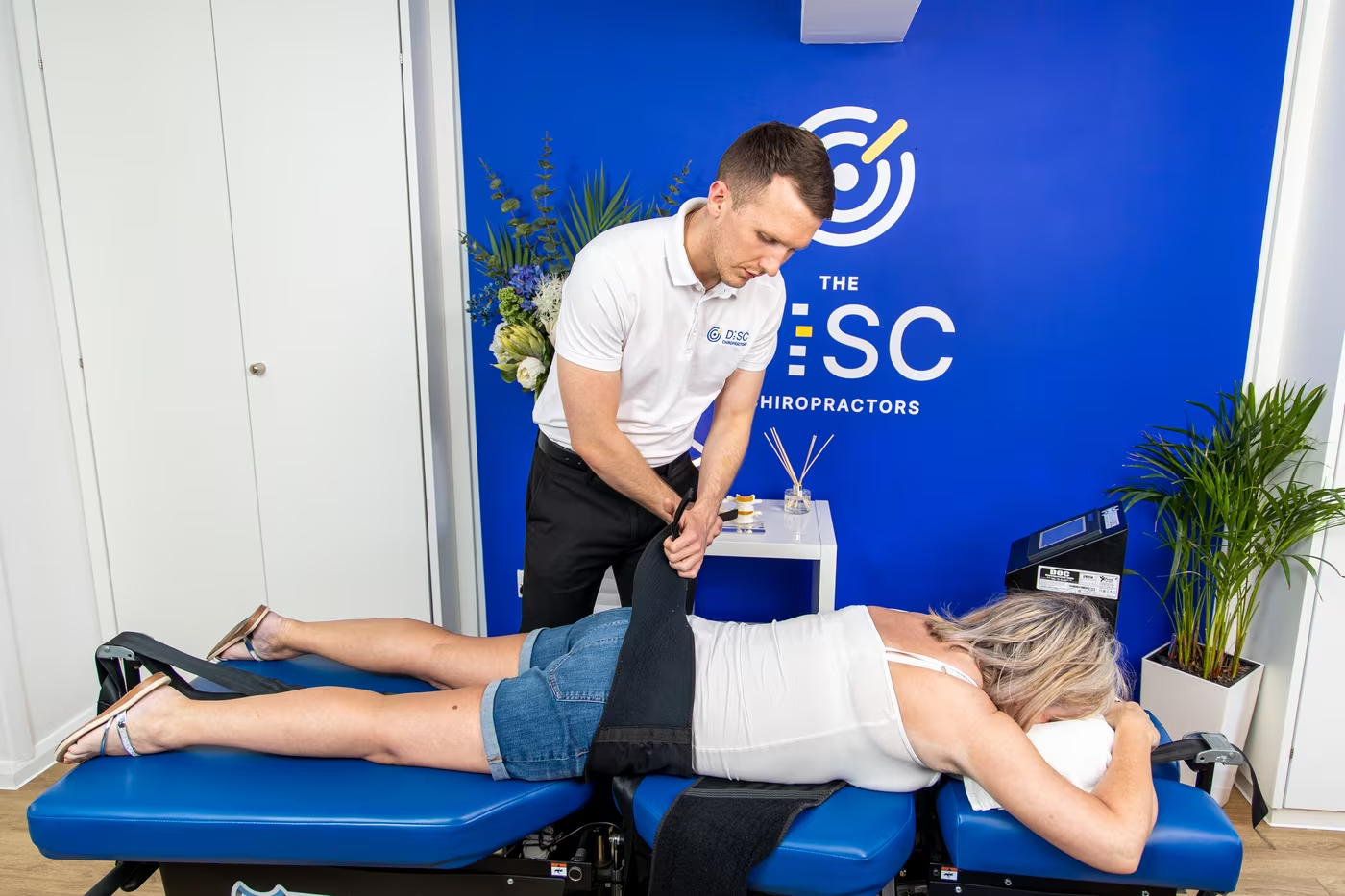
What “lower back pain” actually means.
Lower back pain is a location and a symptom, not a diagnosis. Like saying I have a headache without clarifying it’s because you banged your head. Only with back pain the cause is often harder to pin down, which has led to the medical terminology of declaring most back pain nonspecific lower back pain, something many of us feel is a cop out to a proper diagnosis.
However, in reality only a short list of structures can generate it: the discs between the vertebrae, the facet joints at the back of each segment, the sacroiliac joints where the spine meets the pelvis, the nerve roots leaving the spine, and the muscles and connective tissue around them. That is essentially the entire list (click on the highlighted names to go to in-depth content on each specific pain generator)
These structures sit within centimetres of each other, share nerve supply, and rarely fail one at a time. A stiff segment provokes protective muscle tightening; guarded muscles change how the joint loads, and overloaded joints pressure nerves, further compounding the muscular irritation. The problem becomes cyclic and compounding; by the time most people seek help, more than one tissue is involved, with overlapping or complex dysfunctions.
What does the research say?

Discogenic Pain
Approximately 40% of LBP
Facet Joint Pain
Approximately 30% of LBP
Sacroiliac Joint Pain
Between 2-15% of LBP
Whilst lower back pain is hard to pin down, we know, with reasonable confidence, the statistics behind what drives lumbar pain, based on a series of diagnostic studies that used provocative injections to systematically identify or numb pain locations.
This began with a now-controversial technique known as discography, which is no longer commonly used because, while it had strong diagnostic value, it also left patients with weakened disc structures and a high rate of deterioration post-intervention.
Yet over the years, it provided a baseline, with 10+ studies offering relatively consistent findings, averaging approximately 40% of patients with discogenic pain patterns. Facet blocks averaged about 30% success, and sacroiliac joints averaged 15%, although one study reported as low as 2%.
Whilst it’s useful to have this clinical framing in mind, in practice, when you consider back pain severe enough to seek care, require surgery, or that’s chronic and unresponsive to traditional care, then the odds of disc involvement will increase dramatically, especially if we include cases where the disc is degenerative or inflamed, which are often overlooked diagnostically.
So how do you go about clarifying what’s wrong
Pain, while unreliable, offers a guide, but functional testing will always trump pain diagnostically. Orthopaedic and neurological testing helps narrow which tissues are sensitised, while quantifiable muscle testing can identify weakness or instability in the systems supporting the painful area. Together, those findings help us build and test a working diagnosis.
Clinic Director | DISC
Which direction does your back prefer?
Many mechanical lower back problems have a directional preference, a principle used in the McKenzie Method to rehabilitate disc injuries, and one we regularly incorporate into assessment. Rather than simply measuring how far your back moves, we look at how symptoms respond to repeated movement in different directions.
A flexion-sensitive back may be worse with sitting, bending forwards, getting out of a car, or putting on socks, but can be easier with standing or walking. An extension-sensitive back may behave in the opposite way, becoming worse with standing or arching backwards and easier with sitting or leaning forwards. These patterns do not diagnose a particular structure, but they help narrow what is plausible and guide what we test next.
Not everyone has a clear directional preference, and that preference can change as a problem evolves. But where one exists, it gives us two useful pieces of information: which direction the back currently responds best to, and combined with tolerance, how much load it can currently manage.
It should also be noted that when locked into a spasm, the direction of any antalgia, forwards vs sideways, can provide strong clues to the location of the problem, which is likely to be disc-related given the severity inherently associated with muscle spasms.
Clinically, pain at the start of movement, especially with flexion or when getting out of a chair, is another strong indicator of disc- or nerve-related conditions.
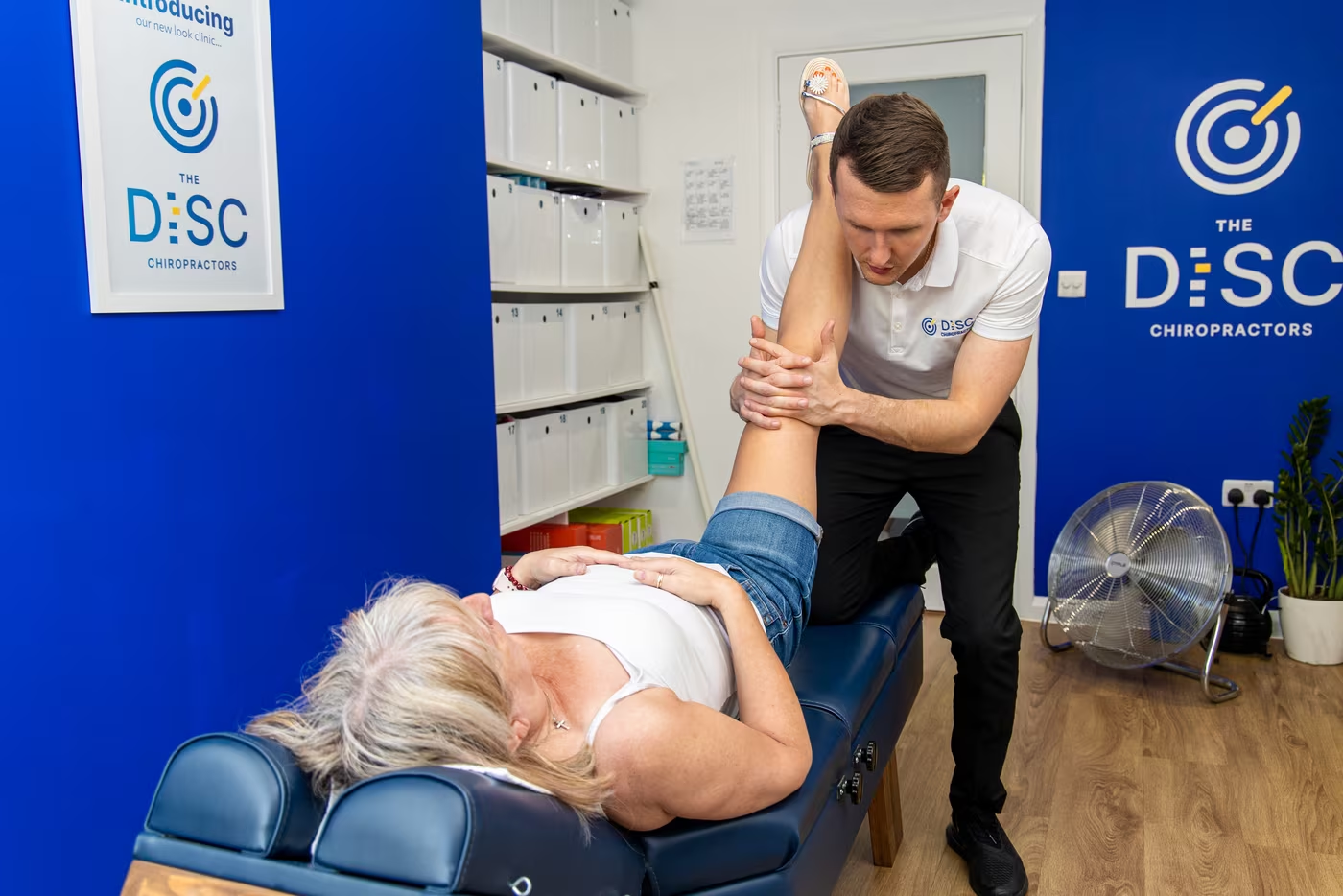
Low Back Pain when you cough, sneeze or strain
Back pain that catches sharply when you cough, sneeze or strain is worth mentioning at assessment, because it points to something specific.
Coughing briefly increases pressure through the abdomen and spinal canal. If a disc or nerve root is already irritated, a sudden change in pressure can produce a characteristic jolt that differs from the background ache. It is a recognised feature rather than a test: many people with disc involvement do not have it.
When sitting, bending are the problem
As well as coughing, symptoms that worsen with sitting and forward bending, and occur when travelling below the knee, particularly when episodes keep returning more easily, raise the possibility of disc involvement. No single feature confirms it, but the combination is worth taking seriously. Slipped disc explains that diagnosis.
Is my lower back pain muscular?
Muscle pain is real and common, but muscles more often respond to a problem than cause one. Back muscles tighten protectively when the nervous system perceives a structure underneath as vulnerable, and that guarding genuinely hurts, which is why “I’ve pulled a muscle” is the commonest self-diagnosis in lower back pain.
A genuine strain behaves like an injury: clear onset, pain on specific loading, matching tenderness, steady improvement over one to three weeks. Protective guarding is a response rather than an injury; it eases when the irritable segment settles, and returns if it does not. A back that “goes into spasm” is guarding at its most dramatic: frightening, rarely dangerous, usually settling over days.
A spasm does not signal something serious underneath. The distinction matters when relief keeps failing to hold, which is also why generic back stretches give twenty comfortable minutes but change nothing by the next day. Our ” Why Muscles Spasm page ” explains the mechanism.

Is your lower back pain the first episode, or a pattern?
Tracking the pattern of pain can provide valuable insight into what might be happening. A first episode and a fifth are different problems, and separating them changes almost everything that follows.
A first episode after an identifiable trigger, an unaccustomed lift, a long drive, or a weekend of decorating is usually straightforward, and most improve substantially over several weeks. Staying as active as symptoms allow beats prolonged rest; prolonged rest reliably worsens lower back pain. Keep doing what you can manage while modifying the specific things that clearly aggravate it.
Recurrent episodes: returning every few months, each time the threshold lowers and problems arise a little more easily, usually mean tolerance was never rebuilt between them. The back settles enough to stop hurting, normal life resumes, and the load that caused it remains unchanged. Each episode starts from a lower baseline.
Persistent pain lasting months is not a long version of an acute episode. It typically involves several contributors at once: the original structure, secondary stiffness, altered movement, and a nervous system that has become more protective than the tissue state alone explains.
Why lower back pain often comes back
For recurrent or persistent problems, at DISC we often find two common reasons that progress has stalled.
- The previous treatment never reached the therapeutic intensity required to create lasting change.
Treatment may have been too gentle, too infrequent, or stopped once symptoms improved rather than continuing long enough to restore function and tolerance. The right treatment given at too low a dose can still produce an incomplete result. - Something else is continuing to feed the problem.
An underlying mechanical fault may not have been identified yet. Poor core stability, leg-length imbalance, restricted hips, pelvic dysfunction or postural loading can repeatedly place stress back through the same area. When symptoms keep returning, the answer is often to widen the assessment rather than simply repeat treatment to the painful spot.
Does it stay in your back, or travel?
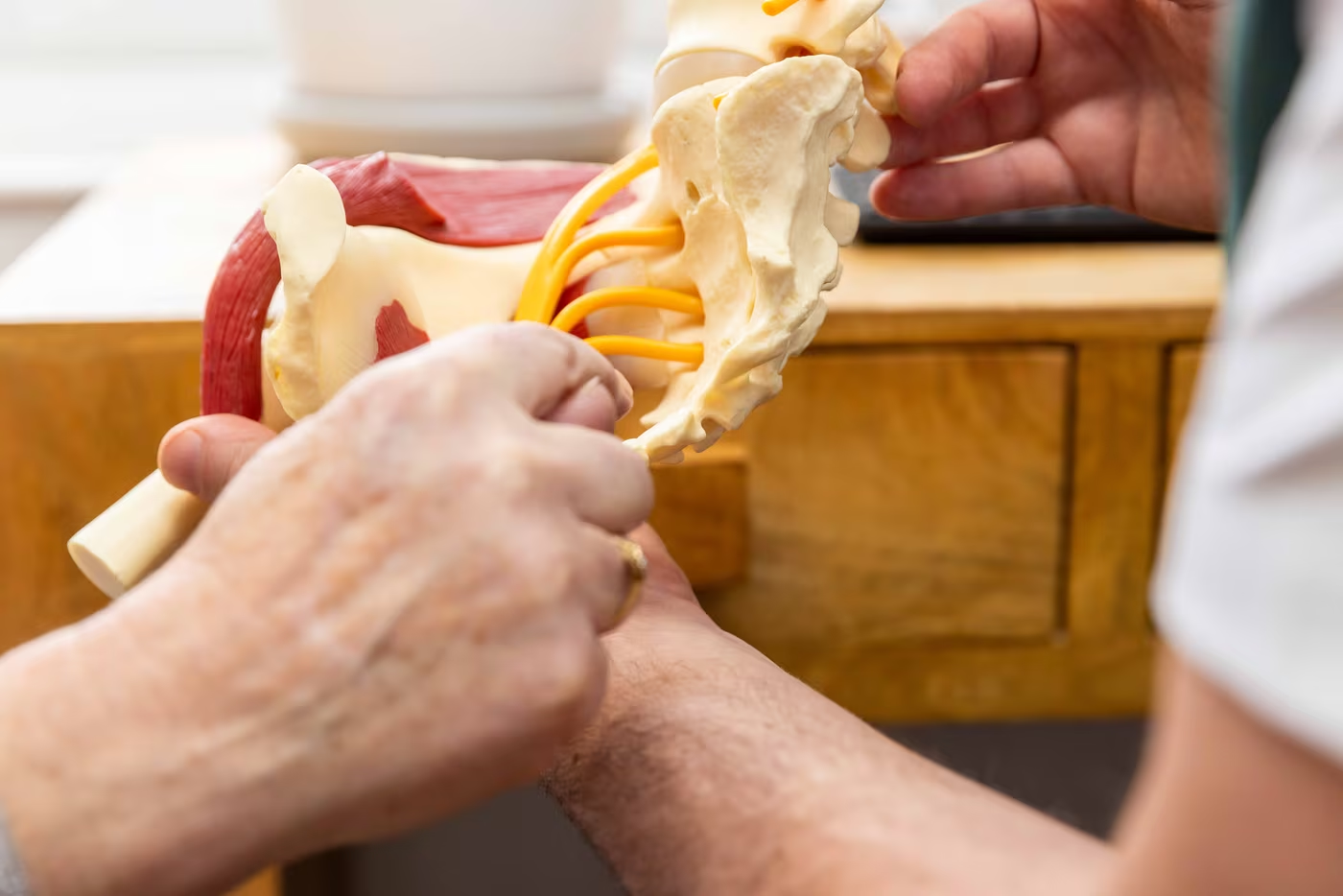
Whether symptoms remain localised or radiate is the most important branching point in the lower back differential diagnosis. Pain confined to the lower back keeps it local: joint, disc, sacroiliac, muscular, or a combination.
Pain spreading into the buttock or upper thigh is common and usually referred, produced by a lumbar or pelvic structure and felt further down, with no obvious nerve compressed. It is typically a diffuse ache without a clear border, arriving without pins and needles, numbness or weakness. It does not mean a nerve is trapped.
Pain travelling below the knee in a narrower band, with pins and needles, numbness or weakness is different; that pattern suggests a nerve root is involved. Where leg symptoms dominate and follow that distribution, sciatica is the more useful page.
The word “sciatica” is used far more loosely than it should be. It describes nerve-root symptoms in the sciatic distribution, not pain radiating to the buttock. Being told you have sciatica when you have referred buttock pain changes what you expect, what you fear, and often what you are offered.
True sciatica describes symptoms arising from irritation of a lumbar nerve root, commonly producing a more defined pattern of leg pain with numbness, pins and needles, or weakness.
The NHS estimates that a lumbar disc herniation is responsible for around 85–90% of true sciatica cases, which is why recognising the difference matters.
Clinic Director | DISC
When your lower back and hip hurt together
Lower back and hip pain together is one of the most common combinations there is, and it’s hard to separate, which is why people are often treated for one when the other is driving it. The regions sit adjacent and share nerve supply, so a lumbar structure can refer into the buttock and outer hip, while a hip joint can refer up into the low back and down into the groin.
Two rough discriminators help. Hip or Groin pain with weight-bearing, turning in bed, or putting on socks points toward the hip joint. Pain that changes with spinal position while the hip moves toward the back points to the back as the primary driver. Neither is decisive, and both are frequently involved at once and can often cause the other in a vicious circle. Where the hip looks the likelier driver, our hip pain page covers it.
Clinically, the most important thing when assessing lower back and hip pain is ensuring the patient knows which part of their body is the hip and which is the pelvis. If you stand with your “hands on your hips”, aka the Superman pose, what you are contacting is part of the pelvis and a different diagnostic challenge than pain deep in the groin or deep in your mid-gluteal region.
When lower back pain points towards something more precise
Most lower back pain never gets a named diagnosis, and fortunately, it doesn’t always require one to be treated well. Some patterns, though, make a particular source plausible enough to be prioritised, not because the pattern proves anything, but because it changes what treatment plan would be ideal in each individual case.
When sitting, bending and coughing are the problem
Symptoms that worsen with getting up from sitting and forward bending, or are provoked by coughing and travelling below the knee, particularly when episodes keep returning more easily, raise the possibility of disc involvement. No single feature confirms it, but the combination is worth taking seriously. Slipped disc explains that diagnosis.
When standing and arching backwards are worse
The opposite pattern, worse with standing and walking, easier with sitting, building through a day on your feet, with stiffness that eases once you get moving, shifts attention to the small joints at the back of the spine. Our facet joint pain covers it.
When the pain sits lower, to one side of the pelvis
Pain below the belt line and to one side, around the dimple at the back of the pelvis rather than the lumbar spine, often provoked by single-leg loading, stairs, rolling in bed, standing on one leg, points toward the joint between spine and pelvis. Our Sacroiliac joint pain page explains the connection.
When walking distance keeps shrinking
Leg symptoms appearing reliably after a predictable walking distance and settling within a minute of sitting or leaning forward, typically over about sixty years old, often easier with a trolley, describe a pattern worth investigating. Our Spinal stenosis page explains more.
When a scan already reports wear or degeneration
Degenerative change is extremely common, increases with age, and is frequently present in people with no pain at all. But recent research has found inflammatory markers (TNF-α and IL-1β) in many degenerative discs, which are associated with both the degenerative process and inflammatory lower back pain. When it does occur, our degenerative disc disease page explains what that means.
Does which side the lower back hurts make a difference?
One-sided lower back pain is normal and, on its own, tells you little. Nearly every structure down there is paired, and people load themselves asymmetrically; a job that turns one way, a dominant lifting side, a habitual sleeping position. Sidedness indicates which side the irritated structure sits on, not what kind it is.
One exception. Pain in the flank, higher and further to the side than typical back pain, that comes in waves, does not change with position, and is accompanied by fever, nausea, or pain when passing urine is not a musculoskeletal pattern and requires medical assessment.
When lower back pain needs medical assessment
Most lower back pain is mechanical and settles. A small number of presentations need medical attention, and one needs it immediately.
Go to A&E immediately — do not wait for an appointment — if you develop any of:
- difficulty passing urine, or loss of the sensation of needing to go
- loss of control of your bladder or bowels
- numbness or altered sensation around the groin, buttocks or inner thighs, the area that would contact a saddle
- numbness or weakness developing in both legs
- loss of sensation during sex
Symptoms of that kind are possible signs of cauda equina syndrome, a rare compression of the nerves at the base of the spine. It is uncommon, but delays can cause permanent harm, so it is assessed urgently rather than monitored. The NHS guidance on cauda equina syndrome sets out the symptoms.
Also go to A&E for:
- lower back pain after significant trauma, such as a fall from height or a road traffic collision
- rapidly worsening weakness in a leg, or a foot you cannot lift properly
- severe pain with fever and feeling generally unwell

Could my back pain be cancer?
Cancer is a rare cause of lower back pain, and back pain alone is usually not a reason to suspect it. Concern increases when the pain occurs alongside other features, particularly a previous history of cancer, unexplained weight loss, feeling systemically unwell, or persistent pain that does not behave mechanically or improve with changes in position.
These features do not mean that cancer is present, but they change the level of investigation required. Where the history or examination raises genuine concern, the appropriate next step is medical assessment and further investigation rather than beginning routine treatment.
Patients over 50 may be more likely to require an X-ray before starting care, depending on their history and examination. This provides an additional layer of reassurance because significant bone changes, including some cancers advanced enough to affect the skeleton, may be visible on X-ray.
However, an X-ray cannot exclude cancer. If several warning signs are present, or the clinical picture raises genuine concern, a good clinician should not be reassured by a normal X-ray and would instead refer for more appropriate investigation, such as MRI, CT or other specialist imaging.
Presentations of this kind are uncommon, and most people reading this list have a mechanical problem. Screening for them is part of any competent assessment, but when these symptoms are present, they should be evaluated medically rather than deferred to a chiropractic appointment. Arrange an assessment through your GP or NHS 111.
Why is my Lower back pain worse at night or when lying flat?
Back pain that is worse in bed often still has a mechanical explanation, but the pattern is worth understanding because several things change overnight.
Think about rolling your ankle. At first, you may think you have got away with it. Then you wake the next morning, and it looks like a football. The inflammatory response develops over time as the body reacts to injured or irritated tissue. Pain and inflammatory activity also follow a natural 24-hour rhythm, with inflammatory signalling tending to be greater overnight and into the early morning. This can help explain why an irritated back may feel particularly stiff or sensitive after several hours in bed.
Then there is the mechanical side. You have spent hours relatively still, and your sleeping position changes how the spine is loaded. Lying flat tends to put the lower back in greater extension, which suits some backs and irritates others. This is also why a mattress that feels wonderful to one person can be dreadful for another.
The important clue is what happens when you change position or start moving. Pain that eases when you roll over, find a more comfortable position, or get out of bed, or that loosens relatively quickly once you start moving, still has a strong mechanical component.
It’s worth repeating: pain that is unrelieved by any position, repeatedly wakes you regardless of how you lie, is progressively worsening, or occurs alongside unexplained weight loss, fever, night sweats or feeling generally unwell is a different behaviour and deserves further assessment.
Do you need an X-ray or MRI before getting your lower back pain treated?
Most lower back pain does not need a scan. The decision should come after the history and examination, when imaging can help answer a specific question.
Routine imaging of uncomplicated lower back pain is not recommended in UK guidance. One concern with unnecessary imaging is that incidental findings can catastrophise an otherwise manageable problem, as scans frequently find disc bulges, degeneration and other age-related changes in people who have no pain at all. A scan can show what is there, past and present, but it cannot determine what is actively causing your symptoms.
When is an X-ray useful?
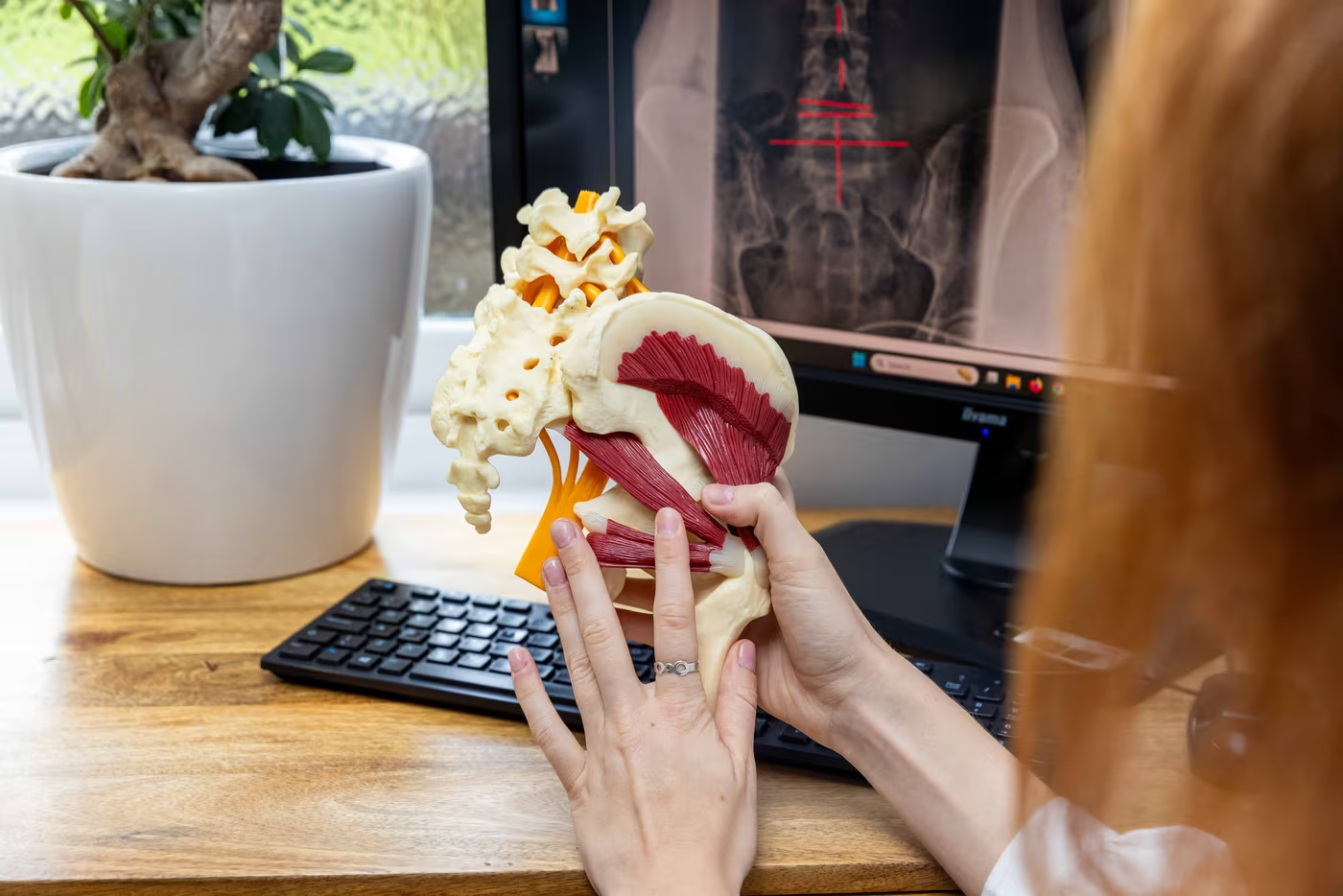
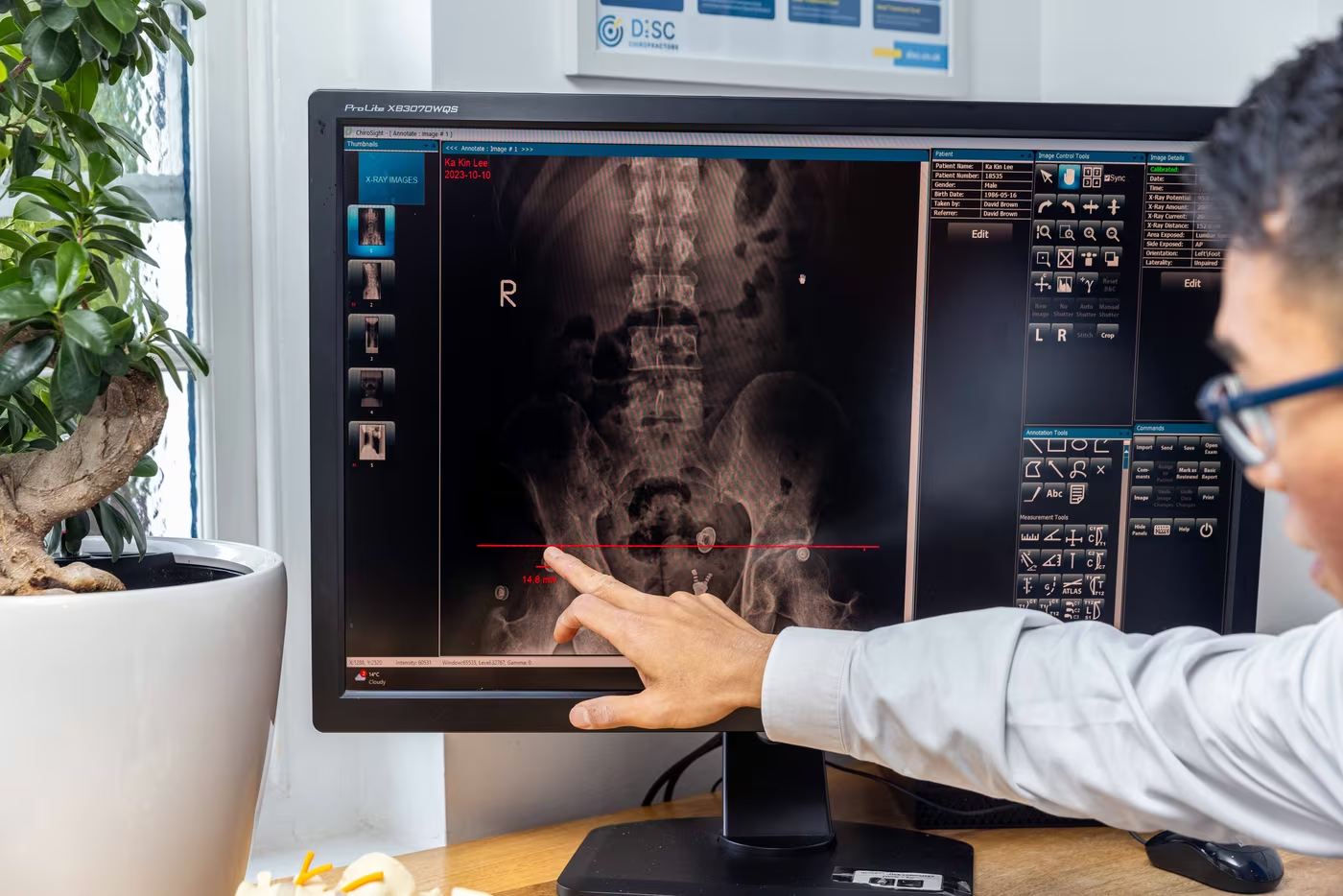
X-rays are primarily useful for assessing bone and structural change. At DISC, we may consider an X-ray when the examination raises questions about significant degeneration, radicular nerve pain, a previous injury or fracture, structural asymmetry, or other bony changes that could affect whether it is safe or appropriate to treat you.
Research shows that 30% of patients X-rayed in chiropractic clinics subsequently have findings that alter the ideal treatment plan.
When is an MRI useful?
MRI provides much greater detail of the discs, nerves, spinal canal and surrounding soft tissues. It becomes more relevant when the history and examination suggest significant disc or neurological involvement.
Most patients can start care at the clinic without an MRI. However, in disc- and nerve-based cases, we often request an MRI only if the initial treatments don’t seem to be yielding the response we hoped for, which, fortunately, is quite rare.
DISC has an on-site X-ray and can refer to private MRI facilities that can return results within a few days.
What does lower back pain treatment involve?
Treatment follows what the assessment and eventual diagnosis confirm, and for most local Surbiton people it is considerably simpler than what we have available,
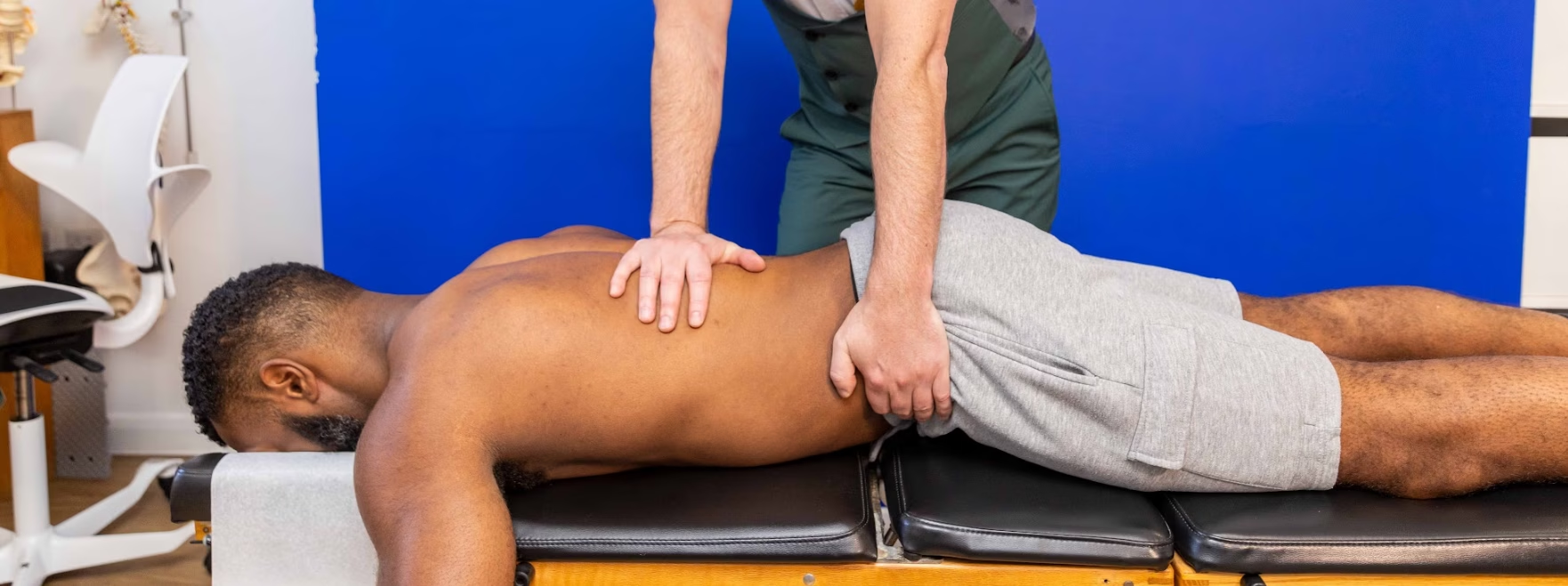
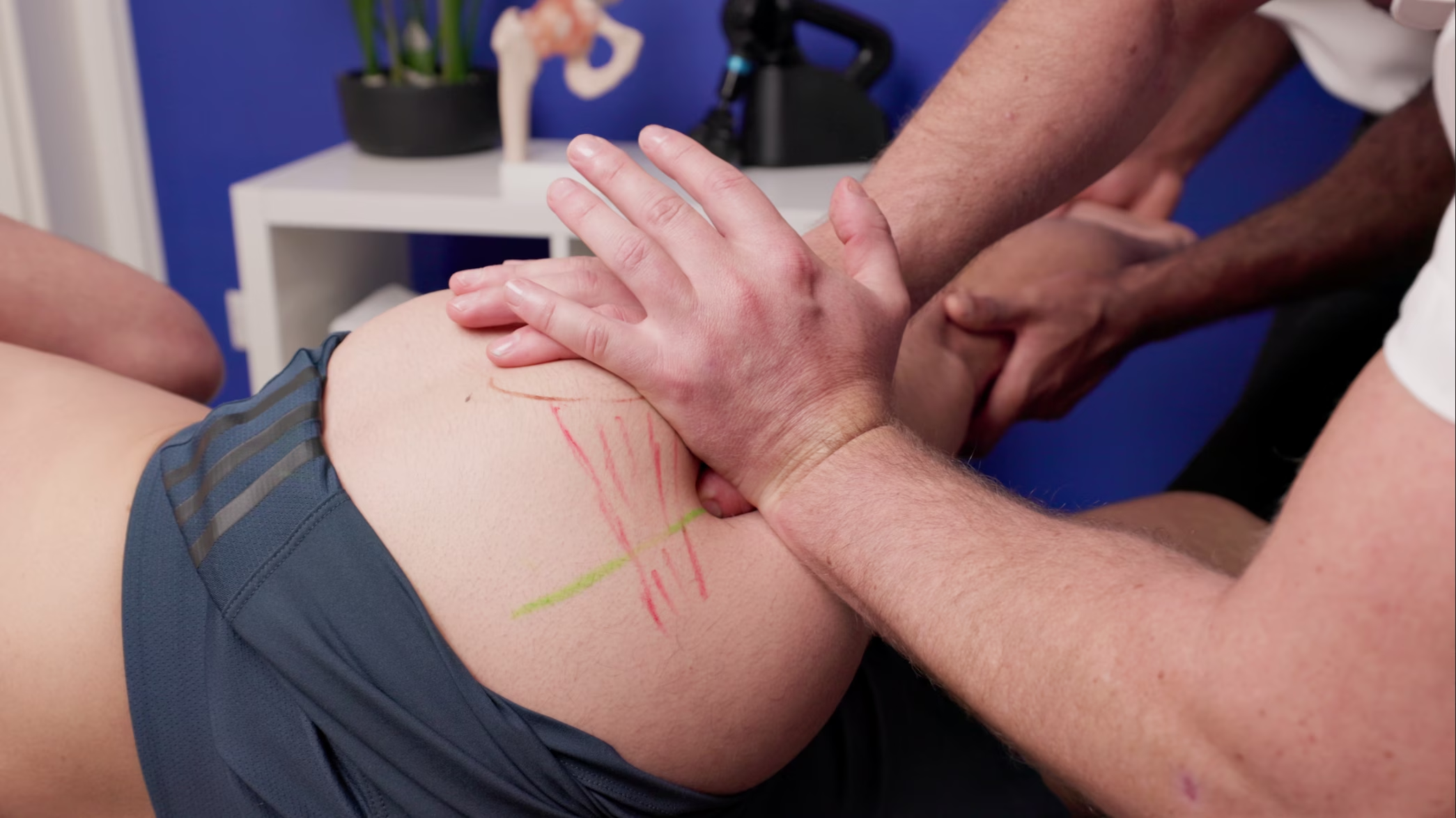
Straightforward mechanical presentations need straightforward care. A first or occasional episode with a clear directional pattern usually responds to manual treatment of the restricted segments, guidance on which directions and loads to modify while it settles, and a graded return to activity. Several weeks, not several months.
This is not a specialist condition that requires the advanced technology we have available. We therefore advise patients who think their problem is relatively uncomplicated, mild, and recent to avoid travelling more than five miles to our clinic, as local chiropractors in your town should be able to offer reliable relief.
Recurrent and persistent presentations require answering the tolerance question.
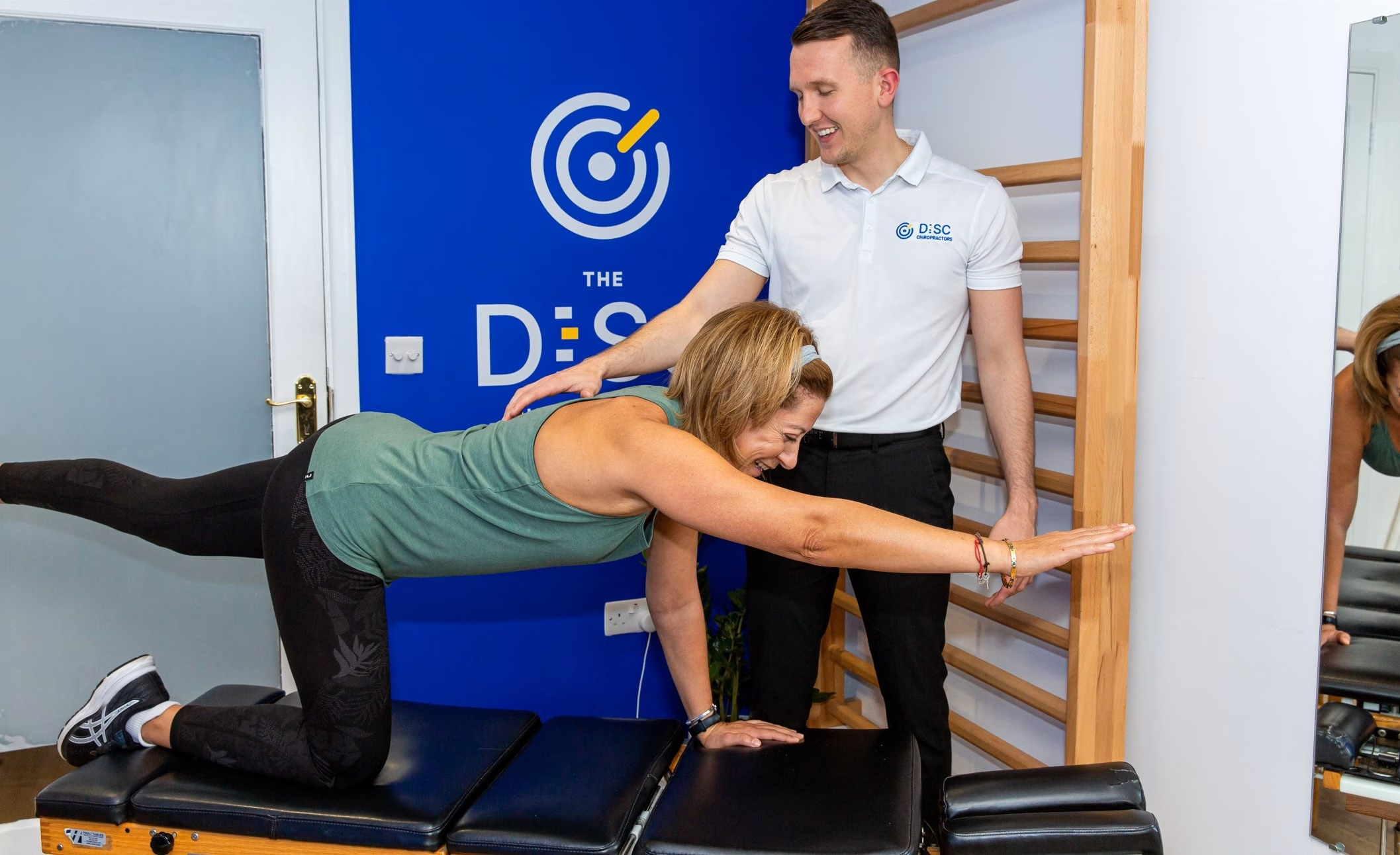
Where episodes keep returning, treating the same painful segment again is unlikely to change the pattern. Assessment widens to the hips, the pelvis and how load is managed, and treatment is staged: settle the irritable structure, stabilise function, rebuild capacity, then address what exceeded it.
Recurrent lower back pain often requires rehabilitation to address muscular imbalances, weakness, and the capacity needed to support long-term improvement.
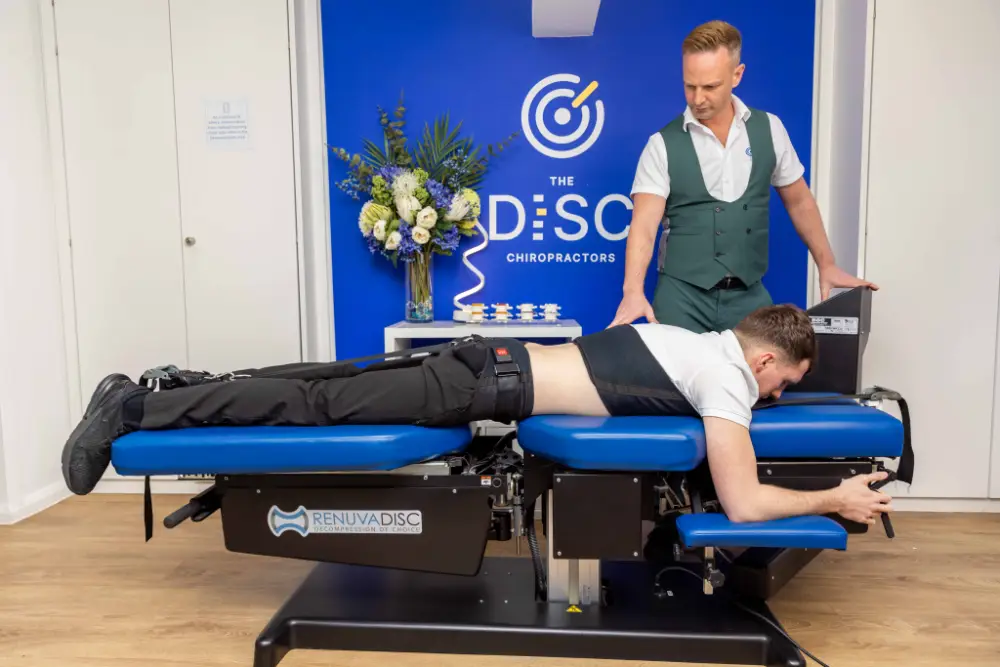
Severe, disc-driven and neurological presentations may justify more. Where examination points to a disc irritating a nerve root, spinal decompression has a mechanism-based role, reducing pressure across the segment in a way manual treatment cannot.
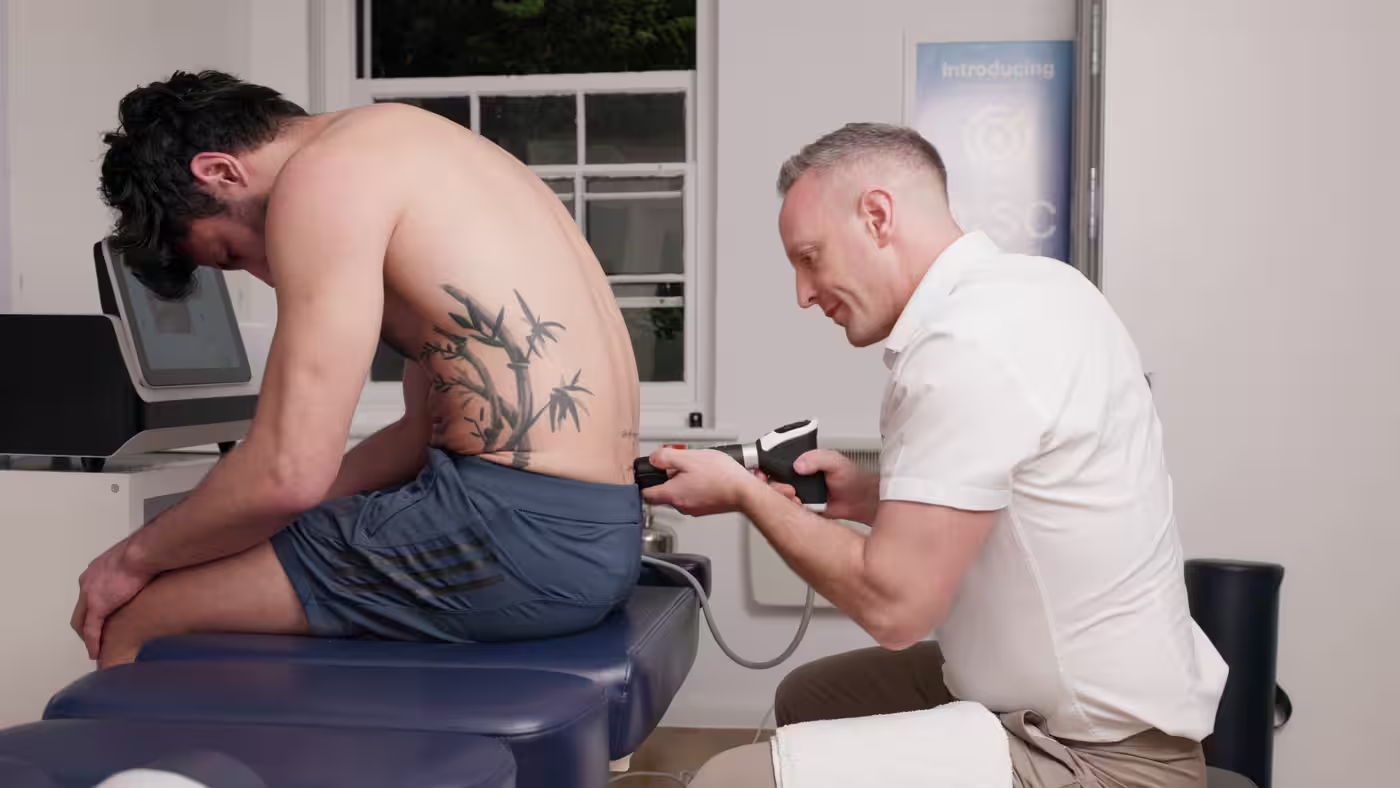
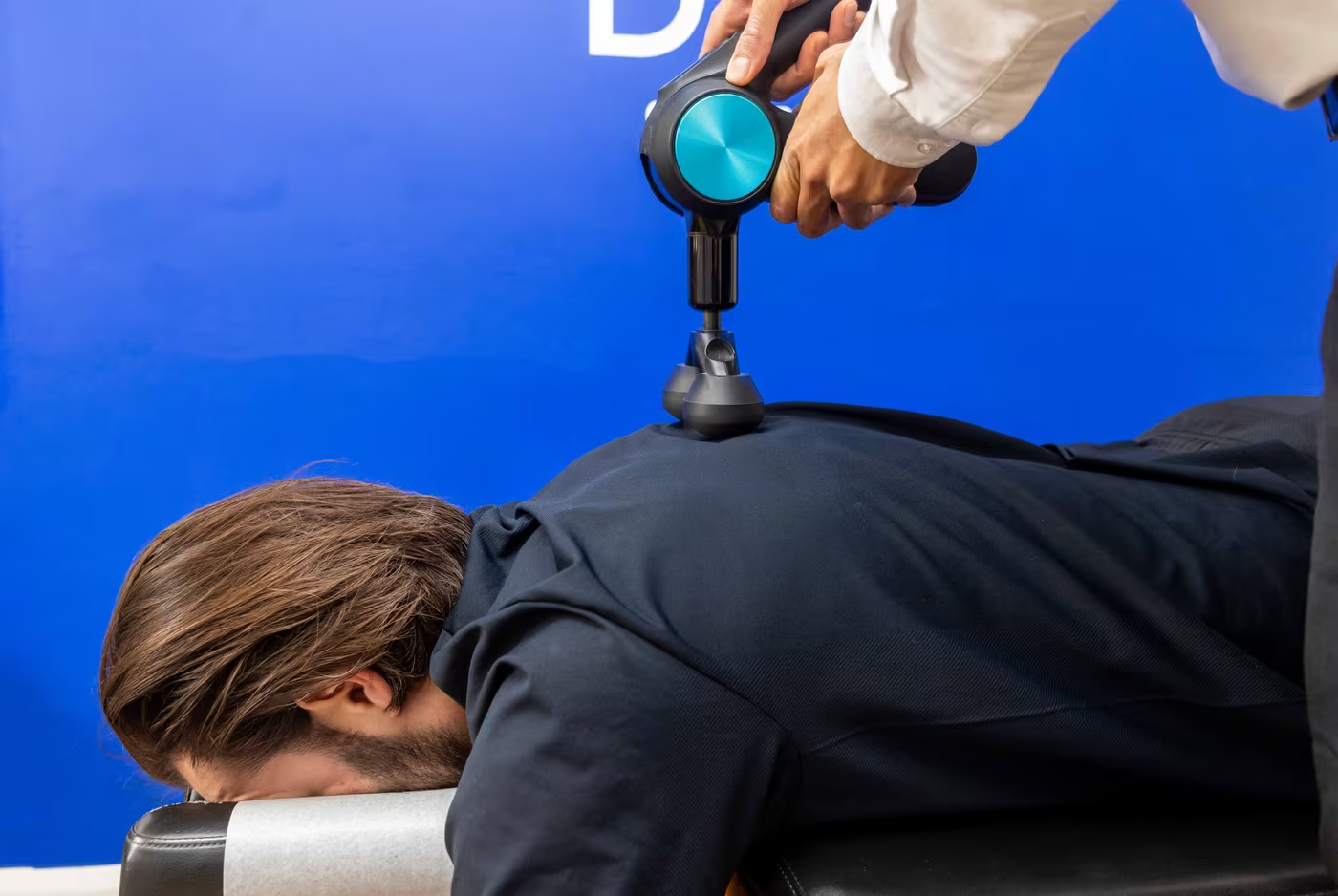
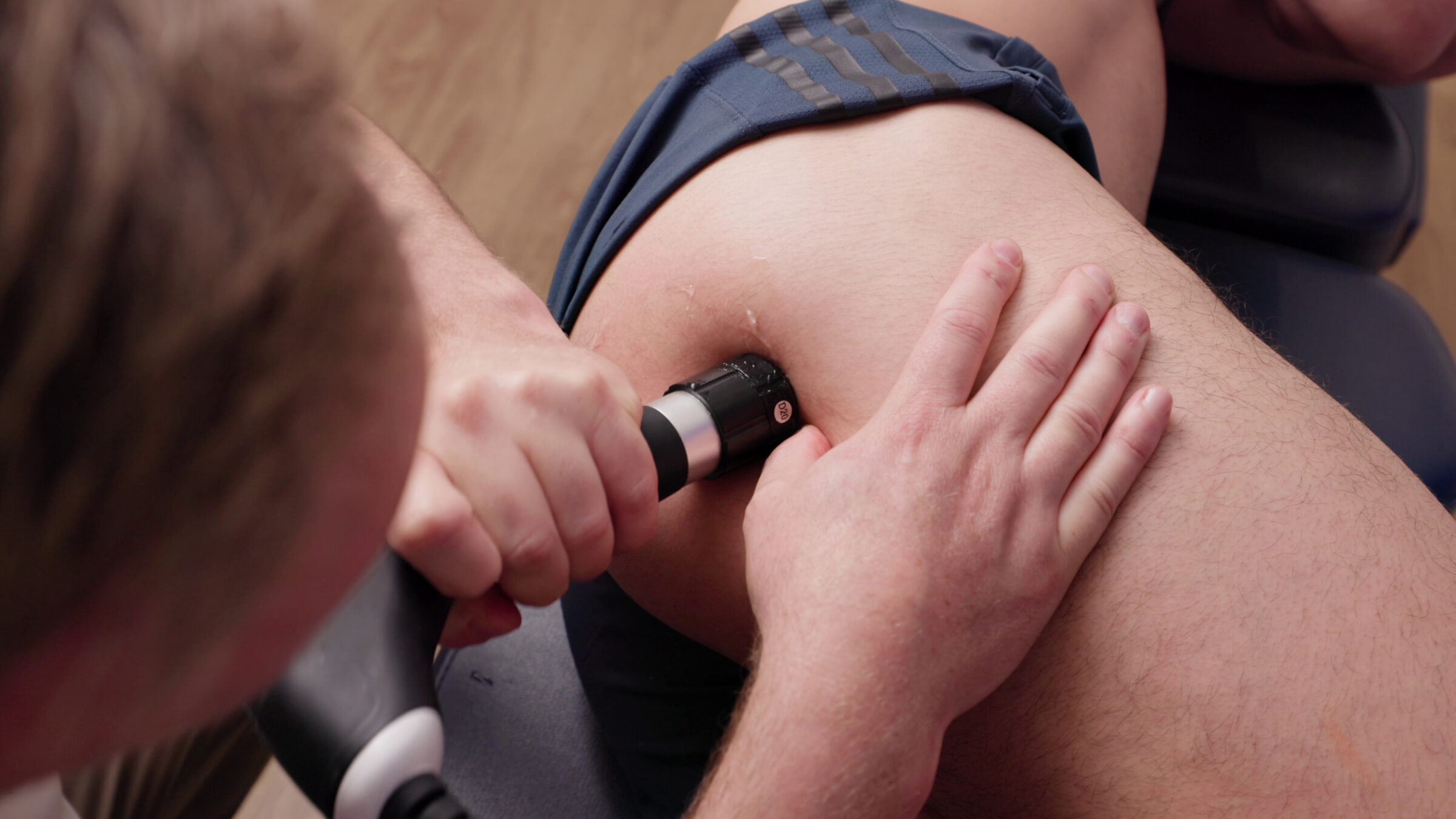
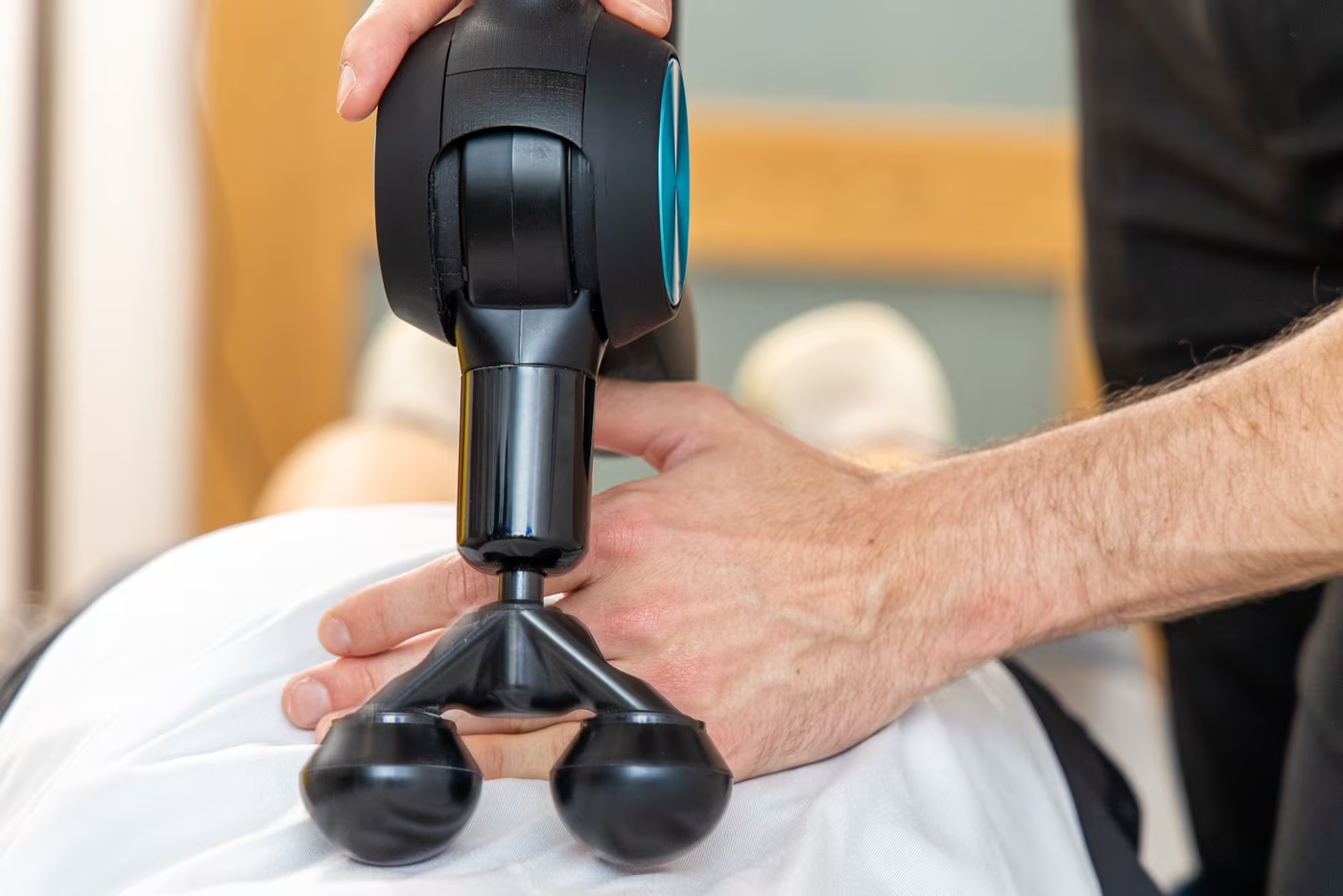
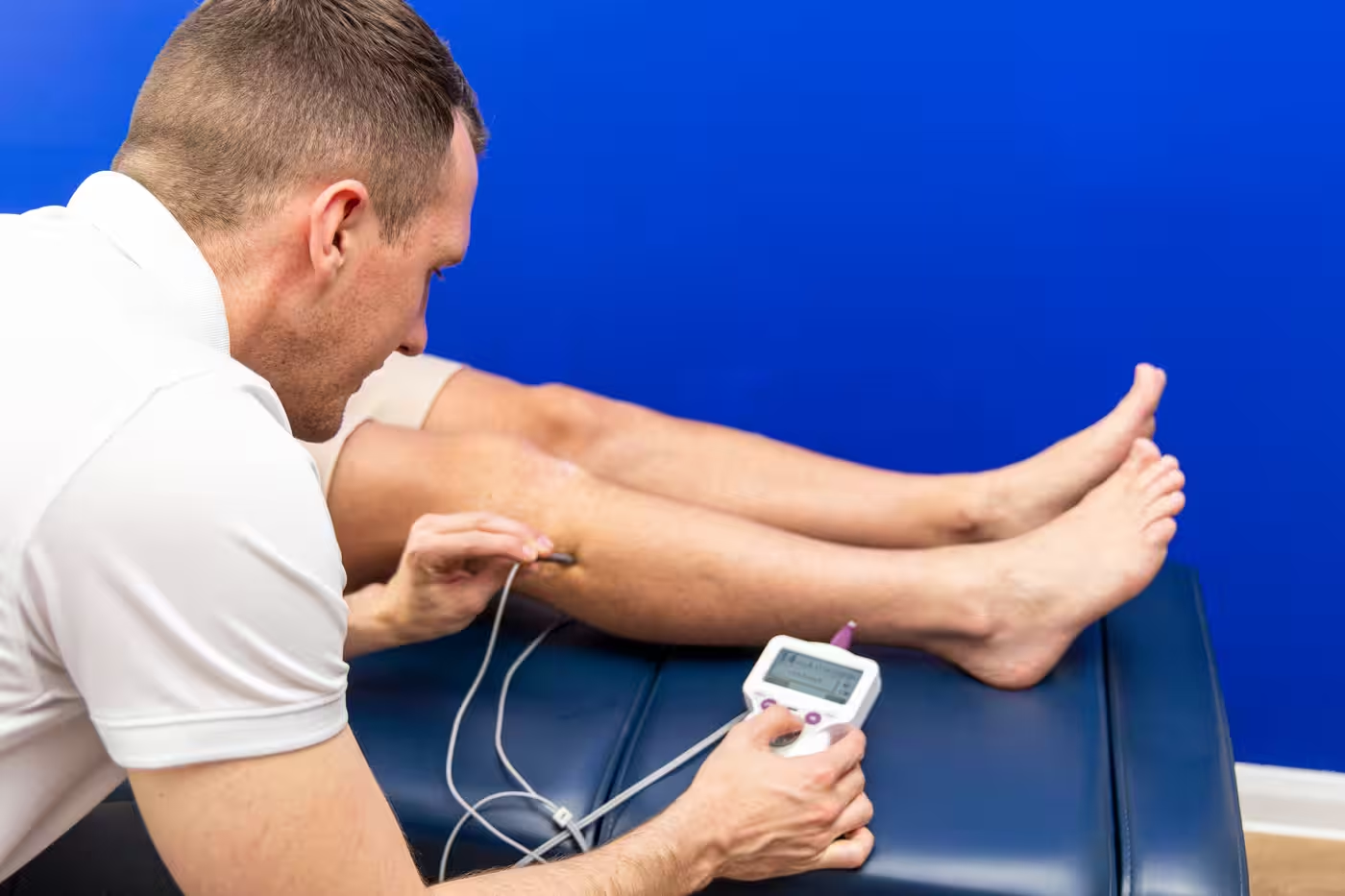
Laser therapy is used when tissue is inflamed or slow to settle, again, because a finding calls for it. Where manipulation is unsuitable due to risk to the disc, age, reduced bone density, or a previous fracture, instrument-assisted adjusting is the controlled alternative.
Some need investigation or referral first. Progressive neurological signs, a suspected inflammatory or systemic cause, significant trauma, or a picture that does not behave mechanically should be investigated before any course of care.
What to do next
If your lower back pain has not settled over a few weeks, or has settled and returned more than once, an assessment that establishes what your back currently tolerates, and which directions and loads it does not, is the sensible next step. It answers what the pain itself cannot: not just what hurts, but what your back can currently do, and what needs to change for that to improve.