
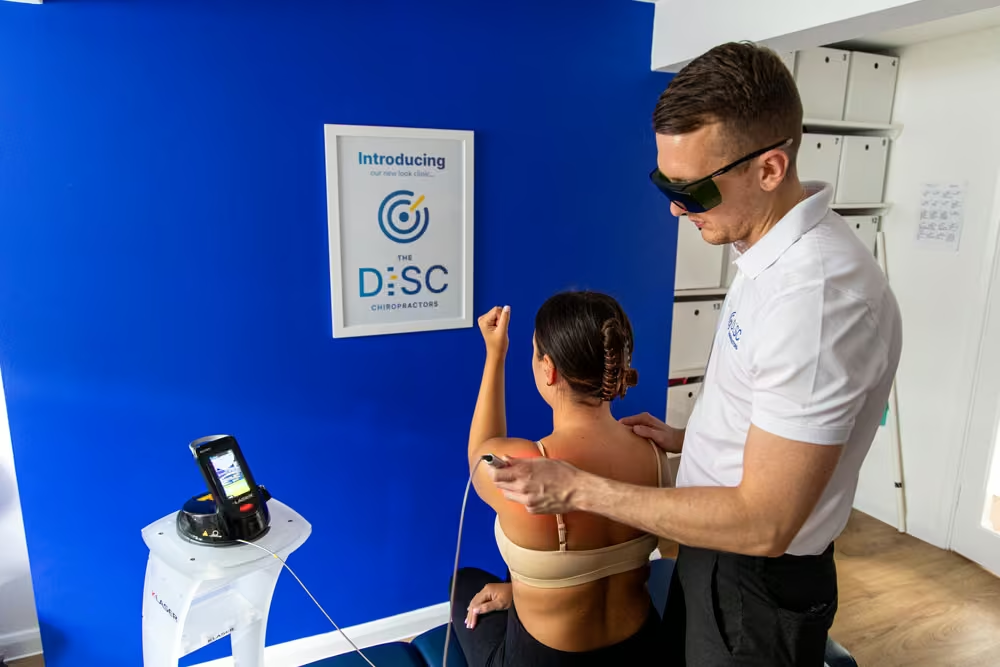
Will I Get Homework From My Chiropractor? The Role of Rehabilitative Exercises in Modern Chiropractic
Realising that his health was in his own hands as much as any clinician’s, Paul was empowered, and in just a few months, he noticed not only a lasting reduction in his pain but also improved mobility and core strength. His story exemplifies how modern chiropractic care is evolving to include these essential exercises, altering what many expect from a visit to their local chiropractor.
When Paul, a Surbiton resident, first visited his local chiropractor, he was sceptical about what the treatment could offer. Paul had struggled with chronic back pain for years, enduring adjustments and intermittent relief but never long-term change. However, his perspective began to shift after he started a rehabilitative exercise program designed by his chiropractor. It was the continuity of care, the exercise “homework”, that truly made a difference.
When you picture visiting a chiropractor in Surbiton, you might imagine adjustments, spine “clicks,” or maybe a few posture tips. Although there is a public perception that physiotherapists are the primary providers of rehabilitative exercise, many chiropractors have long included exercise-based care as a central part of their approach [1] [2]. The difference lies more in how the professions are perceived than how they actually operate. Today, most good chiropractors, including those in Surbiton, routinely incorporate mobility drills, core stability work, and progressive strengthening routines into their clinical models, alongside manual therapy, just as physiotherapists do [3] [4] [5].
So, is being given “homework” by your chiropractor to do between visits standard practice? Absolutely. According to a recent guideline, 85% of successful back pain management cases include patient-directed exercises as a critical component [7]. It is not a sign that they are offloading the work onto you. Far from it, it is a sign they are working hard toward lasting change, not just temporary relief, in line with modern back pain guidelines that emphasise active care and self-management [2] [3].
Let us break down what rehabilitative exercise entails, why it matters, and how it combines the best of chiropractic and physiotherapy principles to support long-term recovery, especially when you are working with a local chiropractor in Surbiton.
What Do Rehabilitative Exercises from a Chiropractor Actually Involve?
Are chiropractic patients expected to do exercises at home?
Absolutely. Today’s best chiropractic care encourages patients to take an active role in their recovery, often through a structured program of rehabilitative exercises [3] [4]. Typically, this involves dedicating 10-15 minutes per session, aiming for 5 days a week. These programs are tailored to each individual’s specific needs and limitations, ensuring personalised care rather than a one-size-fits-all approach.
Large reviews of chronic low back pain consistently show that exercise therapy outperforms doing nothing or minimal care for pain and function, particularly when exercises are specific and progressive [4] [5]. These improvements can translate into concrete daily benefits: fewer painkillers, more energy for playtime with kids, and the possibility of enjoying activities like gardening or walking without discomfort. Such tangible outcomes help patients see the value in sticking to their exercise regimen.
These exercises, which have long been considered just the realm of physiotherapy, are also an essential component of chiropractic care plans aimed at achieving lasting results. Mobility drills, core engagement strategies, postural retraining, and controlled strengthening movements are not just support tools; they are the continuation of your treatment between sessions [3] [4]. By engaging with these targeted exercises, you help reinforce the changes made during in-clinic adjustments, improve neuromuscular control, and address the movement patterns or muscular imbalances that may have contributed to your symptoms in the first place [2] [5].
Your commitment outside the clinic is what transforms short-term relief from adjustments into long-term recovery. Active participation is not a chore; it is your opportunity to become the driver of your own progress [2] [3]. This is one of the main traits people look for when searching for the best chiropractor in Surbiton: someone who will guide and empower them. Which everyday activity would feel easier for you with stronger core control? Consider your routine and how improved mobility and strength could enhance your day-to-day life.
Why do chiropractors assign rehabilitative exercises?
Because adjustments alone can only go so far. While hands-on care is excellent for unlocking stiff joints or calming irritated nerves, muscles and movement patterns need reinforcement if you want those improvements to last [3] [6]. Research comparing exercise alone with combinations of exercise and manual therapy suggests that combining both often results in 30% faster pain relief and more significant improvements in function than either approach in isolation [4] [6].
This is a principle well established in physiotherapy: without functional reinforcement, mechanical corrections tend to regress [2] [3]. Likewise, dentists often require a retainer even after braces are removed, as soft-tissue adaptation takes time to fully maintain the positional changes. Chiropractors who incorporate exercise plans effectively apply these principles to enhance the durability of spinal and joint-based treatments [3] [6].
Your rehabilitative exercises help:
- Retrain weak, imbalanced or inhibited muscles.
- Improve joint stability and coordination.
- Prevent recurring flare-ups.
- Make you an active participant in your recovery [2] [3] [4].
What is the difference between passive care and active care?
Passive care refers to what is done to you, like adjustments, spinal decompression, or soft tissue work. Active care involves what you do for yourself, such as rehabilitative drills, posture retraining, and movement re-education [2] [3]. While many people associate physiotherapy with active strategies, such as exercise and movement retraining, chiropractors have also long adopted these approaches. A mnemonic that might help remember the difference is: ‘Passive care is performed on you, while active care is performed by you.’
The idea that chiropractors only perform adjustments is a common misconception. In reality, many chiropractors have historically integrated rehabilitative exercise into their care, and today it is a cornerstone of practice for those focused on long-term outcomes [3] [6]. The perception that exercise is exclusive to physiotherapy overlooks the active care strategies chiropractors have used for decades. The distinction is largely cultural, rooted more in public expectations than actual clinical behaviour [1] [2].
The best chiropractic care often begins with passive techniques to reduce symptoms, sometimes supported by gentle postural or mobility drills designed for comfort and early progress [3]. The fundamental shift happens when care transitions into active participation. Rehabilitative exercises then become central, helping patients restore stability, build strength, and reinforce the adjustments made in the clinic [3] [4].
This evolution from relief to resilience is not just about technique; it is about empowering the patient. As individuals take an active role in their recovery, they become more than just recipients of care; they become co-creators of their health outcomes, gaining not only physical but also psychological benefits [2] [3]. This is where the long-term transformation begins, and where a good chiropractor in Surbiton can feel more like a coach than simply a technician.
The fusion of these philosophies is not about replacing chiropractic with physiotherapy, or vice versa. It is about evolving beyond outdated stereotypes and providing patients with a broader, more effective toolkit that empowers them to take control of their recovery [2] [3] [6].
Are rehabilitative exercises essential?
Not strictly, but consistency makes a significant difference [4] [7]. Think of your adherence to the exercise program as drawing the ‘consistency curve’. Each day you complete your exercises, you strengthen the curve, keeping it on an upward trajectory toward recovery. However, each missed session bends this curve downward, much like a gap in daily toothbrushing harms dental well-being. Studies on home-based exercise programs for low back pain show that people who actually do their exercises regularly tend to achieve better pain reduction and functional gains than those with poor adherence [7] [8] [9].
In reality, some patients do not fully comply with their rehab plan or may decline to engage with more advanced exercises. While we still aim for positive outcomes in these cases, the results may be more limited or slower to achieve. Skipping exercises tends to disrupt momentum and delay progress [7] [8]. To increase compliance and adherence, we set small, achievable goals and celebrate each milestone.
Your recovery plan is built on two pillars: what happens in the clinic, and what you commit to between visits. If you are inconsistent with your rehabilitative work, it is a bit like brushing your teeth sporadically; you may avoid a crisis, but you will not get optimal health [2] [4].
To truly support and sustain the gains made during treatment, an active role outside the clinic is essential. This is why good chiropractors who include rehabilitation in their model may feel more like a hybrid between traditional chiropractic and physiotherapy. For patients seeking not just short-term relief but lasting change, that hybrid model often delivers the most meaningful outcomes [3] [6] [7]. It is also one of the reasons many people look for the best chiropractor in Surbiton who can combine hands-on care with structured, evidence-informed rehab.
How Do Rehabilitative Exercises Fit Into the Chiropractic Healing Process?
Why is pain relief not enough?
Pain is just one part of the picture. Relief might come after a few sessions, but that does not mean your spine is stable, your nerves are entirely calm, or your body is moving well [1] [2]. Without rehab, it is easy to fall into the pain relapse cycle: feel better briefly, flare up again, repeat. This pattern has helped fuel one of the most persistent myths about chiropractic care, that once you start, you can never stop [1].
However, the truth is that the cycle often reflects the patient’s lack of follow-through with active care and habit changes, rather than a flaw in chiropractic itself [2] [3]. Chiropractors who incorporate structured rehabilitative strategies are actively working to break this loop.
When you strengthen weak muscles, retrain faulty movement patterns, and restore your body’s ability to stabilise itself, not only does the need for repeated adjustments lessen [3] [4], but confidence often returns alongside strength, making patients feel more in control of their recovery. Rehabilitative exercises shift the goal from managing symptoms to achieving sustained independence, both physically and mentally.
What role do exercises play in full recovery?
Rehab teaches your body how to move better, not just feel better. This includes:
- Stabilising function.
- Strengthening weaknesses.
- Stretching contractures.
- Rebalancing posture.
- Improving control and balance during daily activities.
These exercises help reinforce the mechanical or structural adjustments provided by traditional chiropractic care and promote long-term resilience [3] [4] [5]. The goal is not just to relieve pressure on nerves or unlock stiff joints; it is to build a more coordinated, adaptable body that can meet daily demands without repeated breakdowns or reliance on constant treatment [2] [4] [5].
How do exercises help prevent recurring issues?
When pain subsides but the underlying dysfunction remains, such as poor hip stability, weak glutes, or lack of core control, symptoms often return [2] [4]. Without addressing these functional weaknesses, the same stress patterns continue to recur, leading to repeated flare-ups. Rehabilitative exercise is how we ensure we break that cycle in the long term [4] [7] [8].
What does an average rehabilitation plan look like at The DISC Chiropractors?
At The DISC Chiropractors in Surbiton, our rehabilitation programs are staged, progressive, and responsive to each patient’s unique circumstances [3] [6]. Every plan begins with an in-depth clinical assessment that identifies not only the source of pain but also the mechanical, neurological, and behavioural patterns contributing to it. From there, we build an exercise strategy that evolves in tandem with your healing capacity and confidence.
Rather than rushing to high-intensity strengthening, we prioritise movement quality, breathing control, joint stability, and postural awareness [2] [3]. This progression ensures that each layer of your recovery builds on solid ground. For example, before introducing heavier resistance or complex lifts, we verify that stabilising muscles are firing appropriately, compensations have reduced, and you are able to move with confidence under low load [3] [5].
Pushing too hard, too fast, is one of the most common reasons people lose confidence in rehabilitation. A practical readiness check might be: Can you hold a plank for 20 seconds without experiencing pain? Another effective benchmark could be walking pain-free for five minutes or performing 10 bodyweight squats without discomfort. Such targets make the steps clear and attainable.
Skipping foundational phases or jumping to more advanced work before the body is ready can lead to flare-ups or setbacks that shake a patient’s belief in the process [2] [7]. These occurrences should be viewed as data to guide adjustments in the rehabilitation plan, rather than as failures. Embracing setbacks as “feedback, not fiasco” can help maintain motivation and reduce dropout risk. This perspective is integral to ensuring that every step in our approach is earned, not assumed, and that you are progressing at the right pace to feel both safe and successful.
This careful sequencing, rooted in both clinical judgement and patient feedback, helps reduce the risk of flare-ups, supports better long-term outcomes, and empowers patients with a sense of control [2] [3] [7]. It is not a linear checklist; it is a flexible process that respects your body’s healing and adaptation to its needs. By focusing on precision over pressure, we lay the foundation not just for symptom relief but for long-term resilience and sustainable independence.
Phase 1: Mobility and Relief
- Pelvic tilts.
- Gentle range of motion exercises.
- McKenzie extensions (where appropriate).
These drills are designed to restore joint motion and reduce protective tension. They are ideal during the acute or reactive stage, where comfort and pain control are the priorities [3] [4].
Phase 2: Stability and Control
- Deadbug variations.
- Superman holds.
- Side plank progressions.
These exercises re-engage the core and deep stabilisers to support spinal control and functional movement [3] [4] [5]. This phase is essential before introducing any heavier strengthening work.
Phase 3: Functional Strengthening
- Glute bridges and banded clams.
- Sit-to-stand drills or chair squats.
- Step-ups or resistance-based compound movements (as appropriate).
This is where patients build strength and resilience for real-life activities [4] [5]. However, this phase is only introduced when previous layers of control and coordination are well established.
At The DISC Chiropractors, our rehabilitation is carefully timed, tailored to your specific goals, and aligned with your body’s progress [3] [6] [7]. It is not about ticking boxes; it is about earning each stage with quality movement and measured response.
How do I know when pain during exercise is good or bad? Pain Feedback & The Traffic Light System
Understanding the difference between normal soreness and problematic pain is probably one of the most significant lessons you can learn for recovery, and it is essential during rehabilitation [2] [4]. After an adjustment, you may feel looser or more mobile, but that does not mean your body is ready for high-intensity training. Your nervous system may still be recalibrating, and your tissues may not yet be able to tolerate the load [2] [4].
It’s reassuring to note that around 80% of the sensations experienced during rehabilitation fall within the ‘green-amber’ zone, indicating they are generally safe, which can help adjust expectations and reduce anxiety.To help patients navigate this, we use a simple yet powerful tool: the Traffic Light System. This approach is consistent with pain-monitoring models used in tendon and sports rehabilitation, where mild, short-lived discomfort is acceptable but escalating or lingering pain signals overload [10] [11].
🟢 Green Light
Mild discomfort during or after an activity that fades within 30 minutes. This may feel like slight muscle fatigue, tension, or joint awareness. It should not affect how you move or behave afterwards. Green light discomfort often signals adaptation, not damage, and is safe to work through.
Examples:
- Slight stiffness after deadlifts that resolves after stretching.
- Light tension in the lower back after gardening.
- Gentle fatigue in your shoulders following posture drills.
What to do: Continue as planned. This response is therapeutic.
🟠 Amber Warning
Pain or fatigue that lingers for several hours after activity or escalates during the rest of the day. It includes ever-increasing pain during an activity. It may cause you to move differently or avoid specific movements. This indicates you have likely exceeded your current capacity.
Examples:
- Persistent ache in the hip after a long walk.
- Increased back tension during overhead lifts affects form and posture.
- Tiredness or soreness that affects your evening routine.
What to do: Reduce the load, volume, or intensity. Modify the form and focus on core stability for better recovery.
🔴 Red Light
Sharp, shooting, or next-day pain, especially if it limits movement or radiates along a nerve. This is your body’s stop sign, indicating irritation, inflammation, or tissue overload [2] [4] [10].
Examples:
- Electric-like pain down the leg after twisting or lifting.
- Waking up with stabbing pain after a gym session that felt fine at the time.
- Pain that disrupts sleep or prevents normal daily function.
What to do: Stop the activity immediately and consult your chiropractor. If you are under care with a Surbiton chiropractor, feed this information back into your plan so that your program can be adapted safely.
It is important to do warm-up exercises before engaging in any physical activity. Suddenly bending forward without warming up can increase the risk of a twinge, but it may still not be a true red light event. Reduce the chance of pain by warming up thoroughly and engaging your core muscles during movement, which often helps prevent discomfort. Simple warm-up exercises such as gentle marching on the spot or doing arm circles can effectively prepare your body for more intense activities.
The Traffic Light System is not just for training; it applies to lifting laundry, prolonged sitting, or everyday tasks. Discomfort is a feedback tool, not something to fear. When understood and respected, it helps you stay moving without setbacks [2] [4] [7]. To put this into practice, consider taking a simple step towards active engagement in your recovery.
Why not book a movement screen at The DISC Chiropractors in Surbiton, or print out the traffic-light checklist to keep handy at home? This small action can transform your understanding into momentum, empowering you to take charge of your long-term health and well-being.
References
- Hartvigsen J, Hancock MJ, Kongsted A, et al. What low back pain is and why we need to pay attention. Lancet. 2018;391(10137):2356–2367.
- O’Sullivan PB, Caneiro JP, O’Keeffe M, et al. Cognitive functional therapy and a multidimensional approach to chronic musculoskeletal pain. BMJ. 2020;368:m791.
- George SZ, Fritz JM, Silfies SP, et al. Interventions for the management of acute and chronic low back pain: revision 2021. J Orthop Sports Phys Ther. 2021;51(11):CPG1–CPG60. (JOSPT)
- Hayden JA, Ellis J, Ogilvie R, et al. Exercise therapy for chronic low back pain. Cochrane Database Syst Rev. 2021;10:CD009790. (PubMed)
- Li Y, Zhu Y, Shen T, et al. Exercise intervention for patients with chronic low back pain: a network meta analysis. Front Public Health. 2023;11:1155225. (Frontiers)
- Goertz CM, Long CR, Vining RD, et al. Effect of usual medical care plus chiropractic care vs usual medical care alone on pain and disability among US service members with low back pain. JAMA Netw Open. 2018;1(1):e180105. (PubMed)
- Arensman RM, Abma IL, Cup EHC, et al. Exploring the association between adherence to home based exercise and outcomes in low back pain. BMC Musculoskelet Disord. 2024;25:??. (BioMed Central)
- Anar SÖ, Tüzün EH, Erol AM, et al. The effectiveness of home based exercise programs for low back pain: a randomized controlled trial. J Phys Ther Sci. 2016;28(11):3085–3090. (PMC)
- Meuwissen I, Vanderstraeten R, Roussel NA, et al. Contributors to adherence to exercise therapy in non specific chronic low back pain: a systematic review of qualitative and quantitative research. J Clin Med. 2025;14(17):6251. (MDPI)
- Silbernagel KG, Thomeé R, Eriksson BI, Karlsson J. Continued sports activity, using a pain monitoring model, during rehabilitation in patients with Achilles tendinopathy: a randomized controlled study. Am J Sports Med. 2007;35(6):897–906. (PubMed)
- Malliaras P, Barton CJ, Reeves ND, Langberg H. Physiotherapy management of Achilles tendinopathy. Phys Ther Sport. 2022;57:??–??. (ScienceDirect)
- Eklund A, Axen I, Kongsted A, et al. Effectiveness of chiropractic maintenance care versus symptom guided treatment for recurrent and persistent low back pain: a pragmatic randomized trial. PLoS One. 2018;13(9):e0203029. (PLOS)