
Neck Pain: What Your Neck’s Behaviour Tells You
Neck pain is the second most common musculoskeletal complaint after lower back pain, and it attracts some of the least useful explanations in medicine. Most people are told one of three things: that it is muscular, that a scan shows wear and tear, or that it is their posture. None of those explains why the neck is fine at nine in the morning and unbearable by four, or why turning one way is effortless, and the other way is not.
The more useful information is not where it hurts. It is how your neck behaves: where symptoms travel, how they respond when you move, and how long your neck can hold a position before it complains. Rather than repeating the anatomy lesson available on every other neck pain page, we will concentrate on the questions that separate one kind of neck pain from another.

“At The DISC Chiropractors we believe that the most significant factor in back pain is unsurprisingly Disc Injuries (the clue is in our name 😊),
With neck pain, although it’s entirely possible to be suffering from an acute disc herniation it is far more common for patients to present with Degenerative Disc Disease and Postural Issues affecting the Nerves Mechanically”.
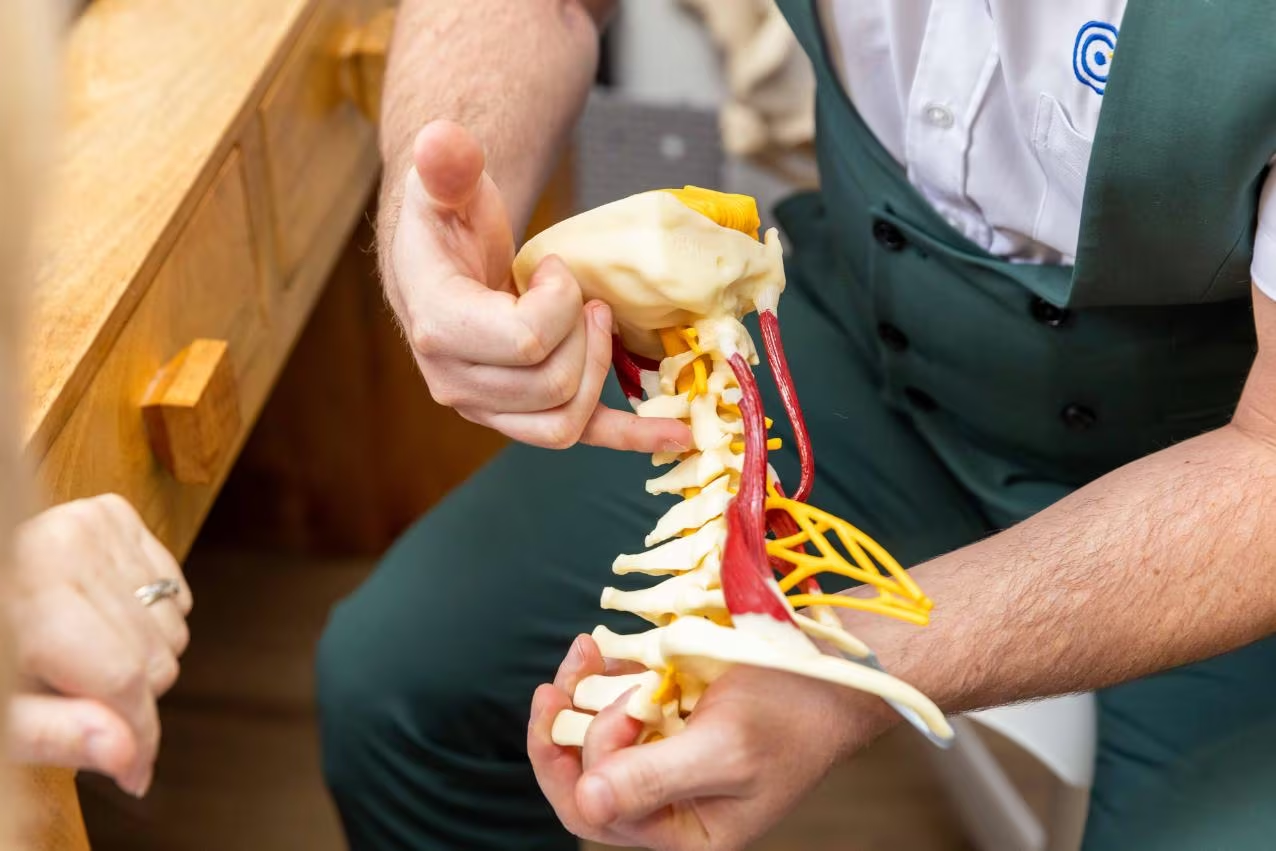
What causes neck pain?
Neck pain is a location and a symptom, not a diagnosis. Saying you have neck pain is like saying you have a headache without mentioning that you walked into a door.
Only a short list of structures can generate it: the discs between the vertebrae, the facet joints at the back of each segment, the small upper cervical joints beneath the skull, the nerve roots leaving on their way to the arm, and the muscles wrapped around all of them. That is essentially the entire list.
These structures sit within centimetres of one another, share nerve supply, and almost never fail one at a time. A stiff segment provokes protective muscle tightening; guarded muscles change how the joint loads; overloaded joints crowd nerves, which further irritates the muscles. The problem becomes cyclic and compounding, and by the time most people seek help, more than one tissue is involved.
Neck pain is significantly impacted by the following:
- Poor Posture
- Trauma/whiplash (including minor impacts)
- Stress
- Alignment issues
- Jaw/dental Issues
What does the research say?
Neck pain is difficult to pin down, but it is not a black box. A body of work using controlled diagnostic injections, anaesthetising specific joints and observing whether the pain stops, has given us reasonable confidence about where chronic neck pain actually comes from.
The facet joints are the most consistent finding. Controlled diagnostic injections suggest facet joints are involved in roughly 29–60% of chronic neck pain, depending on the criteria used.
Stricter dual-block studies put the figure around 49%, rising to approximately 60% after whiplash.
The most useful finding concerns overlap. Among chronic pain patients who underwent both discography and facet blocks, 41% had a painful disc and a painful facet joint at the same segment. That is good evidence for something we see constantly: in established neck pain, the question is rarely which structure, but how many.
It’s worth noting that this is significantly different from the research on lower back pain, which is far more likely to involve a single or primary pain-generating structure.


So how do you work out what is actually wrong?
Pain offers a guide, but it is an unreliable witness. Functional testing will always trump pain diagnostically.
Orthopaedic and neurological testing narrows down which tissues are sensitised and whether a nerve is genuinely involved; movement testing shows how symptoms respond when a movement is repeated; quantifiable muscle testing identifies weakness in the structures meant to support the painful area.
Together, those findings let us build a working diagnosis and then test it; an explanation that cannot be checked against how you respond is not much of an explanation.
Where does your neck pain travel?
Whether symptoms stay in the neck or travel is the first branch point, and it separates three different things.
Local pain stays put where you would rub, changing with certain movements, usually with stiffness and an ache underneath.
Referred pain is felt away from the neck but still comes from it. Joints, discs, and muscles can produce pain across the top of the shoulder, around the shoulder blade, or up into the head, with no nerve compressed at all. It is a deep, hard-to-pinpoint ache with no clear border and pressing the painful area does not reproduce it.
Radicular pain means a nerve root is genuinely irritated where it leaves the neck, and symptoms follow its territory — a narrower band, often below the elbow, and commonly accompanied by pins and needles, numbness or weakness in particular fingers.
Broadly, the upper neck refers upwards into the head, the middle outwards across the shoulder girdle, and the lower neck down the arm.
Referral patterns overlap between neighbouring segments, and any assessment that claims to pinpoint a segment from a symptom map alone overstates what the map can do.
Pain at the base of the skull
Pain at the base of the skull is one of the most common presentations we see and one of the most frequently mislabelled. It sits in the hollow where the skull meets the neck — a deep ache, a tight band across the back of the head, or a trigger point you can find with a fingertip.
The small joints at the top of the neck, and the short suboccipital muscles holding your head level on them, are densely supplied with nerve endings, and they rarely get a break. Sustained positions load them far more than movement does, which is why this pain builds through an afternoon rather than arriving in a single moment, and why it is so often worse on one side.
From a chiropractic perspective, this is commonly described as upper cervical dysfunction or suboccipital dysfunction. It is often related to posture or alignment issues in the neck and can cause pain patterns to refer up into the skull.
When it spreads up into the head, it’s often termed occipital neuralgia, as the occipital nerves carry much of the referral patterns, although the joints and muscles in this area also can refer more diffusely into the skull.
If head pain is the main event and the neck just a contributing factor, then more information is available on our headache and migraine page.


Is dizziness or unsteadiness related to neck pain?
Neck pain and dizziness can occur together, but their relationship is not straightforward. Some people with upper neck pain also report feeling briefly off-balance on turning the head. There is a recognised association, but this is contested ground, and we would rather say so than oversell it.
Cervicogenic dizziness is thought to arise from a mismatch between signals from the upper-neck joints and muscles, the eyes and the inner ear. Tight muscles and restricted joints are sending signals that effectively confuse the brain’s understanding of its position in space.
Cervicogenic dizziness is a diagnosis of exclusion, reached only after inner-ear, blood-pressure and neurological causes are ruled out. If dizziness is a significant part of what you are experiencing, have it assessed properly before anyone attributes it to your neck.
why is cervical instability such a big issue in neck pain?
Cervical instability is definitely a topic en vogue, but it is actually quite rare, and most upper-neck pain and dizziness cases do not lead to a diagnosis of cervical instability. However, previous trauma, particularly whiplash or a significant blow to the head, can occasionally injure the ligaments that control movement between the skull, atlas (C1), and axis (C2).
The alar ligaments are particularly important. They connect C2 to the base of the skull and help limit excessive rotation and side-bending of the head. Injury or laxity can therefore alter the way the upper cervical joints move, and the information those joints and surrounding muscles send to the brain about head position.
Patients with a persistent feeling of instability or apprehension with head movement, unusual movement restriction, neurological symptoms, nausea or dizziness that appears closely related to neck position.
In these cases, abnormal movement between the upper cervical vertebrae may irritate or chafe nearby arteries. This can affect blood flow and may contribute to symptoms such as dizziness, visual disturbances, imbalance, or other neurologic symptoms.
Importantly, suspected upper-cervical instability or possible arterial irritation changes the examination and treatment decisions.
X-ray confirmation is essential before deciding on a treatment plan, as manipulating the neck can be dangerous in these Circumstances. Our gentle instrument-assisted adjusting techniques can often provide relief whilst further investigations or rehab are ongoing.
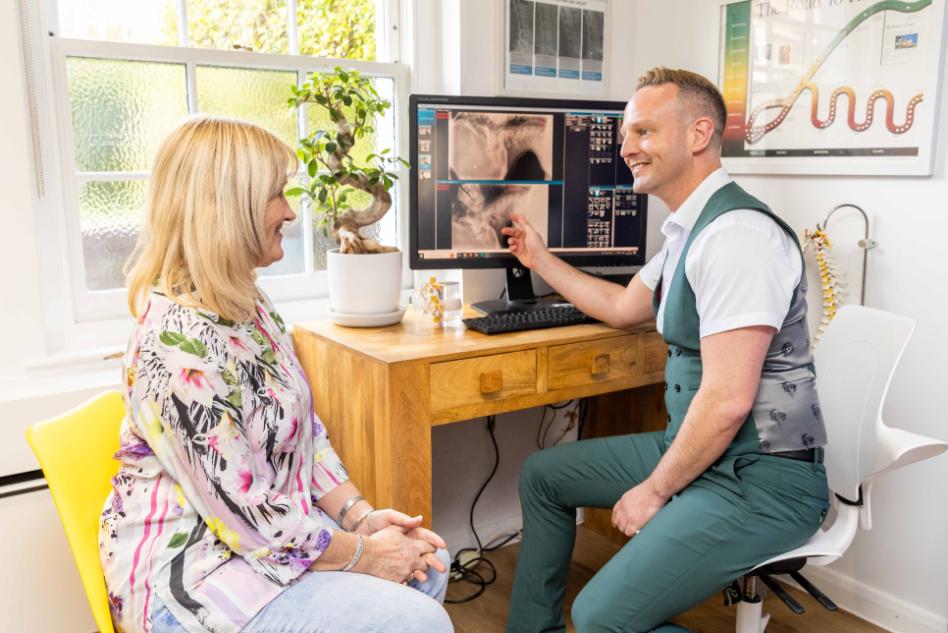

Which direction does your neck prefer?
In the lumbar spine, directional preference is more often discussed because it affects disc diagnosis and treatment, and the neck generally follows the same rules: if extension centralises or reduces pain and flexion peripheralises or exacerbates pain, a disc-related diagnosis is plausible. Sharp or shooting pains on initial movement often indicate disc- or nerve-based issues.
However, the neck is far more prone to posture or alignment issues that can supersede movement-pattern dysfunction, making this categorisation difficult.
Likewise, a rotated or side-bent neck changes the load on the muscles, joints and discs, so movement preference or symptom creation should be interpreted in relation to the position in which symptoms begin.
Same-sided pain often reflects an overload of the muscles that rotate or side-bend the neck towards that side. Pain on the opposite side may increase suspicion of restriction or irritation of the facet joints on that side.
These patterns are useful clinical clues, not stand-alone diagnoses, as muscle guarding can also alter alignment, and joint irritation can produce protective muscle pain.
Could my neck pain be muscular?
Muscle pain is real and common, but muscles more often respond to a problem than cause one. I don’t think anyone would be surprised to hear that long hours of work, especially on computers, tighten the trapezius, extensor, and suboccipital musculature alike. Chronic pain patterns that increase as the day wears on would be primed for a muscular diagnosis.
But neck muscles also tighten protectively when the nervous system judges a structure underneath to be vulnerable, and that guarding genuinely hurts: which is why “I must have slept on it funny” is the commonest self-diagnosis in neck pain, ignoring all the build-up of stress that would be necessary to truly create guarding from just sleeping.
A genuine strain behaves like an injury: clear onset, pain on specific loading, matching tenderness, steady improvement over one to three weeks. Protective guarding eases when the irritable segment settles and returns when it does not. A neck that locks into acute spasm — sudden, one-sided, head held tilted is braced against further damage and should always undergo an assessment.

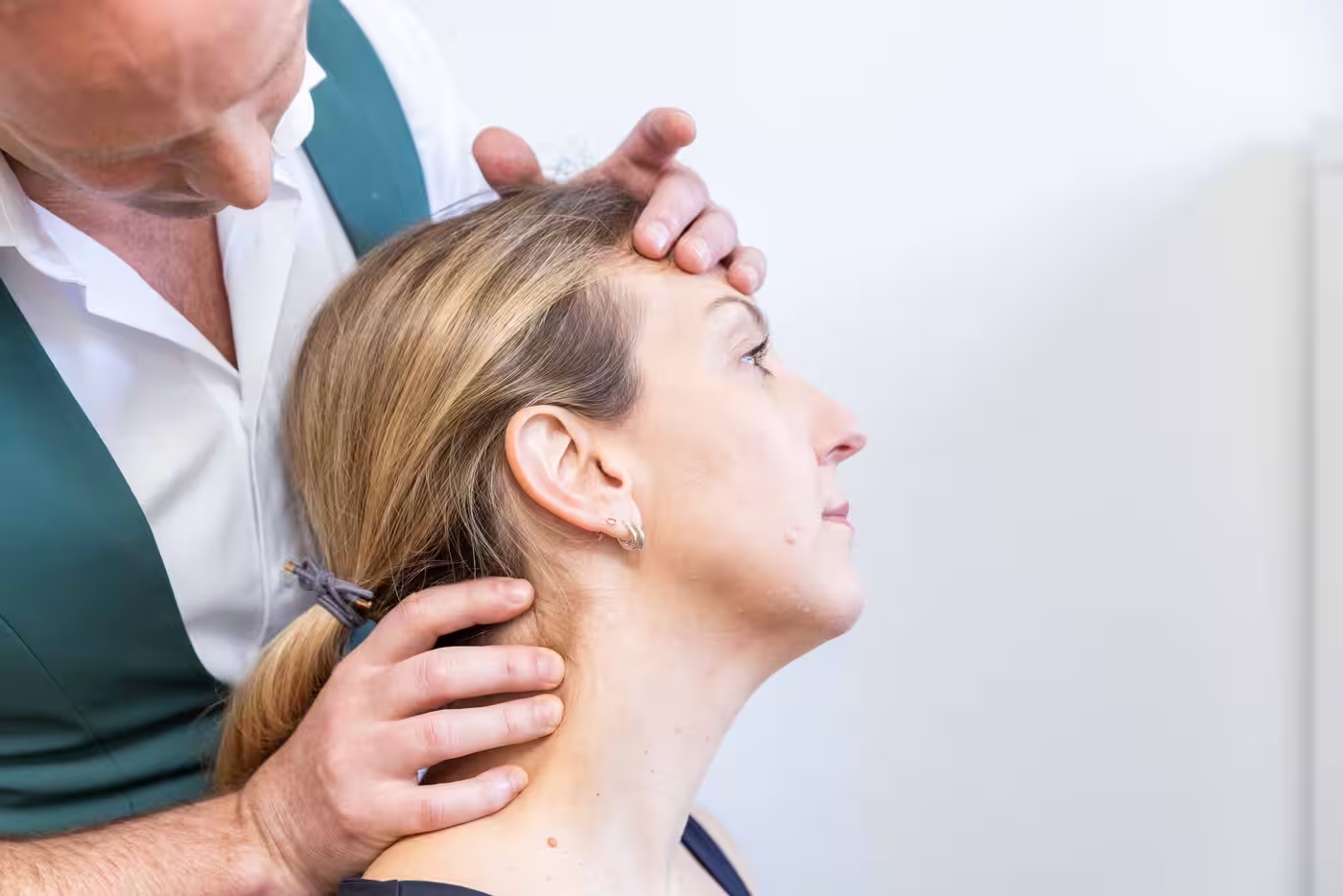
Is this a first episode of neck pain, or a pattern?
A first episode and a fifth are different problems, and separating them changes almost everything that follows.
A one-off pain, whilst worrying, will often self-resolve within a few days, but recurrent episodes or persistent pain require evaluation; at DISC we usually find one of two reasons progress has stalled:
- Previous efforts or treatment never reached the intensity required to create lasting change. A few extra stretches in the morning, or traditional therapies that lack energy, are too infrequent, or stop as soon as symptoms improve rather than continuing long enough to restore function and tolerance. The right effort at too low a dose still produces an incomplete result.
- Something else is continuing to feed the problem. Poor deep neck flexor endurance, a reversed cervical curvature, a shoulder girdle that cannot hold position under load, restricted movement in the upper back, or an unaddressed workstation or driving pattern will keep placing stress through the same segment. When symptoms keep returning, the answer is usually to widen the assessment rather than repeated ineffective treatment.
When neck pain points towards something more precise
Most neck pain never gets a named diagnosis and does not always need one to be treated well. However, some patterns make a particular source or fault plausible enough to prioritise.
When it started with a cough, a sneeze or a strain
Sudden onset, a known cause, and significant muscle spasm or lack of movement raise the possibility of disc involvement. No single feature confirms it, but the combination is worth taking seriously. Our slipped disc page explains more.
When looking up and holding it is the problem
Local, one-sided pain that worsens with extension and improves with flexion, building through a day of overhead work, shifts attention to the facet joints at the back of the spine. Our dedicated Facet joint page covers it.
When a scan already reports wear or degeneration
Degenerative change is extremely common, increases with age, and is frequently present in people with no pain at all. Not automatically the answer, but not automatically irrelevant either. See degenerative disc disease page for more information.

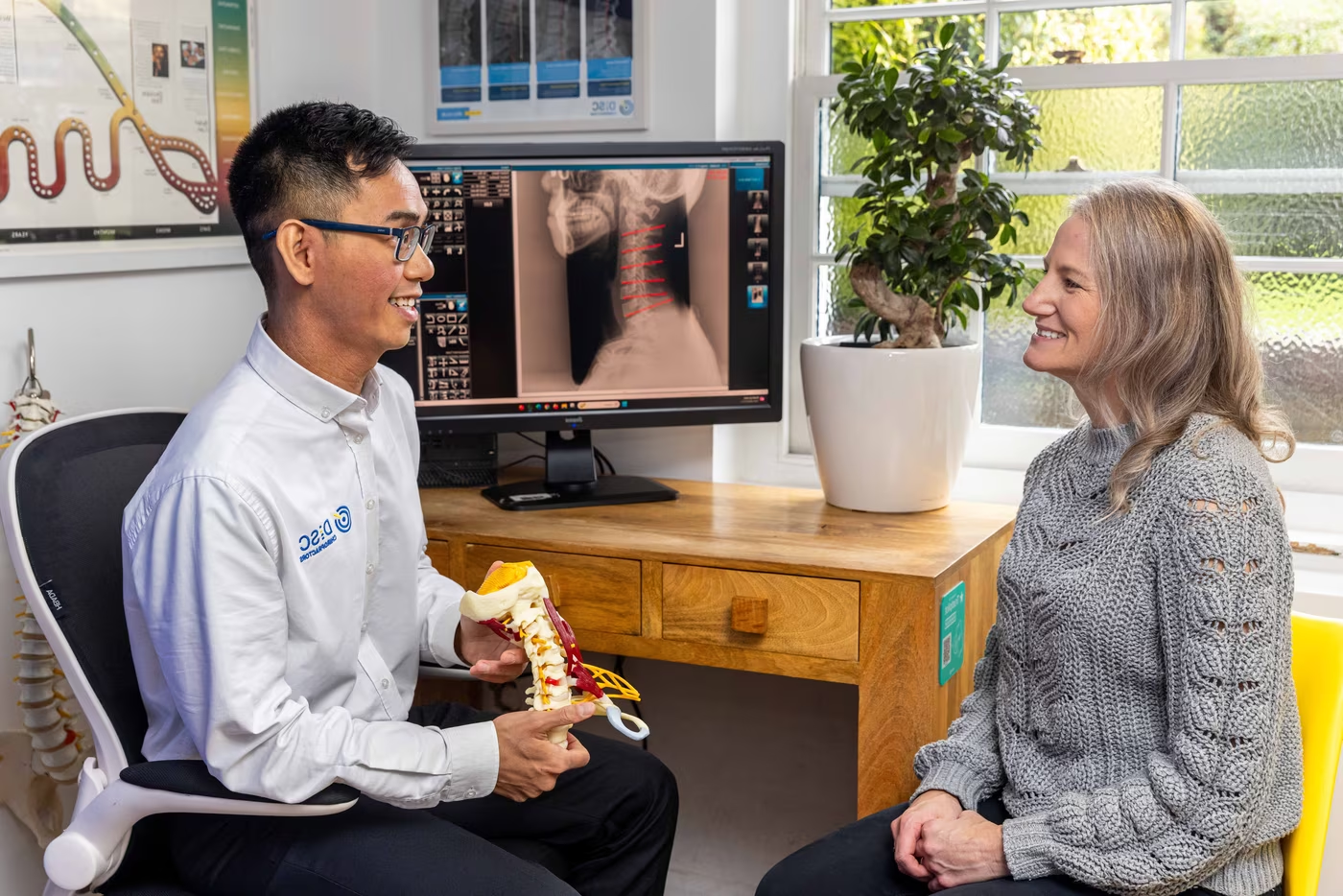
How significant are whiplash injuries after an accident?
Neck pain following a collision, a fall or a blow to the head is assessed differently, and the threshold for taking it seriously is lower.
Symptoms frequently do not appear straight away; a delay of hours or a couple of days is common, but for some patients the true cost might not show up for years, even decades into the future. Even relatively trivial impacts can still cause real damage because what matters is the head accelerating relative to the body, not the force of the collision, which can damage the neck ligaments and deform normal alignment.
NB the ligament in question—the posterior longitudinal ligament—has an extremely high threshold for stretching and mechanical stress. Nociceptive fibres respond to inflammation and chemical irritation, which may sensitise them and make them more tolerant of alignment damage. This matters because cervical alignment influences how load and movement are distributed between the discs, joints and supporting tissues. Longitudinal and biomechanical research suggests that altered curvature can be associated with greater degenerative progression.
In the short term, protective muscle guarding may then develop around it, which helps explain why stiffness and pain can evolve after the initial injury rather than necessarily appearing at the moment of impact.
When neck pain needs medical assessment
Most neck pain is mechanical and settles. A small number of presentations need medical attention, and some need it immediately.
Call 999 immediately — do not wait for an appointment — if sudden, severe neck pain unlike anything you have had before, usually one-sided and often with a headache, comes with any of:
- a drooping eyelid or a smaller pupil on one side
- slurred speech, or weakness and drooping on one side of the face
- loss or blurring of vision
- sudden severe dizziness with difficulty swallowing
- weakness or numbness down one side of the body
That combination can indicate a tear in one of the arteries supplying the brain and is treated as a stroke emergency. The pain can precede the other symptoms by hours or days, which is exactly why it gets missed. Do not wait, and do not treat it as a neck issue. The NHS guidance on stroke symptoms sets out what to look for.
Also go to A&E for:
- a stiff neck with fever, severe headache, dislike of bright light, drowsiness, or a rash that does not fade under a pressed glass
- neck pain after significant trauma, such as a fall from height or a road traffic collision
- rapidly worsening weakness in an arm, or a hand you can no longer grip with
Ask for an urgent GP appointment if you develop growing clumsiness in your hands; dropping things, struggling with buttons, cutlery or handwriting, particularly alongside unsteadiness on your feet, patchy numbness in both arms or both legs, or a change in bladder or bowel control. This can indicate pressure on the spinal cord in the neck, normally from degenerative changes known as stenosis. It usually develops gradually and needs specialist assessment rather than emergency care, but it should not be left, and it should not be treated as ordinary neck pain in the meantime.
Screening for all of this is part of any competent assessment. When these symptoms are present, they should be assessed medically rather than deferred until a chiropractic appointment.

Could my neck pain be Cancer?
Cancer is a very rare cause of neck pain, and neck pain alone is usually not a reason to suspect it.
Concern rises when pain sits alongside other features: a previous history of cancer, unexplained weight loss, fever or night sweats, feeling systemically unwell, a weakened immune system, or pain that does not behave mechanically and does not change with position. None of those means something serious is present, but they change the level of investigation required; arrange assessment through your GP or NHS 111 before seeking MSK care.
Do you need an X-ray or MRI?
Most neck pain does not need a scan. The decision should come after the history and examination, when imaging can answer a specific question.
Routine imaging of uncomplicated neck pain is not recommended in UK guidance. One real concern is that incidental findings catastrophise an otherwise manageable problem: scans frequently find disc bulges and age-related change in people with no symptoms at all.
When is an X-ray useful?
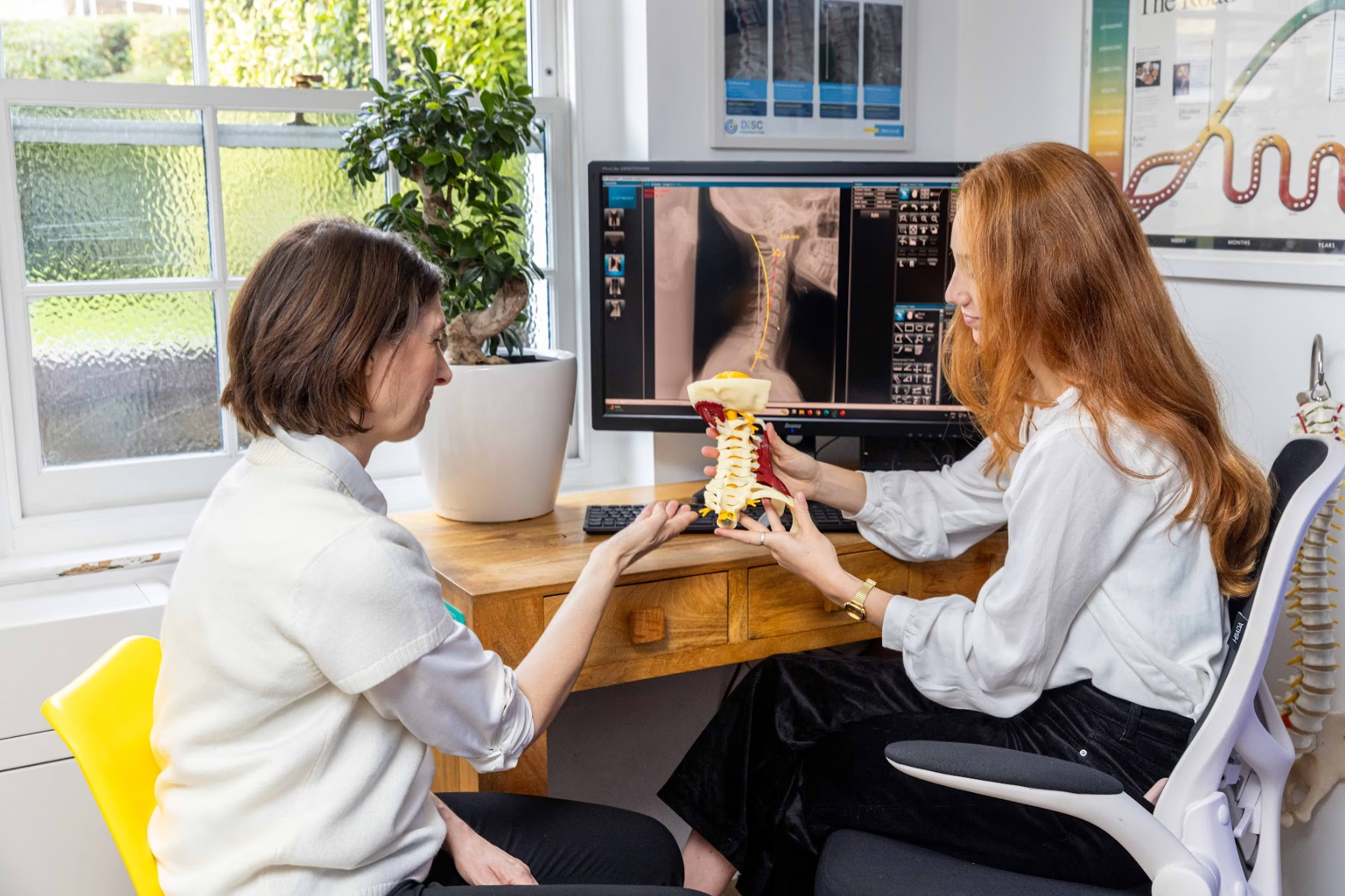
X-rays assess bone and structural change, especially important if the patient has ever had trauma, from car crashes to taking a big hit in sports should be given additional images. At DISC, we may also consider one when the examination raises questions about significant degeneration, radicular nerve pain, a previous injury or fracture, structural asymmetry, or other bony changes that affect whether it is safe or appropriate to treat you.
Research shows that 30% of patients X-rayed in chiropractic clinics subsequently have findings that alter the ideal treatment plan.
When is an MRI useful?
MRI provides far greater detail of the discs, nerve roots, and spinal canal, and becomes relevant when the history and examination suggest significant disc or neurological involvement. Most patients can begin care without one. In disc- and nerve-based cases, we usually request an MRI only if initial treatment is not producing the response we expected, which is fortunately uncommon.
DISC has an on-site X-ray facility and can refer to private MRI providers that return results within a few days.
What does neck pain treatment involve?
Treatment follows what the assessment confirms, and for most people it is considerably simpler than the full range we have available.
Straightforward presentations need straightforward care. A first or occasional episode with a clear directional pattern usually responds to manual treatment of the restricted segments, guidance on which positions to modify while it settles, and a graded return to activity. Several weeks, not several months. Our chiropractic treatment page describes that approach.
For those who aren’t keen on neck adjustments, our clinic offers a non-manipulation service using gentle percussion to mobilise the joints. Read our Instrument-assisted adjusting page for further information.
This is not a specialist problem requiring advanced technology. We therefore advise people who think their neck pain is relatively uncomplicated, mild and recent not to travel more than five miles to reach us — a local chiropractor should be able to offer reliable relief.
Recurrent and persistent presentations require answering the tolerance question. Treating the same painful segment again is unlikely to change the pattern. Assessment widens to the upper back, the shoulder girdle, core stability and how load is managed through the day, and treatment is staged: settle the irritable structure, restore function, rebuild capacity, then address whatever exceeded it. That usually means rehabilitation, not more of the same treatment.
Severe, disc-driven and neurological presentations may justify more. Where examination points to a disc irritating a nerve root, spinal decompression therapy has a mechanism-based role, reducing pressure across the segment in a way manual treatment cannot. Whilst Laser therapy is used where tissue is inflamed or slow to settle.
What to do next
If your neck pain has not settled over a few weeks, or has settled and returned more than once, an assessment that establishes what your neck currently tolerates — and which directions it does not — is the sensible next step. It answers what the pain itself cannot: not just what hurts, but what your neck can currently do, and what has to change for that to improve.