
When the Source Isn't Where It Hurts
Pain felt in your arm does not always come from the tissues in your arm. A structure in the neck or upper back can cause symptoms felt further down the limb, so the arm aches or feels heavy even when the arm itself is healthy. Pain referral patterns describe where symptoms from a structure are often felt or referred, and mistaking one for a local injury is a common reason an arm problem gets treated for months without change.
What does referred pain in the arm actually mean?
Referred pain is pain felt in one part of the body that is produced by a structure somewhere else. In the upper body that usually means a joint, disc, nerve, ligament or deep muscle in the neck or upper back generating symptoms felt in the shoulder, upper arm or forearm.
Referred pain has one consequence that matters: the place that hurts is often not the place of primary injury. Someone can have a genuinely painful arm, a structurally normal arm, and a source somewhere else.
Referred pain is not imaginary: the signal is real, and so is the tissue producing it. What is unreliable is the address the nervous system gives it. The same principle operates lower down, where lower back structures produce symptoms felt down the leg, as covered in our referred pain in the leg page.

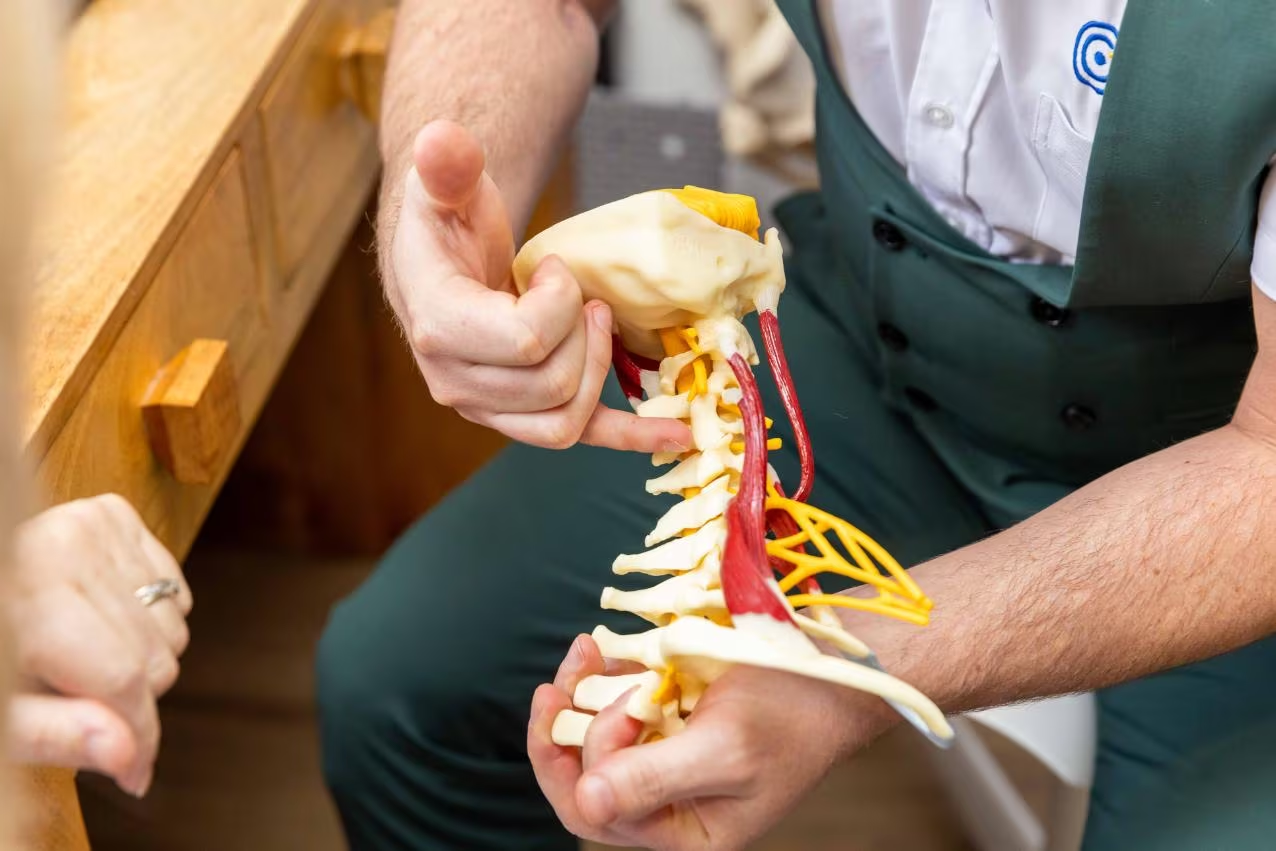
Why does the arm hurt when the problem is in the neck or upper back?
The arm can hurt because nerves from the deep structures of the neck and upper back enter the same spinal cord segments as those carrying sensation from the arm.
Skin is mapped precisely: touch someone’s forearm and the brain locates the contact within a centimetre or two. Deep tissue is not. The nervous system places signals from joint capsules, discs, ligaments and deep muscle only roughly, by region rather than by point. When one of those structures is irritated, its signal arrives on the same segmental line as signals from the arm, and the discomfort is attributed to the whole territory that line serves, what clinicians call somatic referred pain.
I often explain this as two lines sharing one extension. The message gets through, but the nervous system is not always perfect at identifying which line it came from. That is why irritation in the neck can sometimes be experienced as pain further down the arm.
Common musculoskeletal sources of upper-body referral include the small, paired joints at the back of the neck, known as facet joints; the discs between the neck vertebrae; peripheral nerves after they leave the spine; and the deep muscles spanning the neck, shoulder blade, and upper back.
Types of referred and radiating pain
- Somatic referred pain: pain arising from musculoskeletal structures such as joints, discs, ligaments, or deep muscles and felt somewhere away from its source.
- Radiating pain: a descriptive term for pain that spreads away from its source. It describes what the pain does, rather than identifying the tissue or mechanism responsible.
- Peripheral nerve pain: pain associated with irritation or entrapment of a nerve after it has left the spinal nerve root. Symptoms can spread along the distribution of that nerve.
- Radicular pain: pain caused specifically by irritation or inflammation of a spinal nerve root.
- Visceral referred pain: pain originating from an organ but felt in another area of the body.
Pain arising directly from the structures of the arm is best described as local pain or local musculoskeletal pain.
What does somatic referred pain in the arm usually feel like?
Somatic referred pain into the arm is typically deep, aching, and hard to pin down. Most people describe an area rather than a point, and cannot cover it with a fingertip.
A simple clue is how someone shows you their pain. Referred pain is often demonstrated with the whole hand sweeping over an area, while local pain is more likely to be indicated with one or two fingers. It is not diagnostic on its own, but it is one of the small clues that helps build the overall picture.
Referred pain also spreads rather than traveling in a clean line, and is felt more often in the shoulder and upper arm than in the hand, a tendency, not a rule. Symptoms frequently vary with what the neck and upper back are doing, a long drive, an awkward night, rather than with arm use, often with a band of tightness across the top of the shoulder.
True numbness and real loss of strength are usually absent; when present, they suggest radicular or peripheral nerve involvement rather than simple somatic referral.
What is the difference between referred pain and radicular pain?
Referred pain and radicular nerve pain are different problems, although both can produce symptoms felt further down the arm.
Radicular pain occurs specifically when a spinal nerve root is irritated or inflamed.
So, while referred pain from deep tissues is usually experienced as a diffuse ache over a region without a clear border, and neurological testing may remain normal, radicular pain is more likely to travel along a specific, recognizable pathway and may feel sharp, burning, shooting, or electrical. Pins and needles or numbness make nerve involvement more likely, while measurable weakness or altered reflexes provide stronger evidence that the nerve root itself is affected.
A useful way to think about the distinction is in terms of region versus pathway. Referred pain tends to occupy an area; radicular pain is more likely to travel along a neurological route.
The distinction is not always tidy. Referred and radicular pain can occur together, particularly when an irritated structure in the neck is also affecting a nearby nerve root. History alone may therefore not separate them.
Testing sensation, reflexes, and muscle power alongside neck and arm examination helps establish which process is present. Where the findings point towards cervical nerve-root involvement rather than simple referral, our neck pain page explains the relevant cervical presentations in more detail.
What makes radiating pain different from radicular pain
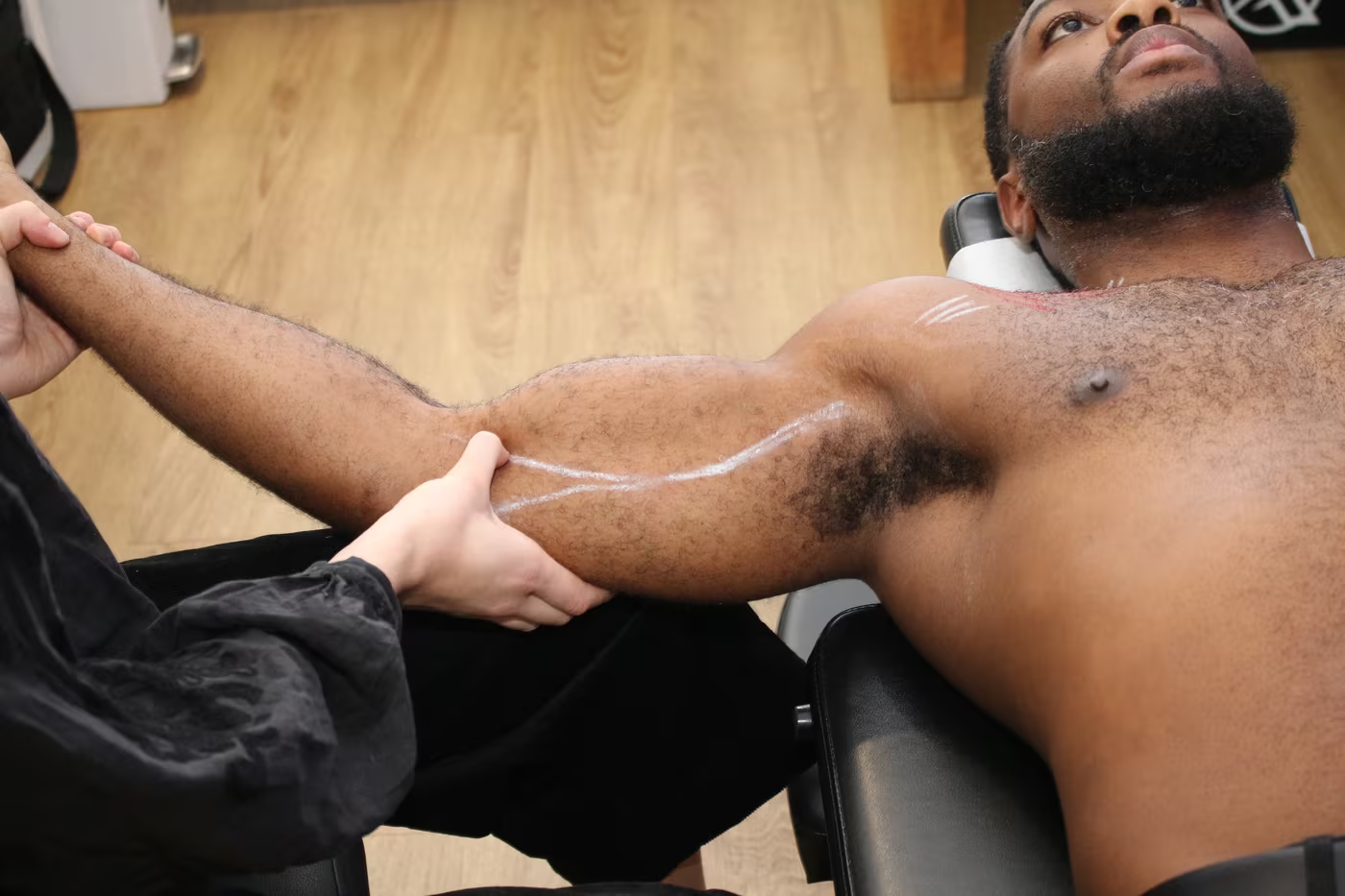
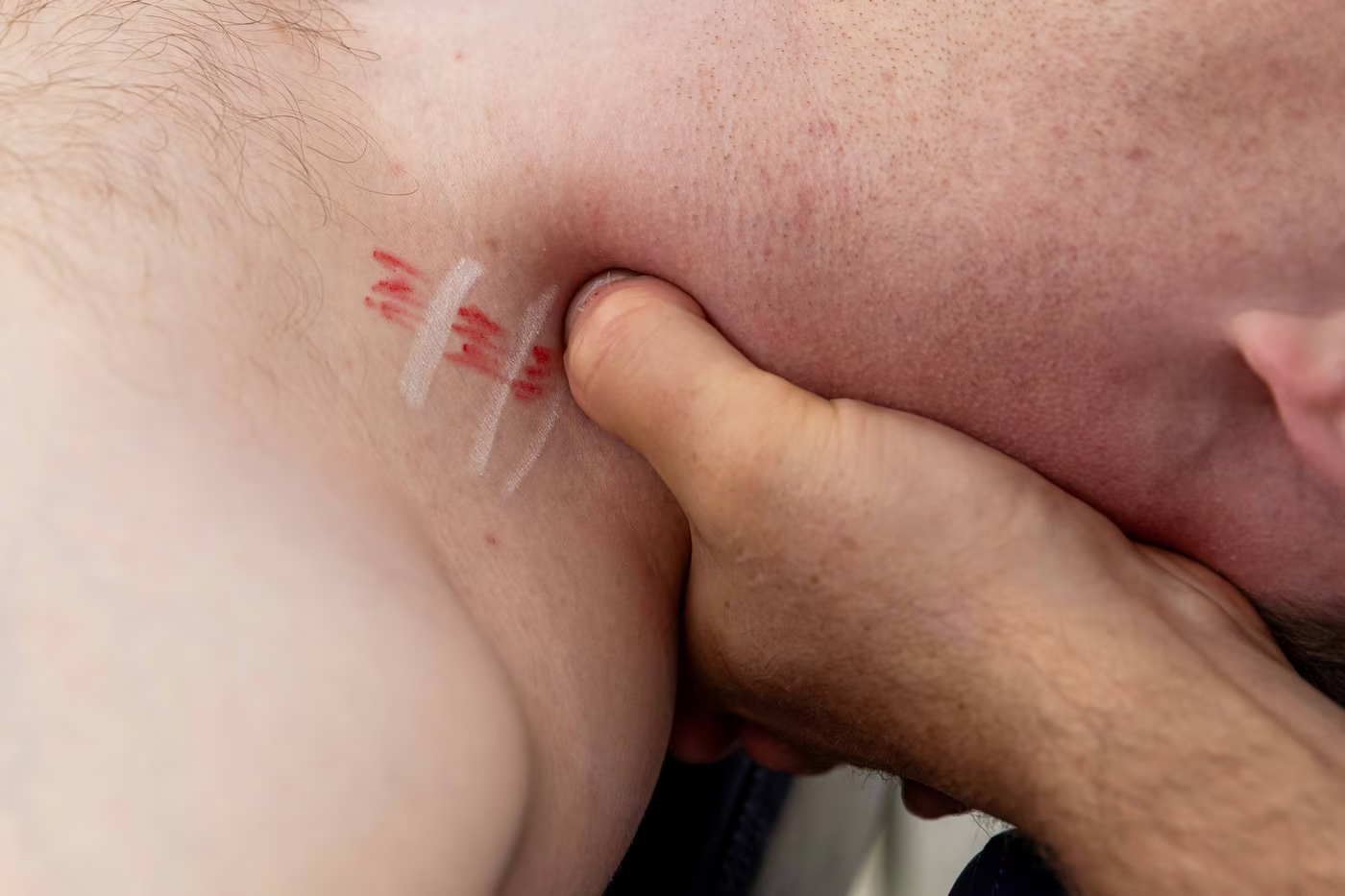
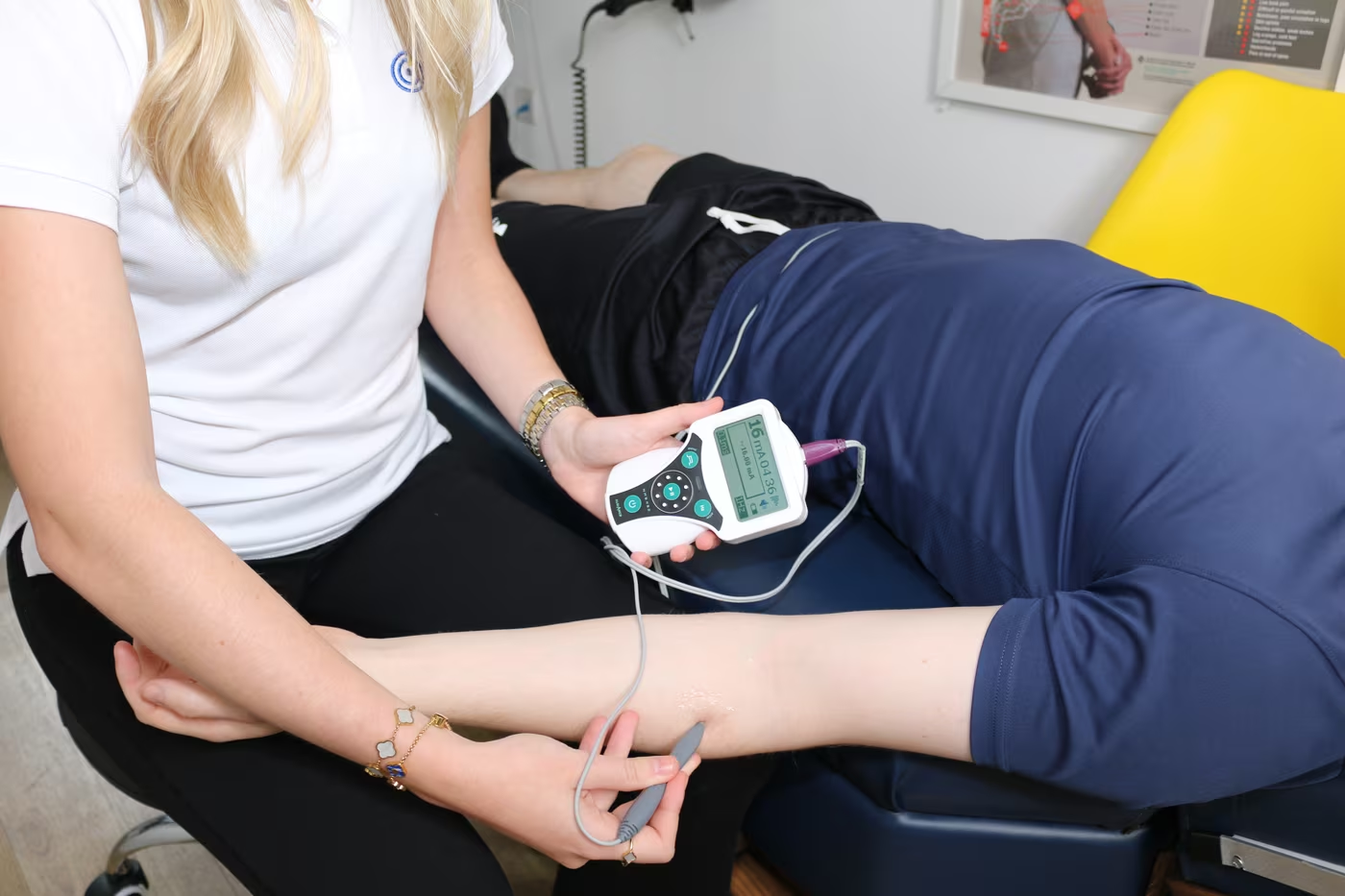
Radiating pain refers to pain that spreads away from its source, rather than a specific diagnosis. One important cause of radiating symptoms is peripheral nerve irritation, in which the source is peripheral to the spinal nerve root, and symptoms can spread along that nerve’s distribution.
Peripheral nerves can become irritated where they pass through or between muscles and other tissues. Muscular hypertonicity, fascial restriction, or reduced tissue movement may contribute to irritation in some presentations.
A nerve is not fixed rigidly in place. It needs to slide through the surrounding tissues as the arm moves, much like a brake cable moving through its outer sleeve. If the surrounding tissues stop moving freely, the nerve can become irritated even though the original problem is not at the spine.
In contrast, radicular pain specifically involves a spinal nerve root. Peripheral nerve symptoms can therefore follow the course of an individual nerve further along the arm, while radicular symptoms originate at the nerve root and are more likely to be accompanied by objective neurological changes on examination.
The important distinction is that radiating describes how pain spreads; peripheral and radicular describe where nerve involvement may be occurring.
Pain that seems to come from the neck
Several structures in the neck are well known to refer pain to the shoulder and arm. The cervical facet joints, the small joints at the back of the neck, can produce deep, aching pain felt over the shoulder blade and into the arm. Our facet syndrome page explains this type of facet-related presentation in more detail. The cervical intervertebral discs can also refer pain to the shoulder girdle and upper limb, particularly when irritated, without necessarily compressing a nerve.
Deep muscles spanning the neck and shoulder can also refer pain to the top of the shoulder, the shoulder blade region, and sometimes further down the arm. These structures can produce symptoms that feel like a shoulder or arm problem, even when the painful tissues in the arm remain undamaged.
Our neck pain page has a more comprehensive review of the neck as a potential source of pain.


Pain that seems to come from the shoulder
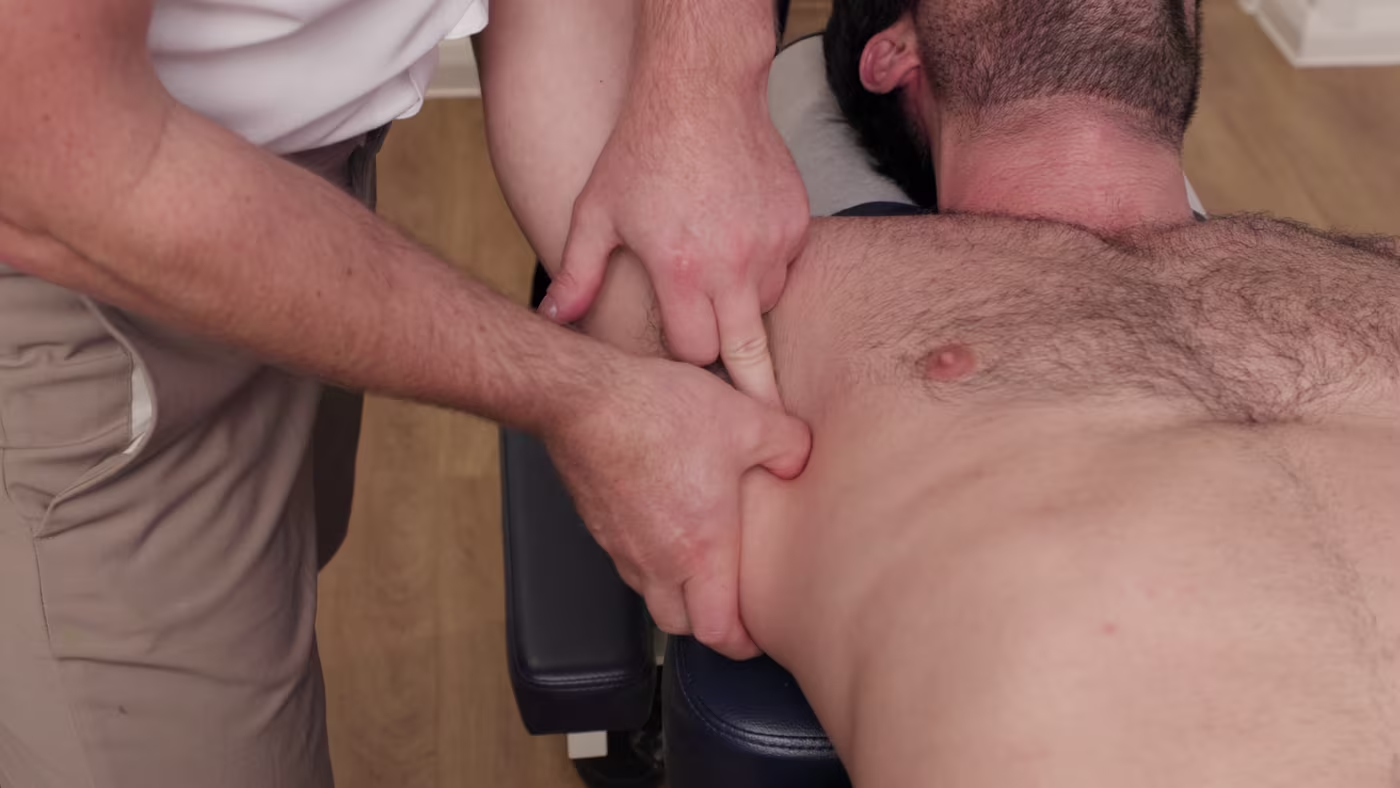
Pain that appears to begin at the shoulder and spread down the arm is the referral pattern most often misread. The top of the shoulder and the region over the shoulder blade share nerve supply with parts of the arm, so a neck structure can produce a pattern a patient reasonably reads as a shoulder injury. Aching across the upper trapezius, the sloping muscle between the neck and shoulder, is common.
The neck should therefore be considered as a potential source before commencing treatment of an apparent shoulder problem, as cervical involvement can be a primary driver of symptoms and may alter the entire management approach.
Additionally, there are multiple touch points where the peripheral nerve bundle can adhere to fascial tissue as it passes through the shoulder and armpit regions.
When symptoms are mainly over or between the shoulder blades, the “pain between the shoulder blades” page is more useful
Likewise, our shoulder pain section provides more detailed information about problems arising from the shoulder itself.
How can i be sure it is referred pain, and not a problem in the arm itself?
The most useful question is whether the arm is behaving as an injured arm would.
A damaged structure protests when it is specifically loaded: a local shoulder, elbow, or forearm problem tends to have a movement that reproduces it, matching tenderness, trauma, or a history that fits, such as a fall, an unaccustomed amount of activity, or a change at work.
Referred pain behaves differently: tenderness is vague and spread out, the movements that ought to hurt an injured arm often do not, and symptoms change with neck position rather than arm use.
Local problems and referred pain often coexist. An arm guarded for weeks can develop its own stiffness, so neither pattern proves much alone. Examination, not description, separates them. Where the arm is the likelier source, our page on arm pain covers the local causes; where the neck is symptomatic in its own right, neck pain is the better starting point.
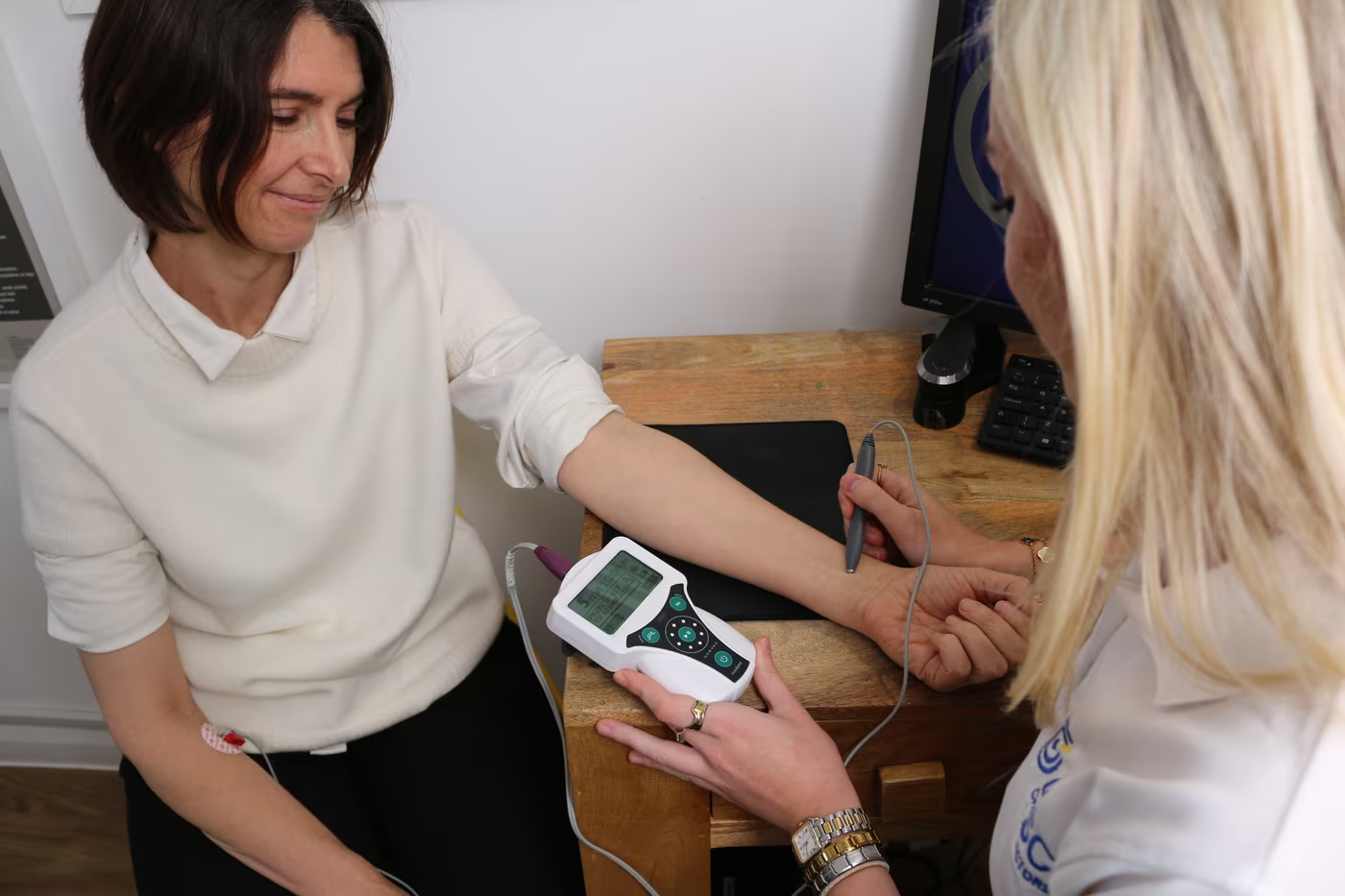
One final point on this matter is peripheral nerve irritation associated with restricted tissue movement. In some cases, fibrous or fascial restrictions, sometimes described clinically as adhesions, may affect the normal movement of muscles and nerves and potentially contribute to irritation. This can produce symptoms along the nerve, but they may also be felt near the site of restriction and resemble a local arm problem.

What the location of your arm symptoms can and cannot tell you
Symptom location narrows the field but does not identify the source.
Referral maps show where a structure tends to produce symptoms, but they are averages drawn from groups of people, and the ranges overlap heavily: the shoulder and upper arm are a plausible referral zone for several neck segments, for muscles around the shoulder blade, and for the shoulder joint itself.
We use referral charts like a map, not a postcode. They can point us towards the right neighbourhood, but they cannot identify the exact structure responsible for one person’s symptoms.
Two people with one source can report different patterns, and two with one pattern can have different sources. Charts of muscular referral are a place to start rather than a diagnosis, and the model behind them is genuinely debated.
One of the things we are taught in our diagnostic classes at university is that you are more likely to get an unusual presentation of a common problem than a textbook version of an unusual problem. In other words, symptoms vary, but the main players are still statistically more likely to be responsible.
When arm symptoms are an emergency rather than a chiropractic problem?
Some arm symptoms need medical assessment first.
This is partly because visceral pain patterns can refer to the arms. The best-known example is the heart, where cardiac problems can produce pain felt in the arm rather than only in the chest.
Call 999 if arm discomfort comes on with chest pain, tightness or pressure, breathlessness, sweating, nausea, or discomfort spreading to the jaw, neck or back. Cardiac pain more often involves the left arm but can affect either arm and can occur with little or no chest pain. The NHS guidance on heart attack symptoms sets out what to look for.
Go to A&E, or call 999, for:
- sudden severe neck or head pain with dizziness, slurred speech, visual disturbance, or facial weakness
- symptoms in both arms, particularly with clumsiness in the hands, unsteadiness on your feet, or a change in bladder control
- an arm that becomes cold, pale or discoloured, or that swells rapidly
- arm or neurological symptoms after significant trauma, such as a fall from a height or a road traffic collision
Arrange prompt assessment through your GP or NHS 111 for:
- weakness that is worsening, or visible loss of muscle bulk in the arm or hand
- unrelenting pain that no position eases and that wakes you regularly, especially with fever, night sweats or unexplained weight loss
- pain at the very tip of the shoulder occurring with abdominal pain or illness, since the diaphragm and several abdominal organs can refer pain to that area
Serious causes are uncommon, and most arm symptoms are musculoskeletal. Red-flag screening forms part of our assessment, but symptoms suggesting an emergency should be assessed medically first rather than waiting for a chiropractic appointment.

How DISC works out where your arm symptoms are coming from?
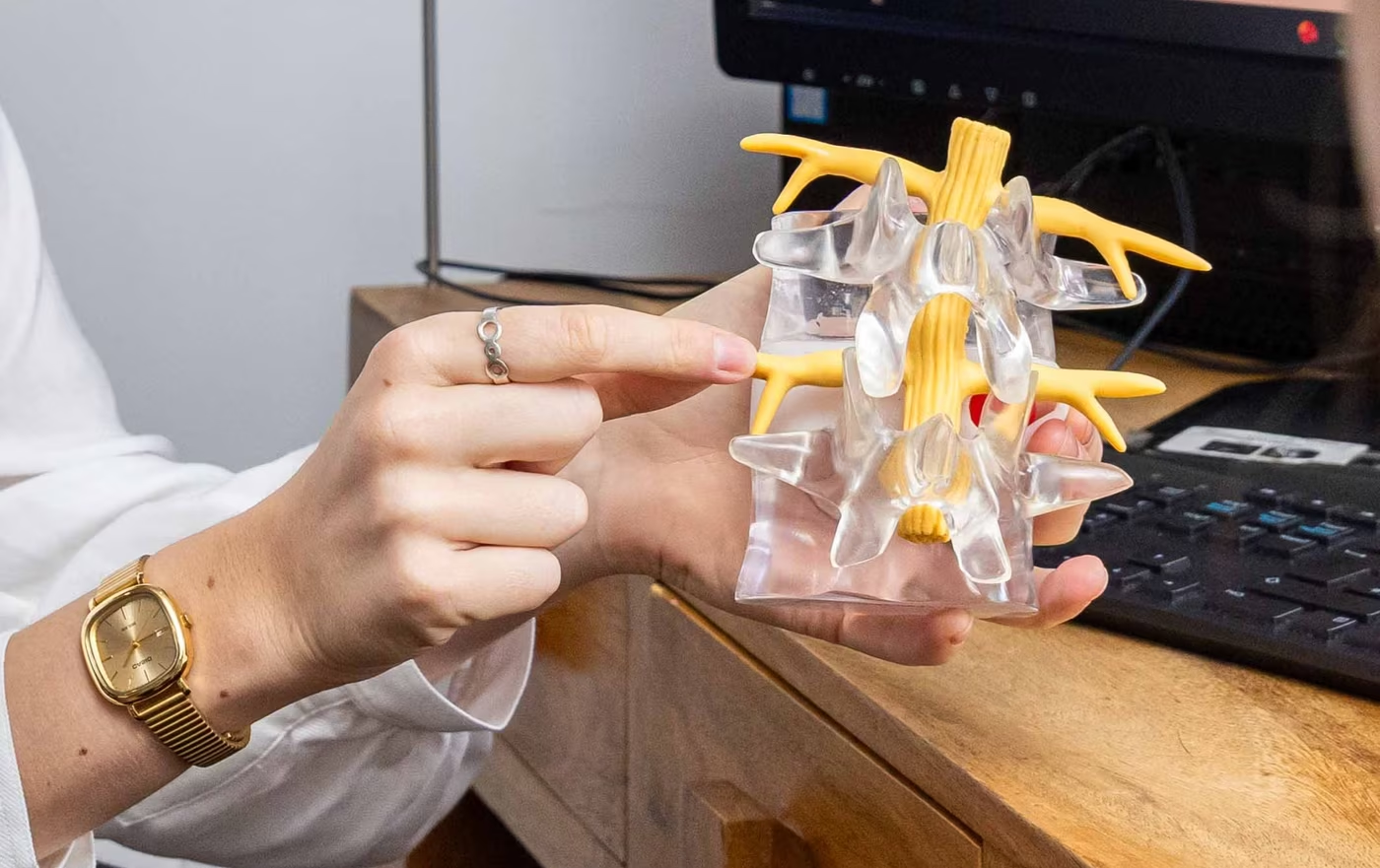
Examination is the primary source of identification because symptom description alone cannot distinguish between the possibilities.
Think of the examination as tracing the problem backwards. We start where you feel it, then systematically test the arm, peripheral nerves, shoulder, neck, and upper back until the findings consistently point to the same source.
Assessment of arm symptoms is a process of elimination carried out physically rather than verbally:
- testing whether neck and upper back movements reproduce or alter the arm symptoms, alongside functional testing and examining those segments by hand for irritability and restriction
- loading the shoulder, elbow and forearm specifically, to see whether the arm produces its own pain
- a neurological screen of sensation, reflexes and muscle power, to establish whether a nerve is involved
- looking at how the arm is held and used, since sustained positions maintain much referral
Individual tests matter less than the pattern they form. A neck that reproduces the arm symptoms on a specific movement, an irritable segment at the matching level, a shoulder that tests clean and a normal neurological screen is a different problem from an arm that hurts on loading with a neck that does nothing, even when both patients describe their symptoms identically.
However, it is important to recognise that clinically, things are rarely as simple as a single tissue becoming inflamed in isolation. For example, an initially irritated neck joint may lead to protective shoulder guarding, altered arm use and secondary sensitivity in the surrounding tissues. Over time, several of those factors can begin to maintain one another. This is why chronic, complex and severe pain patterns can sometimes develop from relatively minor or innocuous beginnings.
How treatment changes once the source is clear
Treatment follows the source, not the symptom, which is why identical-sounding arm symptoms are managed differently.
Where the neck or upper back is producing the referral, care is directed there: restoring movement at restricted segments, settling irritable ones, addressing the loads maintaining it. Where the arm or shoulder is the genuine source, treating the neck will not help. Where both are involved, settling the driver first makes the local component easier.
In more chronic or complex presentations, the picture is rarely this linear. Symptoms that have persisted for months or years often involve a combination of sensitised nervous system pathways, altered movement patterns, and secondary changes in the arm itself. In these cases, the original source may still be relevant, but it is no longer the only driver of symptoms. The system becomes less about a single ‘faulty structure’ and more about a network of maintained irritation.
In severe or long-standing cases, the body can begin to behave as if the problem is more widespread than it actually is. The nervous system becomes more reactive, normal loads are interpreted as threatening, and pain can appear more easily and in more places. This does not mean damage is increasing, but that the processing of the signal has changed. Treatment in this context often needs to be staged, starting with reducing irritability and restoring tolerance before more specific mechanical work is effective.
Straightforward presentations are still common. A recent, mechanically clear referral pattern in an otherwise well person often settles with a short course of manual care, a clear explanation and some changes to lifestyle and posture.
Advanced technology is not the default. Spinal decompression treats disc- or nerve-driven presentations where examination and history point that way. Symptoms travelling into an arm are not by themselves a reason to use it: referral is a mechanism, not a diagnosis, and much upper-body referral is not disc-driven.
Where restricted tissue movement or suspected adhesions appear clinically relevant, Adhesion Release Methods may be considered as part of the treatment plan, rather than being assumed from the symptom pattern alone.
Sometimes the right answer is not treatment here. Progressive weakness, a suspected inflammatory or systemic cause, or a picture that does not fit a mechanical explanation should be investigated medically first.
What to do next
If arm symptoms have not settled or have been treated as an arm problem without changing, an assessment that includes the neck and upper back is the sensible next step. One appointment answers the most important question: where is this actually coming from?
The plan follows from the answer, and sometimes the answer isn’t as bad as you think. Getting the source right is what allows the next step to be proportionate to the problem.