
Arm Pain: Working Out What's Injured, and why
Most arm pain is exactly what it feels like: something in the arm itself, irritated or overloaded, protesting when you use it. An aching right arm after a heavy weekend’s DIY, a sore wrist that objects when you reach for a seatbelt, a forearm that burns after a long day at a keyboard. Those problems are real, local, and usually settle given sufficient rest.
But the arm is also part of a larger multi-link system. It connects to the shoulder, is stabilised by the shoulder blade, and is supplied by nerves that begin in the neck. Since this page is dedicated to Arm pain, we will focus on pain that arises in the arm itself.
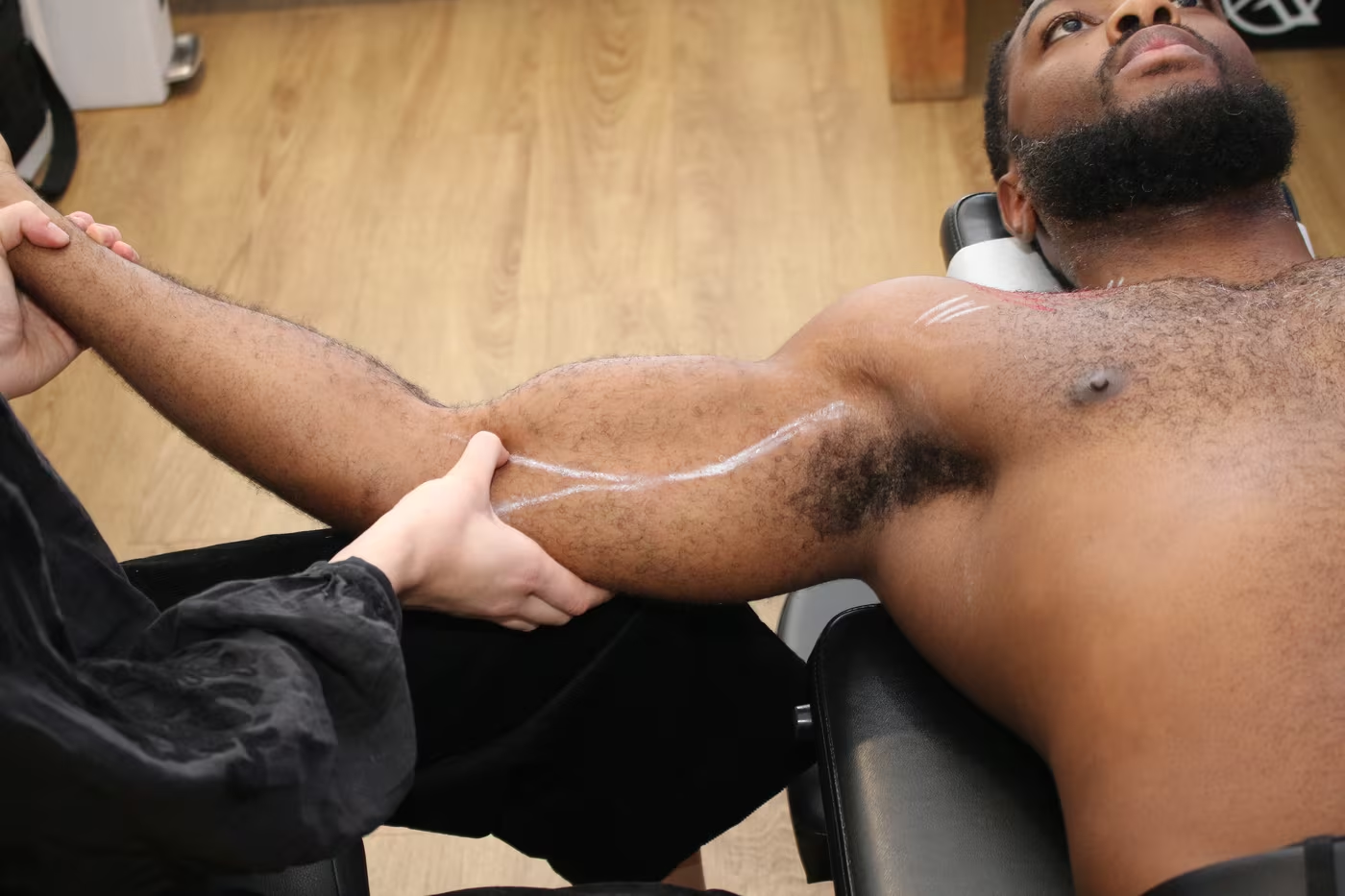
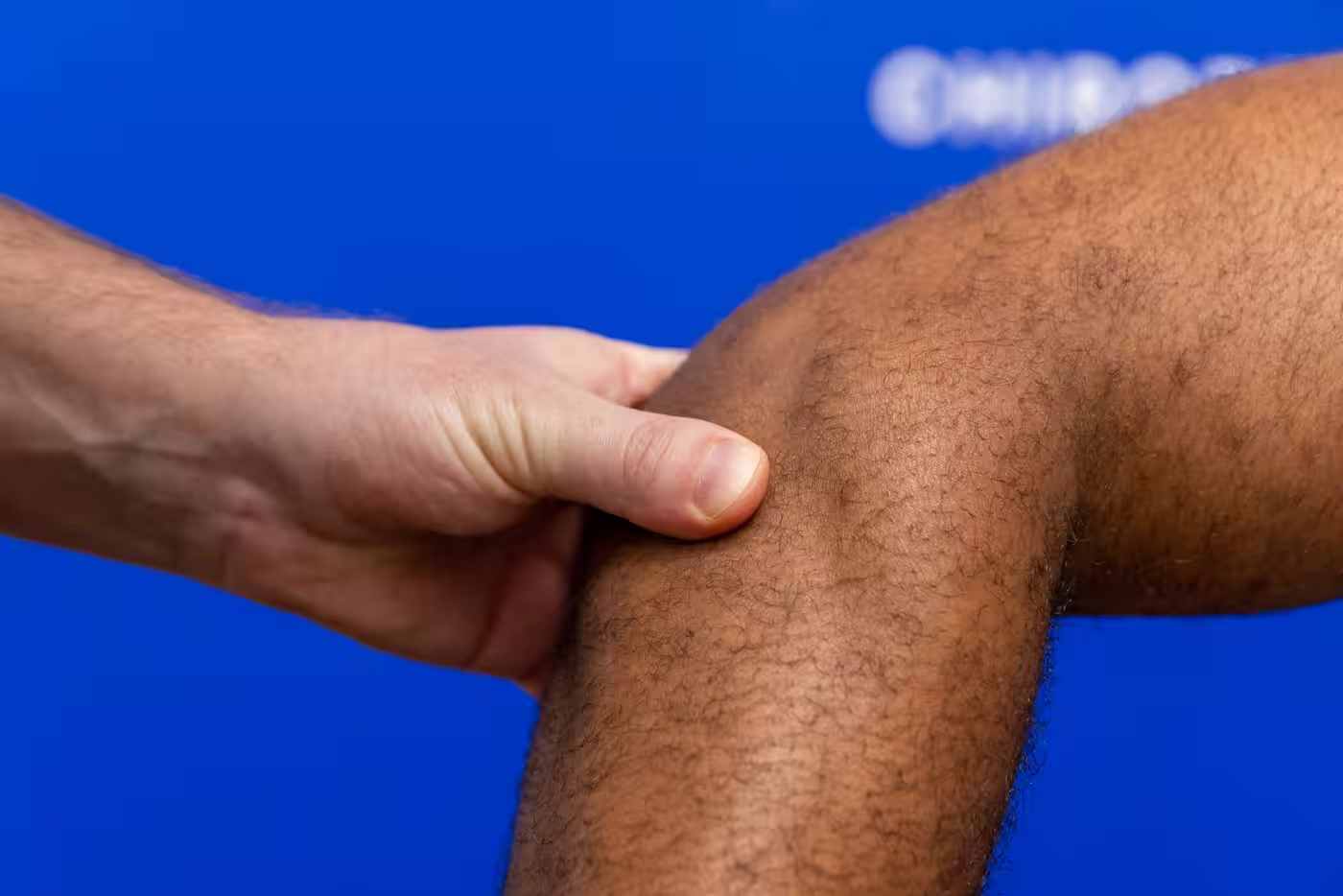
Is the arm itself the problem?
An injured structure behaves like an injured structure, and that is the most useful thing to establish first.
Local arm problems share three features.
- There is usually a movement or load that reliably reproduces the pain — a specific reach, a particular lift, resisting in one direction.
- There is usually local tenderness that matches.
- There is usually a story that fits: an unaccustomed amount of something, a change at work, a new activity, an awkward lift, or a straightforward knock.
When symptoms behave differently, vague and spread out, unreliable on testing, changing with neck position or the end of the working day rather than with arm use, the arm may not be the source at all. That is a genuinely different problem, and referred pain in the arm covers it in detail.
Of course, just to complicate things, both can be true at once, which is what makes this hard. When the nerves controlling the arm are stressed, the muscles operate dysfunctionally throughout the extremity, lowering the threshold for inflammation and injury. Likewise, an arm guarded for weeks develops its own stiffness and tenderness, so a referred problem eventually acquires local findings.
What is actually in your arm that can cause pain?
An injured structure behaves like an injured structure, and that is the most useful thing to establish first.
Local arm problems share three features.
- There is usually a movement or load that reliably reproduces the pain — a specific reach, a particular lift, resisting in one direction.
- There is usually local tenderness that matches.
- There is usually a story that fits: an unaccustomed amount of something, a change at work, a new activity, an awkward lift, or a straightforward knock.
When symptoms behave differently, vague and spread out, unreliable on testing, changing with neck position or the end of the working day rather than with arm use, the arm may not be the source at all. That is a genuinely different problem, and referred pain in the arm covers it in detail.
Of course, just to complicate things, both can be true at once, which is what makes this hard. When the nerves controlling the arm are stressed, the muscles operate dysfunctionally throughout the extremity, lowering the threshold for inflammation and injury. Likewise, an arm guarded for weeks develops its own stiffness and tenderness, so a referred problem eventually acquires local findings.

Where the pain is can give clues
Outer upper arm
Very often comes from the shoulder, even if it feels like an arm problem. Pain with reaching overhead or lying on that side supports this.
Front of upper arm
Often linked to the bicep’s tendon. Pain increases with lifting or turning the palm upward.
Back of upper arm
Less common. Can be triceps-related or referred from the neck or shoulder.
Mid upper arm (no clear point)
One of the least specific patterns. Often referred pain rather than a local injury.
Forearm
Usually related to grip, wrist, or repetitive hand use rather than the upper arm itself.
Both arms at once
Deserves separate clinical mention. Symmetrical arm symptoms are unlikely to be a local injury; the same tissue rarely fails identically on both sides at the same time, and point instead toward something central, systemic, or related to a shared task or posture.
What makes it hurt often matters more than where!
The movement that triggers pain is often more useful than the location.
- Pain lifting the arm sideways → usually shoulder
- Pain bending the elbow → often biceps
- Pain straightening the elbow → triceps or elbow
- Pain with gripping → forearm or elbow
- Pain with long positions (driving, sleeping awkwardly) → load or posture issue
A key feature of mechanical pain is that it usually has:
- Something that makes it worse
- Something that makes it better
Pain that does not change with movement or position is less typical and may need further assessment.

Two honest qualifications.
- The relationship between how a limb moves and where it hurts is easier to describe than to prove, and the evidence linking specific movement patterns to specific injuries is mixed rather than settled.
- Plenty of arm injuries are simply what they look like — an unaccustomed load, a straightforward strain, no upstream driver at all. The upstream question earns attention when a local problem keeps returning, not as a first explanation.
When the arm is injured — but the reason is higher up
Some arm injuries are genuinely local and heal readily with rest. Others are genuinely local but keep coming back, which clinically suggests that there is a higher-up condition that is affecting the region.
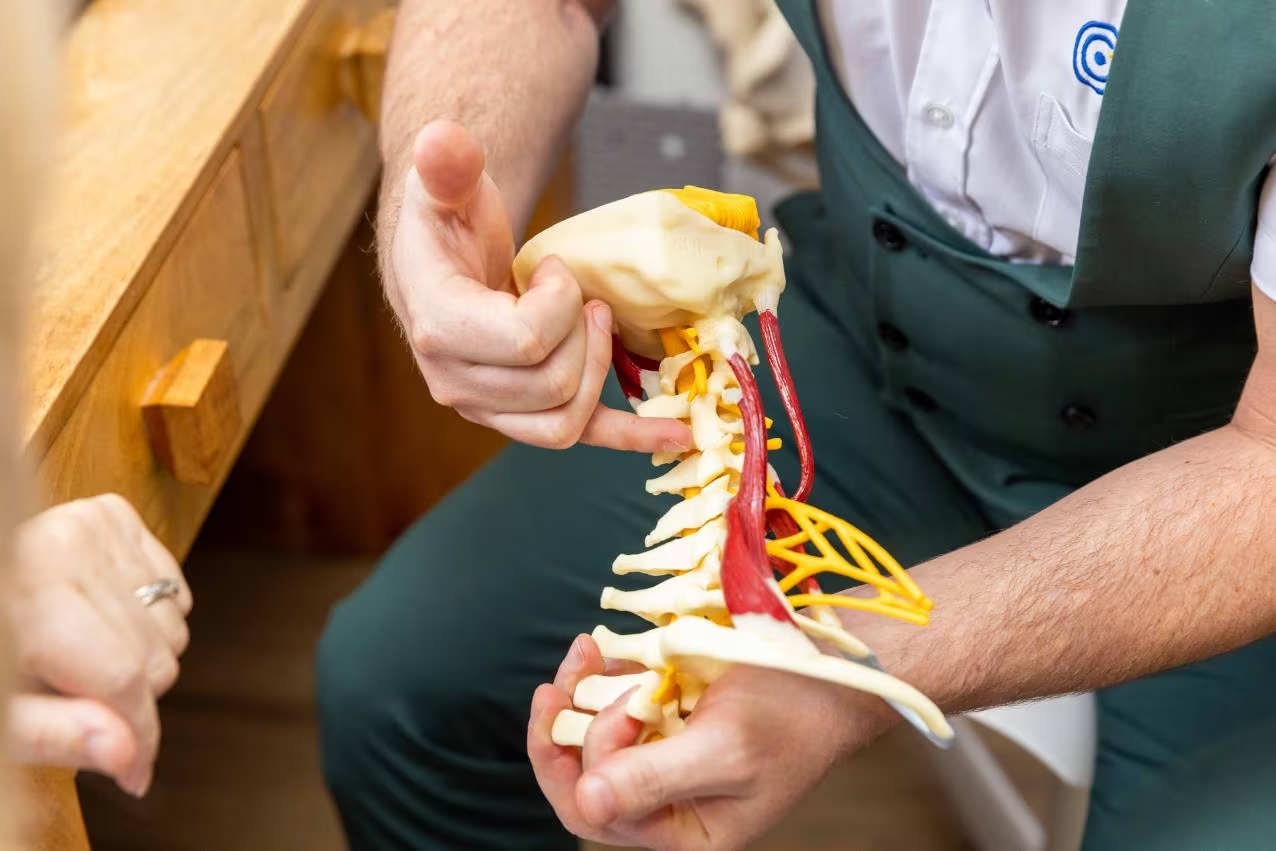
The arm does not work in isolation. Its position is set by the shoulder blade, which is held onto the ribcage entirely by muscle and is a common source of upper back symptoms in its own right
Its power and coordination depend on nerves that begin in the neck. When something interferes with that control, a stiff or irritable neck segment, a shoulder blade that is not moving well, a shoulder that has lost some range, the arm compensates. It works at slightly different angles, recruits muscles in a different order, and takes load through tissue that was not designed to carry it.
Does it matter which arm?
For mechanical arm problems, the side tells you very little and for one specific situation, it matters a great deal.
Most causes of arm pain are indifferent to which side of the body they affect. A biceps tendon, a shoulder referring into the outer arm, an irritated neck segment: any of these will affect whichever side they occur on, and handedness, occupation, and sleeping position account for most of the asymmetry people notice. Left upper arm pain that behaves mechanically, provoked by a movement, tender to the touch, eased by rest, is the same problem as right upper arm pain that behaves mechanically.
The exception is cardiac referred pain. Discomfort from the heart can be felt in the arm, more often on the left, because signals from the heart and the arm arrive at overlapping levels of the spinal cord, and the brain interprets the location imprecisely. It can occur with little or no chest pain, which is why arm discomfort that arrives suddenly in someone who feels unwell is treated as urgent until proven otherwise.

When arm pain needs medical assessment
Most arm pain is musculoskeletal. A small number of causes are not, and a few need attention immediately.
Call 999 if arm discomfort comes on with any of:
- chest pain, tightness or pressure, breathlessness, sweating, nausea, or discomfort spreading to the jaw, neck or back — in either arm, or both. See the NHS guidance on heart attack symptoms
- sudden weakness or numbness of the face or one side of the body, slurred speech, or sudden visual disturbance
- an arm that becomes cold, pale, blue or mottled, particularly with sudden severe pain
Go to A&E for:
- an arm that swells rapidly, becomes hot and red, or is severely painful after an injury
- a suspected fracture or dislocation, or an arm you cannot use after a fall
- symptoms in both arms together with clumsiness in the hands, unsteadiness on your feet, or a change in bladder control
- rapidly worsening weakness, or a wound with spreading redness and fever
Arrange assessment through your GP or NHS 111 for:
- weakness that is getting worse, or visible loss of muscle bulk in the arm or hand
- pain that is unrelenting, wakes you regularly and is not eased by any position, particularly with fever, night sweats or unexplained weight loss
- a persistent lump in the arm or armpit, or one that is growing
- arm pain in someone with a history of cancer, or taking long-term steroids
- new arm symptoms in someone with a known heart condition, where the pattern is unfamiliar
Presentations of this kind are uncommon, and most people reading this list will have a mechanical problem. Screening for them is part of any competent assessment, but when symptoms suggest an emergency, they should be assessed medically rather than delayed for a chiropractic appointment.
Why does arm pain often comes back after treatment
Common reasons include:
- Treating the painful area but not the cause
- Missing shoulder, neck, or shoulder blade involvement
- Continuing the same load or activity that caused it
- Multiple contributing factors rather than one single issue
Recurring arm pain usually means the right tissue was treated for the wrong reason, not that the treatment was done badly. If you only fix the chicken and don’t acknowledge the egg, you end up in a vicious cycle.
Most people arrive having tried something: massage, a course of physiotherapy, rest, anti-inflammatories, a support or strap, or simply avoiding the movement that hurts. When those help and then stop helping, there are generally four explanations.
Recurring arm pain usually means the cause has not been fully addressed.
Recurrence of this kind reflects the difficulty of the problem rather than the quality of earlier treatment. Treating a local problem locally is a reasonable first approach and works often enough to be the right starting point. The second or third recurrence is what should prompt a wider look.
Many patients attending at The DISC Chiropractors have already seen multiple practitioners without finding lasting relief.


How DISC works out what's causing your arm pain
Assessment works by reproducing the pain from each possible source in turn, because the description alone rarely distinguishes them.
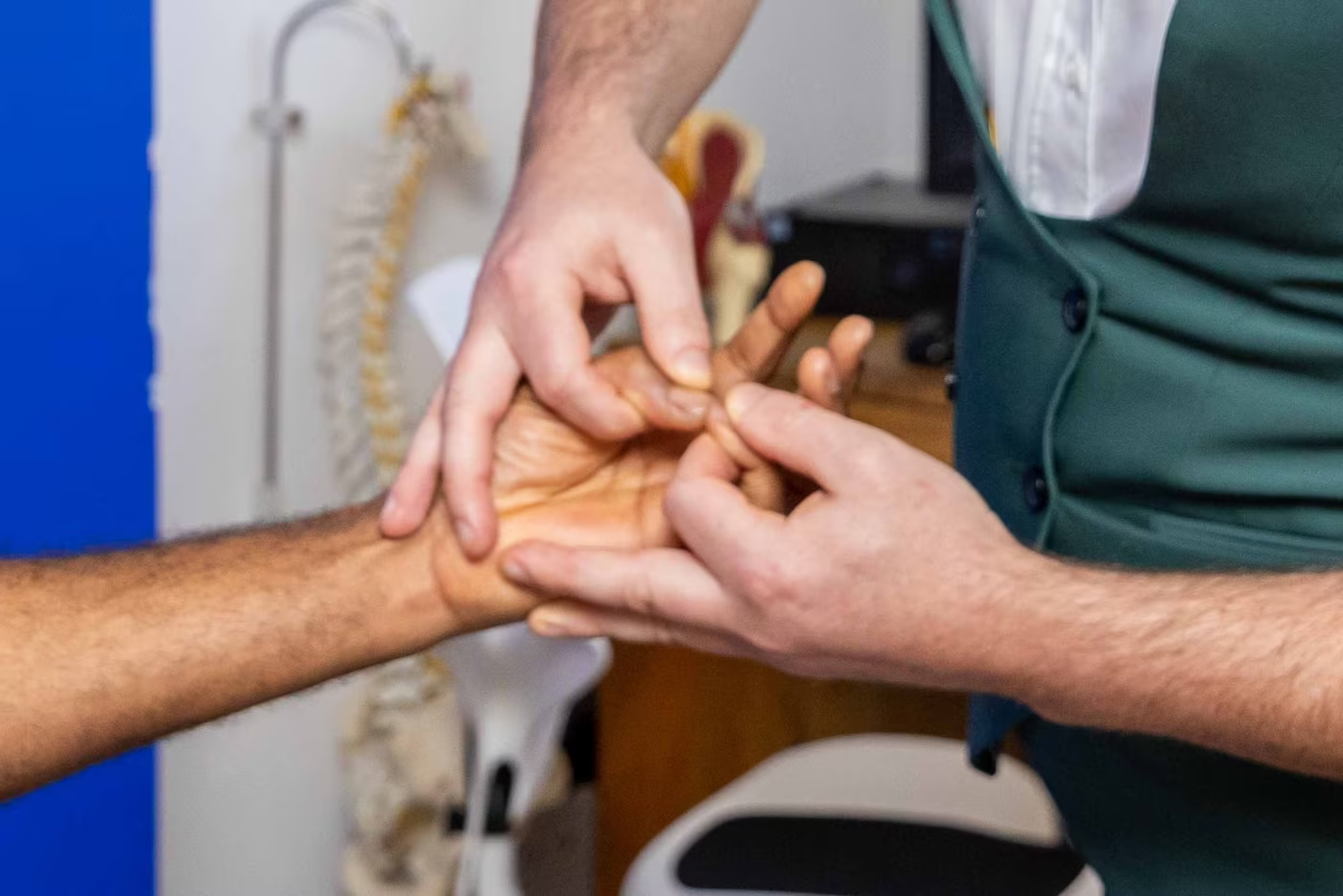
Assessment generally involves loading the arm’s own structures specifically — resisted testing of the biceps, triceps and shoulder muscles, and palpation of the tendons and their attachments; moving and testing the shoulder, since it refers into the arm so readily; examining the neck and upper back segments by hand and checking whether their movement alters the arm symptoms; a neurological screen of sensation, reflexes and power where symptoms suggest one; and watching how the arm and shoulder blade actually move through the ranges that hurt.
The value lies in the pattern rather than in any single test. An arm that reproduces its own pain on resisted testing, with a clean neck and full shoulder range, is a different clinical problem from an arm that tests unremarkably while neck movement changes the symptoms, even when both people describe an aching upper arm in near-identical words.
Effectively, symptoms indicate where the last straw has broken the metaphorical camel’s back, not where the journey began. By prioritising functional testing, you can identify which systems are failing and trace those tests back to their associated starting points.
What makes treatment at The DISC Chiropractors different?
Treatment follows what the examination finds, which is why apparently similar arm pain is managed in quite different ways.
Straightforward presentations are the most common and easiest to resolve. A recent, mechanically clear arm problem in an otherwise well person usually responds to treatment directed at the irritated tissue, a clear explanation of what overloaded it, and specific changes to the load or technique that caused it.
Manual treatment of the affected tissue and the joints above it, combined with a graded return to activity, is generally sufficient, but additional therapies such as Class IV Laser or Pressure-Wave Therapy can provide significant anti-inflammatory effects. Several weeks, rather than several months, is the usual expectation.
Recurring and multifactorial presentations require answering the upstream question. When the same arm problem recurs, treating the tissue in isolation again is unlikely to change the pattern. Assessment should extend to the shoulder, shoulder blade, and neck, and management is staged—settling the irritable tissue first, then addressing the instability or adhesions that are overloading it, before rebuilding tolerance to the activity that provoked it.
Some presentations need investigation or referral first. Progressive weakness, a suspected inflammatory or systemic cause, significant trauma, a persistent lump, or a picture that does not behave mechanically should be investigated medically before any course of care begins.

When a specific therapy has a mechanism, it is used for that reason, not by default.
Laser therapy is used when tissue is inflamed or slow to settle, making it relevant to some tendon and repetitive-strain presentations in the arm and irrelevant to most others.
Adhesion Release Method targets facial restrictions, irritating the muscles and nerves of the arm
Pressure-Wave therapy uses shockwaves to break down scar tissue and stimulate healing
Spinal decompression treats disc-driven nerve irritation in the neck; it has a role when examination points there and the arm symptoms are neurological, and none at all in an ordinary local arm strain. Most arm pain responds to considerably simpler care than either.
NeuroMuscular Stimulation further amplifies the regeneration of irritated nerves.
What to do next
If your arm pain has not settled, or has settled and returned more than once, a sensible next step is an assessment that includes the shoulder, shoulder blade, and neck alongside the arm itself. It takes one appointment and answers the two questions the location cannot: what is injured, and what caused it.