
How Are You Meant to Feel After a Chiropractic Adjustment

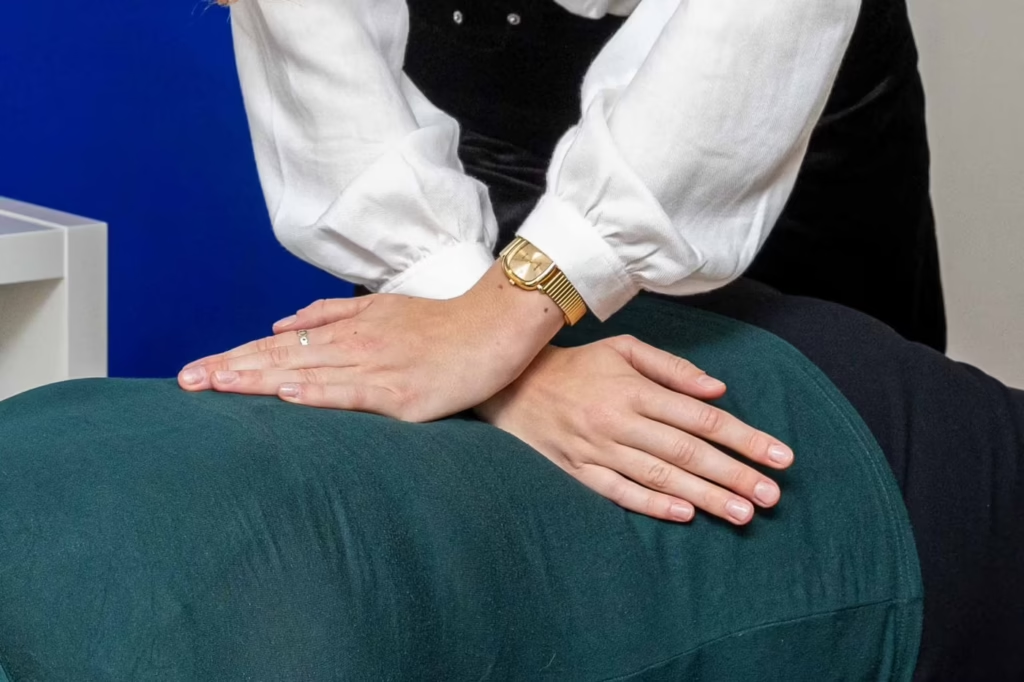
What’s Normal and What’s Not
You’ve just had a chiropractic adjustment, and one of the first questions that naturally follows is: how should you feel afterwards?
People can experience a surprisingly wide range of sensations after treatment, most of which are temporary and settle naturally within a short period of time. Some patients feel noticeably freer or lighter almost immediately, while others may feel mildly sore, tired, emotional, or simply “different” for a day or two [100].
Whether you are hoping for immediate relief or simply trying to understand your body’s reactions, it helps to know that there is no single “correct” response after care. Every person brings a different injury history, stress load, movement pattern, lifestyle, and nervous system sensitivity into the room [89][94].
In this article, we’ll explore some of the most common post-adjustment experiences, which sensations are generally considered normal, and which ones deserve a second look. The aim is not to convince you that every sensation is automatically positive, but to help you feel informed, reassured, and more confident understanding your body’s responses.
What Is a Chiropractic Adjustment and What Does It Do?
Before discussing how you may feel afterwards, it helps to briefly explain what a chiropractic adjustment is, and what it is not.
The Goal Behind the ‘Click’
Despite the myths, chiropractors are not “cracking bones” or forcefully “putting things back into place.” The click or pop sometimes heard during an adjustment is usually caused by a rapid pressure change within the joint, similar to cracking your knuckles. In most cases, it is simply gas releasing from the joint fluid as movement and pressure normalise [113].
The sound itself is not the treatment goal, and meaningful improvements can occur with or without an audible pop.
Adjustments are typically designed to:
- Improve joint mobility and movement quality [15][16].
- Reduce mechanical irritation and muscular guarding [40][94].
Influence how the nervous system processes movement and position [102][103]. - Restore more efficient and coordinated movement patterns [88][102].
Many chiropractors are ultimately more interested in how your body moves and responds afterwards than whether a loud pop occurred during the treatment itself. Research into spinal manipulation suggests these responses may involve a combination of mechanical, neurological, and sensorimotor changes rather than a purely structural “realignment” model [15][102].
How Adjustments Influence Your Nervous System
The nervous system plays a central role in how the body moves, adapts, protects itself, and responds to pain. When spinal joints begin moving more freely, the surrounding muscles, joints, and nerves often start communicating more efficiently as well [89][94].
Patients commonly describe feeling:
- Looser or lighter.
- More upright or balanced.
- Less restricted when turning or bending.
- More relaxed after muscular tension begins settling.
Some of these responses are mechanical, while others appear to involve changes in muscular coordination, sensory input, movement awareness, and nervous system processing [40][101].
For some people, the effect feels immediate. For others, the body takes time to adapt. That is one reason chiropractors often combine adjustments with rehabilitation exercises, mobility drills, or postural retraining. The adjustment may help create change, but the body still needs to learn how to use those new movement patterns more efficiently over time [88][102].
In some cases, patients also notice changes that seem less directly mechanical, such as feeling unusually relaxed afterwards, sleeping more deeply, experiencing digestive activity, or sensing broader shifts in tension levels. While these responses are not yet fully understood scientifically, they are commonly reported clinically, particularly when long-standing tension, guarding, stress, or altered movement patterns begin to change [89][101].
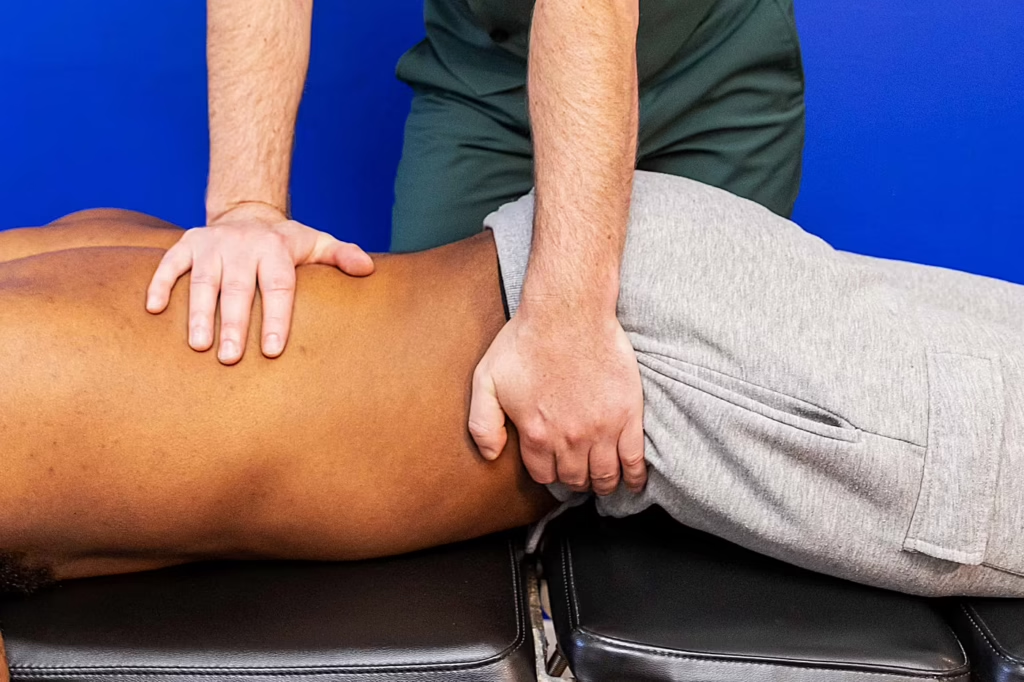
Common Things You Might Feel After an Adjustment
Everyone responds differently to chiropractic care, and that’s completely normal. Your experience will be shaped by your body, the nature of your condition, your stress levels, and how your nervous system adapts to changes in movement and sensory input [94][95].
In simpler mobility-based problems, patients often respond quickly and positively to care. More persistent or long-standing conditions, particularly those involving chronic tension, altered movement patterns, nerve irritation, or prolonged guarding, may produce a more noticeable temporary response as the body adapts.
What matters most is not whether you feel a dramatic reaction immediately afterwards, but whether your body gradually begins to move, function, and tolerate activity more effectively over time.
Immediate Relief
Many patients report feeling “lighter,” “freer,” or less restricted after an adjustment. You might notice:
- Increased range of motion [15][16].
- Easier movement and reduced stiffness [30][40].
- Reduced pressure or muscular tension [40][101].
- Temporary reduction in pain sensitivity [40][101].
At clinics such as The DISC Chiropractors in Surbiton, changes in movement quality, posture, stability, and range of motion are often reassessed before and after treatment to help patients understand how their body is responding. Research has also shown measurable short-term changes in pain processing and muscular responses following spinal manipulation in some patient groups [40][101].
Mild Soreness or Ache
Some patients experience mild soreness after treatment, similar to what you might feel after stretching, exercising, or using muscles differently than usual. This temporary response may occur as joints, muscles, and surrounding tissues begin adapting to changes in movement and loading patterns.
Research suggests that these short-term reactions are common, mild, and usually resolve naturally within a short period of time [13][100].
Mild post-treatment soreness does not automatically mean something is wrong, particularly if symptoms settle gradually over the next day or two. However, responses should always be monitored alongside the overall clinical picture.
Temporary Light-headedness or Tiredness
Because chiropractic care can influence muscular tension, movement patterns, and nervous system activity, some people report feeling:
• Sleepy or deeply relaxed.
• Slightly foggy or light-headed temporarily.
• More aware of fatigue after long-standing tension begins easing.
Many patients describe this as their body “finally switching down a gear” after spending long periods in a heightened protective or stress-driven state. Emerging research into spinal manipulation and autonomic nervous system responses may partly help explain why some patients notice broader relaxation or stress-related changes after care [95][101].
Staying hydrated, moving gently, and allowing your body time to settle afterwards can often help these sensations pass more comfortably.
Improved Range of Motion or Balance
When joint mechanics and muscular coordination improve, movement can begin to feel smoother and more efficient. Some patients notice subtle changes in:
- Balance and proprioceptive awareness [88][102].
- Walking pattern and gait mechanics [88][102].
- Turning, bending, and coordinated movement control [15][88].
- Posture, body awareness, and sensorimotor integration [102][103].
Because the body functions as an interconnected system, improving movement in one area can sometimes influence how other regions load and move as well. Research into sensorimotor integration and altered motor control may help explain some of these broader movement-related changes following care.
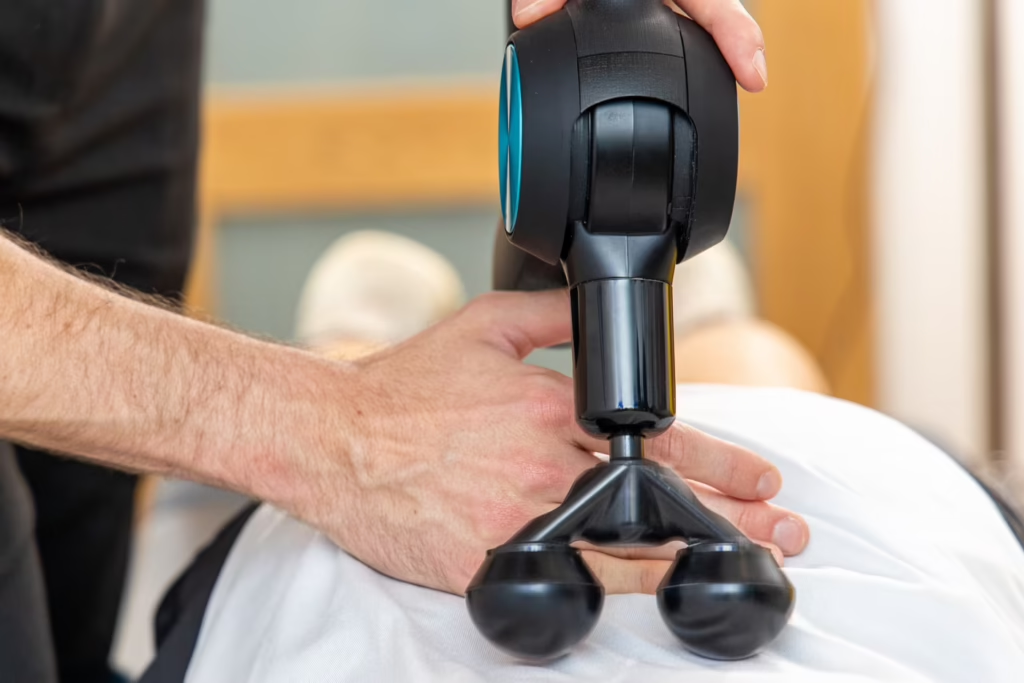
Less Common but Still Normal Sensations
Occasionally, patients report sensations that seem unrelated to their original symptoms. The body does not function as a collection of isolated parts but as an interconnected system in which movement, muscular tension, stress responses, breathing patterns, and nervous system activity can influence one another [89][94].
When movement begins to improve in one area, other regions of the body may also start to adapt. For example, reducing joint restriction and muscular guarding may influence how the body distributes tension, movement, posture, and even stress responses more broadly [88][102].
Some patients notice subtle changes in:
- General tension levels.
- Breathing ease or posture.
- Relaxation or stress levels.
- Awareness of movement or body position.
While research into these broader responses is still evolving, many clinicians and patients report that changes following care are not always limited strictly to the exact area being treated [95][101].
Emotional Release
Ever had a good cry after a massage? Some patients report similar experiences after chiropractic care, particularly when long-standing muscular tension or stress begins easing.
People occasionally describe:
- Feeling unexpectedly emotional.
- A sense of relief or calm afterwards.
- Feeling lighter mentally as well as physically.
- Greater awareness of built-up stress or tension patterns.
The mechanisms underlying these responses are not fully understood, but they may partly involve changes in muscular tension, autonomic nervous system activity, stress processing, and the strong connection between physical and emotional states [95][101].
If you experience this kind of response, it is usually temporary and not considered harmful. Simple grounding strategies, breathing exercises, walking, hydration, or journaling can sometimes help people process these sensations more comfortably.
Digestive or Sinus Changes
Some patients occasionally report temporary digestive or sinus-related changes after treatment, particularly following work around the upper neck, rib cage, or thoracic spine.
Examples can include:
- Gurgling or digestive activity.
- Temporary sinus drainage or pressure changes.
- Feeling unusually relaxed afterwards.
- Changes in breathing patterns or chest tension.
One possible explanation is that chiropractic care may influence muscular tension, breathing mechanics, stress responses, and autonomic nervous system activity, all of which are closely connected to how the body regulates digestion and relaxation [95][101].
Research in this area is still developing, so these responses should not be viewed as guaranteed outcomes or direct treatment targets. However, they are often reported clinically enough that many chiropractors recognise them as part of the body’s broader adaptation process after care.
Sensations in Other Body Areas
Sometimes patients notice changes in body regions that were not directly treated. For example, a hip, shoulder, or knee may feel different after treatment focused elsewhere in the spine.
The body works as a kinetic chain, meaning tension, posture, movement, and load distribution in one region can influence many others [88][102].
When one area has been stiff, painful, or overloaded for a long time, the body often develops compensation patterns to protect itself. As movement and load distribution begin changing, previously underused or overworked areas may temporarily feel tighter, more active, or simply “different” while the body adapts.
For example, if one leg has been subconsciously offloading weight due to pain or stiffness, restoring movement elsewhere may gradually change how force is distributed through the hips, pelvis, spine, and surrounding muscles. That does not necessarily mean a new injury has occurred. In many cases, it simply reflects the body redistributing load and movement more evenly again [88][102].

What’s NOT Normal, When to Call Your Chiropractor
Many patients are surprisingly intuitive about their own bodies, even if chiropractic care itself is completely new to them. Often, people can sense the difference between a normal temporary reaction and something that feels genuinely unusual. If there is any doubt, a good chiropractic clinic should welcome that conversation and be readily available to offer guidance or reassurance.
While it’s perfectly normal to experience a range of sensations after an adjustment, some responses may suggest the body is struggling to adapt rather than settling appropriately. Discomfort does not automatically mean something is wrong, and mild temporary reactions are relatively common after manual therapy [13][100].
However, it is still important to recognise the difference between expected short-term responses and symptoms that deserve clinical attention.
Potential red-flag symptoms requiring urgent medical assessment can include:
- Sudden loss of bladder or bowel control.
- New or severe unexplained headache.
- Significant weakness in the arms or legs.
- Loss of coordination or balance that is rapidly worsening.
- Severe or progressive neurological symptoms.
These situations are uncommon, but they should never be ignored. If symptoms feel severe, rapidly progressive, or significantly outside your normal experience, seek urgent medical advice promptly [1][77].
Knowing what to look for helps you stay proactive and safe during recovery while also allowing your chiropractor to adapt your care plan as needed.
Sharp, Radiating, or Increasing Pain
If pain begins travelling further down your arm or leg after treatment, especially if it feels noticeably different from your usual symptoms, it is worth paying attention to. These sensations may feel sharp, tingling, electrically sensitive, or unusually intense compared to normal post-treatment soreness.
In some cases, this may simply reflect temporary irritation or increased nerve sensitivity as the body adapts to changes in movement and loading [94][95].
However, if symptoms continue to worsen, persist beyond a short period, consistently disturb sleep, or significantly interfere with daily functioning, it is sensible to contact your chiropractor for review. Sometimes small adjustments to treatment intensity, frequency, exercise prescription, or pacing can make care more comfortable and better tolerated.
Symptoms That Persist Beyond 48 Hours
Most mild soreness following chiropractic treatment resolves within a day or two as the body adapts to changes in movement and loading [13][100].
If discomfort persists beyond this, becomes progressively more intense, or starts interfering with normal daily activities, work, sleep, or mobility, it is important to let your chiropractor know rather than simply “pushing through.”
Good chiropractic care should be adaptable. If your body is responding more strongly than expected, your chiropractor may modify the:
- Technique used.
- Treatment intensity.
- Frequency of visits.
- Rehabilitation strategy.
- Recovery pacing between sessions.
Open communication is one of the most important parts of a successful rehabilitation process. A good chiropractor should never pressure you into continuing treatment that feels consistently overwhelming or inappropriate. Instead, care should evolve around your current capacity, goals, and response pattern.
New Symptoms That Weren’t Present Before
It’s worth reiterating that shifting pain patterns are normal and often a positive sign of change. However, unfamiliar symptoms that appear after treatment that do not resolve quickly and should be reported to your chiropractor, can include:
- Persistent dizziness.
- Unusual tingling or numbness.
- Significant weakness.
- Significant increase in the pain of complaint
- New coordination changes.
- Symptoms that feel distinctly different from your original complaint.
In some situations, these responses may reflect temporary changes in muscular tension, posture, movement patterns, or nervous system sensitivity as the body adapts [94][95].
However, persistent or concerning symptoms should never simply be ignored or assumed to be “part of healing.” A brief reassessment can help determine whether your treatment plan needs adjustment, whether further investigation is appropriate, or whether a different approach would suit your body better.
Good chiropractic care should feel collaborative, responsive, and adaptable, not rigid or dismissive when patients raise concerns.
How to Get the Most from Your Adjustment
To support your body’s ability to adapt and recover after treatment, a few simple habits can make a meaningful difference. Recovery is not just about what happens during the adjustment itself, but also how your body responds in the hours and days afterwards.
At The DISC Chiropractors, we often encourage patients to remember the “Rule of 2s” as a simple starting point after care:
- Two Litres, aim to stay well hydrated following treatment.
- Two Hours, give your body time to settle rather than rushing straight back into stress or heavy activity.
- Two Walks, short gentle walks can help keep the body moving without overloading sensitive tissues.
These suggestions are not rigid rules, but practical ways to help your body adapt more comfortably after treatment.
Hydrate and Rest
Staying well hydrated after treatment may help support normal tissue recovery, circulation, and movement within joints and muscles. Many patients also notice they feel more fatigued or relaxed after care, particularly during earlier sessions when the body is adapting to change [95][101].
- Aim for roughly 1.5–2 litres of water over the following 24 hours.
- Give your body a few hours to down-regulate and settle afterwards.
- Short naps, rest, or an earlier night can sometimes help if your body feels unusually tired.
Rather than viewing this as “doing nothing,” it can help to think of recovery as giving your nervous system and movement patterns time to integrate the changes brought about by treatment.
Gentle Movement After Care
While it may be tempting to stay completely still after treatment, gentle movement is often more helpful than prolonged inactivity. Walking, mobility drills, and light movement can help reinforce improved movement patterns and reduce excessive stiffness afterwards [88][102].
- Avoid intense workouts, sprinting, or heavy lifting immediately after treatment.
- Light walking, gentle stretches, or breathing exercises are often better tolerated.
- Pay attention to movements that suddenly feel easier, smoother, or less restricted.
Movement also helps joints circulate synovial fluid more efficiently and encourages muscles to gradually adapt to changing movement demands over time [88][102].
Avoid High Stress or Repetitive Strain
Your body and nervous system often respond best when given space to settle after treatment. Jumping straight back into prolonged sitting, repetitive strain, poor posture, or high-stress environments can sometimes make it harder to maintain the benefits of care [94][95].
- Avoid long periods slumped on the sofa, driving, or sitting poorly immediately after treatment.
- Consider simple ergonomic improvements where possible.
- If stress levels are particularly high, breathing exercises, short walks, or relaxation techniques may help calm the nervous system.
Many patients underestimate how closely stress, muscular tension, pain sensitivity, and recovery capacity are linked.
Use a Pain Diary or Symptom Tracker
Not every change happens immediately after an adjustment. Tracking how you feel physically and mentally over the next 24–48 hours can help both you and your chiropractor understand how your body is responding to care [98].
You might choose to track:
- Pain levels.
- Movement quality.
- Energy levels.
- Stiffness or mobility.
- Mood or stress levels.
Sometimes the biggest improvements are subtle at first and become easier to recognise when patterns are written down consistently.
Bringing these observations to your next appointment can help your chiropractor adjust exercises, pacing, treatment intensity, or rehabilitation strategies more accurately around your individual response.
Small, consistent steps often make the biggest long-term difference.
Final Thoughts: Feeling Change Often Means Something Is Working
Chiropractic care is ultimately aimed at improving how the body moves, functions, and tolerates activity, not simply chasing short-term pain relief.
Some people feel immediate improvement after treatment, while others may feel temporarily sore, tired, emotional, or simply different for a short period afterwards. In many cases, these responses reflect the body adapting to changes in movement, muscular tension, nervous system input, and loading patterns [89][95].